2026 Tariff Impact On Sports Equipment: Calculate True Cost Of Ownership
Tariffs bite hard. In 2026, the sticker price on a net or goal is the least reliable number in your spreadsheet, because duties, user fees, freight volatility, and compliance risk can stack into a second invoice that arrives weeks later and quietly eats your margin. If your quote ignores that second invoice, are you pricing a product or a fantasy?
Here’s the headline risk: a U.S. Supreme Court ruling in February 2026 struck down broad “emergency” tariffs under IEEPA, and the White House immediately pivoted to a temporary, across-the-board tariff under Section 122 of the Trade Act, lifting it up to 15% and applying it as a global surcharge for up to 150 days (with carve-outs for some sectors). That’s not theory; that’s live policy whiplash. US Supreme Court strikes down Trump’s global tariffs and Singapore urges country to brace for US 15% tariff describe the reset and the “15%” number. (The Straits Times)
Now the hard truth I don’t see on most “landed cost calculators”: tariffs don’t replace your base duty rate or other trade measures. They stack. And if you buy from China, Section 301 exposure remains a real, litigated, and policy-tested layer—U.S. importers tried to knock out List 3 and List 4A tariffs in court and lost on remand in 2023. In re Section 301 Cases (Slip Op. 23-35) sustained those lists and kept the fight procedural, not existential. (cit.uscourts.gov)
Policy didn’t cool off after the courtroom either: in May 2024, USTR published its four-year review of Section 301 and proposed tariff modifications, showing the program’s staying power even as product lists and rates shift. (United States Trade Representative)
So what does this mean for sports gear specifically? The tariff impact on sports equipment prices shows up first in landed cost, then in TCO when you’re forced to raise prices or accept thinner margins. It means “sports equipment tariffs” isn’t one rate. It’s a bundle of levers tied to HS classification, country of origin, and whatever Washington decides is “temporary” this month.
Table of Contents
The dependency problem nobody budgets for
If you sell or source sports gear, you’re almost certainly exposed to imported supply. One slice of the category—HS 950691 (gym, fitness, and athletics articles and equipment)—shows how concentrated this gets: in 2023, U.S. imports were about $2.37B, and China alone supplied about $1.61B. World Bank WITS import data for HS 950691 spells out the scale. (wits.worldbank.org)
When your upstream is that concentrated, “tariff risk” becomes “pricing risk,” and pricing risk becomes “inventory risk.” That’s why true cost of ownership (TCO) matters more than a duty percentage.
Landed cost vs. true cost of ownership: the difference that decides your margin
Landed cost answers one question: “What does it cost to get this item into my warehouse, cleared and ready to sell?” True cost of ownership answers the question that hurts: “What does it cost me after it lands—over time, across defects, replacements, working capital, and regulatory exposure?”
I like to think of it as two piles of money:
- Pile A: Get it here (Landed Cost) Ex-works/FOB + international freight + insurance + inland freight + brokerage + duties/tariffs + government fees
- Pile B: Keep it sold (Ownership Cost) Inventory carrying cost + damage/defect rate + warranty/replacement + storage + compliance testing + chargebacks + returns + end-of-life disposal (yes, even for “simple” nets)
The 2026 cost stack you should actually model
If you build a landed-cost calculator for sports equipment, don’t stop at “duty %.” Add these layers:
- Tariff layers (the headline numbers)
- Base MFN duty rate (depends on HS code)
- Special tariffs (Section 301, etc., if applicable)
- Temporary surcharges (like the 2026 Section 122 “global” tariff)
- Government fees that sneak in as “small” numbers
- U.S. Merchandise Processing Fee (MPF) has minimum/maximum limits that change with inflation adjustments; for FY2025 it lists a minimum of $32.71 and a maximum of $634.62. Federal Register CBP user fee adjustment notice has the current caps. (Federal Register)
- Freight volatility (because geopolitics doesn’t care about your PO)
- When Maersk told customers to plan for Red Sea disruption into the second half of 2024, it wasn’t writing fan fiction; it was warning about longer transits, congestion, and higher costs. Maersk warns Red Sea disruptions could last into second half of year is the kind of operational reality your spreadsheet needs to price in. (Reuters)
- Compliance and testing (the cost of “boring” rules)
- If your catalog touches youth training gear, you’re in CPSIA territory. Total lead (Pb) content limits dropped to 100 ppm (with 90 ppm for lead in paint/surface coatings), and you may need third-party testing and certificates depending on the product. CPSC CPSIA lead content requirements lays out the thresholds. (U.S. Consumer Product Safety Commission)
- Failure modes (where TCO really lives)
- Nets tear. Steel frames rust. Welds crack. Hardware goes missing. You don’t “save” money if you pay 8% less but double your replacement rate.
A practical formula (steal this)
True Cost of Ownership per unit (TCO) = Landed Cost
- (Annual carrying cost % × average inventory value × months on hand / 12)
- (Defect rate × replacement cost)
- (Return rate × reverse logistics + refurb/write-off)
- (Compliance/testing + inspections allocated per unit)
- (Financing cost on payables gap)
If you want a quick “board-room” version, run two scenarios: Best Case (stable freight, low defects) and Bad Case (tariff stacks + freight spike + returns). The spread is your risk premium.
Worked example table (illustrative, but the math is real)
Assumptions (for illustration): customs value = ex-works price; base duty = 4%; additional trade measure = 25% (e.g., Section 301 exposure); temporary surcharge = 15%; MPF/HMF/brokerage rolled into “Fees”; ownership costs are 12-month expected.
| Product example | Ex-works (USD) | Freight + inland | Duties & tariff stack | Fees (MPF/broker/basics) | Landed cost | 12-mo ownership adders (returns, replacements, carrying) | 12-mo TCO |
|---|---|---|---|---|---|---|---|
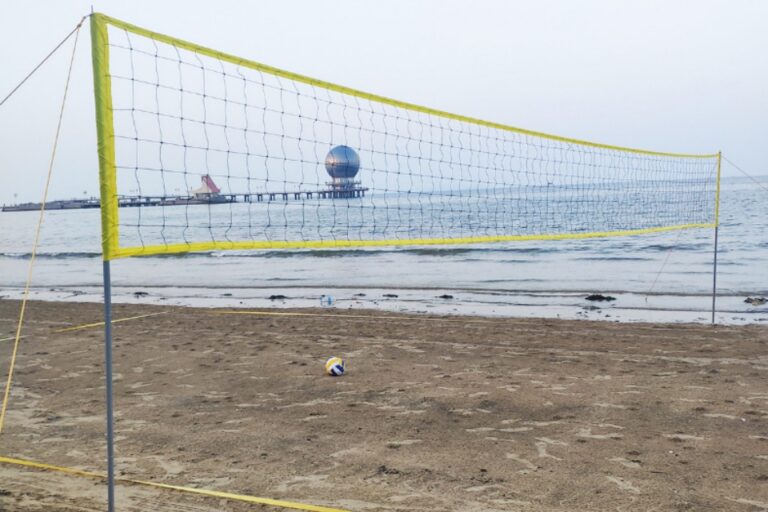
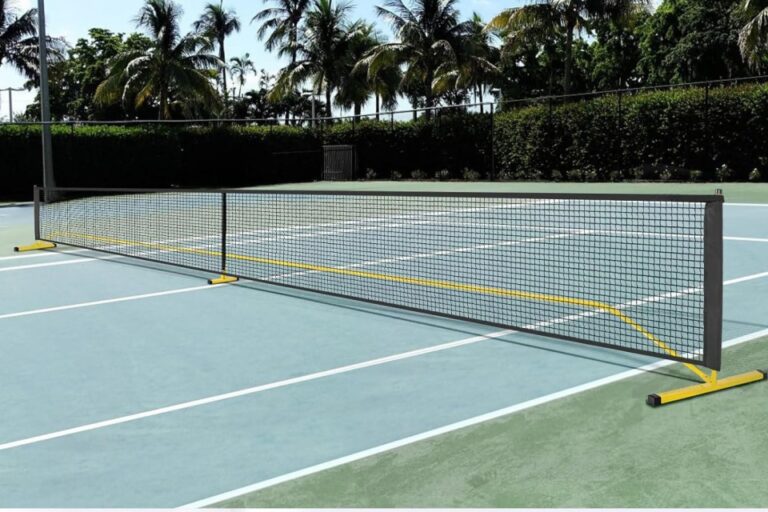
| 22-ft portable pickleball net system | 55 | 18 | 24 (4%+25%+15%) | 4 | 101 | 12 | 113 |
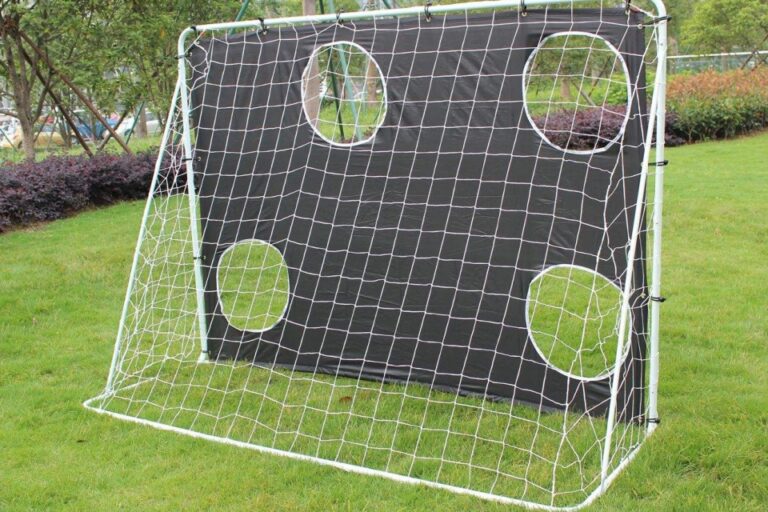
| Backyard soccer goal (steel frame) | 70 | 25 | 31 (4%+25%+15%) | 5 | 131 | 16 | 147 |
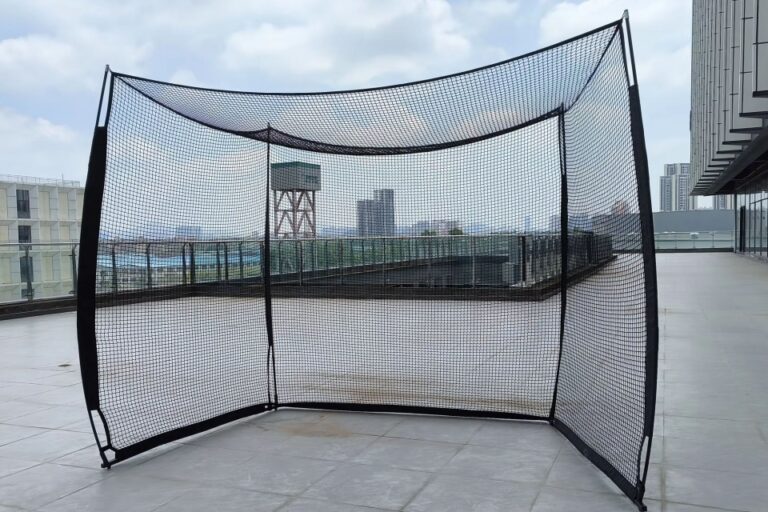
| Golf hitting cage net kit | 120 | 40 | 53 (4%+25%+15%) | 7 | 220 | 28 | 248 |
Two things jump out. First, the tariff stack can rival freight. Second, TCO doesn’t stop at the port; the “boring” costs (returns, replacements, carrying) can add another 10–15% without you noticing until the quarter closes.
Where this hits on FSPORTSNET product decisions
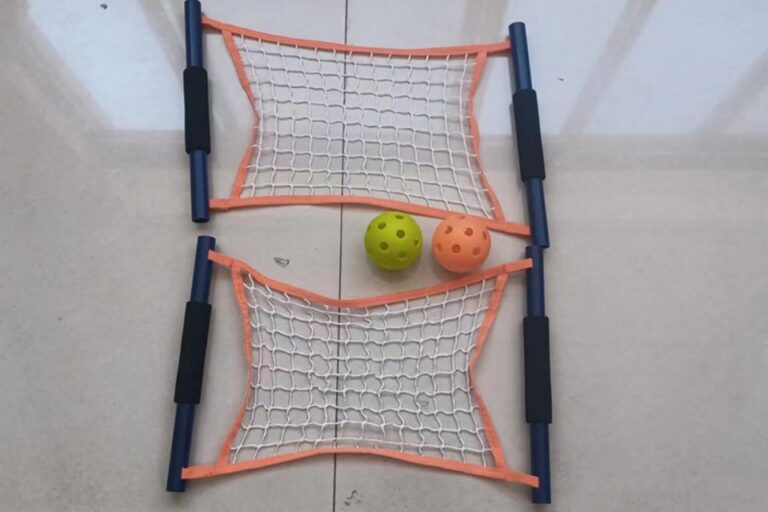
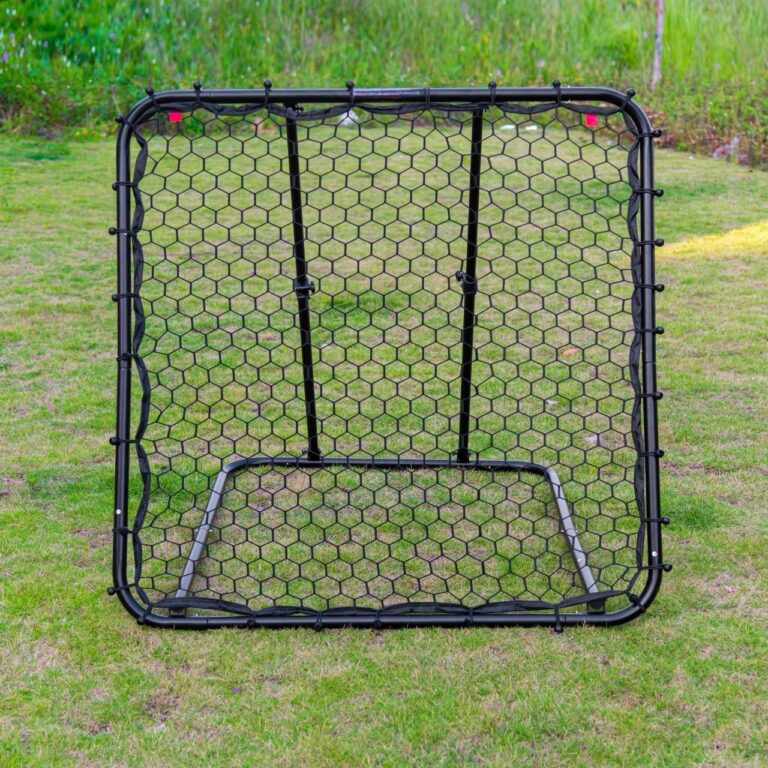
If you’re sourcing or quoting items like portable pickleball nets or soccer goals, you should treat tariff exposure as a product spec, not a finance afterthought. And if your revenue rides on training gear like rebounder nets or practice cages in the golf net category, the “ownership” side of the equation matters more because durability drives replacement rates.
But. Don’t pretend you can “outsmart” customs. You can only out-model your competitors.
Legit ways to reduce tariff costs on sports gear (no cute tricks)
- Lock classification early. Get a binding ruling when the HS call is ambiguous; misclassification is an expensive hobby.
- Use duty drawback where it fits. If you re-export, drawback can turn paid duties into refunds—paperwork-heavy, but legal.
- Design for durability. Lower defect rates beat marginal duty savings every time.
- Negotiate Incoterms like you mean it. Your freight and insurance structure changes your risk, not just your cost.
- Diversify origin with real substantial transformation. Token assembly doesn’t move origin; actual manufacturing steps might.
- Treat compliance as a line item, not a surprise. If a kids’ product fails, your “savings” vanish in one recall cycle.
If you need manufacturing transparency, start with the factory tour before you argue about pennies on freight.

FAQs
How do tariffs affect sports equipment prices in 2026? Sports equipment tariffs in 2026 are the combined customs duties, temporary surcharges, and trade measures applied to imported gear, and they raise prices by adding percentage-based charges to customs value plus fixed fees and logistics knock-on costs that suppliers and distributors eventually pass through. The February 2026 court-driven tariff reset and the shift to a 15% temporary global surcharge under Section 122 is exactly the kind of policy swing that pushes “stable pricing” into wishful thinking.
What is a landed cost calculator for sports equipment? A landed cost calculator for sports equipment is a worksheet or model that estimates the total cost to deliver an imported item into your warehouse by combining product value, freight, insurance, brokerage, duties, tariffs, and government fees into a single per-unit number you can price from. If your calculator doesn’t include MPF caps, port fees, and realistic transit buffers, it’s not a calculator; it’s a mood board.
What does “true cost of ownership” mean for sports nets and goals? True cost of ownership for sports nets and goals is the full, time-based cost of sourcing, importing, storing, selling, supporting, and replacing the product, including landed cost plus inventory carrying cost, defect and return rates, warranty replacements, compliance testing, and the cash-flow cost of lead times. This is why a “cheap” net can be expensive over 12 months.
How do I calculate import duties on sports gear? Import duties on sports gear are calculated by identifying the correct HS code and country of origin, applying the base duty rate and any special tariffs or surcharges to the customs value, then adding entry-related fees such as MPF (within minimum/maximum caps) and any applicable port fees or brokerage charges. If you can’t explain your HS code choice in one paragraph, you’re taking a risk you didn’t price.
What are the best ways to reduce tariff costs on sports gear legally? Reducing tariff costs legally means lowering the duty base through accurate classification and valuation, using lawful programs like duty drawback or FTZs when eligible, redesigning supply chains to change origin through substantial transformation, and reducing avoidable “ownership” costs (defects, returns, expedited freight) that tariffs often distract you from. The fastest win is usually quality and packaging discipline, not paperwork gymnastics.
How do tariffs affect the total cost of owning sports equipment? Tariffs affect the total cost of owning sports equipment by raising the landed cost you pay upfront and by amplifying downstream ownership costs—like inventory carrying, cash tied up in longer lead times, replacement stock for defects, and price-driven demand swings—so the “cost” becomes a full-year profitability problem, not a checkout price. The practical move is to model tariffs as a risk band (best case vs bad case) and price your warranty and replacement assumptions with the same honesty you apply to duty rates.
Conclusion
If you’re pricing 2026 POs right now, rebuild your model around landed cost + ownership cost, not unit price. Want a second set of eyes on your assumptions? Use the contact page and send your target HS codes, origins, and shipment lane.