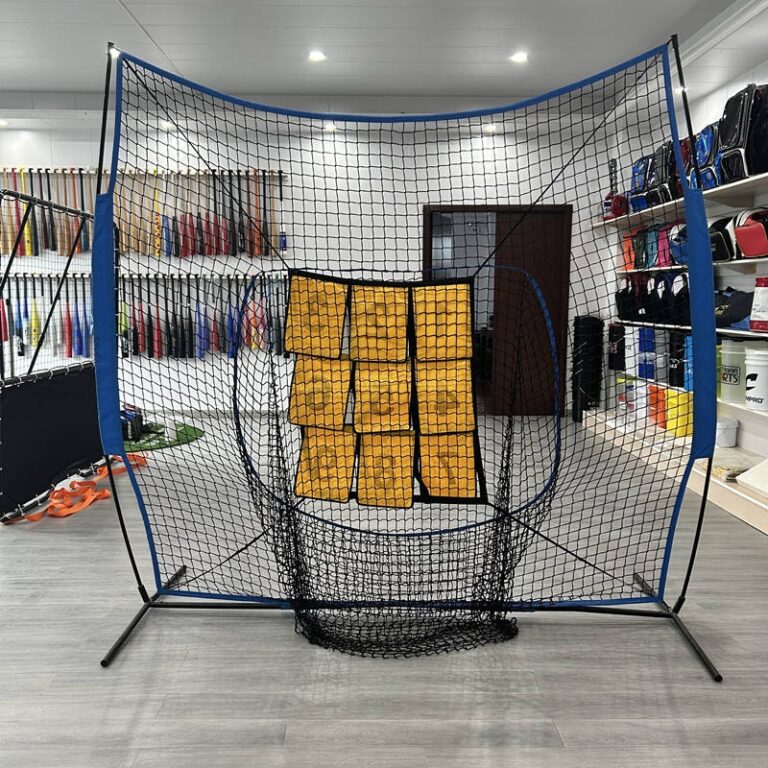
Tell us what you want to develop. FSPORTS supports OEM/ODM, private label, and custom sports netting projects based on your existing product, drawing, sample, photo, or application requirement.
Share the product type, dimensions, target quantity, destination, and any known mesh, material, frame, hardware, logo, or packaging requirements. If your specification is not complete yet, send what you have and we can review the remaining details before quotation.
Why Clubs Struggle With Multi Height Volleyball Needs
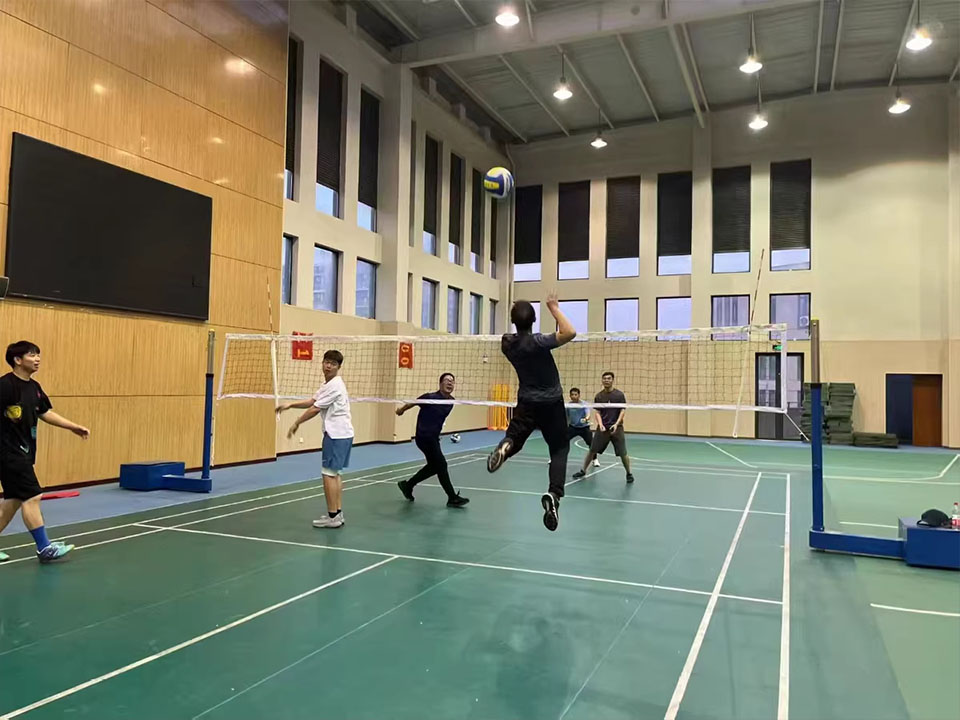
If you run a volleyball club, you already know the “net height problem” isn’t really about a number. It’s about turnover. It’s about court ops. It’s about running a clean schedule when you’ve got 12U in the first block, 16U next, adult open gym at night, and a weekend event that flips formats every few hours.
Multi-height volleyball needs hit clubs harder than most people expect because every height change triggers a chain reaction: tension tweaks, hardware checks, safety risks, and staff time. And if you’re sharing space with basketball, PE, or other rentals, it gets even messier.
Below is a practical breakdown using FSPORTS guidance and product specs, plus real “gym floor” scenarios you’ll recognize. (If you’re sourcing for multiple locations or reselling into your market, you’ll also see where FSPORTS fits as a bulk/OEM supplier.)
The core arguments clubs run into
Argument (what’s really happening)
What it looks like during club operations
Internal reference
Net height isn’t “one size fits all,” so clubs must change it often.
Constant changeovers between age groups, mixed training, rentals, and events.
Clubs love flexible setups. Reality check: flexibility only works when the system stays rock-solid through chaos—kids sprinting under the antenna zone, players colliding on jousts, staff doing fast resets between blocks.
The FSPORTS safety checklist calls this out directly: if the poles aren’t stable, nothing else matters.
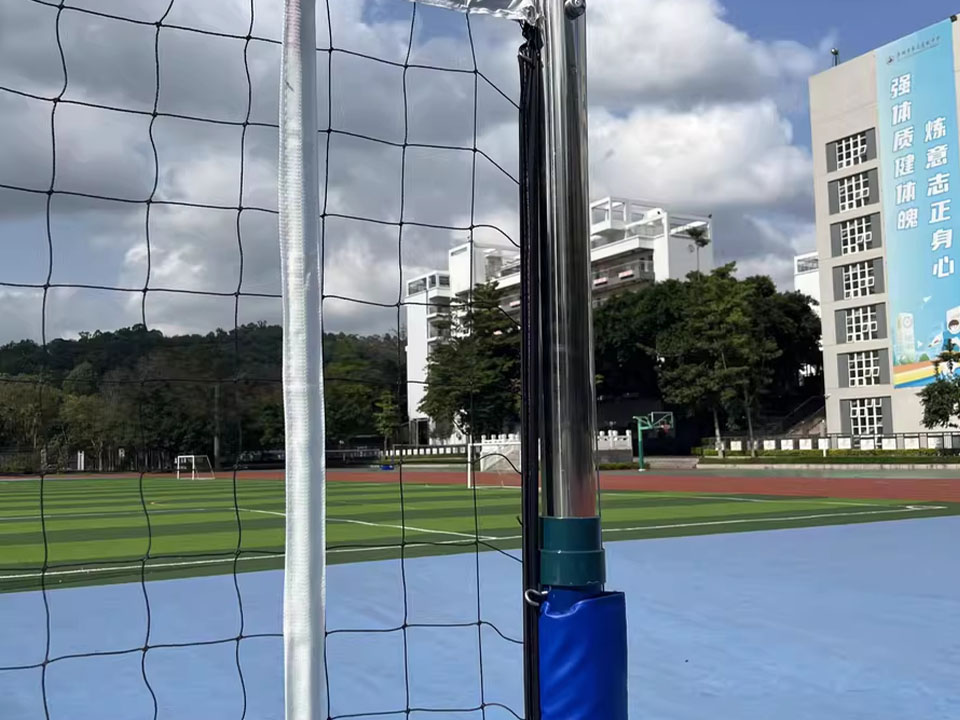
Floor sleeves and sockets
Floor sleeves feel “set and forget” until they don’t. Dust, moisture, and tiny looseness add up. In a busy facility, a sleeve that’s slightly off becomes a daily wobble. Then your net height changes aren’t really height changes. They’re “height + lean + tension drift.”
A good habit is boring but effective: clean sleeves, confirm full seating, and treat movement like a real ticket, not a “we’ll watch it.”
Weighted bases and support feet
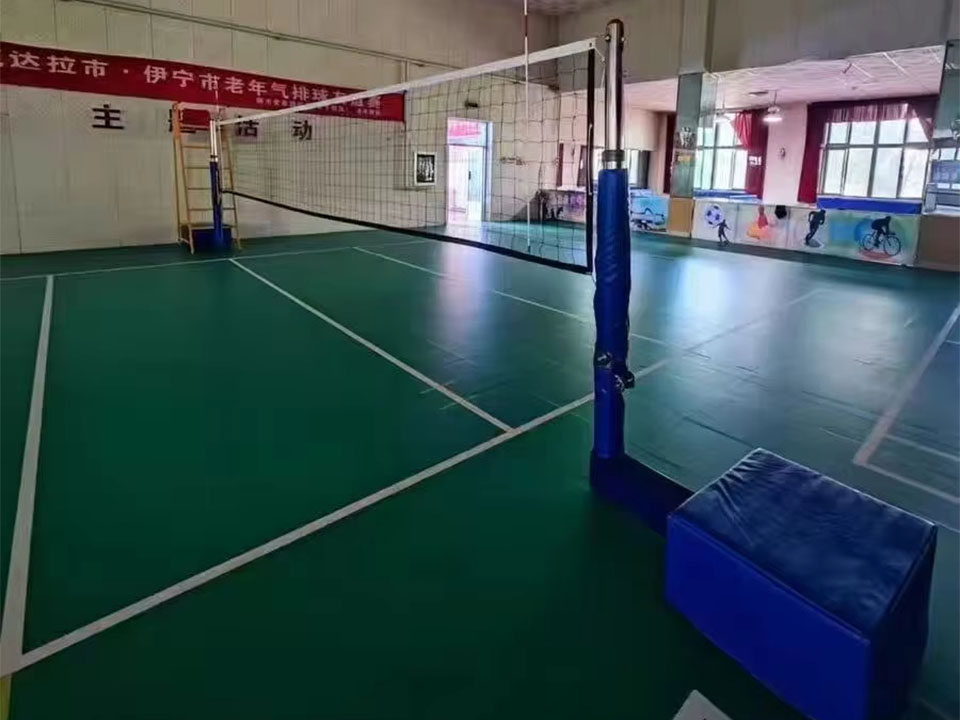
Portable systems save your schedule when you’re flipping courts fast. But you need a base that’s designed for gym floors, not backyard vibes. Wide stance, non-slip feet, and repeatable placement matter more than people think.
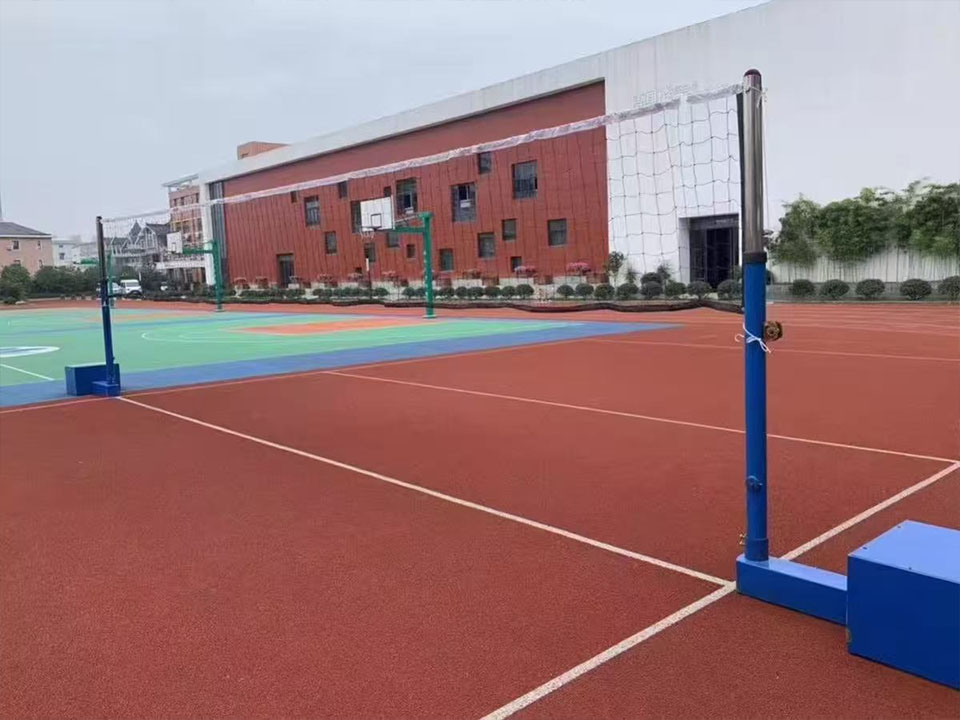
If you want a simple spec example, look at a portable setup that’s built around controlled height choices and durable hardware, like this Portable Professional Outdoor Volleyball Net Set with Adjustable Height Poles. It offers three height options (men’s, women’s, co-ed) and calls out a winch system designed to reduce mid-net sag.
Net tension and height adjustment
Multi-height needs expose weak tension habits fast. A net can look “fine,” but if the center droops, the whole training session feels off. Coaches hate it because it kills rhythm. Players hate it because it changes contact timing.
FSPORTS puts it plainly: treat tension like a setup spec, not a vibe.
Balance Top Cable, Bottom Rope, And Side Straps
Most clubs run into the same mistake: staff only pulls the top cable. Then the net bellies, edges tilt, and the center drifts low.
FSPORTS lays out a clean order that matches real ops: set post spacing and height, tension the top cable to playing height, tighten the bottom rope to remove belly, then lock side tension so the edges stay vertical.
Here’s the punchline: if you change height a lot, you’re not just adjusting poles. You’re rebalancing the whole load path.
Winch, straps, and cable wear
Clubs don’t usually “lose a net.” They lose a session to a small failure: frayed strap, kinked cable, bent hook, slipping winch. That’s why the safety guide pushes quick inspections and early replacement of wear parts.
If your staff keeps fighting sag on multi-height changeovers, it’s worth looking at systems that make adjustment predictable, not a wrestling match.
Common school scenarios that trigger safety issues
The FSPORTS article calls these “school” scenarios, but clubs live the same story—just with tighter scheduling pressure and more variety.
PE class multi-court changeover
For clubs, this is your “back-to-back blocks” problem. You’ve got minutes to flip from youth training to older athletes. That’s when padding gets skipped, strap tails get left loose, and poles don’t get fully seated. Standardizing steps makes the setup repeatable even when you’re understaffed.
Tournament day hardware fatigue
Events stack wear fast. More collisions. More tension tweaks. More hands touching hardware. Plan a mid-day reset: tension check, hardware scan, and base stability test. You’ll save yourself from the late-afternoon meltdown when a court goes down.
Outdoor volleyball and wind load
Outdoor programs add wind load and UV exposure. That’s where netting spec matters: you want mesh and build choices that hold up through repeated impact and weather.
This is also where FSPORTS’ positioning lines up with club needs: UV-resistant, high-impact nets, built for standard or made-to-order sizes through Custom Sports Netting Solution Services.
Multi-height setups that actually work in the field
Sometimes the cleanest answer is to reduce the number of “special cases” your staff handles.
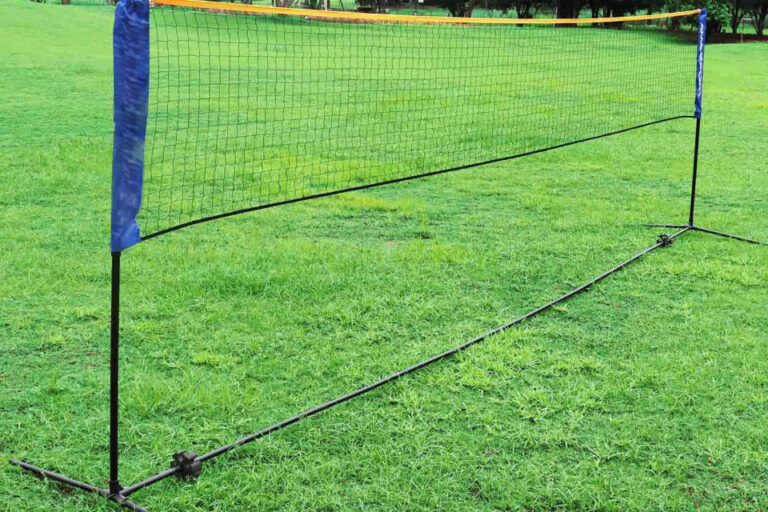
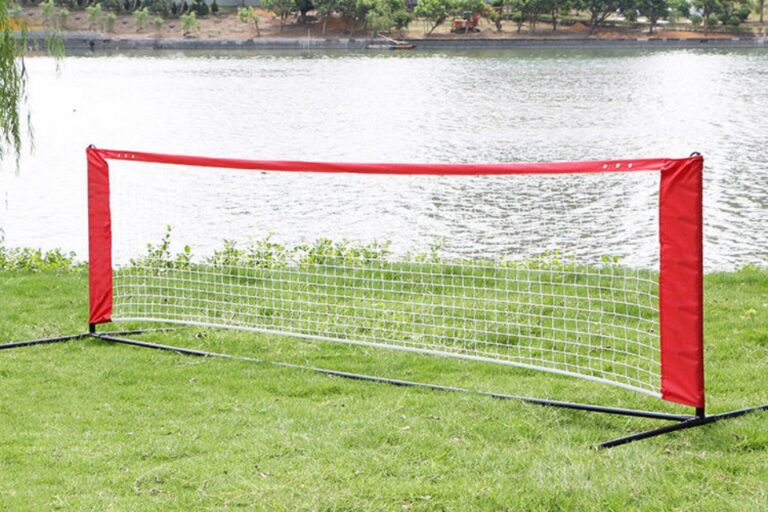
If you run mixed training (volleyball + badminton + pickleball) in the same space, a cross-use system can cut downtime. A product example is this Adjustable Height Portable Multi Sports Net, listed at 10FT long with a 3FT to 5.2FT height range for multi-sport play.
If you want volleyball-only options and broader selection, start with the Volleyball Net category and filter by how your club actually runs: indoor league, outdoor training, travel kits, or hybrid programming.
If your facility supports lots of crossover programming, browse the Multi Sports Net category. It’s useful for clubs that care more about fast deployment and consistent tension than “one sport only.”
Where FSPORTS fits club procurement, wholesale, and OEM/ODM
Multi-height needs usually show up as procurement pain:
Too many SKUs, not enough consistency
Mixed quality across batches
Hardware that doesn’t match the way your facility actually runs
Reorders that arrive “close enough,” then cause more staff fiddling
FSPORTS positions itself as a manufacturer that supports custom builds, bulk purchasing, and OEM/ODM, which is exactly what distributors, retailers, and multi-site operators care about.
If you’re building a sourcing plan, these pages help you map capabilities fast:
Start at the FSPORTS homepage for the product lineup and factory positioning.
Check About FSPORTS for the “who we serve” angle and B2B focus.
If you want the simplest rule to run multi-height volleyball without daily drama: make height changes predictable (hardware + process), and make tension repeatable (setup order + quick checks). Everything else flows from that.