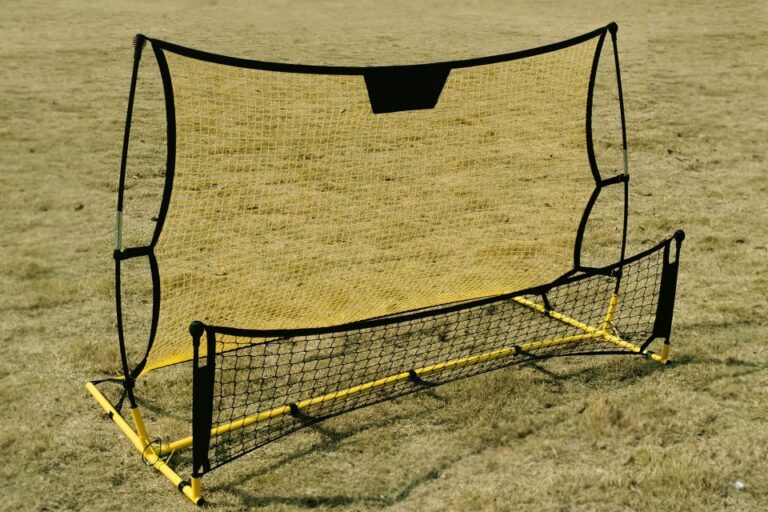
Tell us what you want to develop. FSPORTS supports OEM/ODM, private label, and custom sports netting projects based on your existing product, drawing, sample, photo, or application requirement.
Share the product type, dimensions, target quantity, destination, and any known mesh, material, frame, hardware, logo, or packaging requirements. If your specification is not complete yet, send what you have and we can review the remaining details before quotation.
How do I install a tennis net correctly according to ITF standards?
A tennis net can look “fine” and still play wrong. If the center sits a little high, you’ll hear it right away: balls clip the tape, players complain, and your court staff ends up doing a redo during peak hours. Let’s keep it simple and install it the ITF way, with measurements you can verify in minutes.
If you’re sourcing nets for multiple courts, or you’re buying for retailers, clubs, schools, or OEM programs, consistency matters just as much as the install. That’s where FSPORTS fits in: premium netting manufacturing in China with custom runs, wholesale volume, and OEM/ODM support.
ITF tennis net height (0.914 m centre, 1.07 m at posts)
Net height at the centre: 0.914 m
ITF sets the net at 0.914 m (3 ft) at the center. That’s the number you measure first. Don’t eyeball it. Grab a tape measure and check from the court surface straight up to the top of the net in the middle.
Real-life tip: the center will “creep” after tensioning. Measure, wait a couple minutes, then measure again. That quick re-check saves you from the classic callback.
Net height at the posts: 1.07 m
At each post, the cable and net should align to 1.07 m (3 ft 6 in). If your posts are solid but your center is off, the strap is usually the culprit. If the center is correct but the post area looks low, your cable path or post hardware might be wrong.
ITF net posts position (doubles posts and singles sticks)
Doubles net posts position: 0.914 m outside the doubles sideline
For doubles courts, the center of each post sits 0.914 m outside the doubles sideline. This is why the net spans beyond the outer lines. If you place posts “right beside” the sideline, you’ll never get the right geometry.
Singles sticks on a doubles net: 1.07 m support height
Most facilities leave doubles posts in place for everything. When you run singles with a doubles net, use singles sticks. Place them 0.914 m outside the singles sideline, and the stick supports the net at 1.07 m. That keeps the net from drooping at the singles line, which is a sneaky fairness issue during matches.
Center strap, white net band, and cable specs (ITF requirements)
These parts look like details until they fail a spec check.
Center strap holds the middle down to 0.914 m
Center strap max width: 5 cm
Top white band depth: 5 cm to 6.35 cm
Cable max diameter: 0.8 cm
All-white strap and band
If you’re outfitting courts at scale, lock these specs into your purchasing checklist. It avoids mismatched components across batches, which is a common headache for club chains and school districts.
Tennis net installation steps (winch cable, tension, and centre strap)
Step 1: Prep the posts and hardware
Start with the boring stuff. It saves time later.
Confirm posts are vertical and stable.
Check the winch turns smoothly.
Inspect the cable for rust, kinks, or broken strands.
Post sleeve placement and court operations (facility scenarios)
Club courts: reduce downtime and complaints
On busy club courts, a bad net becomes a service ticket. The fix is a simple ops rhythm:
Daily: quick center-height check
Weekly: tension check and hardware scan
Monthly: inspect straps, band stitching, and cable wear
If you manage multiple courts and want SKU consistency across sites, it helps to source from one factory that can hold specs across bulk runs. You can browse the broader catalog through FSPORTS products and align on one standard per venue.
Schools and community centres: fast changeovers
You might run tennis in the morning and another sport in the afternoon. In that case, you care about changeover speed and fewer missing parts.
ITF tennis net installation checklist (no drama version)
Measure center height: 0.914 m
Confirm post height reference: 1.07 m
Confirm post position: 0.914 m outside the correct sideline
Use singles sticks for singles on a doubles net
Don’t over-tension the winch
Re-measure after the net settles
Keep a spare center strap and lacing cord on hand for quick fixes
If you’re buying for B2B retail, distribution, clubs, or OEM programs, the install is only half the job. The other half is supplying the same spec, the same build, and the same finish across every shipment. That’s exactly the kind of steady, repeatable production FSPORTS is built for.