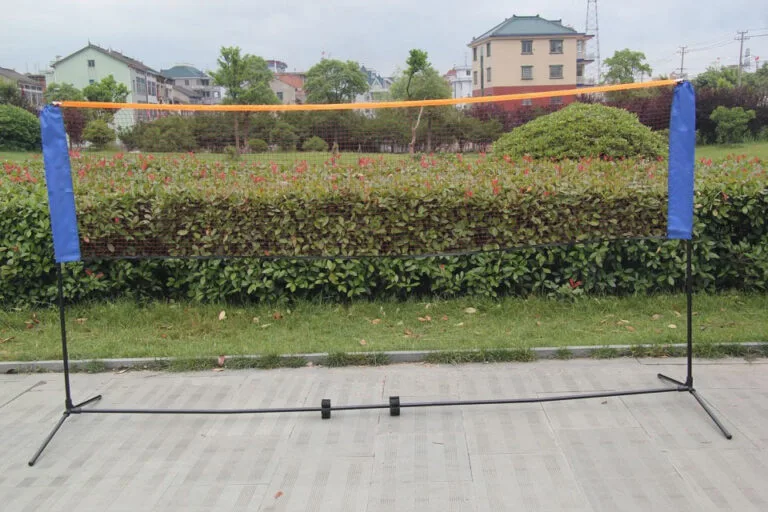
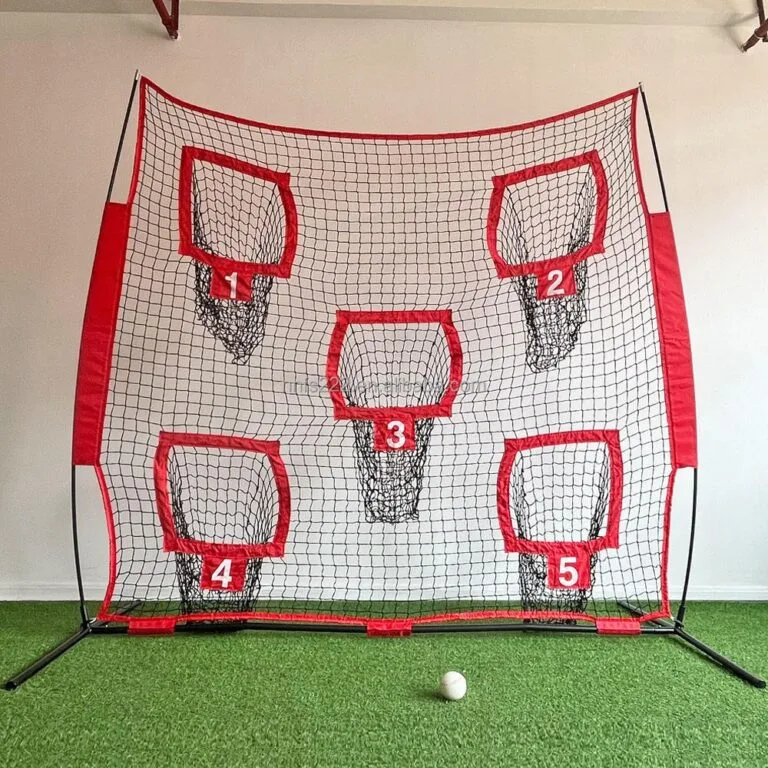
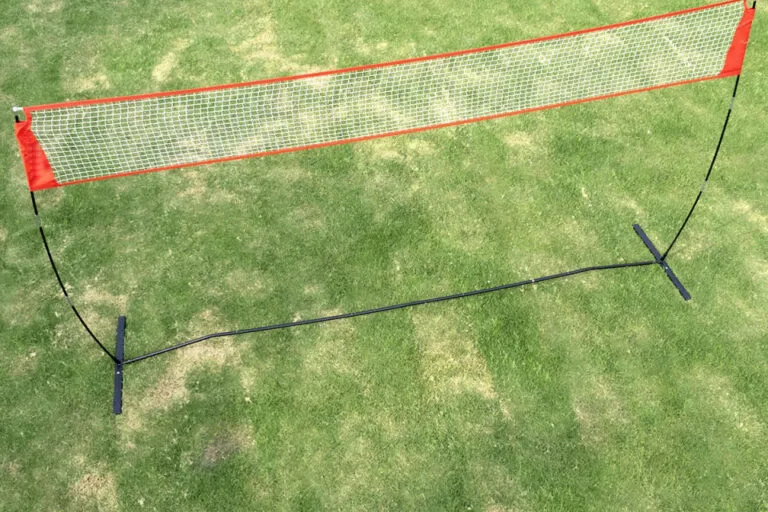
Tell us what you want to develop. FSPORTS supports OEM/ODM, private label, and custom sports netting projects based on your existing product, drawing, sample, photo, or application requirement.
Share the product type, dimensions, target quantity, destination, and any known mesh, material, frame, hardware, logo, or packaging requirements. If your specification is not complete yet, send what you have and we can review the remaining details before quotation.
I’ve been on enough court builds to know the routine: somebody points at a freshly painted 78-by-36 rectangle, says “there you go, regulation,” and hopes nobody notices the pinched backspace, the stingy sidestop, the low lid overhead, or the fact that the whole thing is going to play like a squeezed practice pen instead of a real tennis court. It happens.
Here’s the ugly truth.
A standard tennis court is 78 feet long, 27 feet wide for singles, and 36 feet wide for doubles, measured to the outside of the lines—but that number is only the line box, not the full play envelope, and confusing those two things is how owners end up paying good money for a court that technically exists yet still feels wrong the first time someone runs down a wide forehand or throws up a defensive lob. The ITF court-size guide and USTA Friend at Court 2024 make that pretty hard to argue with.
But people still try.
I frankly believe “regulation” is one of the loosest words in this business. Too loose. It gets used to cover sins—tight footprints, bad fence setbacks, awkward ceiling clearances, sketchy court banks. Then the owner gets blamed because “well, the court dimensions were right.” Sure. On paper.
The Government of Western Australia guide says the quiet part out loud. It gives a club/recreation total area of 34.77 m x 17.07 m, which works out to about 114 x 56 feet, with 5.48 m behind the court and 3.05 m to the side fence; for pro-tour use, it jumps to 36.6 m x 18.3 m, or roughly 120 x 60 feet. That’s not decorative space. That’s functional space. The Government of Western Australia tennis dimensions guide doesn’t mince words.
And demand’s not helping.
When more facilities want more courts inside the same footprint, somebody almost always starts shaving the runback, trimming the sidestop, or playing games with court-to-court gaps, and that’s exactly when a “value-engineered” layout turns into a compromised install that players feel within ten minutes. Bad squeeze.
The USTA 2024 National Tennis Participation Report put U.S. participation at 23.8 million players in 2023, including 4.8 million beginners and 527 million total play occasions, while Reuters reported that the 2024 U.S. Open topped one million fans for the first time and attendance rose 8% from the prior record. More play. More traffic. More corners getting cut.
So no, “court size” is not one number. Never was.
From my experience, you have to break tennis court dimensions into separate buckets or the whole conversation gets muddy fast, because line geometry, runoff, inter-court spacing, and overhead clearance are different animals, and people in procurement love pretending they’re all just one interchangeable spec. They’re not.
The Four Dimensions That Actually Matter
Playing Lines
First bucket. Pure geometry.
The court itself is 23.77 m long, 8.23 m wide for singles, and 10.97 m wide for doubles. Net height is 1.07 m at the posts and 0.914 m at the center. That part is dead simple. No guesswork. No “close enough.” If somebody wanders off those dimensions, they’re not tweaking—they’re freelancing. The ITF court-size guide is very plain about that.
And honestly, this is where amateurs get fooled.
Because the painted rectangle looks official. It photographs well. It satisfies the eye. But tennis isn’t just a paint job—it’s movement, recovery, braking distance, sightline, ball flight, and usable chase-down room. Anybody who’s played real points knows that. Anybody who’s built real courts should know it too.
Runoff Space
Second bucket: runoff. This is where the court either breathes—or doesn’t.
The USTA and ITF guidance points toward 18 feet behind the baselines and 10 feet on each side for recreational or club play, then 21 feet and 12 feet for international competition. That’s the part some sales guys try to blur, because runoff doesn’t feel glamorous, but it’s the difference between a court that plays clean and one that feels like you’re always one stride from the fence. The USTA Friend at Court 2024 backs that up.
Players don’t stop on a dime.
They load, decelerate, slide, recover, cross-step, overrun, peel off, and sometimes get dragged way outside the doubles alley during live points. That’s not theory—it’s just tennis. So when somebody skimps on the backspace, the issue isn’t “comfort.” It’s overshoot risk. It’s fence contact. It’s bad movement patterns because the court teaches players to pull up early.
That’s a rotten setup.
Inter-Court Spacing
Third bucket: inter-court spacing. This one gets butchered all the time.
And I mean all the time.
Here’s where the jargon matters. Side clearance for one court is not automatically the same as the gap between two adjacent unfenced courts in a court bank. Those are two different planning conversations, but I still see them mashed together in layouts, bid sheets, and supplier chats like they’re interchangeable. They aren’t. Not even close.
The ITF diagram builds in 12 feet of sidestop per side for international play, while the WA guide separately lists 3.66 m for club/recreation and 5.48 m for pro-tour as the minimum distance between two unfenced courts. That distinction sounds nerdy until a bad layout gets built and suddenly neighboring courts are bleeding into each other like a cheap multi-use park install. Then everybody cares.
Too late.
From a builder’s standpoint, this is where you separate a real court bank from a jam-it-in special. If the spacing’s wrong, the whole bank feels choked, especially during doubles when lateral movement and visual interference stack up at the same time.
Overhead Clearance
Fourth bucket: overhead clearance. Indoor jobs live or die here.
I’ve walked into indoor spaces where the surfacing looked premium, the lights were expensive, the branding was slick, and yet the first proper lob exposed the whole thing because the roofline sat too low, the truss geometry pinched the usable airspace, and the court instantly felt like a compromise pretending to be a facility. Nice shell. Wrong volume.
The USTA rule guidance keeps 29.6 feet as the recommended minimum indoor height measured at the net, the ITF court-size sheet states 10 m for indoor or covered show courts, and the ATP 2024 Rulebook goes higher still—40 feet for ATP events and 30 feet for Challenger events. My take? Thirty feet is survivable. Forty feels like tennis.
And yes, low lids change behavior.
Players stop trusting the lob. They flatten out more balls. They play around the building instead of through the point. That’s not a tiny issue—it rewires how the court gets used.
Line Treatment
There’s another thing people wave off as cosmetic.
Line treatment.
But it isn’t. Not really. Friend at Court gets oddly specific here—in a useful way. On blended-line courts, the line should stay in the same colour family as the surface, lighter than the background, within 5 CPR of the playing area, and 1.0 to 1.5 cm narrower than standard lines. That sounds fussy until you’ve seen a court with muddy visual contrast, conflicting overlays, and too much striping noise. Then it makes perfect sense.
Players call it “weird.” That’s the technical term they use.
What they mean is the court reads badly. Their eyes hesitate. Their depth judgment gets noisy. The court feels busy. In court-design slang, that’s a line package that’s doing too much.
Recommended Layout Table
Scenario
Playing lines
Back run-off
Side clearance
Total footprint
Overhead guidance
Singles-only playing area
78 x 27 ft
Not enough by itself
Not enough by itself
Not a complete facility spec
Indoor guidance still applies
Standard doubles court
78 x 36 ft
Not enough by itself
Not enough by itself
Not a complete facility spec
Indoor guidance still applies
Club / recreational court
78 x 36 ft
18 ft each end
10 ft each side
~114 x 56 ft
29.6 ft recommended at net
International / pro-tour layout
78 x 36 ft
21 ft each end
12 ft each side
~120 x 60 ft
29.6 ft+ guide; ITF covered show court 10 m
ATP indoor event court
78 x 36 ft
Built around event spec
Built around event spec
Usually pro envelope or better
40 ft minimum top height
ATP Challenger indoor court
78 x 36 ft
Built around event spec
Built around event spec
Usually pro envelope
30 ft minimum top height
These figures are drawn from the ITF, USTA, WA government, and ATP facility guidance; the arithmetic is simple, sure, but the planning fallout isn’t, because one sloppy assumption in the envelope stage can cascade into fencing, lighting, drainage, roofing, and player-safety headaches that cost a lot more to fix later. That’s the trap.
Hardware and Net System Choices
Now, gear.
I’m going to say something a lot of sellers won’t love: don’t let a portable net frame dictate a permanent court layout. That’s backwards. The court envelope comes first. Always. Then the hardware package. Not the other way around.
People see a portable system and think, “great, maybe we can cheat the footprint too.” Don’t. A transportable net is a product choice. It is not a court-design loophole.
Supplier Screening and Manufacturing Reality
And then there’s sourcing.
Here’s the ugly truth again: this industry is full of buzzwords. “OEM.” “Tournament quality.” “Premium construction.” “Regulation-grade.” Fine. Show me the weld consistency. Show me the frame spec. Show me the tensioning hardware. Show me the actual production line instead of a tidy sales PDF with stock images and a lot of adjectives.
That’s why I’d look at custom sports net manufacturing services and, frankly, I’d want to see the factory tour. Because once you’ve been around enough installs, you stop buying slogans and start looking for process control, material discipline, and whether the supplier understands the difference between backyard rec kit and facility-grade equipment.
Talk is cheap.
Bad hardware is expensive.
FAQs
What are standard tennis court dimensions?
Standard tennis court dimensions are 78 feet long, 27 feet wide for singles, and 36 feet wide for doubles, measured to the outside of the lines, while a usable court also requires runoff space and side clearance so players can serve, recover, and chase balls safely at normal playing speed. That’s the clean definition. The practical version is harsher: the painted box alone is not enough.
How much space do you need around a tennis court?
A full tennis court layout usually needs about 114 x 56 feet for club or recreational play and about 120 x 60 feet for international competition, because the space beyond the lines is part of the playable court environment rather than wasted perimeter area. That’s the direct answer. The less polite answer? Anyone quoting only 78 x 36 is selling shorthand, not a finished layout.
What ceiling height is required for indoor tennis?
Indoor tennis ceiling height should be at least about 29.6 feet measured at the net under general rule guidance, while higher-level covered competition courts may require more, including 40 feet for ATP events and 30 feet for Challenger events under ATP rules. That’s the short version. My version is simpler: low ceilings make a court feel second-rate fast.
What is the minimum distance between two tennis courts?
The minimum distance between two tennis courts depends on whether a standard refers to sidestop clearance around one court or the actual gap between two unfenced courts, with government guidance listing 3.66 m for club/recreation and 5.48 m for pro-tour spacing between unfenced courts. That distinction is the whole story. Miss it, and the layout math goes sideways.
Can you fit a full-size tennis court in a backyard?
A true full-size tennis court needs much more than the 78 x 36-foot doubles playing area, because once realistic baseline runoff and sideline clearance are included, the total recreational footprint rises to about 114 x 56 feet and competition-style layouts require even more room. So yes, sometimes. But usually not as comfortably as property owners think.
Final Recommendation
If you’re planning a court, don’t start with color swatches, fence fabric, or a glossy render. Start with the envelope. Then the clearance package. Then the net system. Then the supplier. When you’re ready, browse the tennis net range, review the service options, or contact the team before somebody sells you a “regulation” court that only works on paper.