Are Your Golf Cages Safe Enough For Heavy Daily Use
If your golf cage sees real traffic—morning warm-ups, back-to-back lessons, weekend “let’s crank driver” sessions—safety stops being a nice-to-have. It becomes part of your setup, like your mat and your balls.
The tricky part is this: most cages look “fine” right up until the day they don’t. A tired seam, a loose tie-off, a frame that walked two inches over time… then you get a ball-escape, a scary rebound, or a ripped panel that shuts the bay down.
Table of Contents
Golf cage safety for heavy daily use
“Heavy daily use” usually means high duty cycle: lots of impacts, lots of mishits, and more chances for the net, seams, and hardware to hit their wear points. Home garages, golf studios, school teams, and pro shops all run into the same problems—just at different speeds.
If you’re sourcing cages for resale, bulk installs, or OEM bundles, you want a setup that stays stable, stays contained, and stays easy to maintain. That’s where a manufacturer like FSPORTS (custom sizes, bulk wholesale, OEM/ODM) fits naturally: you’re not guessing; you’re speccing what the workload actually demands.
Golf ball injury risk and containment
Argument title: Golf balls can seriously injure people, especially head/neck injuries, so containment isn’t optional.
A golf ball doesn’t need a perfect strike to cause trouble. In heavy rotation, you’ll see toe hits, hosel rockets, thin shots, sky balls, and the classic “I swear I’ve never done that before” shank.
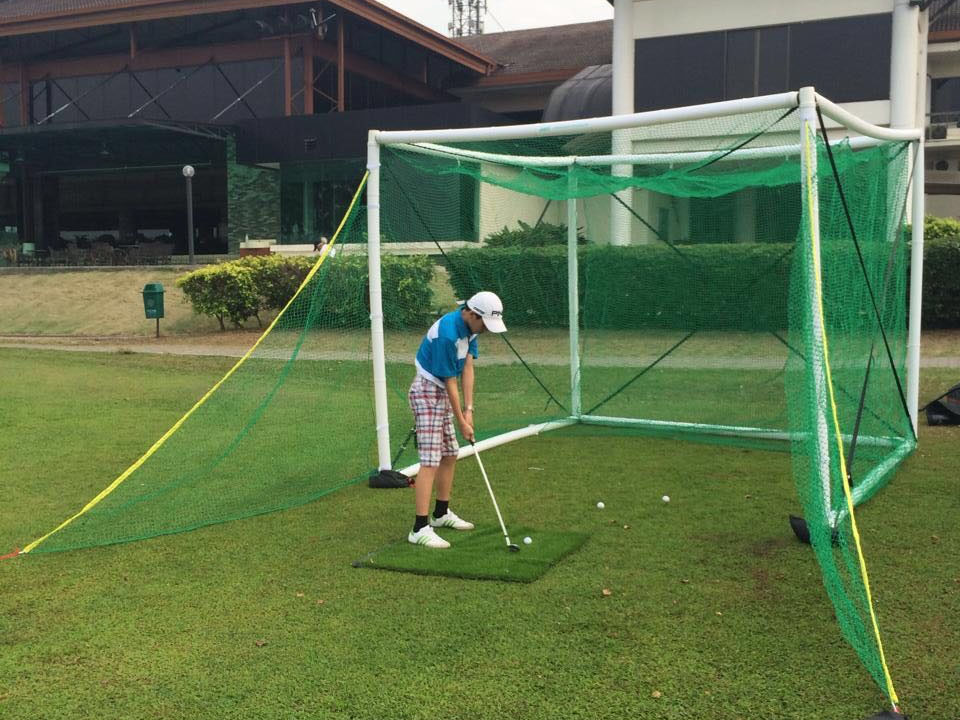
So containment isn’t just “did the front net stop it.” For daily use, you want full capture thinking:
- Side coverage to kill the shank lane
- Roof coverage to stop high launch and ricochet
- Back clearance so the net can “give” instead of snapping a rebound back at you
If you’re building out a bay, start by looking at a true cage design like the Professional Golf Hitting Cage Net for Indoor/Outdoor Use and spec side containment where mishits actually travel.
Golf cage protects people and property
Argument title: A golf cage reduces risk to people and property.
This is where reality shows up fast. A busy setup doesn’t just protect the hitter. It protects:
- The coach who steps in to adjust a grip
- The next golfer waiting behind the line
- TVs, lights, drywall, garage doors, windows, and cars
- In commercial spaces: your brand, your schedule, and your liability posture
For higher-traffic bays, many facilities add extra “insurance layers,” like side safety panels and barrier netting in the danger zones (doorways, walk paths, retail racks).
If you need a cage built around that idea, use something like a Professional Golf Practice Cage with Side Safety Panels and pair it with a perimeter barrier option such as the Durable Nylon Golf Barrier Net with Hooks and Bungee Cords for quick, repeatable installs.
Golf net inspection and maintenance
Argument title: Inspect before use, repair damage, and don’t use faulty parts.
Heavy daily use turns “minor wear” into “sudden failure” when you ignore it long enough. The fix isn’t complicated. You just need a simple preventive maintenance rhythm.
Here’s a practical checklist you can hand to a coach, a facility manager, or a warehouse team doing QC on returns.
Daily-use inspection checklist
| Area | What fails first (typical wear point) | Quick check (daily) | Deeper check (weekly) |
|---|---|---|---|
| Net face / impact zone | Mesh fatigue, thinning, small tears | Look for thin spots and holes | Check for stretch, distorted mesh, and weak knots |
| Seams / edge binding | Seam creep, thread break, edge fray | Scan corners and bottom edge | Tug test along seams (firm, not aggressive) |
| Tie-offs / bungees | Slack, snapped cords, hook deformation | Confirm tension and symmetry | Replace any cord that’s stiff, cracked, or stretched out |
| Frame / joints | Wobble, loosened fasteners | Shake test (shouldn’t “rattle”) | Check bolt tightness and joint alignment |
| Floor contact / anchors | Frame “walk,” twist, slide | Confirm position marks didn’t move | Re-seat anchors, confirm stability under load |
If you sell cages B2B, this table is also a returns killer. Customers often blame the net when the real issue is bad setup or skipped maintenance. You reduce that pain by bundling clear install guidance and hardware kits with predictable tie points.
For product sourcing across different cage types and accessories, your Products collection keeps it clean for buyers building a line card.

Golf cage anchoring and clearance
Argument title: Secure anchoring + enough clearance around you prevents “weird” accidents.
Most “weird” accidents aren’t freak events. They’re geometry problems.
Here’s what shows up in the field:
- The cage sits too close to the hitter, so the net behaves like a trampoline
- The frame isn’t anchored, so it creeps forward and changes the impact angle
- The ceiling is too low, so a wedge shot hits structure and drops straight down
- A side panel sags, creating a gap right where shanks fly
If you run a garage bay, mark the floor with tape for “frame position,” then treat movement as a red flag. In a commercial studio, do the same with a painted line or a floor label so staff can spot drift instantly.
If you’re setting up for outdoor swing work where wind and ground conditions change, a bigger footprint helps. A product like the Large Golf Practice Cage Net for Outdoor Swing Training is designed for that kind of use.
Golf netting material selection for indoor and outdoor use
Argument title: Material choice should match the job (indoor cage vs outdoor range).
This is where buyers get burned, especially on bulk orders: they pick a net that looks right but doesn’t match the workload.
For heavy use, think in three simple filters:
- Impact resistance: can the net take repeated high-speed contact without thinning fast?
- UV resistance (outdoor): will the material hold up under sun exposure over time?
- Moisture and abrasion: will it resist rot, stiffness, and edge wear in your environment?
Your own SEO positioning already nails the baseline: UV-resistant, high-impact nets in standard and made-to-order sizes. That matters to distributors and installers because it keeps performance consistent across batches.
For a higher-support build, look at a reinforced option like the Heavy Duty Golf Hitting Cage Net with Steel Frame Support when you expect constant throughput.
Impact screen tension and rebound control
Argument title: Screen/fabric tension and frame quality affect rebound safety.
If you’ve ever watched a ball snap back off a too-tight surface, you get it. Rebound behavior changes with:
- Screen or net tension
- Distance between impact surface and hard structure
- Frame rigidity and “give”
- Where the ball hits (center vs edge vs corner)
This shows up most in simulator bays and tight indoor rooms. You want enough “catch” to absorb energy, but not so much slack that the ball drops straight down into feet and ankles.
If you’re building a simulator enclosure or supplying them to studios, a dedicated setup like the Professional Golf Simulator Enclosure Impact Screen Setup gives you a cleaner baseline to spec around.
Arguments and sources
Here’s a quick mapping you can reuse in your content, sales deck, or product training. It keeps the message tight and the sourcing internal.
| Argument (title) | What it supports (in plain terms) | Internal source you can reference |
|---|---|---|
| Golf balls can seriously injure people, especially head/neck injuries, so containment isn’t optional. | Full coverage: side + roof + safe clearance | Professional Golf Hitting Cage Net for Indoor/Outdoor Use |
| A golf cage reduces risk to people and property. | Protects bystanders + surroundings | Professional Golf Practice Cage with Side Safety Panels |
| Inspect before use, repair damage, and don’t use faulty parts. | Prevents downtime and surprise failures | Products |
| Secure anchoring + enough clearance around you prevents “weird” accidents. | Stops drift, gaps, rebound issues | Large Golf Practice Cage Net for Outdoor Swing Training |
| Material choice should match the job (indoor cage vs outdoor range). | Matches net spec to workload and environment | Heavy Duty Golf Hitting Cage Net with Steel Frame Support |
| Screen/fabric tension and frame quality affect rebound safety. | Safer ball behavior in tight spaces | Professional Golf Simulator Enclosure Impact Screen Setup |
| A golf cage reduces risk to people and property. | Adds perimeter protection where needed | Durable Nylon Golf Barrier Net with Hooks and Bungee Cords |
Why this matters for B2B buyers, resellers, and OEM programs
If you’re a retailer, distributor, or OEM customer, safety isn’t just a product feature. It’s a support load problem. Better containment and clearer maintenance steps mean:
- fewer “it ripped in a week” complaints that come from wrong setup
- fewer replacements caused by preventable edge wear and hardware issues
- smoother reorders because specs stay consistent across batches
- cleaner merchandising: you can sell “daily-use ready” without overselling
That’s also why buyers lean toward a factory partner like FSPORTS for custom builds, bulk wholesale, and OEM/ODM. You can match the cage to the duty cycle, not just the photo on the listing.
If you want, I can rewrite this into two versions: one aimed at home users (garage/backyard) and one aimed at commercial facilities and distributors (spec language, SKU planning, and purchasing keywords).