Are Your Volleyball Systems Safe For School Use
Table of Contents
School volleyball looks simple until you’re the one responsible for the gym. One day it’s PE class with beginners. Next day it’s varsity practice with heavy swings. Then you host a weekend tournament and rotate courts fast. In that mix, a “mostly fine” volleyball setup can turn into a liability.
This guide breaks down the safety points that actually matter for school use. It also shows how to build a repeatable checklist your staff can run without guesswork. If you source nets and hardware in bulk, or you’re a dealer/OEM customer, I’ll also point out where FSPORTS fits—custom builds, wholesale orders, and OEM/ODM supply from a factory that focuses on UV-resistant, high-impact netting.
Pole stability and base anchoring
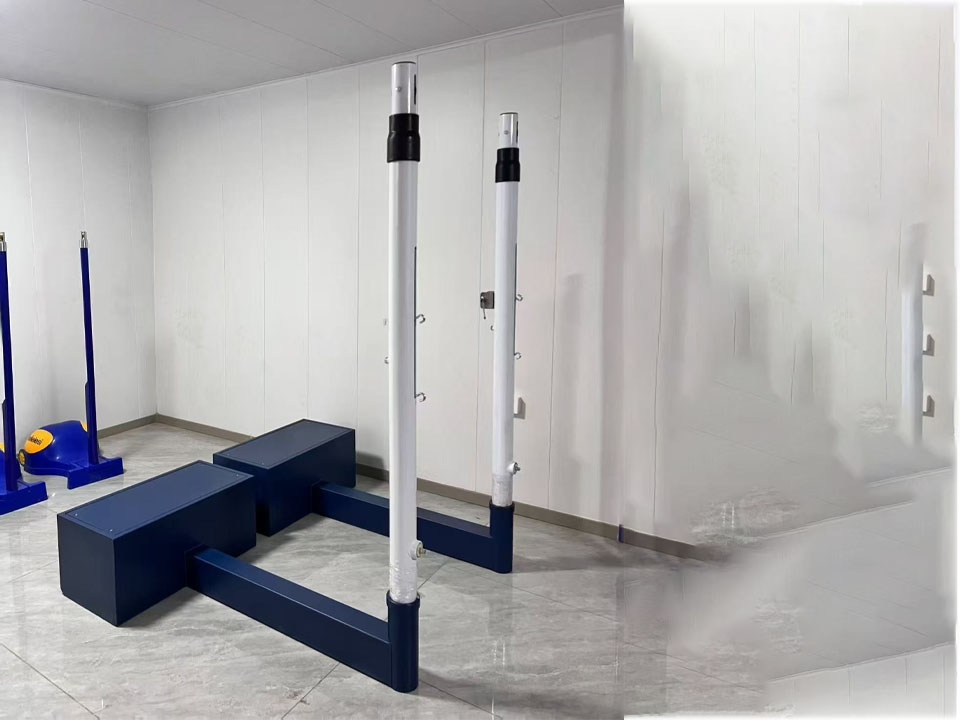
If the poles aren’t rock-solid, nothing else matters. Schools see constant changeovers, so stability has to survive daily handling.
Floor sleeves and sockets
In-ground floor sleeves are common in gyms. They’re also where small problems hide.
- What goes wrong: a sleeve loosens over time, collects debris, or develops corrosion. The pole “feels” seated, but it can shift during a hard collision.
- What to do: keep sleeves clean, confirm the pole fully seats, and stop using any position that wobbles. If you see movement, treat it as a repair ticket, not a “we’ll watch it” situation.
Weighted bases and support feet
Portable systems bring flexibility, but only if they’re designed like real sports equipment, not like a backyard toy.
- Look for wide stance, non-slip feet, and weighting that doesn’t skate on gym floors.
- Train staff to place bases the same way every time. Random angles create random instability.
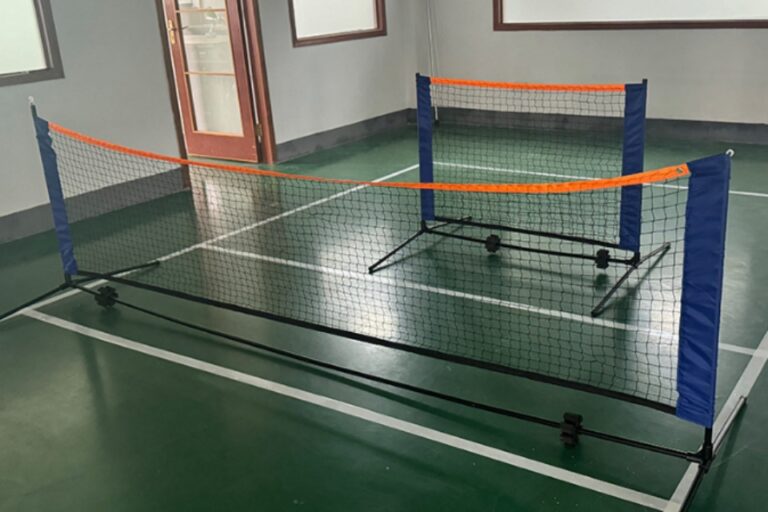
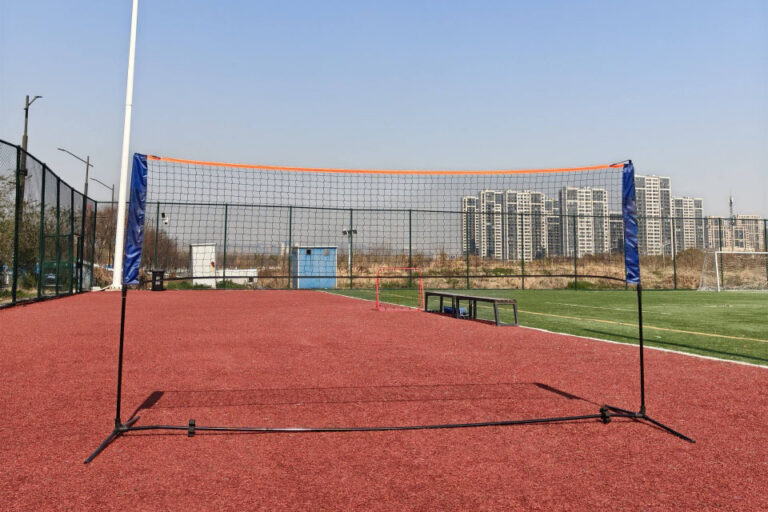
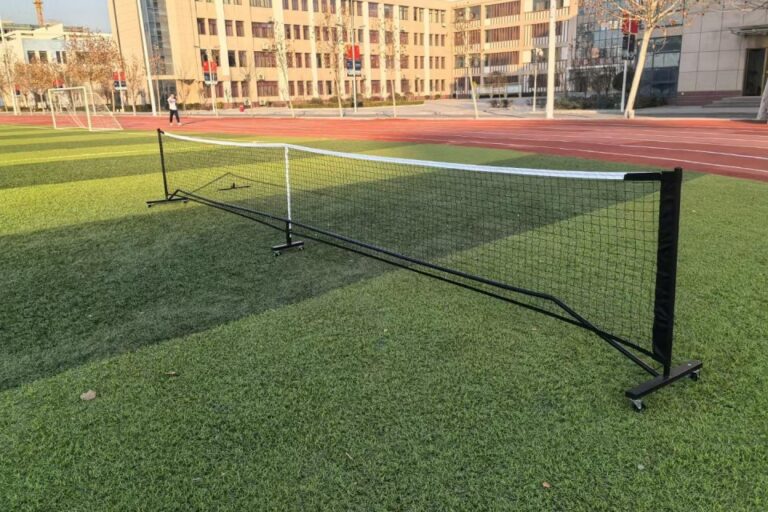
If you rotate between indoor and outdoor setups, portable frames can help you deploy faster. For example, a school can stage a portable kit for after-school clubs while the main court stays available.
Pole padding
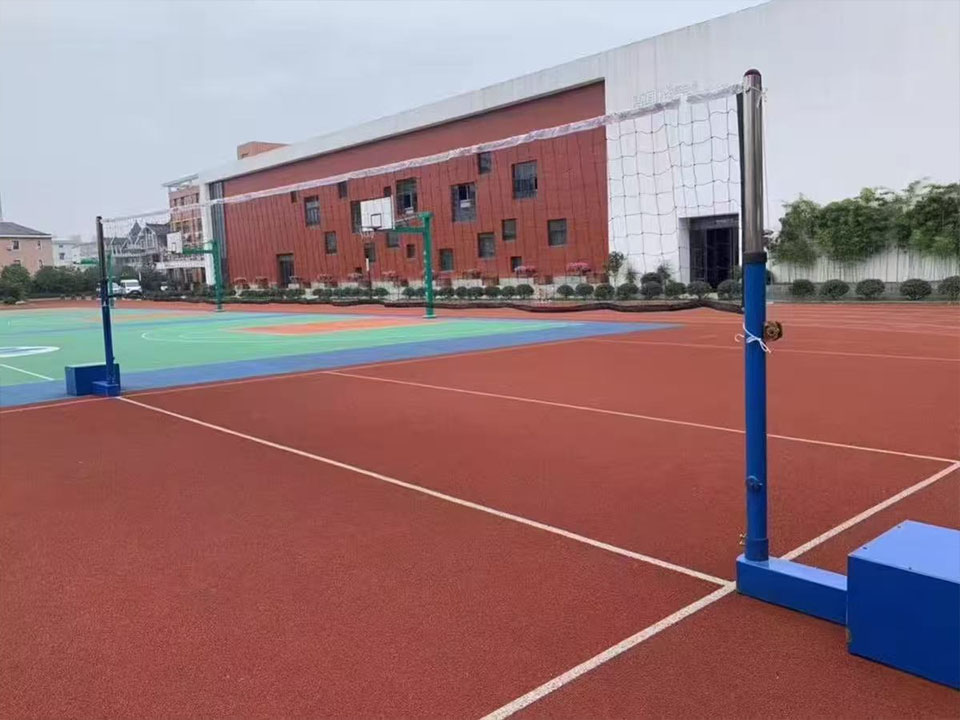
Padding sounds obvious, but schools miss it all the time, especially during rushed setups.
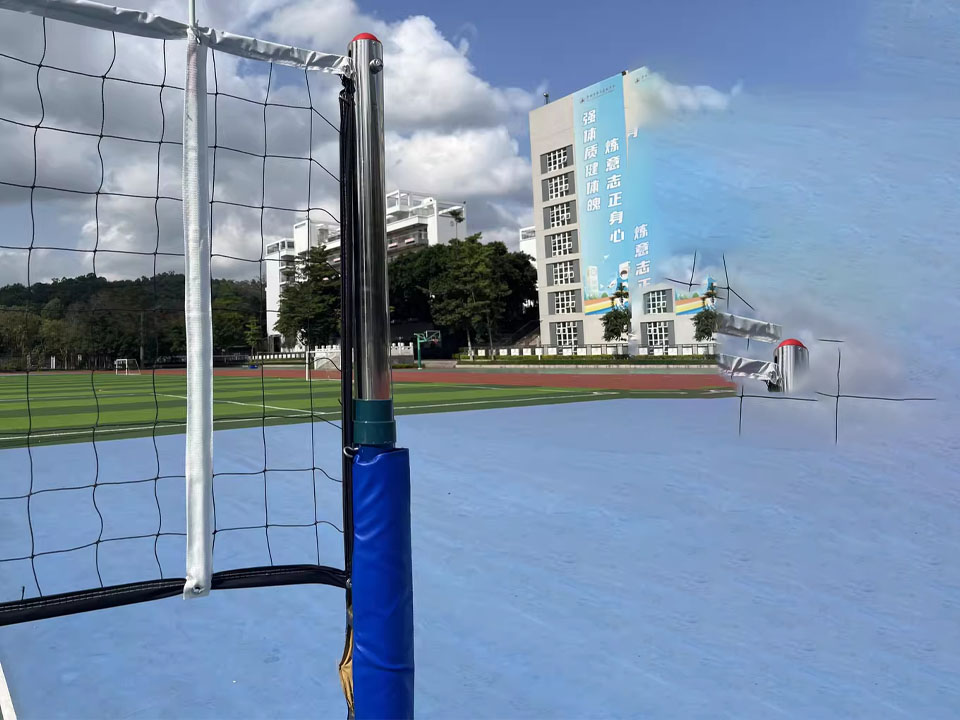
- Why it matters: athletes run through the antenna zone. They also chase shanked balls into the pole line. A bare pole turns a routine save into a shoulder, rib, or knee injury.
- What “good” looks like: thick padding that stays in place and covers the contact area athletes actually hit.
Referee stand padding
Ref stands add another hard surface right where players transition from attack to defense. Pad it like you mean it. Don’t rely on a thin wrap that slides halfway through warmups.
Net tension and height adjustment
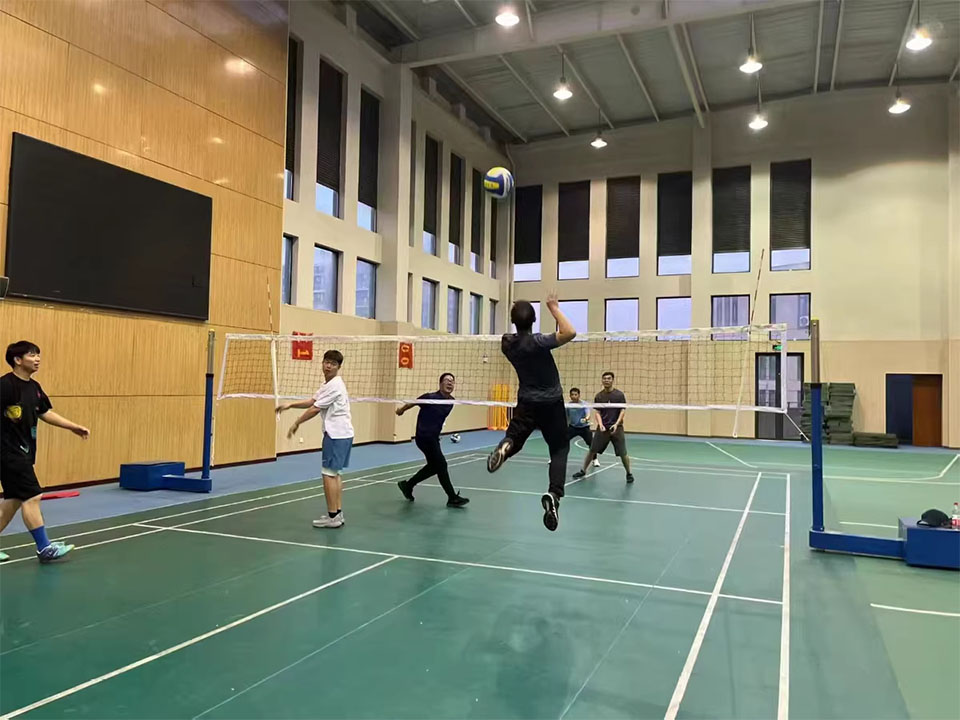
Bad tension isn’t just an “annoying net.” It changes how the system behaves under load.
- Too loose: players can tangle, the top cable can whip, and the net can sag into traffic.
- Too tight: you overload cables, winches, straps, and pole alignment.
Treat tension like a setup spec, not a vibe.
Winch, straps, and cable wear
Most failures don’t happen because the net “rips.” They happen because a strap frays, a cable kinks, a hook bends, or a winch slips.
- Inspect wear points weekly during season.
- Replace small parts early. It’s cheaper than a full downtime scramble before a match.
No guy wires and clear court hazards
Competitive rules commonly discourage guy wires in standard indoor play for a reason. Wires and loose lines create trip hazards, and they add clutter near the sideline where kids sprint without looking down.
Overhead and sideline clearance
School gyms add extra hazards: basketball backboards, divider curtains, wall padding gaps, bleacher corners, and rolling carts. Your volleyball system can be perfect, and you can still have a dangerous court.
Do a simple clearance scan:
- Floor: no cords, no loose tape tails, no exposed anchors.
- Sideline: keep benches, ball carts, and bags outside a buffer zone.
- Overhead: confirm safe distance from hanging equipment.
Pre-match inspection checklist
This is where schools can win big. Don’t rely on memory. Build a 5-minute routine that anyone can follow.
5-minute pre-use walk-through
- Shake each pole lightly. If it moves, you’re not ready.
- Check sleeves or bases for wobble and sliding.
- Confirm padding is installed and secured.
- Verify net height and tension.
- Check the top cable/strap path for frays, kinks, or loose hardware.
- Walk the sidelines and end lines for trip hazards.
Maintenance log
Schools often rotate staff. A maintenance log stops problems from disappearing between shifts.
Track:
- Date, court location, issue, action taken
- Parts replaced (strap, cable, padding, hooks)
- “Do not use” tags and when they were cleared
Common school scenarios that trigger safety issues
Here are the real-life moments where systems fail, not the idealized setup photo.
PE class multi-court changeover
You’ve got 5 minutes between classes. Someone rushes the setup, skips padding, and leaves a loose strap tail. That’s how you get the classic “trip + faceplant” incident. If you standardize the setup steps, even new staff can do it right.
Tournament day hardware fatigue
All-day events stack wear fast. Cables heat up, straps stretch, and bases shift with repeated collisions. Plan a mid-day reset: tension check, hardware scan, and sleeve/base stability test.
Outdoor volleyball and wind load
Outdoor nets catch wind like sails. If you’re running a grass or beach program, use frames and anchoring that match outdoor conditions. Also pick netting that handles UV and repeated impact, so you don’t replace gear every season.
Safety arguments and reference sources
Use this table inside your SOP, bid package, or internal risk review. It turns “we think it’s safe” into a documented standard.
| Safety point (claim) | What can happen in a school gym | What you should verify | Reference source (no external links) |
|---|---|---|---|
| Pole stability is mandatory | Pole shifts or tips during contact | Pole fully seated/locked, no wobble | Equipment safety guidance used by volleyball programs |
| Floor sleeves must stay tight and clean | Trip hazard and pole misalignment | Sleeve condition, debris removal, no looseness | Facility maintenance practice for in-ground sockets |
| Weighted bases must resist sliding | Base skates on wood floor | Wide base, non-slip feet, correct placement | Portable system best practices |
| Pole padding reduces impact injuries | Collision injuries near net line | Padding installed, thick enough, secured | Indoor volleyball equipment safety standards |
| Referee stand needs padding | Players collide near stand | Stand padding coverage and security | Competition setup guidance |
| Net tension affects hardware stress | Cable/winch failure, unstable net | Consistent tension, no over-tightening | Manufacturer maintenance checklists |
| Height adjustment must be consistent | Unsafe play dynamics and collisions | Correct net height for group | Volleyball rules and competition procedures |
| No hazardous obstacles near court | Trips, collisions, sideline injuries | Clear floor, controlled sideline zone | Volleyball court safety requirements |
| Regular inspections prevent sudden failures | Small damage becomes sudden break | Weekly checks + seasonal deep inspection | Athletic equipment maintenance practice |
Where FSPORTS fits school procurement and wholesale supply
If you buy for a district, a dealer network, or an ecommerce catalog, you care about two things: repeatability and downtime. You don’t want a mixed batch where half the nets stretch weird or hardware comes in inconsistent specs.
FSPORTS supports bulk purchasing and OEM/ODM programs, so you can standardize volleyball-related netting across multiple campuses, then reorder without re-testing every time. Start at the homepage for an overview of capabilities: FSPORTS . If you want to browse categories quickly, use the main listing: Products .
For volleyball-specific or volleyball-adjacent setups that schools often use for PE, clubs, or outdoor programs, these internal pages are useful references when you’re mapping use cases:
- Portable multi-court activities: Portable four-way volleyball net system
- Stable indoor setups: Adjustable portable volleyball net with steel base frame
- Extra stability for busy gyms: Adjustable portable volleyball net with weighted base stands
- Practice containment (fewer chase-downs, safer sidelines): Outdoor volleyball practice net with ball catch system
- Repetition training without full-court chaos: Heavy-duty adjustable volleyball rebounder with steel frame
- Multi-sport shared spaces: Adjustable portable badminton volleyball tennis net system
- Fast deployment for PE and clubs: Portable round battle ball volleyball net
Final check: a simple rule for school use
If you wouldn’t feel comfortable letting a beginner sprint full-speed near the pole line, your system isn’t “almost safe.” It’s a no-go until you fix it.
Lock down stability, padding, tension, and hazard control. Then document it with a checklist and a log. Once you do that, your volleyball setup stops being a risk you manage in your head and becomes a process your whole team can run.