How to Choose the Right Sports Netting for Your Facility
Table of Contents
Nets fail fast. I’m not talking about the obvious “someone cut it with a knife” scenarios—I mean slow abrasion at the frame edge, UV embrittlement you don’t notice until month 14, or stitch lines that unzip because the installer tensioned the panel like a guitar string in July heat. Want to learn that lesson by invoice—or by incident?
Most buyers over-focus on material and under-focus on system. Sports Netting is a containment system: fiber + knot/knit + mesh + edging + hardware + geometry + sourcing. If one part is junk, the whole thing becomes an expensive apology.
Start with physics, not product pages
Here’s the blunt checklist I use when I’m sizing Sports Netting for a facility:
- Projectile: ball type, diameter, mass, typical velocity (golf and baseball are not in the same universe).
- Distance to net: 6 ft in a golf simulator enclosure is a different load profile than 40 ft behind a lacrosse goal.
- Occupancy and consequence: is this just “ball stop netting” to keep equipment safe, or “protective barrier netting” to keep people safe?
- Indoor vs outdoor sports netting: UV, moisture, wind sail-load, temperature cycling, and corrosion move from “nice-to-have” to “you will regret this.”
- Regulatory friction: indoor installs can trigger fire-code requirements, especially in public assembly spaces (NFPA 701 gets brought up constantly).
If you can’t answer those, you’re shopping blind. And blind shopping is why facilities end up patching nets with zip ties.
Nylon vs polyethylene: the answer nobody likes
Let’s talk netting material (nylon vs polyethylene) with less marketing and more reality.
Nylon (often nylon 6 or nylon 6,6)
- Pros: higher abrasion resistance, good energy absorption, “softer catch,” typically longer wear in high-friction zones (frame edges, repeated impacts).
- Cons: can absorb water, can stretch/creep under sustained load (sag is real), needs decent UV stabilization if outdoors.
Polyethylene (usually HDPE)
- Pros: low water absorption, solid UV performance when properly stabilized, common for outdoor barrier nets, generally lower cost.
- Cons: abrasion at contact points can chew it up, and cheap PE can turn brittle faster than buyers expect.
Hard truth: the “better” choice is often decided by where the net rubs, not by where the ball hits. If your design forces the panel to saw against a steel tube, nylon usually survives longer. If it’s a big outdoor perimeter barrier with fewer abrasion points and lots of UV exposure, stabilized PE is often the practical pick.
If you want examples of how vendors package these tradeoffs, look at a durable nylon golf barrier net setup with included hooks/bungees like this one: Durable Nylon Golf Barrier Net with Hooks and Bungee Cords. It’s the “system” mindset: net + attachment method, not net-only.
The spec sheet tells the truth
Ignore fluffy adjectives. Ask for these numbers:
- Mesh size (typical: 3/4″, 1″, 1-3/4″)
- Twine diameter (common facility-grade range: ~2.5 mm to 4.0 mm; thicker isn’t always better if it turns into a wind sail outdoors)
- Construction: knotted vs knotless (knotless often distributes stress more evenly; knotted can be tougher in some abrasion contexts)
- Edge finishing: rope border, sewn webbing, double stitching, reinforced corners
- Hardware: bungees vs fixed ties; carabiners; cable clamps; track systems
- UV stabilization: ask what it is (generic “UV treated” is marketing fog)
- Test references: tensile/break strength testing methodology, lot traceability
And yes—installation matters enough to ruin good netting. I’ve seen premium net panels destroyed by a $0.60 sharp-edged eye bolt.
Indoor facilities: fire compliance is the quiet budget killer
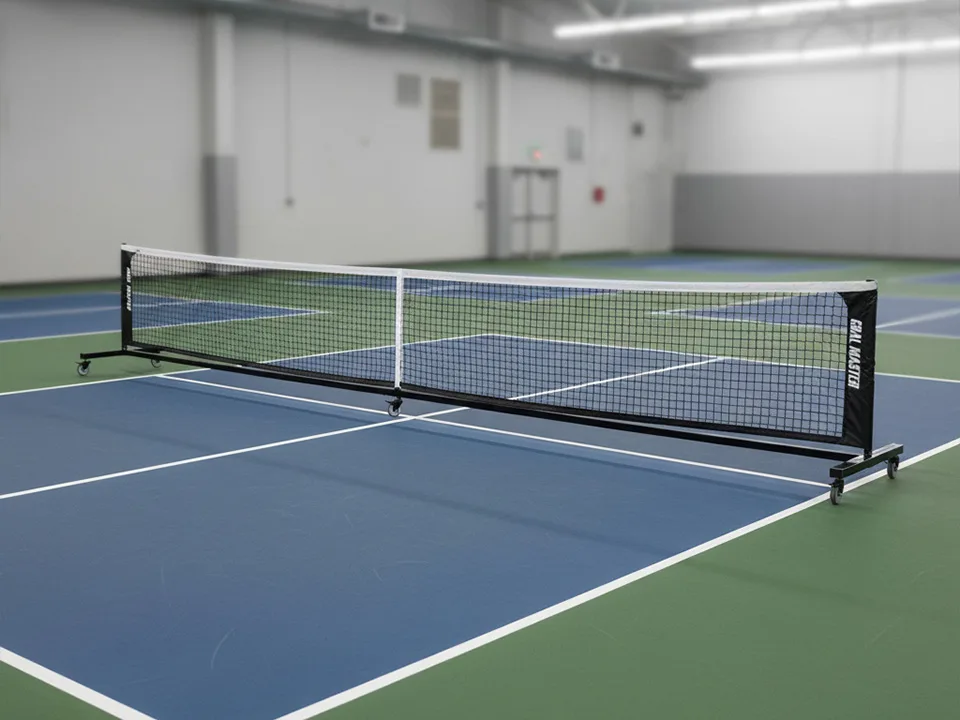
If you run an indoor facility open to the public—sports dome, school gym, training warehouse—someone will eventually ask, “Is that netting flame tested?”
NFPA 701 is one of the common standards referenced for flame propagation testing of textiles and films. (nfpa.org) Even when it’s not legally required in your specific jurisdiction, it can be demanded by an insurer, inspector, or venue operator because nobody wants to explain a fast-burning fabric in a post-incident report.
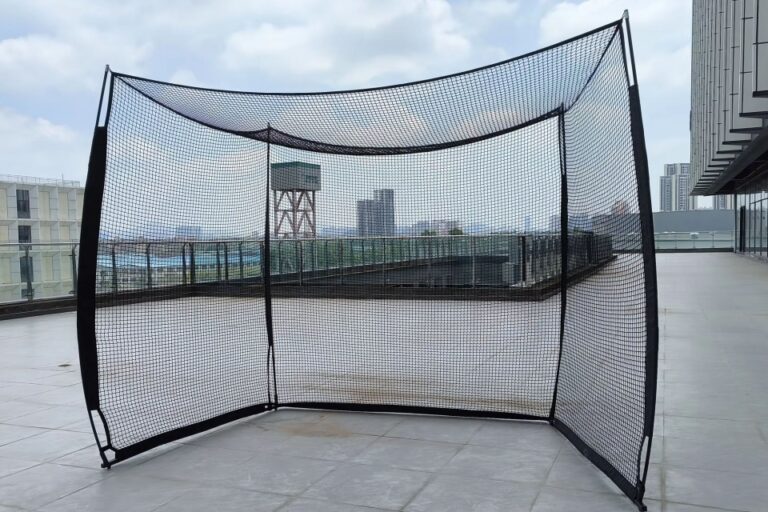
If you’re building a golf simulator bay or cage, this is where “cheap online netting” starts getting expensive. For a ready-made containment approach, compare a full cage product like Professional Golf Hitting Cage Net for Indoor/Outdoor Use versus trying to stitch together mismatched panels.
Outdoor netting: UV + wind load + hardware corrosion
Outdoor sports netting dies in three ways:
- UV degradation: fibers lose toughness; failures look like “it just ripped.”
- Wind load: large mesh panels behave like a sail; anchors and frames start doing weird things.
- Corrosion: hardware becomes the failure point, not the net.
For outdoor perimeter barriers (think multi-court complexes), I push buyers to treat posts, cables, and tensioning as first-class citizens. If your frame is underbuilt, the net becomes a liability banner.
The uncomfortable sourcing conversation
Sourcing location changes four things: price, lead time, consistency, and tariff exposure. Anyone telling you otherwise is either naive or selling you something.
The U.S. has kept Section 301 tariffs in place while continuing to modify actions through the statutory review process (May 14, 2024) and final actions (September 13, 2024).Translation: if you’re importing components, trade policy volatility is not theoretical. You need to model it.
Here’s a practical comparison I use when advising facility buyers (assume you’re buying netting + hardware at scale, not one backyard net):
| Manufacturing Region (Typical) | Unit Cost (Relative) | Lead Time (Typical) | Consistency (Typical) | Tariff/Duty Volatility (US-bound) | Best Fit |
|---|---|---|---|---|---|
| USA / Domestic | High | Low–Medium | High | Low | Public facilities, tight deadlines, spec-heavy jobs |
| Mexico | Medium | Low–Medium | Medium–High | Low–Medium | Faster replenishment, regional projects |
| Vietnam / SEA | Medium | Medium | Medium | Medium | Cost-sensitive with moderate QC controls |
| China | Low–Medium | Medium–High | Medium | High (policy-sensitive) | Buyers with strong QC + tariff planning |
Notice what’s missing: “quality.” Quality is not a country; it’s a process. But your odds change based on supplier maturity and how much leverage you have to enforce specs.
If you want to keep this simple, start at a single catalog hub and work outward: Sports Netting Products. That’s where you can map your facility’s needs to categories (barrier nets, cages, rebounders, regulation systems) before you argue about fiber chemistry.
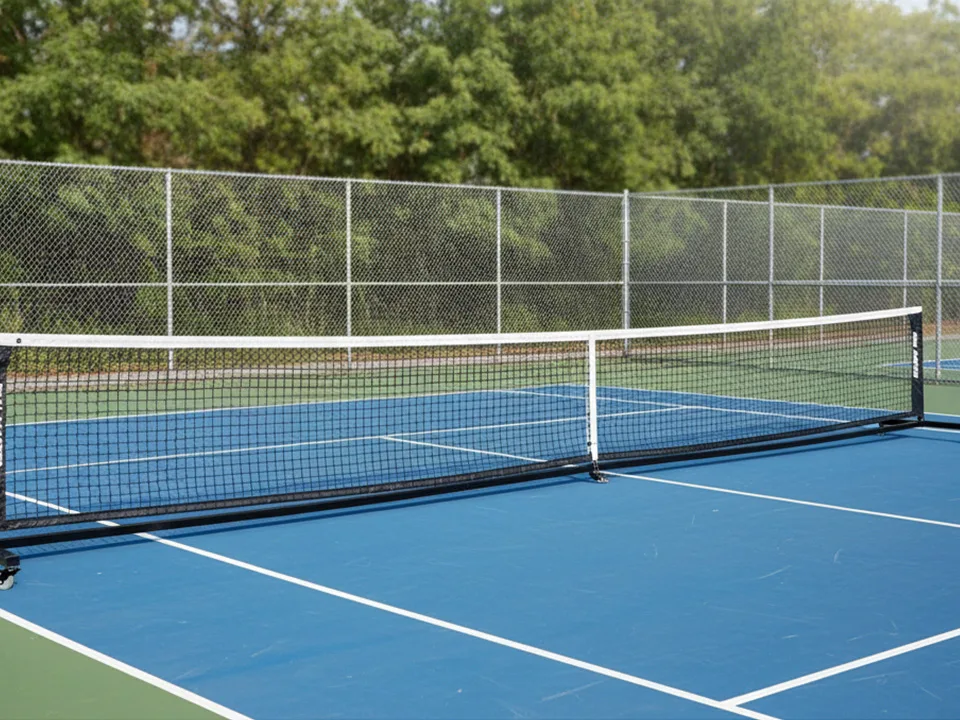
Where “sports facility netting” decisions go wrong
Three recurring mistakes:
- Buying by square-foot price while ignoring edge finishing and attachment hardware (the edges fail first).
- Treating “ball stop netting” and “protective barrier netting” as interchangeable (they’re not; consequence is different).
- Forgetting that injuries are not rare edge cases—sports and recreation injury counts have been rising again recently, which is exactly when risk management gets louder.
And a fourth, for the truly unlucky: copying a neighbor’s setup without matching geometry. Same net + different span/tension = different outcome.
Quick product-fit examples
- Golf containment / cages: start with a full cage approach, then tune dimensions. Example: Professional Golf Hitting Cage Net for Indoor/Outdoor Use.
- Long-run barriers (side protection, backstops): look at barrier net packages with hardware like Durable Nylon Golf Barrier Net with Hooks and Bungee Cords.
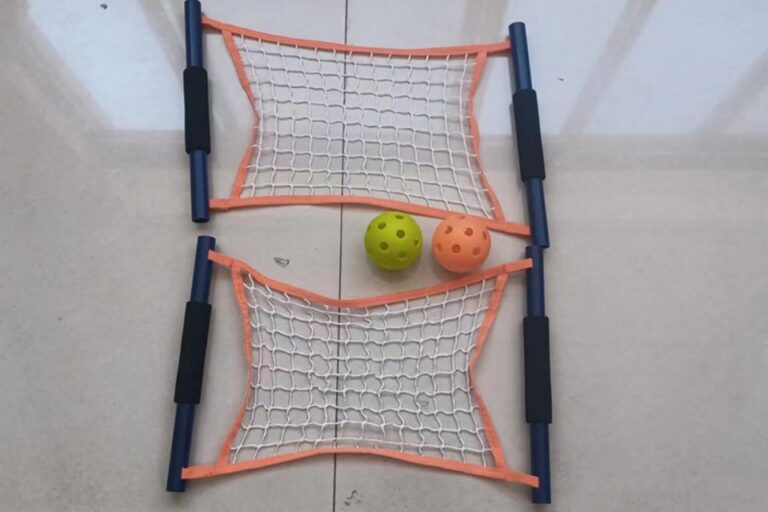
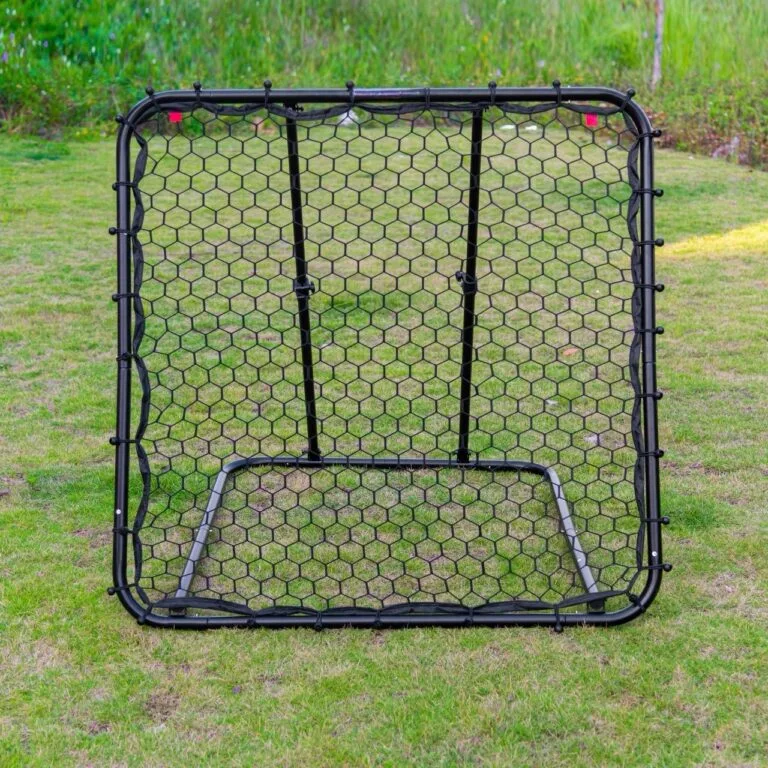
- High-repetition rebound training (where abrasion and frame contact are nonstop): check rebounder-style builds and pay attention to frame padding and tie points; a category sample is Portable 6x6ft Pickleball Rebounder Net with Target Zones.
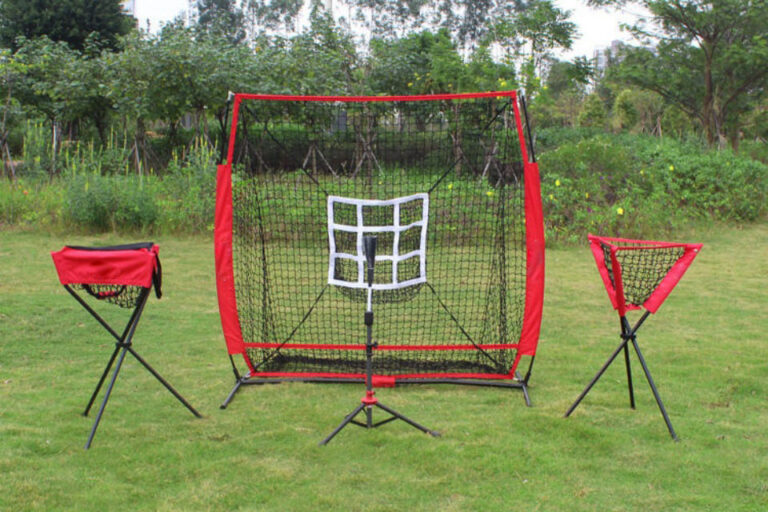
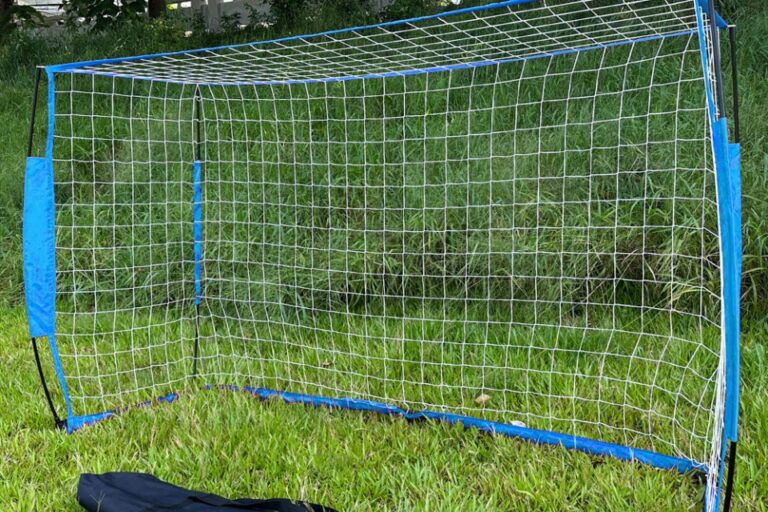
- Large barrier panels for general facility containment: a reference point is 12 ft x 9 ft Sports Barrier Net.
None of those links “solve” your project by themselves. They show you how complete systems are packaged—net + attachments + intended load profile—so you can stop shopping like it’s a bedsheet.
FAQs
What is sports netting? Sports netting is a purpose-built mesh containment system (material, construction, mesh, edging, and mounting hardware) designed to stop or redirect balls and equipment in athletic environments while managing rebound, wear, and safety requirements for people and property in predictable impact zones.
After that definition, the practical step is matching netting to projectile energy, distance, and consequence—then selecting construction and hardware that won’t fail at the tie points.
Nylon vs polyethylene netting: what’s the difference in real facilities? Nylon netting is typically chosen for abrasion-heavy, high-contact areas because it tends to tolerate repeated rubbing and impact better, while polyethylene (often HDPE) is favored outdoors for moisture resistance and UV performance when properly stabilized, with tradeoffs in abrasion and “feel” on catch.
If your net will touch frame members or tracks constantly, nylon often wins on longevity. If it’s a large outdoor barrier with fewer abrasion points, stabilized PE can be the practical buy.
What mesh size should I use for ball stop netting? Ball stop netting mesh size is the opening dimension (e.g., 3/4″, 1″, 1-3/4″) selected so the smallest projectile you care about cannot pass through, while still balancing airflow, wind load, visibility, and material mass—because too-small mesh outdoors can create sail-load problems.
Golf and baseball typically demand smaller mesh than soccer or volleyball barriers. If you’re unsure, spec to the smallest ball used in the space, not the biggest.
Do indoor sports facilities need flame-retardant netting? Indoor sports facilities may require flame-tested or flame-retardant netting depending on occupancy type, local code enforcement, insurer requirements, and how the netting is classified in the space, with NFPA 701 commonly referenced as a textile flame propagation test standard during inspections.
Ask your AHJ/insurer early. Retrofitting after install is where budgets go to die.
How does sourcing region affect netting cost and tariffs? Sourcing region affects netting cost through labor and scale, lead time through logistics and production queues, quality through process control, and tariff exposure through trade policy—especially for U.S.-bound imports where Section 301 actions have remained active and were updated through the 2024 statutory review and final modifications.
If you buy overseas, bake policy volatility into your landed-cost model and don’t pretend it’s a rounding error.
What type of sports netting do I need for my facility? The right sports netting for your facility is the combination of material (nylon vs PE), mesh size, construction, edge finishing, and mounting method that matches your sport’s projectile energy, the net’s distance and span geometry, indoor/outdoor exposure, and any compliance requirements—so failure modes occur on your terms, not randomly.
Start by listing every sport/ball used in the space, then decide whether you’re protecting people, property, or both. That one decision changes everything.
Conclusion
If you want a fast path from “requirements” to “options,” browse the category map first, then narrow by sport and environment: Shop Sports Netting and Facility Systems. If you’re building a golf bay or cage, begin with a complete containment setup like the professional golf hitting cage net and size from there—because patchwork systems are where money goes to vanish.