Key Questions to Ask a Sports Netting Manufacturer Before Ordering
Table of Contents
Ask harder questions. I’ve read enough “premium, heavy-duty, UV treated” spec sheets to know that half the industry sells vibes, not verification—so if you’re ordering ball stop netting, baseball backstop netting, or any sports barrier netting that will sit in sun, wind, and liability, you need measurable specs, traceability, and install math, not a pretty product photo and a hopeful lead time. Want to find out after a near-miss?
The uncomfortable truth about “sports netting”
Most buyers think they’re shopping materials. They’re not. They’re shopping risk transfer: Who owns the failure mode when the twine fatigues, a cable slips, a post flexes, or the “UV treated netting material” turns chalky after one summer?
And yes, failure modes are boring—right up until they’re expensive.
A U.S. Consumer Product Safety Commission warning from Dec 19, 2024 calls out a portable soccer goal with an exposed metal tip; a high school student died after a fall in April 2023, and the product had been sold online for $43–$150. That’s not “netting” in the abstract—that’s design, hardware, and manufacturer refusal to recall. So when a supplier tells you “hardware included,” my next question is: What hardware, exactly, and what’s the injury story if it goes wrong?
On the facility side, a 2023 lawsuit targeting the Peoria Chiefs’ ballpark netting situation cites “approximately 10 spectators hit by foul balls in 2019” and notes MLB instructed minor league teams to install netting “to the foul poles… but… will not enforce the policy until opening day in 2025.” That gap—policy now, enforcement later—is where owners get hurt and purchasers get blamed.
Meanwhile demand keeps climbing. SFIA’s Nov 14, 2024 release says pickleball participation grew 51.8% (2022→2023) and 223.5% in three years, and it pegs $855 million in court construction need over the next 5–7 years. More courts, more balls, more neighbors complaining, more netting.
The questions that separate real manufacturers from “brokers with a warehouse”
If you only steal one idea from this piece: force your sports netting manufacturer to answer in numbers (mesh size, twine diameter, break strength, UV package, hardware grade, wind load assumptions) and documents (test reports, COIs, drawings). If they can’t, you’re not buying a product—you’re buying a future argument.
1) What exactly is the net—material, construction, and spec tolerance?
Don’t accept “nylon” or “HDPE” as an answer. Ask for:
- Polymer (e.g., Nylon 6 vs Nylon 6,6; HDPE resin family)
- Construction: knotted vs knotless; braided vs twisted
- Twine diameter / size (e.g., #36, #42, #60—whatever system they use, force a crosswalk to mm)
- Mesh size (e.g., 1″, 1-3/4″, 2″) and tolerance
- Breaking strength per strand and per panel (minimums, not “average”)
- Net panel seaming method (stitched border rope? taped? heat-welded for some synthetics?)
If you’re ordering custom sports netting, also ask: “What’s your reject rate on custom panels, and who eats it when a panel is off by 2 inches?”
2) What does “UV treated” mean in chemistry, not marketing?
Three words. “Show me data.”
Ask what UV inhibitor system is used (common in plastics: HALS + UV absorbers), how it’s added (in resin vs surface treatment), and whether they have accelerated weathering test results (many labs run xenon-arc style testing). If they won’t share a report, ask for the lab name, method, and date.
If they claim “5–8 years outdoors,” ask: “At what latitude and what sun exposure assumptions?” Florida sun is not Seattle sun.
3) What’s the intended ball speed / energy, and what’s the design margin?
This is where “sports netting” becomes engineering.
- Golf (high velocity, small projectile)
- Baseball/softball (hard impact, repeat hits)
- Lacrosse (high speed, different rebound behavior)
- Pickleball (lower energy, but huge volume and neighbor concerns)
Ask for the manufacturer’s assumed impact conditions: ball mass, speed, strike frequency, and whether the netting spec is sized for fatigue (repeat loading) or just a single hit.
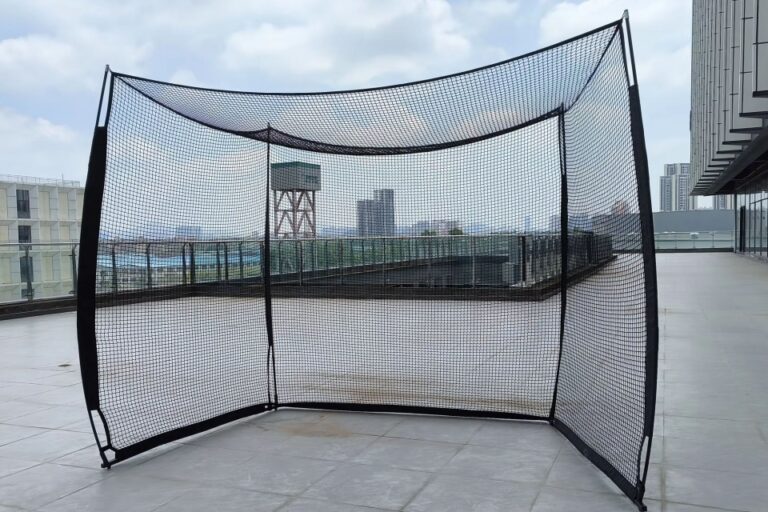
If you’re shopping golf containment, compare a purpose-built cage like a professional golf hitting cage net for indoor/outdoor use with a lighter practice option; they behave differently under repeated driver strikes.
4) Hardware and edges: where the “cheap net” lawsuits are born
Netting rarely fails in the middle first. It fails at:
- Grommets / edge rope
- Attachment points
- Cable clamps
- Hooks / bungees
- Frame welds
- Pole caps / exposed ends (yes, that CPSC scenario again)
So ask: “Provide a full bill of materials: cable type and diameter, clamp type, hook material, coating, corrosion rating.”
If they sell barrier kits, scrutinize how they mount and tension. For example, a kit like durable nylon golf barrier net with hooks and bungee cords is convenient, but convenience hardware is also where corners get cut—especially outdoors.
5) Installation specs: do they have drawings, or just suggestions?
Say it out loud: sports netting installation specifications. If they don’t have them, you’re the test pilot.
Request:
- Layout drawing with post spacing, net sag target, and anchor points
- Tensioning guidance (how tight, measured how?)
- Wind assumptions (basic mph, exposed area)
- Structural requirements (when you need an engineer’s stamp)
And ask the question most buyers avoid: “If your recommended install fails, whose insurance responds first?”
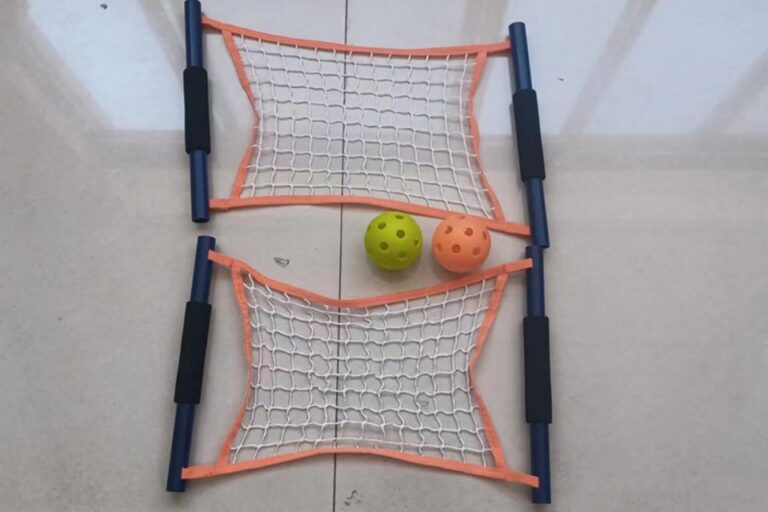
If you’re doing courts, look at systems that ship as complete frames (less dependency on your site conditions), like an adjustable indoor pickleball net system with steel frame or a portable 22ft regulation-size pickleball net—then still ask about frame stability, fastener grades, and replacement parts.
6) Origin, traceability, and “who actually made this?”
This is where people get mad at me. Fine.
Ask:
- Where is the net manufactured (country and facility type)?
- Do you have batch/lot tracking for yarn and finished panels?
- If there’s a defect pattern, can you isolate it to a production run?
Why I push this: the CPSC warning literally names a manufacturer that refused to recall a product. If your supplier can’t tell you who made what and when, you’re buying opacity.
7) Warranty language: what’s excluded, specifically?
A “1-year warranty” can mean “we’ll ignore you politely.”
Ask for:
- UV degradation coverage (often excluded)
- Hardware corrosion coverage
- Stitching/edge failures
- Labor coverage (almost always excluded—get it in writing if offered)
Then ask: “Do you prorate? What’s the claim process timeline? Who pays freight?”
8) Replacement parts and lifecycle cost
Netting is consumable. Pretending otherwise is budgeting theater.
Ask:
- Can you buy replacement panels by dimension?
- Are parts standardized across models?
- What’s the typical lead time for replacements (in-season vs off-season)?
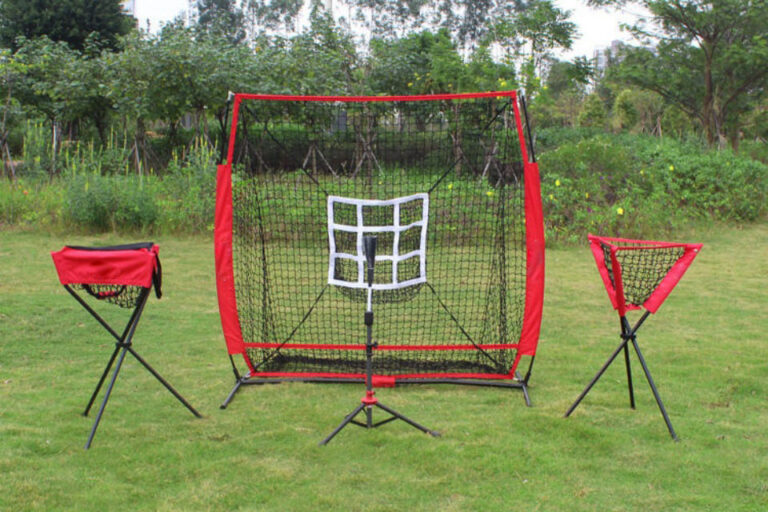
If you’re outfitting lacrosse training, a modular product like a heavy-duty lacrosse backstop net with stable steel frame is only “heavy-duty” if you can actually source replacement netting and hardware fast.
A quick reality-check table you can drop into your RFQ
Use this to spot evasive answers before you wire money.
| What you ask | What a real answer looks like | What a bad answer looks like |
|---|---|---|
| Material + construction | “Nylon (type specified), knotted, mesh 1-3/4”, twine dia X mm, min break strength Y lbs” | “Premium nylon, heavy-duty” |
| UV treated netting material | “UV package type, additive %, weathering method + date, expected service range by exposure” | “UV treated for outdoor use” |
| Ball stop netting performance | “Designed for baseball at ___ mph, fatigue notes, recommended standoff distance” | “Stops balls” |
| Hardware spec | “Cable dia, clamp type, hook grade, coating, corrosion notes” | “Hardware included” |
| Sports netting installation specifications | Drawing + spacing + tensioning + wind assumptions | “Install is easy” |
| Warranty | Written exclusions, claim workflow, freight responsibility | “1-year warranty” (full stop) |
| Traceability | Lot/batch tracking, origin disclosure | “Imported” |
FAQs
What questions should I ask a sports netting manufacturer before ordering?
You should ask for quantified specifications (material type, mesh size, twine diameter, minimum breaking strength), documented UV performance, full hardware bill of materials, written sports netting installation specifications with load assumptions, and clear warranty/insurance terms so responsibility is defined before money moves and before failure becomes a dispute. Then push for drawings, test dates, and replacement-part lead times, because “custom” without documentation is just improvisation with invoices.
What is sports netting, and how is it different from generic netting?
Sports netting is purpose-specified containment or rebound netting engineered around ball size, impact energy, strike frequency, and installation geometry, typically with defined mesh, twine strength, edging, and attachment requirements that generic utility netting often lacks, especially under repeated high-velocity impacts and outdoor UV exposure. Generic netting can work for low-energy uses, but it’s a risky choice for golf, baseball backstops, or high-traffic facilities.
What does “UV treated netting material” actually mean?
UV treated netting material is polymer netting formulated or coated with UV stabilizers (often additive systems designed to slow sunlight-driven chain breakdown) and should be supported by a stated additive approach plus test evidence or a defensible service-life range tied to exposure assumptions, not just a label on a listing. If there’s no test method, no date, and no assumptions, treat it as an unverified claim.
How do I choose between nylon and HDPE for custom sports netting?
Choosing between nylon and HDPE for custom sports netting means balancing impact behavior and environmental durability: nylon often offers strong energy absorption and toughness under repeated strikes, while HDPE commonly offers strong outdoor weather resistance and lower water absorption, and the right choice depends on sport speed, climate, and install tension. Ask for the manufacturer’s minimum breaking strength and weathering evidence for the exact build, not a generic “material advantage” pitch.
What should be included in sports netting installation specifications?
Sports netting installation specifications should include a dimensioned layout, post/cable spacing, attachment method, tension targets, edge treatment details, wind and impact assumptions, hardware requirements, and guidance on when structural engineering is required, because containment failures usually start at anchors, clamps, or bad geometry—not mid-panel. If the seller can’t provide a drawing, you’re about to design it yourself in the field.
Conclusion
If you’re ready to buy, don’t start with “price.” Start with proof. Browse a baseline of what “complete systems” look like in the sports netting products catalog and compare it against the checklist above. Then send your manufacturer the table, ask for documents, and wait. The good ones won’t flinch. The ones you should avoid will.