Multi-Sport Facility Design: Baseball, Volleyball & Basketball Layout
Small mistakes hurt. If you’re trying to stack baseball training lanes beside a volleyball/basketball floor, you’re really designing a controlled-failure system: balls will escape, athletes will drift into buffers, and “temporary” gear will become permanent clutter unless the layout bakes in clear zones, overhead height, and separation netting from day one. Want fewer injuries and fewer rebuilds?
Here’s the uncomfortable truth: most “multi-purpose sports facility layout” plans are just a basketball court with hope sprinkled on top. Hope doesn’t stop a line-drive. Hope doesn’t protect a maple floor. Hope doesn’t satisfy an inspector.
Table of Contents
The constraints nobody budgets for (until it’s too late)
The governing bodies give you the baseline geometry. Designers still blow it because they ignore the extra space that makes the geometry usable.
Basketball (international spec) is a clean example. FIBA’s court is 28 m x 15 m, but it also calls for a surrounding obstruction-free boundary of at least 2 m, which pushes the minimum clear floor area to 32 m x 19 m. That’s not optional if you want safe run-off and sane operations. See the FIBA Official Basketball Rules (court dimensions) and the FIBA Venue Guide summary.
Volleyball is sneakier. USA Volleyball’s indoor rules fix the playing court at 18 m x 9 m and allow a free zone as small as 2 m around it, while also calling out free playing space overhead—7 m minimum for nationally sanctioned competition. That ceiling number becomes your silent dealbreaker the moment you add baseball pop-flies or high-arc volleyball serves. Source: USAV 2023–2025 Indoor Rules Book.
Baseball training facility layout isn’t governed the same way, so people get sloppy. And sloppy means: ricochets, broken lights, and netting that “temporarily” hangs in athletes’ sightlines for the next five years.
The cost environment is not your friend
Prices don’t care about your optimism. When national construction spending is running at a seasonally adjusted annual rate of $2,152.6 billion (November 2024) and still shows year-over-year growth, everyone in your bid stack knows they can push. You can read the U.S. Census Bureau’s release yourself: Monthly Construction Spending, November 2024.
So you’re not just fighting geometry. You’re fighting change orders.
And change orders love “multi-sport” projects because the scope is fuzzy unless you nail it down in drawings: divider net locations, retraction methods, floor protection zones, storage, and traffic routing.
Divider netting is the real centerline
A painted line won’t stop a ball. A net will.
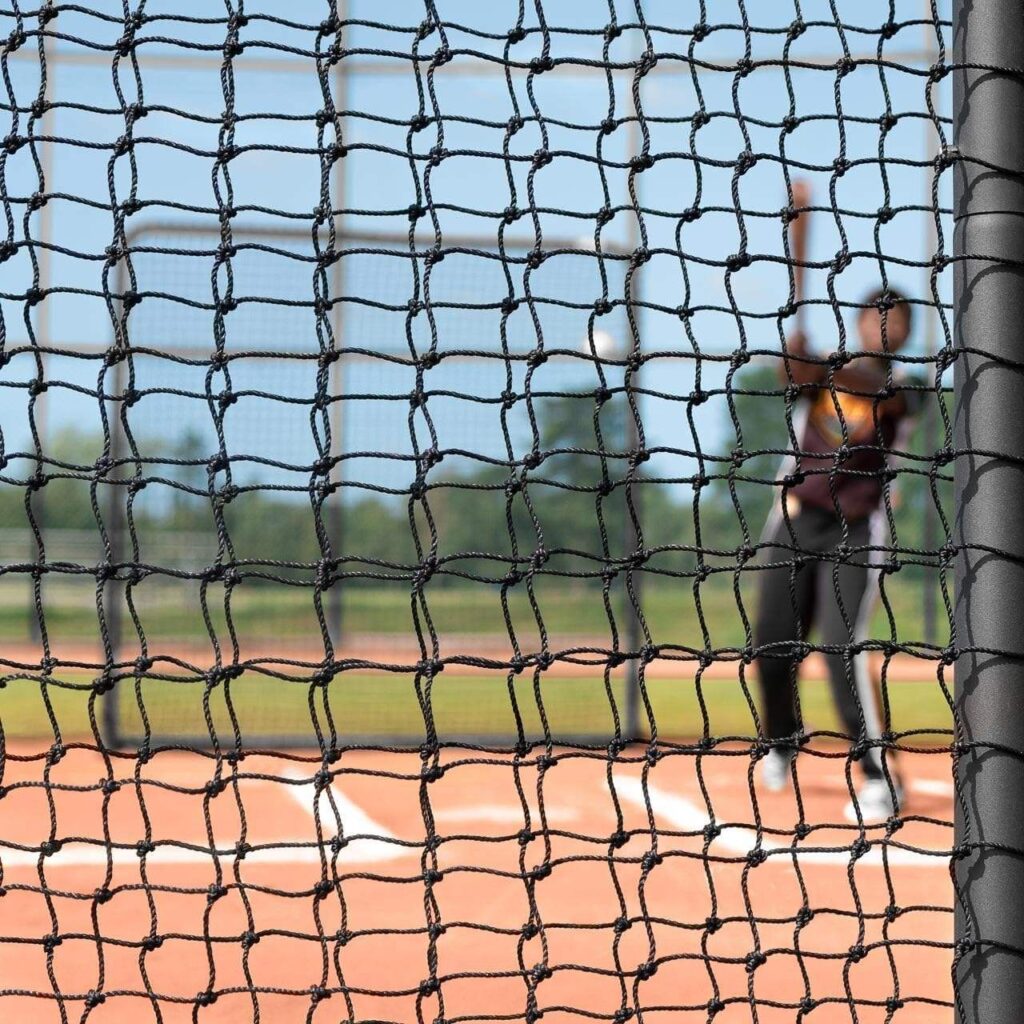
If I had to pick the single highest-leverage decision in indoor gymnasium layout design, it’s the sports facility divider netting systems: where they sit, how they retract, and what they’re rated to handle. This is where people either look smart or look sued.
Two legal signals you should not ignore:
- In September 2024, federal prosecutors announced an ADA settlement forcing a town to make significant accessibility changes across parks and sports facilities. That’s not “paperwork.” That’s money and retrofit pain. DOJ: New Canaan ADA settlement (Sept 2024)
- In October 2024, DOJ announced a settlement and proposed consent decree with the Chicago Cubs over alleged ADA violations at Wrigley Field. Different scale, same message: access and viewing aren’t optional. DOJ: Cubs/Wrigley ADA settlement (Oct 2024)
The design implication is blunt: route planning and separations must be “real,” not hand-waved. ADA guidance explicitly talks about accessible routes to areas of sport activity and connections around court sports. Start here: 2010 ADA Standards (ADA.gov).
Netting materials: the short, annoying checklist
You’ll hear vendors pitch “heavy-duty” like it’s a spec. It’s not. If you want something measurable, ask about:
- Fiber type (nylon vs polyester vs UHMWPE—polyethylene repeat unit (–CH₂–)ₙ)
- Mesh size (small enough for baseballs, not just volleyballs)
- Border ropes and attachment method (grommets, webbing, cable track)
- Retraction method (manual pull, winch, motor)
- Replacement lead time (because you will replace panels)
If you’re sourcing gear, at minimum look at purpose-built categories instead of generic “curtains,” like multi-sport netting built for separation: multi-sports net systems. For a rolling divider that can reconfigure quickly, the adjustable multi-sport net with rolling base and casters is the right type of idea—mobile barrier, defined footprint, predictable setup.
Three layout patterns that don’t collapse in real life
1) Court-first, tunnels on the perimeter (best for hardwood preservation)
You dedicate the center to basketball/volleyball. Baseball lanes live along one long side (or both), protected by fixed wall netting plus retractable cross-court dividers. You keep ball impacts off the floor finish and keep volleyball/basketball run-off consistent.
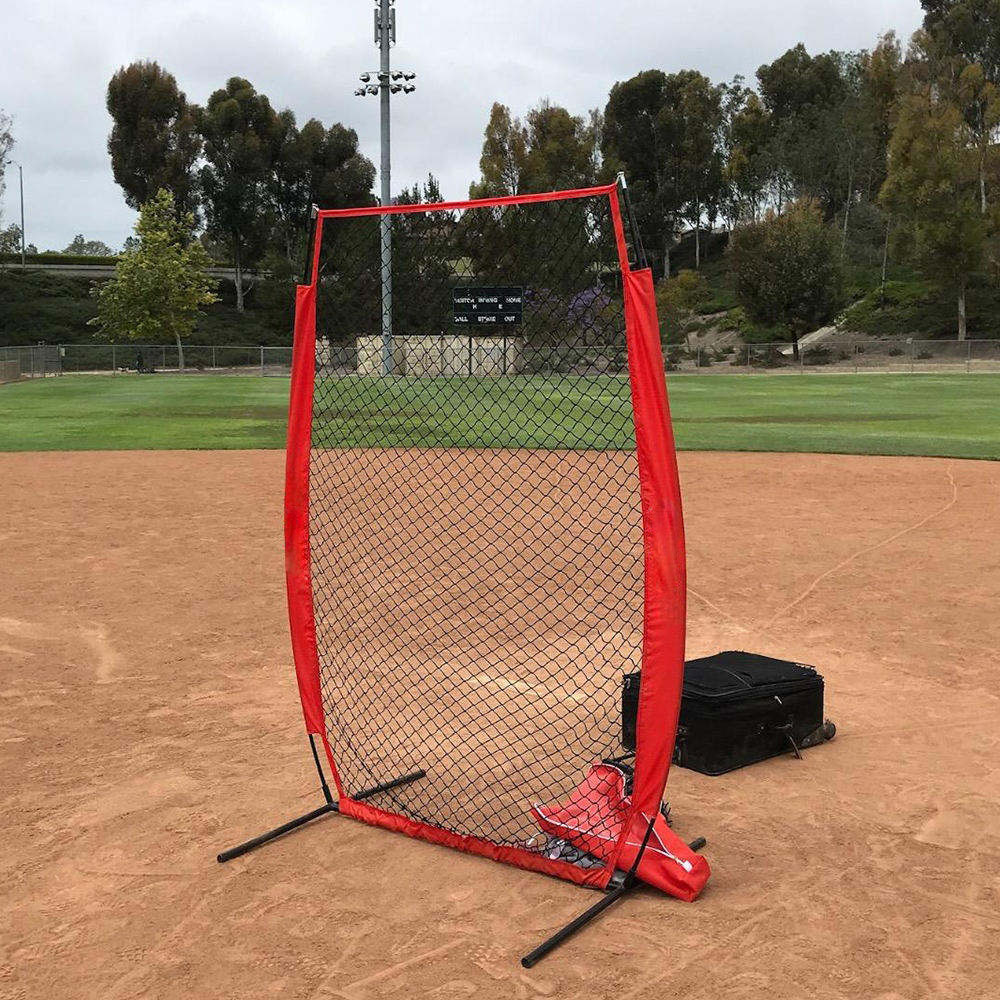
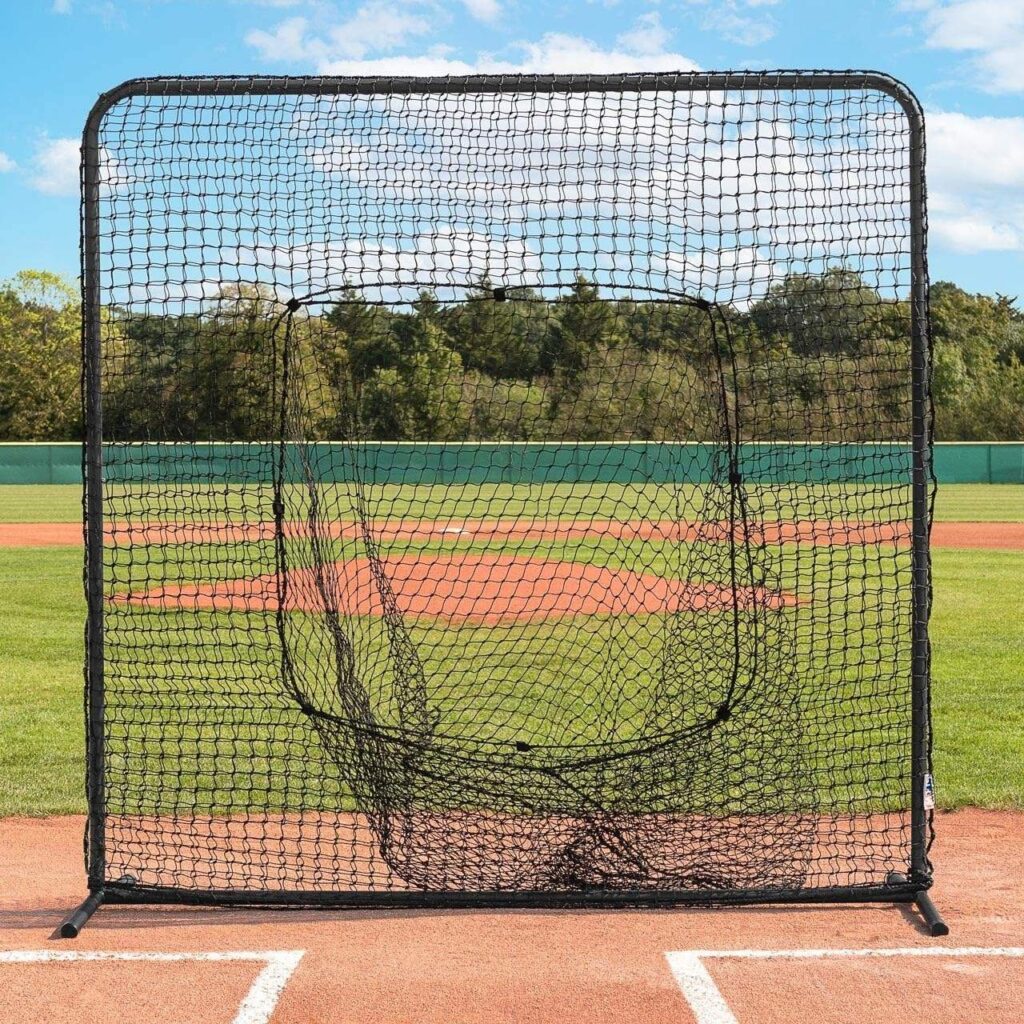
Baseball equipment lives in the baseball zone. No shared storage “just for now.” If you’re shopping that category, start with baseball netting built for impacts and backstops.
2) Split-hall with a hard divider line (best for simultaneous programming)
You divide the hall into two time-share zones: one half for court sport, one half for baseball. This only works if the divider net is properly tensioned and tall enough to prevent lofted balls from crossing. The operational win is obvious: two groups at once. The safety risk is also obvious: one failure point.
3) Convertible “event mode” with stored tunnels (best for weekend tournaments)
You run a clean court layout for volleyball/basketball most days, then deploy baseball tunnels from stored tracks or rolling frames during dedicated training blocks. This is where many facilities lie to themselves about labor. If setup takes 45 minutes and needs three staff, it won’t happen consistently. It’ll drift. Then your layout becomes chaos.
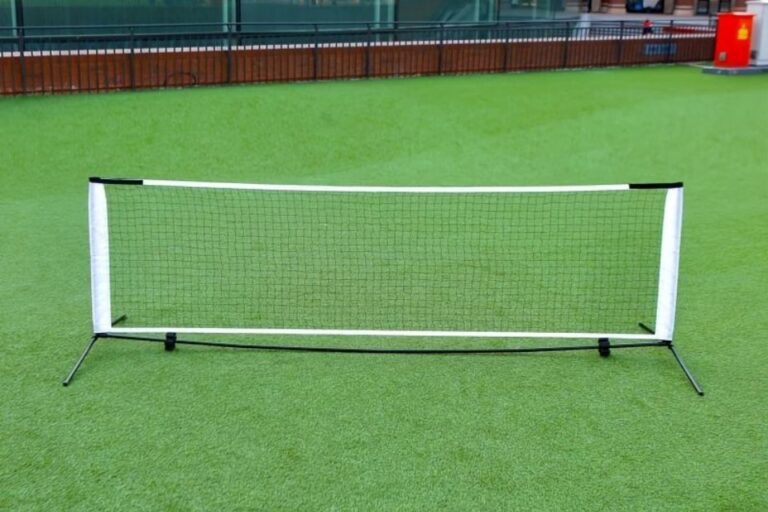
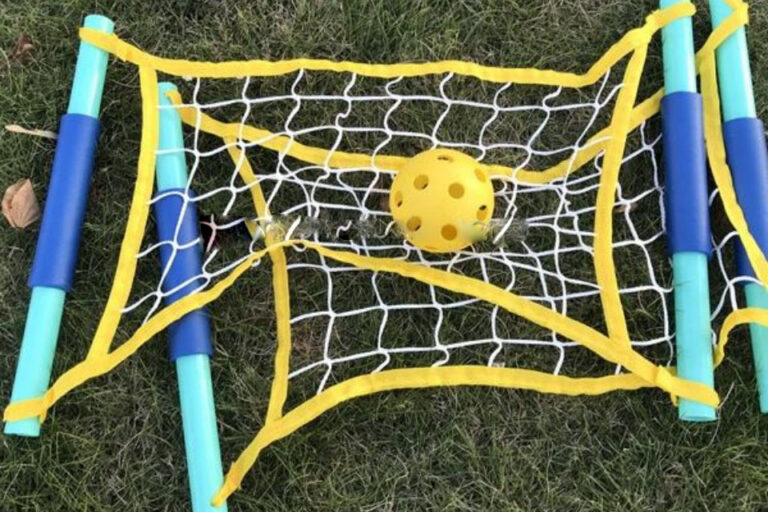
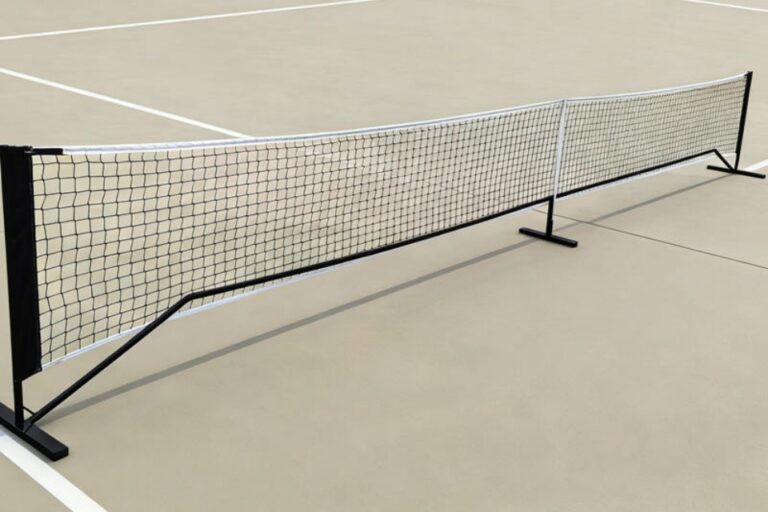
For volleyball-specific hardware, don’t fake it with backyard kits. Use systems designed for stable poles, padding, and repeatable tension: volleyball net systems.
Quick comparison table: what your layout must physically survive
| Sport use | Playing area baseline | Minimum additional clear zone (typical governing guidance) | Vertical clearance trigger | Primary hazard | Practical separation move |
|---|---|---|---|---|---|
| Basketball (FIBA) | 28 m x 15 m | 2 m obstruction-free boundary (min 32 m x 19 m total floor) | Backboards + lighting conflicts | Athlete run-off + collisions | Fixed wall padding + retractable divider nets |
| Volleyball (USAV) | 18 m x 9 m | Free zone can be as low as 2 m | 7 m minimum free playing space noted for sanctioned play | Net/pole instability + overhead obstructions | Floor sleeves + dedicated volleyball net system + ceiling-aware planning |
| Baseball training lanes | “Industry typical” tunnels vary | Needs buffer for ricochets and coach traffic | Pop-fly and high-arc ball paths | Ball escape + surface damage | Full-height impact netting + cross-zone divider netting |
FAQs
How much space do you need for a true multi-sport facility design?
A multi-sport facility design is a single indoor footprint planned to safely host multiple sports by meeting each sport’s minimum playing dimensions while reserving dedicated clearance zones, overhead free space, and separation systems so simultaneous or rapid-change programming doesn’t create collision risk, ball-escape risk, or accessibility violations. Start by locking your “largest envelope” sport (often basketball run-off or volleyball overhead), then fit baseball lanes as protected sub-zones with controlled traffic.
What’s the minimum safe run-off space for basketball in a shared gym?
Basketball run-off space is the obstruction-free boundary area around the marked court that keeps players from contacting walls, equipment, or spectators during high-speed stops, saves, and baseline drives; it’s a safety buffer that must remain clear even when the facility is configured for other sports or storage. FIBA points to at least 2 m beyond the boundary lines, which is why the full clear floor grows beyond 28 m x 15 m. See the FIBA rules.
What does “volleyball court dimensions and clearance” really mean indoors?
Volleyball court dimensions and clearance mean the 18 m x 9 m playing court plus a surrounding free zone and overhead free playing space so athletes can pursue balls and execute serves and sets without hitting obstructions; it’s not just floor tape, it’s a 3D volume requirement. USAV allows a free zone minimum of 2 m and notes 7 m minimum free playing space for sanctioned competition. Source: USAV rules.
How do you design one indoor facility for baseball, volleyball & basketball without constant conflicts?
Designing one indoor facility for baseball, volleyball, and basketball means assigning the center rectangle to court sport geometry, then building baseball as contained lanes with impact-rated netting, dedicated storage, and traffic routing that never crosses court run-off; the trick is treating the divider system as permanent infrastructure, not an accessory. If your divider nets aren’t specified like structure, your schedule will eventually become the “design,” and it will be messy.
What ADA issues trip up multi-purpose sports facility layout projects?
ADA issues in multi-purpose sports facility layouts center on continuous accessible routes to areas of sport activity, consistent access around courts, and the fact that “temporary” layouts still count if the public uses them; if you block routes with stored nets, carts, or rolled equipment, you can manufacture noncompliance. Start with ADA.gov’s 2010 Standards and take recent enforcement seriously, like the New Canaan settlement.
Conclusion
If you’re building or retrofitting a multi-sport facility, don’t let “we’ll figure it out later” write your operating plan. Map your divider netting, storage footprints, and ADA routes now, then spec equipment that matches the abuse you’re asking it to take—especially separation systems and baseball impact zones.
If you want product-direction fast, browse purpose-built netting categories like multi-sport divider net systems, baseball netting for training lanes, and volleyball net systems. If you need custom sizing, mounting, or a quote tied to your layout, start with FSports services or go straight to contact.