Nearshoring Sports Equipment: How Local Sourcing Reduces Tariffs
Why Tariffs Changed the Sourcing Equation
Tariffs changed everything.
I’ve sat in too many sourcing calls where somebody waves around a pretty ex-works quote from Asia, everybody nods like they’ve cracked the case, and then—two quarters later—the landed cost is wrecked by tariff drag, longer cash conversion, ocean freight swings, emergency air moves nobody budgeted for, and a pile of dead inventory sitting in a warehouse because the replenishment window was built on fantasy. Then people act surprised. Why?
Here’s the ugly truth.
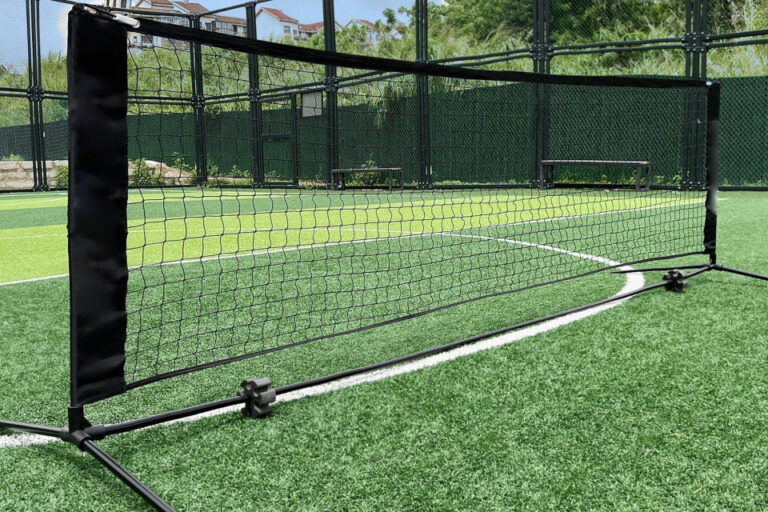
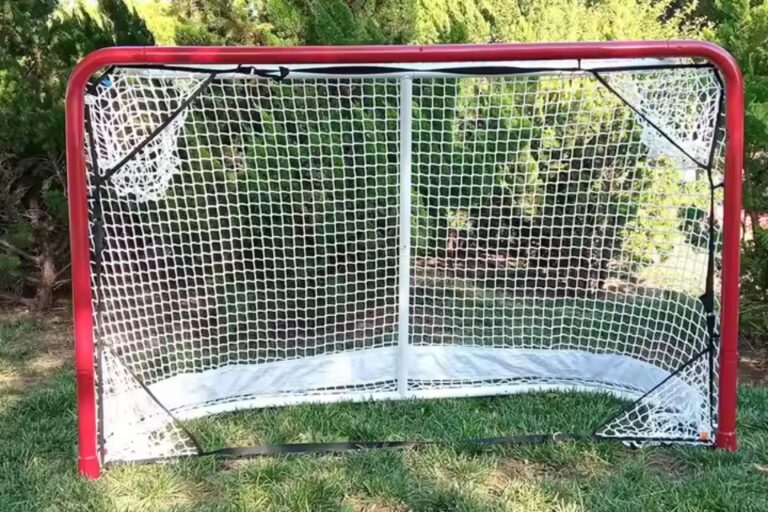
For a lot of frame-based gear, nearshoring sports equipment isn’t some fashionable supply-chain slogan. It’s math. Ugly, boring, highly consequential math. A regulation pickleball system with steel legs and wheels, a soccer goal with powder-coated tubing, a rebounder that eats up carton space—those products are cube-hungry, steel-heavy, and brutally unforgiving when forecasts slip. If you’re selling pickleball nets, soccer goals, or a broader sports equipment product range, local sourcing sports equipment stops being theoretical pretty fast.
And no, I don’t buy the lazy story that the China tariff issue has “basically faded.” It hasn’t. The September 2024 USTR Section 301 four-year review notice confirmed that the tariff framework remained in place, with modifications and category-specific increases still being actively managed, which means buyers banking on a quiet return to pre-trade-war normal were reading wishful thinking instead of policy. That distinction matters. More than most importers admit.
Table of Contents
Why “Made in Mexico” Is Often Misunderstood
But there’s another trap.
I frankly believe half the market still misunderstands what “manufacturing in Mexico” actually does. It doesn’t wave a wand. It doesn’t erase tariff exposure because a carton crossed the border from a different zip code. Under USMCA Article 5.2 and Article 5.4, preferential tariff treatment depends on a valid certification of origin and proof that the product is an originating good; origin is a rules-and-records exercise, not a vibe, not a label, and definitely not a late-stage screwdriver operation in northern Mexico dressed up as strategy.
It works. Usually.
Well—only when the bill of materials actually supports the claim. That’s the part people skip because it’s tedious. A sports product isn’t just “a net” or “a goal.” It’s tubing spec, wall thickness, resin inputs, fastener source, coating process, weld sequence, connector tooling, carton origin, netting conversion, and final assembly logic. A steel-frame rebounder or rolling pickleball system can absolutely fit a smart Mexico strategy. But if the guts of the SKU still depend on imported content that doesn’t satisfy the rule set, the whole nearshoring story can go sideways during compliance review.

The Data Behind the Shift
And the macro data? It backs the shift. Official 2024 U.S. Census trade tables show Mexico as the United States’ largest goods trading partner at $839.9 billion, or 15.8% of total trade, while U.S. imports from Mexico reached $505.9 billion and imports from Vietnam hit $136.6 billion; that followed the earlier shift documented by the Dallas Fed in July 2023, when Mexico moved ahead of China as the top U.S. trading partner at the start of that year. Buyers didn’t move because it sounded elegant. They moved because the old model got noisy, expensive, and harder to defend in a boardroom.
So let’s stop pretending.
Asian sourcing vs nearshoring isn’t a morality play. It’s not “global bad, local good.” It’s a SKU triage exercise. Which country gives you the cleanest landed margin? Which option cuts the duty burn? Which supplier can turn an engineering revision without forcing you into another 90-day replenishment gamble? That’s the actual conversation. Everything else is brochure copy.
Where Mexico Has the Edge
Yet Mexico deserves a real look first for more sports equipment than many buyers think. Especially the clunky stuff. Especially the steel stuff. Especially the products that punish distance. When you regionalize bulky frame systems, you’re not just chasing tariff mitigation strategy—you’re cutting transit time, shrinking safety stock, and reducing the weird hidden tax that comes from having to forecast too far out. I’ve seen companies save themselves with that move. Quietly.
And yes, supplier transparency matters. A lot.
When a manufacturer is willing to show a real factory tour and spell out actual manufacturing services, I pay attention, because this business is full of middlemen who can describe “integrated capabilities” for 45 minutes without ever telling you where the welding happens, who controls the powder line, how they source the netting, or whether the packaging is engineered for pallet efficiency instead of just looking neat in a sample room. Show me the line. Show me the fixtures. Show me the QA choke points. Otherwise, spare me.
Why Mexico Works for Bulky, Steel-Heavy SKUs
Mexico, in my experience, wins when the product is freight-sensitive and revision-sensitive at the same time. Think training frames, wheeled bases, rebounders, larger goals, combo systems. Those are not forgiving SKUs. A late design tweak on a far-shore model can cost a season. A carton redesign can take forever. A tubing failure can multiply. In Mexico, those loops tighten up. Not magically. But materially.
Why Vietnam Still Matters
Vietnam, though? Still very real.
I think some nearshoring advocates oversell their case and understate how strong sports equipment manufacturing Vietnam remains for labor-heavy work. Netting-heavy assemblies. Sewn components. Accessories with lots of hand operations. Replacement parts. Products where labor minutes matter more than freight cube. In those lanes, Vietnam still has teeth.
Vietnam’s Strength in Labor-Heavy Production
The best public signal is still Nike. In its FY2024 Form 10-K, Nike disclosed that Vietnam produced about 50% of NIKE Brand footwear and 28% of NIKE Brand apparel in fiscal 2024, which tells you something blunt about sporting-goods sourcing: when labor density is high and the vendor bench is deep, Vietnam is not some fallback option. It’s a core node. A serious one.
But. There’s a but.
Moving from China to Vietnam without redesigning your sourcing model isn’t the same as solving your sourcing model. It’s often just a reroute. Different map, same fragility. You still have long transit. You still carry more inventory than you’d like. You still absorb distance risk. You still live and die by forecast accuracy. So when buyers say, “We de-risked,” I always ask—did you really, or did you just swap one dependency stack for another?

Where U.S. Manufacturing Still Wins
That’s why US sports equipment manufacturing shouldn’t be dismissed as “too expensive” before the numbers are honest. I’ve watched domestic quotes get rejected at the spreadsheet stage and then quietly become the winning answer six months later after import delays, rework, rush freight, and markdowns torched the “cheaper” option. It happens all the time. Not on every SKU. But often enough.
The U.S. tends to win where buyers are under pressure, where product revisions are still alive, where retailer programs need speed, where IP matters, or where order volume isn’t large enough to fully exploit far-shore labor arbitrage. Those are real conditions—not edge cases. And once time starts carrying a price tag, the domestic premium shrinks fast. Faster than most teams admit in the first sourcing review.
So no, the best countries for nearshoring sports equipment are not fixed forever. They’re conditional. Steel-heavy and bulky? Mexico jumps to the front. Labor-heavy and stable? Vietnam stays dangerous. Custom, urgent, or sensitive? The U.S. can absolutely steal the deal. I know that sounds annoyingly non-binary. Too bad. That’s how the category works.
The comparison buyers should actually run
| Sourcing base | Tariff logic | Lead-time reality | Best product fit | Cost pattern | My take |
|---|---|---|---|---|---|
| China / traditional Asian sourcing | Highest exposure if product lines are hit by Section 301 or related trade actions | Longest planning cycle; weakest recovery from forecast mistakes | Mature vendor ecosystems, highly optimized legacy SKUs | Usually strongest ex-works price | Still viable, but only when tariff and inventory math stay under control |
| Vietnam | Lower China exposure, but still an import model with its own policy risk | Better than China on some categories, still far-shore | Labor-heavy sewn goods, netting-heavy assemblies, accessories | Often attractive on labor cost | Good hedge, bad religion |
| Mexico | Can reduce or eliminate tariffs when goods truly qualify under USMCA origin rules | Fastest non-U.S. replenishment for the American market | Steel-frame systems, bulky sports equipment, rolling bases, quick-turn private label | Higher factory cost than Asia, often lower landed pain | Usually the smartest middle ground |
| United States | No import tariff on domestic production | Fastest response, easiest engineering control | Custom runs, retailer tests, IP-sensitive products, urgent replenishment | Highest nominal unit cost | Expensive until you count the hidden costs elsewhere |
I like this table because it forces the right fight. Not “Who quoted the lowest piece price?” That’s amateur hour. The real question is nastier: which source gives this exact SKU the best landed contribution after duty, freight, turns, replenishment risk, and correction speed are all priced in? That’s where nearshoring sports equipment either makes sense—or doesn’t.

FAQs
What is nearshoring sports equipment?
Nearshoring sports equipment is the practice of moving production, conversion, or final assembly closer to the customer market—usually from China or broader Asia to Mexico or the United States—to reduce tariff exposure, shorten transit times, improve replenishment speed, and cut the inventory burden created by long overseas supply chains. It’s usually most effective for bulky, steel-heavy, or fast-turn products where distance creates hidden costs that don’t show up in a simple factory quote.
How does nearshoring reduce tariffs?
Nearshoring reduces tariffs by shifting production into trade structures or domestic manufacturing setups that may qualify for preferential treatment, avoid China-linked duty exposure, or reduce reliance on countries subject to heavier U.S. trade actions, but the benefit only holds when origin rules, documentation, and supplier records genuinely support the claim. In plain English: if the paperwork and the bill of materials don’t line up, the “tariff savings” can evaporate fast—especially under USMCA, where qualifying origin is the entire ballgame. (ustr.gov)
Is Mexico better than Vietnam for sports equipment manufacturing?
Mexico is generally better than Vietnam for sports equipment manufacturing when the item is bulky, steel-intensive, or needs fast replenishment into the U.S. market, while Vietnam is often stronger for labor-heavy sewn goods, netting-intensive assemblies, and stable-demand products where labor cost matters more than regional speed or North American origin strategy. I’d put it this way: frame systems lean Mexico, labor-dense soft goods still give Vietnam plenty of room to win.
Can final assembly in Mexico eliminate China tariffs?
Final assembly in Mexico can eliminate China tariff exposure only when the finished product genuinely qualifies as originating under USMCA rules and is supported by a valid certification of origin, because customs treatment depends on legal origin and documentary proof rather than on a simple “assembled in Mexico” label or a superficial last-stage assembly process. That’s the part people hate hearing. But it’s true. A border assembly play without origin discipline is not strategy—it’s wishful thinking with paperwork risk attached. (ustr.gov)
What are the best countries for nearshoring sports equipment?
The best countries for nearshoring sports equipment are Mexico for bulky steel-frame systems and faster U.S. replenishment, Vietnam for labor-intensive sewn products and cost-sensitive netting assemblies, and the United States for custom, urgent, low-volume, or IP-sensitive programs where engineering control and speed matter more than nominal labor savings. There isn’t a universal winner here. There’s only a better fit for a given SKU structure, demand profile, and margin target.
Conclusion
If your team is still benchmarking suppliers on ex-works price alone, you’re probably missing the actual cost story. Start with the BOM. Then the tariff code. Then the origin path. Then the replenishment window. Go review the product lineup, look hard at the operating reality in the factory tour, and if you want a serious conversation instead of another vague quote sheet, contact the team.