Performance Standards: Tensile Strength, Breaking Strength & Durability
Why Strength Numbers Alone Mislead Buyers
Numbers seduce buyers. I’ve read too many spec sheets that scream “heavy duty” while hiding the only facts that matter: test method, twine diameter, polymer type, knot construction, UV package, span length, and hardware load. Want the blunt version?
Here it is. Tensile strength is the lab number. Breaking strength is the field number. Durability is the bill you pay six months later when the first two were sold to you without context. And in sports equipment, that gap is where weak products survive—on paper, not on the court, not on the range, not in the weather.
I’d put it even harder: “tensile strength” by itself is often an elegant distraction. It tells you how much stress a material can take under pull, usually in psi or MPa. But buyers do not purchase raw polymer coupons. They buy finished systems—mesh, knots, borders, clips, cables, frames, coatings, seams, anchors. The finished system fails at its weakest point, not at the prettiest number in the brochure.
Table of Contents
Tensile Strength vs Breaking Strength
That is why the phrase tensile strength vs breaking strength is not semantics. It’s procurement survival. Tensile strength describes the material. Breaking strength describes the force at which the strand, rope, or net element actually gives up. In real netting, knots reduce efficiency, UV cooks polymers, abrasion roughs the filaments, and repeated ball strike loads create fatigue that a single pull test never fully captures. So when someone asks me about the best breaking strength for sports applications, my first answer is annoying but honest: best for what span, what ball speed, what climate, what exposure cycle, what replacement budget?
What Institutional Buyers Already Know
The institutional buyers already understand this, even if retail marketing often pretends otherwise. In the City of Miami Beach’s golf range netting procurement, the requirement was not some vague “premium net”; it called for polyester barrier netting with black UV inhibitor, a minimum tensile break strength of 100 pounds, snap hooks with 900-pound minimum working strength, cables tensioned to 1,000 to 1,500 pounds, and rope borders with 3,500-pound minimum tensile strength. Palomar College’s 2023 netting package went another direction and specified 252-pound backstop netting, 542-pound skirt netting, and 880-pound batting-cage wall and ceiling netting under ISO 1806. Same industry. Wildly different numbers. Because use case—not adjectives—drives the standard. See the Miami Beach golf range netting contract and the Palomar College netting submittal set. (docmgmt.miamibeachfl.gov)
Why Durability Standards Matter More in 2024 and Beyond
And demand is not slowing down. Reuters reported in July 2024 that pickleball participation in the U.S. had jumped 52% from 2022 to 2023, which means more courts, more portable systems, more replacement cycles, and—let’s be honest—more cheap netting entering the market under pressure to hit price first and durability second. That same rush has a safety side: on December 19, 2024, the U.S. Consumer Product Safety Commission warned consumers to stop using certain Sport Nets 4×8 portable soccer goals after a Washington State high school student suffered a fatal brain injury in April 2023 when he fell onto an exposed metal tip. The lesson is bigger than that one product: performance standards are not abstract engineering trivia; they are design, liability, and safety questions. Read the Reuters report on pickleball’s 2024 expansion and the CPSC safety warning. (reuters.com)
How Tensile Strength Affects Durability
Now the part the industry likes to bury: how tensile strength affects durability is mostly a story about loss. UV light, heat, moisture, and oxidation do not ask permission.
UV Exposure and Mechanical Degradation
In a September 2024 technical note, NIST described how weathering drives chain scission and other degradation processes that reduce mechanical properties and alter strength over time, while UV-protective additives such as TiO₂ are used precisely because unprotected polymers lose performance outdoors.
When Strength Loss Becomes a Warranty Issue
The University of Kentucky’s 2024 athletic turf specification was even more ruthless in practical terms: it treated UV-related damage as warranty-relevant when tensile strength decreased by 50% or more. That is how serious real buyers are when money and field uptime are on the line. Read the NIST 2024 weathering note and the University of Kentucky turf specification. (nvlpubs.nist.gov)
What I Actually Trust in a Netting Spec
So what do I actually trust? Not one number. Never one number. I trust a stack: material type, denier or twine diameter, mesh size, knot or knotless construction, coating chemistry, retained strength after weathering, border rope strength, attachment hardware load, and the stated test standard. Anything less is sales theater.
How Performance Standards Change by Sport
For buyers comparing categories, the priorities change fast.
Golf Net Systems
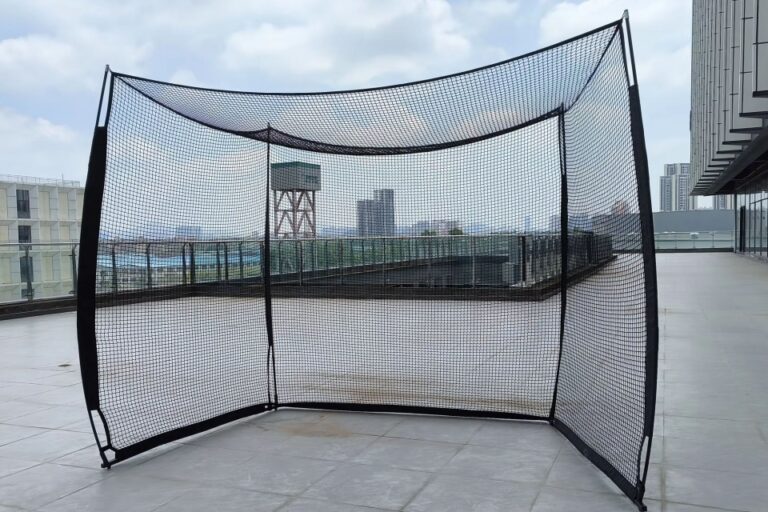
With golf net systems, I care about span length, ball velocity, pretension, and UV-treated perimeter integrity because a big range net lives under constant load and weather.
Pickleball Net Systems
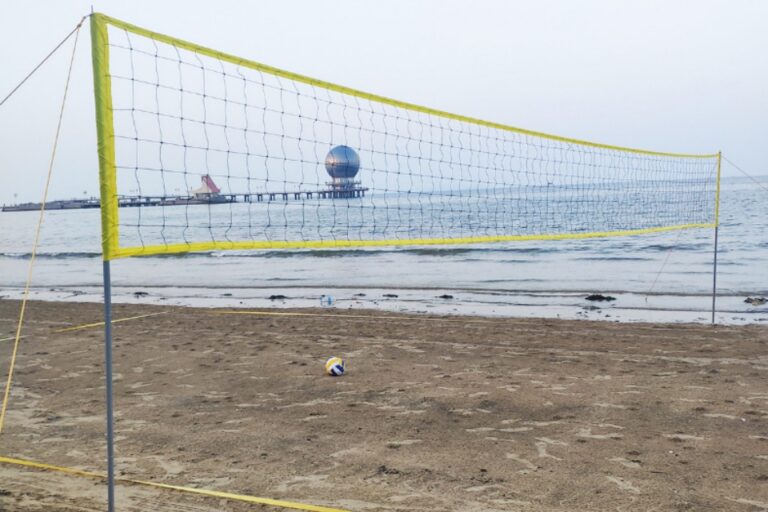
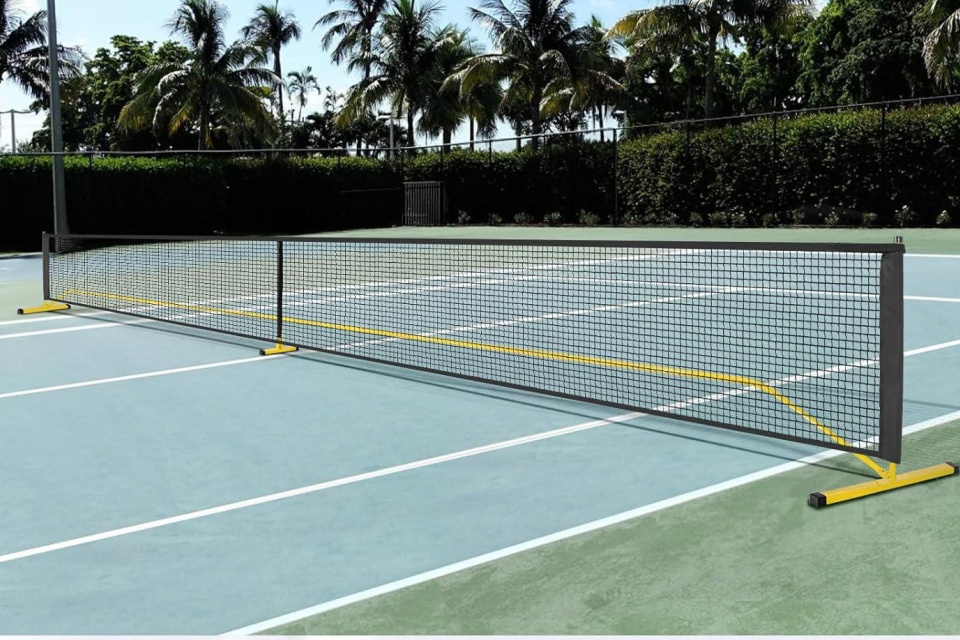
With pickleball net systems, the raw impact load is lower, but seam stability, portability wear, wheel hardware, and frame stiffness become bigger than most people expect.
Soccer Goal Systems
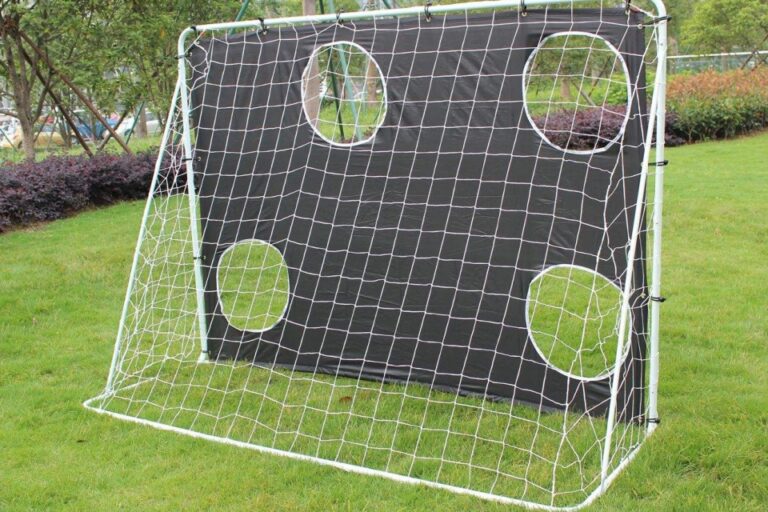
With soccer goal systems, anchoring and exposed hardware can matter as much as mesh strength.
Multi-Sports Installations
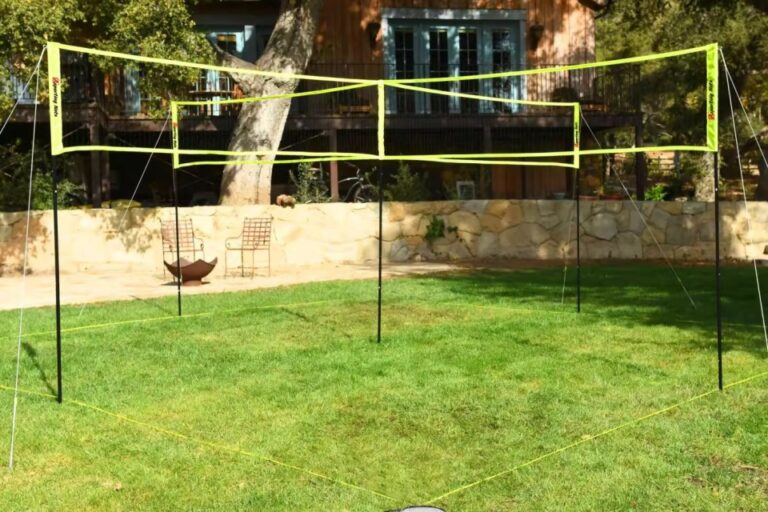
And for facilities trying to serve schools, clubs, and parks, multi-sports net systems demand compromise without drifting into mediocrity.
Comparison Table: What Buyers Ask vs What They Should Ask
| Application | What buyers usually ask | What they should ask instead | Practical read |
|---|---|---|---|
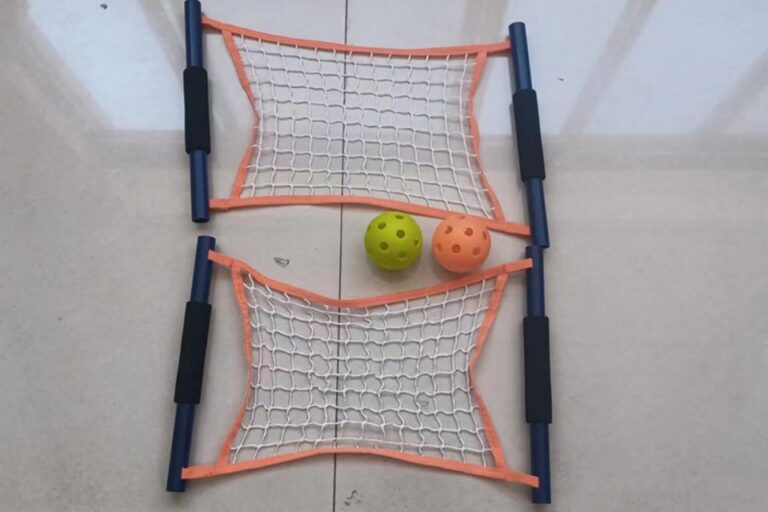
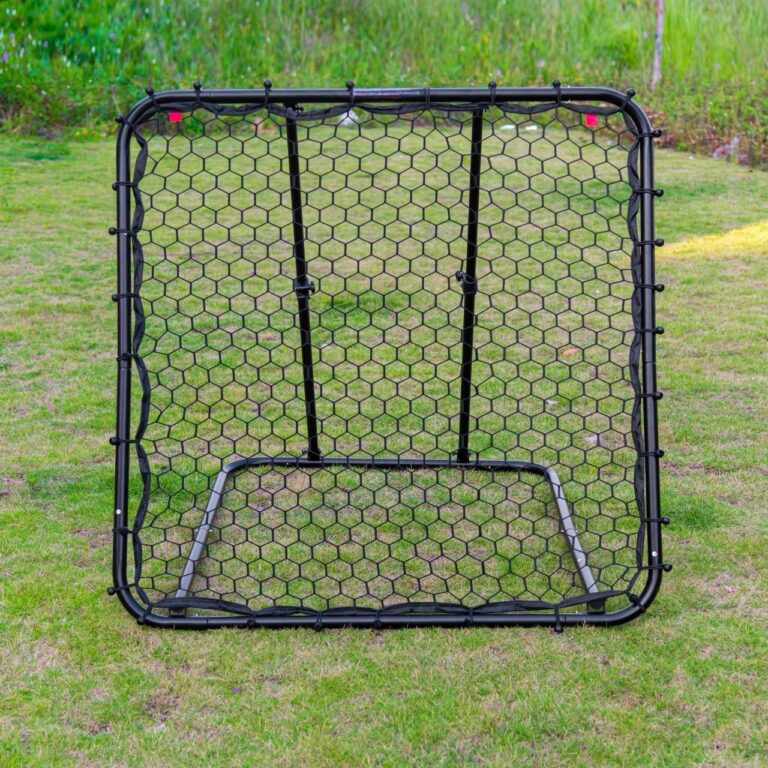
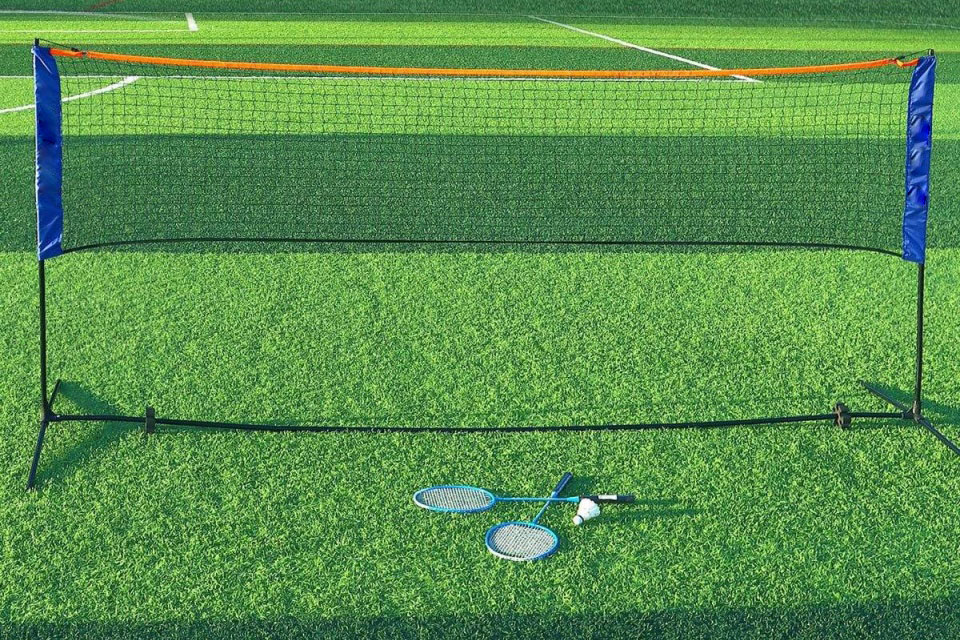
| Portable training nets | “What’s the strength rating?” | What is the strand rating, border strength, seam method, and frame fatigue tolerance? | The common 50–200 lb-per-strand shorthand is only a starting point. |
| Golf range barrier nets | “Is it UV resistant?” | What is the minimum break strength, cable tension spec, snap-hook load, and warranty term? | Outdoor spans punish weak borders and lazy hardware specs. |
| Backstops and batting cages | “Is it heavy duty?” | What is the tested mesh breaking strength under ISO or ASTM methods, and what is the wind-load assumption? | Impact-heavy environments need much higher net and attachment performance. |
| Permanent school or club installs | “How long will it last?” | What retained strength is expected after weathering, and what counts as warranty failure? | A product that starts strong but loses half its strength too early is not durable. |
The figures behind that table are not imaginary. Miami Beach used 100-pound minimum tensile break strength, 900-pound snap-hook working strength, and 1,000–1,500-pound cable tension for golf barrier netting; Palomar College specified 252-, 542-, and 880-pound mesh breaking strengths for different baseball applications; the University of Kentucky treated a 50% tensile-strength drop from UV degradation as a warranty trigger. (docmgmt.miamibeachfl.gov)
The Procurement Rule Most Buyers Ignore
My rule is simple. If a supplier cannot tell you the difference between tensile strength, breaking strength, and retained strength after weathering, that supplier is not selling performance standards. They are selling comfort.
That is why I’d rather inspect process than listen to adjectives. A credible manufacturer should be able to show how the yarn is selected, how the border is finished, how clips and cables are matched to working loads, how UV treatment is handled, and how the finished panel is inspected before shipment. A glossy catalog helps. A real factory tour helps more. And if the project is custom—different spans, sport mixes, or commercial use—start with actual sports net manufacturing services rather than pretending an off-the-shelf spec fits everything.
FAQs
What is tensile strength?
Tensile strength is the maximum stress a material can withstand while being pulled before failure begins, usually measured in psi or MPa, and in sports netting it describes the fiber or material itself rather than the full installed system of mesh, borders, clips, and cables.
That is why strength ratings explained poorly can mislead buyers: a strong polymer can still become a weak product once it is knotted, coated, stitched, stretched, and left in the sun.
What is breaking strength?
Breaking strength is the total pulling force at which a strand, rope, cable, or net component actually ruptures, usually measured in pounds or newtons, and it is often the more useful buying metric because it reflects how a real component fails under load rather than how raw material behaves in theory.
For sports buyers, this is usually the number that maps more directly to field reality, especially when you compare golf barriers, cage netting, and portable training systems.
How does tensile strength affect durability?
Tensile strength affects durability by setting the starting mechanical baseline a product has before outdoor exposure, repeated impacts, abrasion, moisture cycling, and UV-driven chemical degradation begin reducing that baseline, sometimes sharply enough to turn a “strong” net into an early replacement problem.
The hard truth is that durability is not the opening number; it is the retained number. NIST’s weathering discussion and Kentucky’s 50% loss threshold make that painfully clear. (nvlpubs.nist.gov)
What is the best breaking strength for sports applications?
The best breaking strength for sports applications is the minimum force rating that safely contains the sport’s ball speed, installation span, weather exposure, attachment loads, and expected wear cycle with real safety margin, which is why one fixed number cannot responsibly cover pickleball dividers, golf barriers, and batting cages.
A decent shortcut is to treat lightweight recreational systems very differently from permanent impact-heavy installs. Miami Beach’s golf spec started at 100 pounds for the net but paired it with much stronger hardware, while Palomar’s baseball applications ran from 252 to 880 pounds depending on where the net sat in the system. (docmgmt.miamibeachfl.gov)
Is tensile strength more important than breaking strength?
Tensile strength is more important for understanding raw material quality, while breaking strength is more important for understanding how a strand, rope, or finished net element actually fails in use, so the serious answer is that you need both—but you should never confuse one for the other.
I look at tensile strength first to screen materials, then breaking strength and retained weathered strength to decide whether the product belongs outdoors.
Final Takeaway
If you’re evaluating a new net system, skip the brochure language and ask for the real stack: test method, twine diameter, mesh size, UV treatment, border strength, hardware load, and retained performance after exposure. Then compare that against your actual application. For a serious buying conversation, start with the relevant category—golf nets, pickleball nets, soccer goals, or multi-sports nets—and use the contact page to request specifications that talk like engineers, not marketers.