Why Badminton Nets Sag In The Middle So Quickly
You pull the net tight before the first game. Everyone warms up, plays a few rallies… and by the third game the middle looks tired and low again.
If you run a club, a school hall, or a multi-court facility, that sag isn’t just ugly. It messes with rally quality, line calls, and even your refund rate. Let’s break down why badminton nets sag in the middle so fast, and what you can do about it in real courts, not just on paper.
Table of Contents
Badminton net height rules and why a small dip is normal
First thing: not all “sag” is a problem. A small dip in the center is built into the rules.
- Height at posts: 1.55 m (about 5 ft 1 in)
- Height at center: 1.524 m (about 5 ft)
So there’s already about 3 cm difference. That’s on purpose, not a defect.
You can show this clearly to staff and players with a simple spec table:
| Position on net | Standard height | What it means in practice | | | | – | | At the posts | 1.55 m | Set your posts to this height. | | Dead center | 1.524 m | The center should be slightly lower. | | Visual effect | Slight dip | A straight line from post to post is actually wrong. |
The problem starts when that small, legal dip becomes a deep U-shape. That’s when players complain and shuttles start clipping tape that should be out of reach.
Gravity, tension, and why the center of the net drops faster
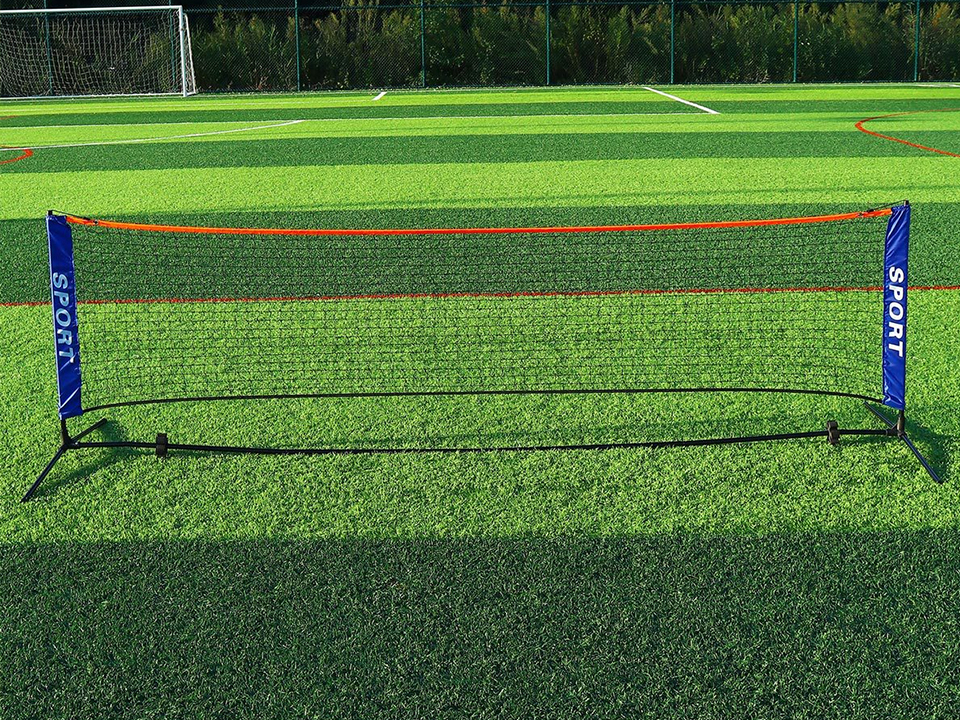
Think of the top cord like a laundry line. You pull it tight between two posts. It still forms a curve. The lowest point is always the middle.
Now add real-life stress:
- Players hit the tape.
- Kids lean on the net on changeover.
- Staff tug the cord hard, then release it a bit.
Every small loss of tension shows up first in the center. The posts still look fine, so people say, “We just fixed this. Why is it sagging again?”
On a busy night:
- The first hour: net looks sharp.
- Second hour: tape sits just a touch lower in the middle.
- Third hour: floaters that used to pass clear start catching the tape.
From a facility side, that’s lost “playability” time. From a retailer or wholesaler side, that’s when customer support starts getting emails.
Net materials, stretch, and long-term performance
Typical badminton net materials
Most badminton nets use:
- Nylon or similar synthetic mesh
- PE or steel cable in the headband
- PVC or fabric tape at the top
These materials are strong, but they still stretch under load. UV, moisture, and constant tension all slowly lengthen the cord and soften the mesh.
Outdoor vs indoor wear and tear on nets
Outdoors, the net fights sun, rain, and wind. Indoors, it deals with constant use and storage.
- Sun breaks down fibers over time.
- Rain makes nylon absorb water and relax.
- Nets that stay up 24/7 “creep” under their own weight.
That’s why a net can look perfect when it leaves the factory and still sag after a few weeks on court. The physics is fine. The material just settles.
If you work with B2B clients, this is a key talking point: net height is not a one-time setting. It’s part of the maintenance cycle, just like stringing and floor care.
Common installation mistakes with badminton nets
Weak hardware and missing center support
Most “fast sagging” nets suffer more from setup than from design. Typical issues:
- Low tension at setup Staff don’t want to over-tighten, so they leave the cable “soft.” The center drops fast.
- Over-tightening Someone pulls too hard, bends the posts, or damages fittings. Next time you tension, the net won’t sit right.
- Wrong post spacing If the posts aren’t at the correct distance, the load on the cord isn’t even. The tape will “smile” in the middle.
- No real center support When there’s no center strap or the frame is too light, the headband can only go one way: down.
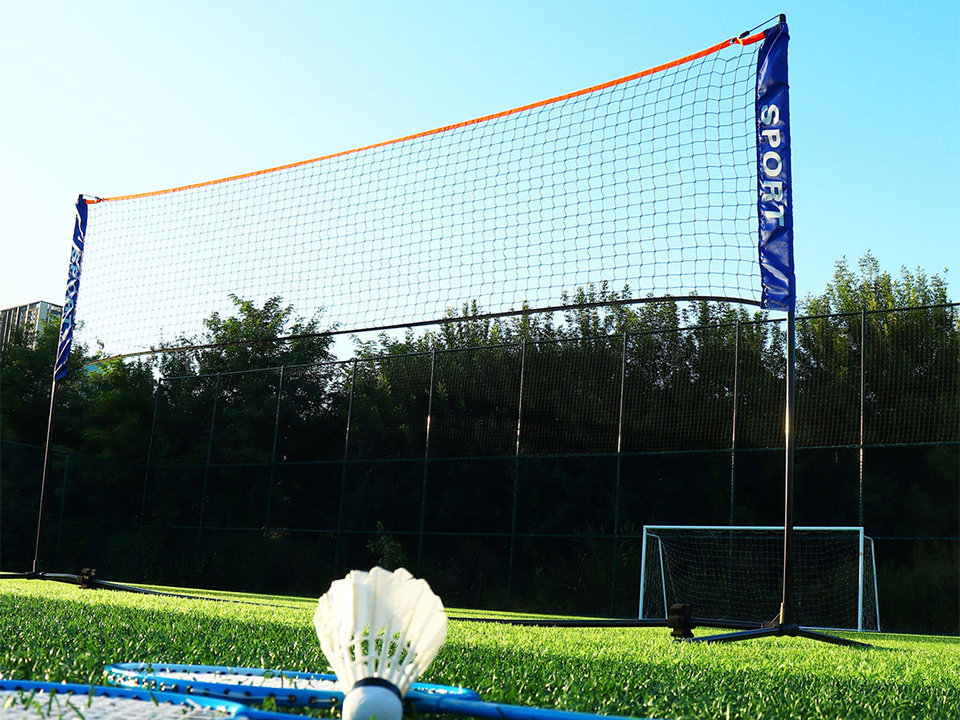
A height-adjustable badminton net like the height-adjustable portable badminton net set with carry bag helps a lot, because staff can tweak height quickly instead of fighting fixed hardware.
For clubs and multi-sport halls, weak hardware becomes a real pain point: lost court time, coach complaints, and poor “sell-through” if you also run a shop on site.
Real-world court scenarios: when sagging nets hurt play and revenue
Here’s how sagging nets show up in daily use:
- School gyms PE teachers don’t have time to adjust nets every period. By the last class, the center is too low. Kids start arguing about in/out calls.
- Community centers Different groups use the same nets for multi-sport. Someone lowers the setup for volleyball and doesn’t bring it back to spec for badminton. The next group walks into a mess.
- Retail and e-commerce You ship a portable set. The buyer sets it up on uneven ground. A month later they send a picture: the net is sagging. They think it’s “defective,” even though it’s an install issue.
If you sell or manage nets, that’s real business risk: returns, chargebacks, and low ratings. If you want repeat orders from clubs and distributors, “net stays up” matters as much as “net looks good in the box.”
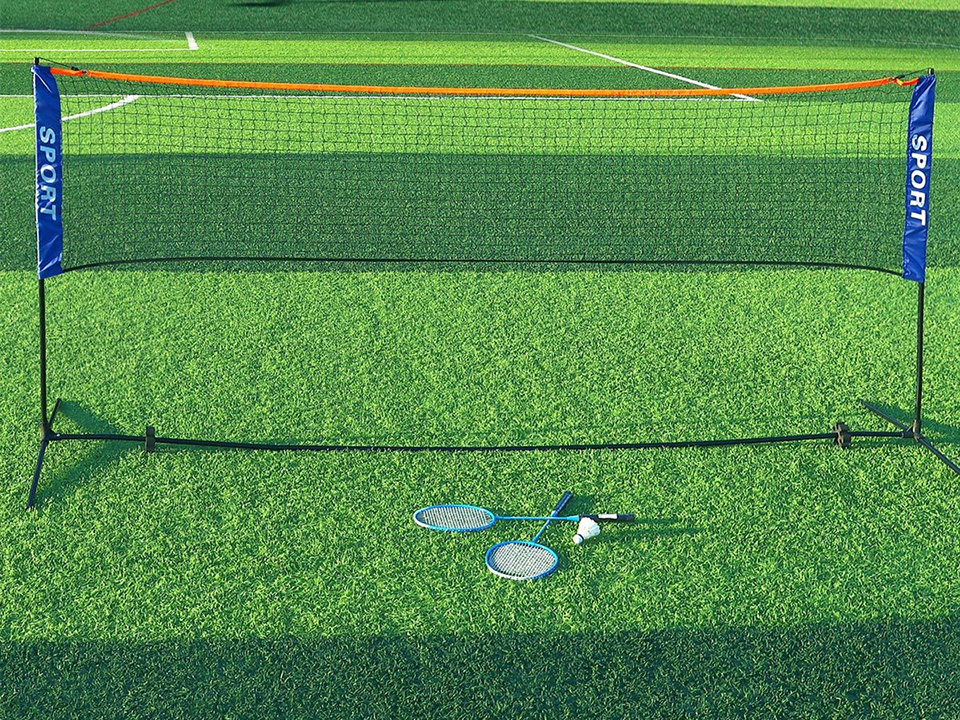
How FSPORTS designs badminton nets to hold height longer
As a top premium sports netting manufacturer in China, FSPORTS builds nets from golf range cages to stadium backstops, and that same mindset flows into the badminton line.
FSPORTS badminton net options for clubs and retailers
For buyers who care about tension stability and lifetime value, FSPORTS offers several badminton and multi-sport options:
- A portable badminton net set that focuses on quick assembly but still gives you a stable frame for repeat use.
- An indoor and outdoor badminton net that handles weather and frequent transport, ideal for rental fleets and seasonal programs.
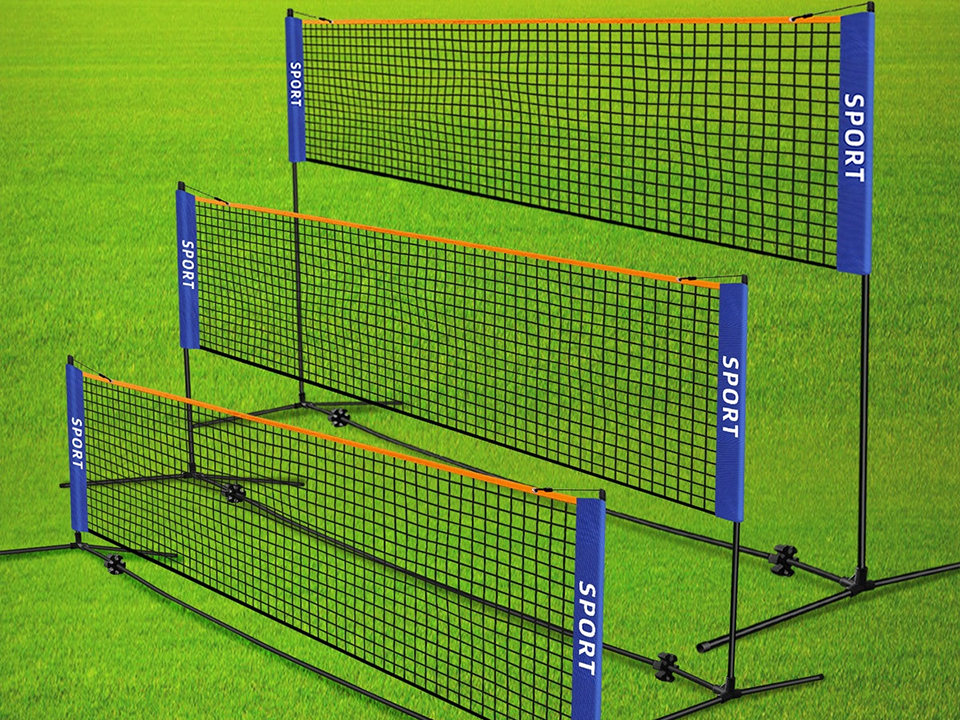
- An adjustable badminton volleyball tennis net system that lets you switch sports while keeping proper tension — perfect for multi-use gyms and parks.
- A multi-sport net system with height adjustment for volleyball, tennis, badminton, and pickleball, so your staff doesn’t need three different rigs.
- A competition-ready badminton net with stronger frame geometry to reduce flex and sag in higher-level play.
- A full badminton net set for pickleball, volleyball, soccer, and tennis when you want one SKU that solves several court formats in your catalog.
Behind these products, FSPORTS focuses on:
- UV-treated mesh and headband materials for better outdoor life.
- Stiffer frames and smart base design to cut down on wobble and unwanted tilt.
- Easy-to-use tension adjusters so coaches and staff can “dial in” the net in seconds, not minutes.
- OEM/ODM and private label options if you want your own branding, packaging style, and spec sheet.
For B2B buyers — retailers, wholesalers, distributors, storage operators, and e-commerce sellers — that means you’re not just buying a net. You’re buying fewer complaints, better reviews, and smoother inventory turns.
Quick checklist to keep your badminton net from sagging
To wrap up, here’s a simple checklist you can give to staff or customers. It’s easy to understand and works with any brand:
- Measure at posts and center Check 1.55 m at the posts and 1.524 m in the middle. Don’t chase a “perfectly straight” line.
- Set proper tension, don’t guess Tighten until the center sits at spec. If the frame starts to bend, ease off.
- Inspect hardware weekly Look at hooks, buckles, straps, and post sleeves. Replace worn parts before they fail.
- Log adjustments For busy facilities, add net checks to your regular maintenance schedule. Treat it like floor cleaning.
- Store nets correctly If you pack down portable systems, dry the net first and avoid sharp bends in the cable.
- Choose better materials for heavy use For high-traffic or outdoor courts, steer customers toward reinforced, UV-resistant systems like the FSPORTS multi-sport and competition-grade nets above.
Do this, and that “why is the net sagging again?” question shows up far less in your inbox. Instead, players get cleaner rallies, your buyers trust your catalog more, and your courts stay closer to spec for much longer.