Tell us what you want to develop. FSPORTS supports OEM/ODM, private label, and custom sports netting projects based on your existing product, drawing, sample, photo, or application requirement.
Share the product type, dimensions, target quantity, destination, and any known mesh, material, frame, hardware, logo, or packaging requirements. If your specification is not complete yet, send what you have and we can review the remaining details before quotation.
Professional Lacrosse Goals For League Procurement
If you run a league, you don’t just buy “a few goals.” You build a hardware standard that needs to survive seasons, weather, and budget meetings.
Most field leagues now look for three things when they write specs for professional lacrosse goals:
Rule-correct size for all sanctioned games.
Heavy duty frame plus net that can handle pro level shots.
Easy ops for your crew: move, store, and swap nets without drama.
That’s where a netting factory like FSPORTS comes in. The brand sits behind many OEM and private label goals and nets for retailers, distributors, and teams worldwide.
Below is a simple size and usage table you can drop into an RFP or spec sheet.
Lacrosse goal size and use case comparison
Goal type
Typical size
Main use case
Hardware example
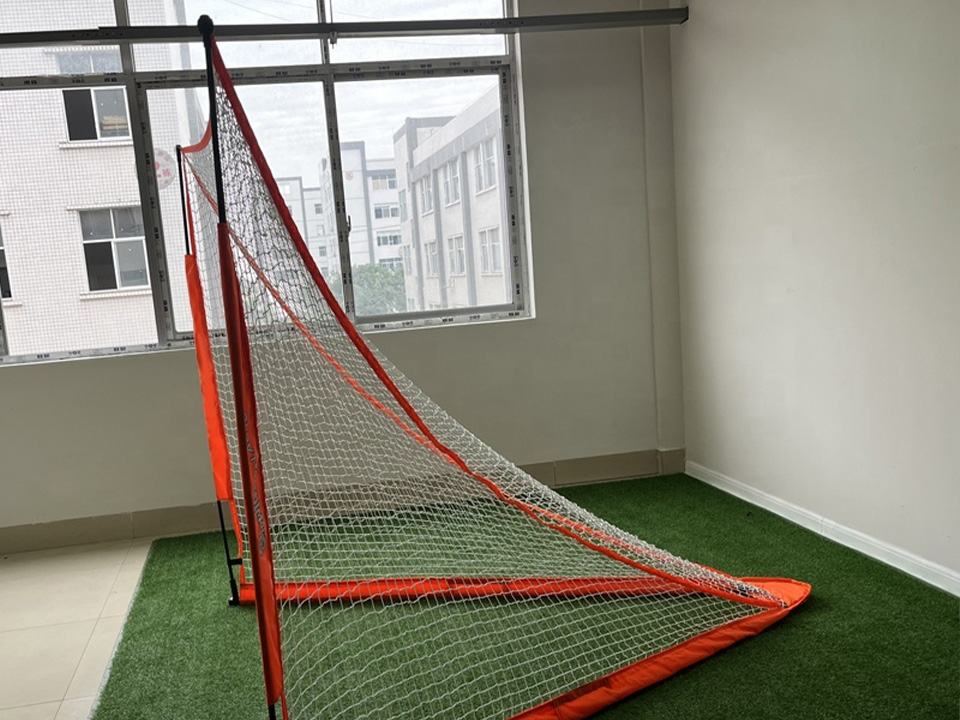
Professional full-size lacrosse goal
6 ft x 6 ft frame
Adult league games, college games, serious club fields
You can use this table as a quick roadmap when you plan a full league roll-out, not only single goals for one field.
Regulation 6×6 lacrosse goal specifications for leagues
For most outdoor leagues, regulation 6×6 lacrosse goals are the backbone. If your frame and net don’t match that size and depth, you’ll fight with refs and coaches all year.
Full-size lacrosse goal dimensions for adult leagues
A good spec for adult field play usually includes:
Inside frame opening: 6 ft x 6 ft
Depth: enough room for the keeper and net (commonly around 7 ft at the base)
Bright frame color (often orange or red) for clear sight lines
You can lock this down with a simple line in your procurement doc:
“All match goals must be full-size 6 ft x 6 ft field lacrosse goals with welded steel frame and heavy duty net.”
Some clubs still use full-size 6×6 goals for older youth.
Smaller 4×4 or training goals make more sense for U8 and backyard style sessions.
For development work, many leagues pair match goals with bigger training frames like the 12x9ft lacrosse goal with sandbags. Coaches get a safe, wide shooting wall where kids can miss high or wide without losing balls.
From a procurement view, that means:
Keep one standard match size across age groups so refs stay happy.
Add a small pool of training-only frames in different sizes for camps and clinics.
Heavy duty steel lacrosse goal frames for high impact play
Size is just the start. A league goal takes thousands of shots and regular moves across turf. Thin tube frames bend, rust, and wobble. That burns budget fast.
Heavy duty steel lacrosse goal frame design
For pro or college level impact, you usually want:
They stay square even after hard contact at the pipe.
They need less welding repair between seasons.
They sit solid on the line, so keepers can trust their angles.
From a buying angle, you lower lifecycle cost by choosing frames that last, even if the first invoice is higher. You swap nets and target sheets over time, but the core steel stays in play.
Lacrosse goal nets, backstop systems and replacement netting
The frame gives shape. The net is where most wear and tear happens. A bad net makes your league look cheap and slows games when balls punch through.
High strength lacrosse goal nets and backstops
For match use, you want:
Thick, high-strength mesh that can take hard shots.
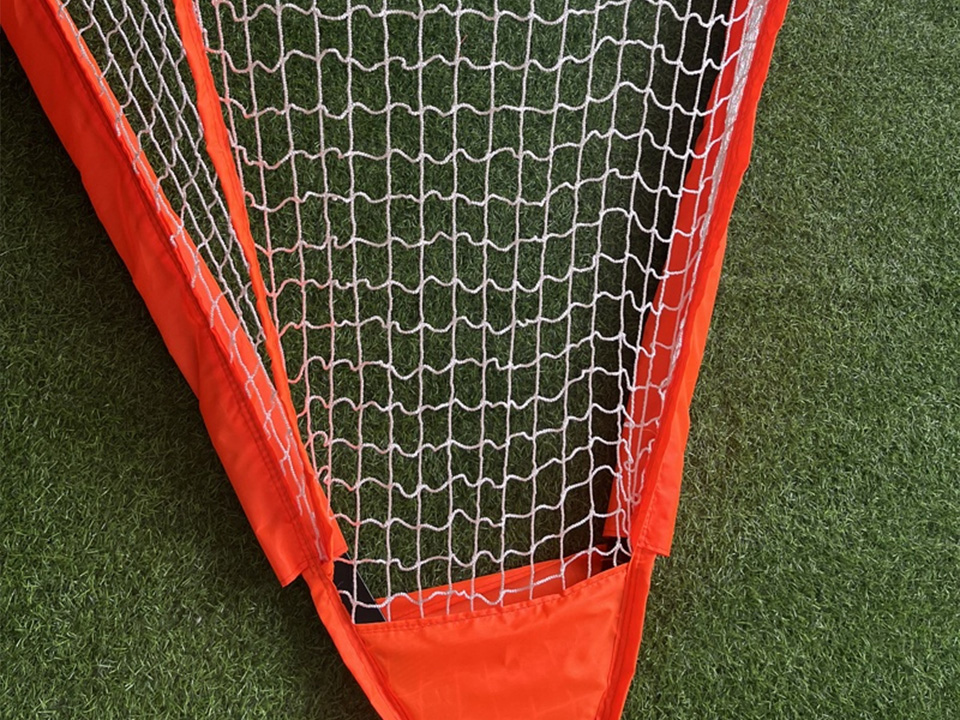
Knot or knotless design that doesn’t tangle on the frame.
Good UV and weather resistance for outdoor leagues.
Match goals like the professional full-size lacrosse goal use strong mesh with tight binding around the steel. You can back this up with a field-wide safety net like the heavy-duty lacrosse backstop net. That backstop saves balls, protects fences, and keeps your neighbors calm.
This combo is very common in multi-field parks:
Front line: two heavy duty match goals.
Back line: one long backstop curtain behind both goals.
Your crew spends less time chasing balls. Players get more reps. Insurance managers sleep better.
Replacement lacrosse goal nets and rebounders
No matter how strong the mesh is, nets wear out before frames. A smart league spec separates frame life and net life.
Your warehouse can hold extra nets as a simple SKU. When a site report comes in (“corner mesh shot out on field 3”), your staff just ships a new net instead of replacing the whole goal.
Practical league use cases for professional lacrosse goals
Let’s map gear choices to real league scenes. This is where buyers feel the difference between a basic catalog goal and a full setup.
Game day on a shared stadium field
Scenario:
City stadium hosts football in autumn, lacrosse in spring, and school events all year.
Field crew needs to turn the field fast and move goals without damage.
Tight field layout with many reps in a small space.
With a netting factory like FSPORTS behind the gear, the club can also dial in custom mesh specs, branding colors, or private label tags for their own store and e-commerce channels.
OEM, ODM and bulk lacrosse goal supply for B2B buyers
If you’re not just a league, but also a retailer, distributor, or OEM brand, you care about more than the next match. You need a stable supply chain and flexible design.
Lock in bulk orders for frames, nets, or full kits for your catalog.
Run OEM or ODM projects if you want custom specs or white label designs.
Serve different channels at once: pro clubs, schools, stores, and online sellers.
Because FSPORTS builds not only lacrosse gear but also golf cages, soccer goals, pickleball nets, and other systems, B2B buyers can standardize across sports with one main vendor. That cuts lead times and simplifies QC.
When you write your next RFP or vendor brief for professional lacrosse goals, you can keep it simple:
Define sizes and formats you need: match goals, training frames, backstops, rebounders.
Set frame specs: steel tube size, weld quality, coating, and stability.
Set net specs: mesh strength, knot type, color, and change-out method.
Add ops details: storage, movement, and replacement plan.
Choose a manufacturing partner that understands both league needs and wholesale business.
Do this well and your league gets consistent cages on every field. Your players get better shooting reps. Your staff gets fewer complaints. And your business builds a clean, scalable product line around professional lacrosse goals that actually fits how the sport is played today.