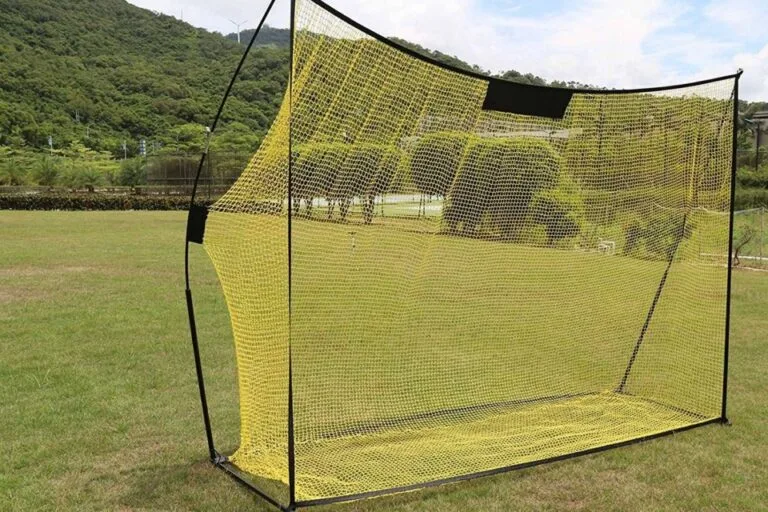
Tell us what you want to develop. FSPORTS supports OEM/ODM, private label, and custom sports netting projects based on your existing product, drawing, sample, photo, or application requirement.
Share the product type, dimensions, target quantity, destination, and any known mesh, material, frame, hardware, logo, or packaging requirements. If your specification is not complete yet, send what you have and we can review the remaining details before quotation.
How To Plan For Multi-Sport Facility Netting Installation
Why Most Netting Projects Start Too Late
Start earlier. Much earlier.
I’ve seen this movie before: a facility owner signs off on flooring, lighting, divider curtains, wall pads, maybe even the logo package, and then—right at the point when the money is already bleeding out of the budget—someone says, “Wait, what about the netting?” That’s how bad installs get born. Quietly. Expensively. And usually with a fake smile from a vendor who knows the scope is still mush.
It gets worse.
Because multi-sport facility netting installation isn’t really a “netting” problem in the way most buyers imagine it. It’s a ball-flight problem, a structural-load problem, a changeover problem, a sightline problem, and, on the ugly days, a liability problem wearing a nylon mask. I frankly believe that’s where the industry plays games with people—too much talk about mesh, nowhere near enough talk about trajectory, anchor loads, swing zones, dead-ball areas, and how the space actually operates on a Tuesday at 7:15 p.m. when baseball training is running on one side and pickleball players are already complaining on the other.
So where do I start?
Not with catalogs. Not with glossy renderings. And definitely not with a random “heavy-duty” claim that means absolutely nothing without context. I start with the danger map—where balls go, where they ricochet, where spectators drift, where coaches like to stand, where kids ignore boundaries, and where the room turns chaotic once multiple sports overlap.
That sequence isn’t me being dramatic. The 2024 City of Orange design brief for El Modena Park explicitly called for a professional foul-ball trajectory analysis before final netting geometry, and that’s exactly the order I trust. Not because it sounds technical. Because it is technical. And because geometry decided late is geometry paid for twice. (citydocs.cityoforange.org)
Choosing the Right Netting by Sport and Use Case
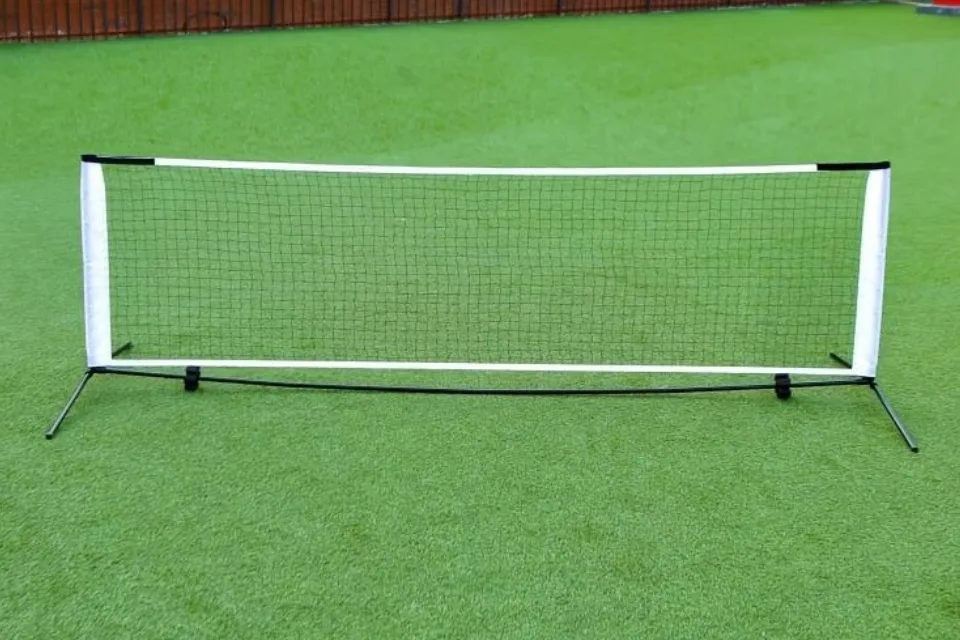
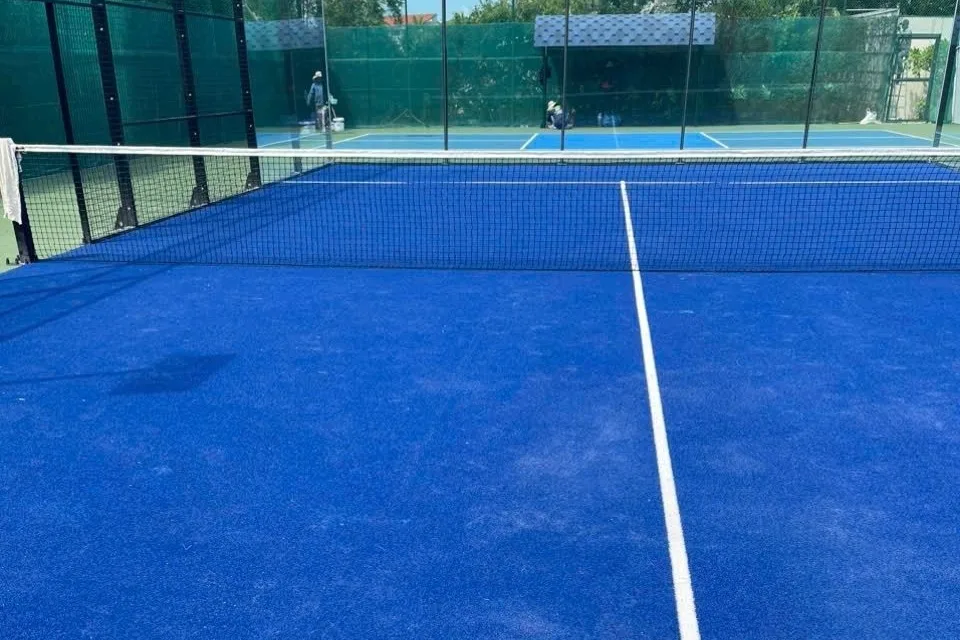
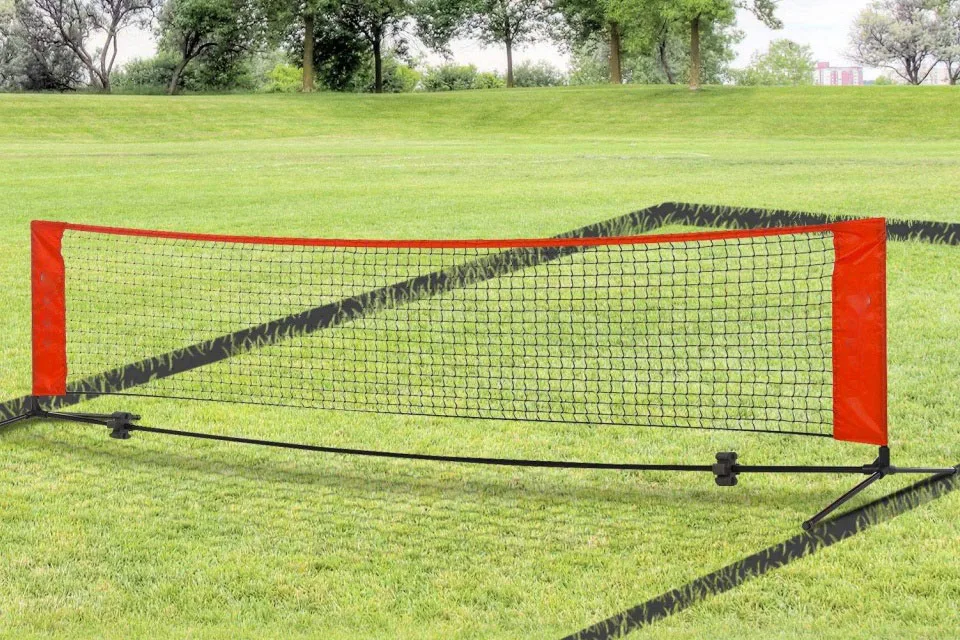
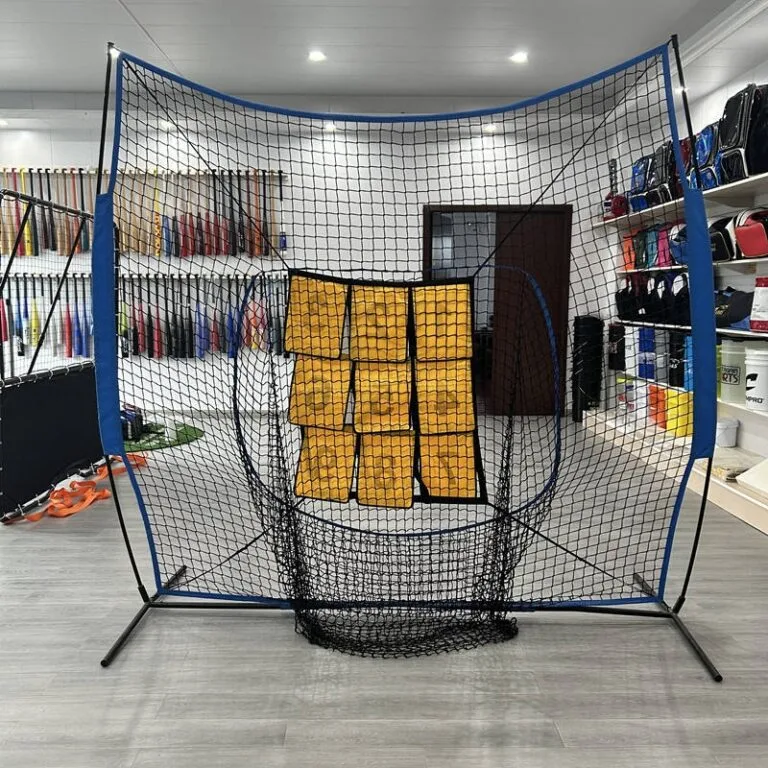
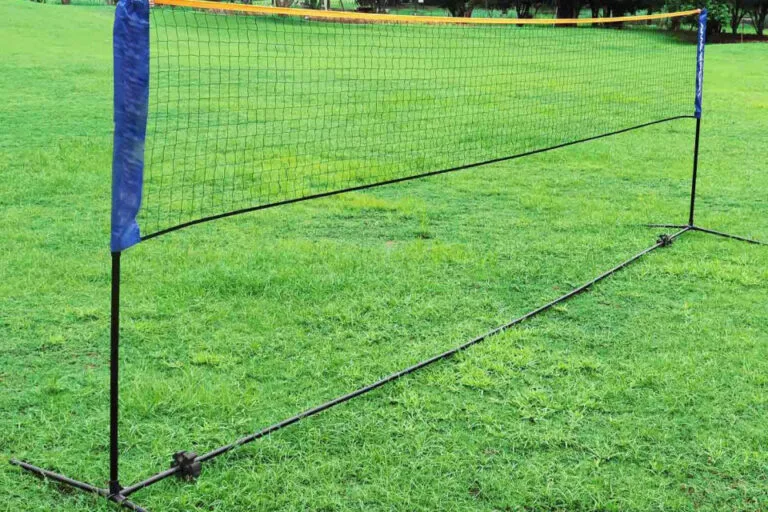
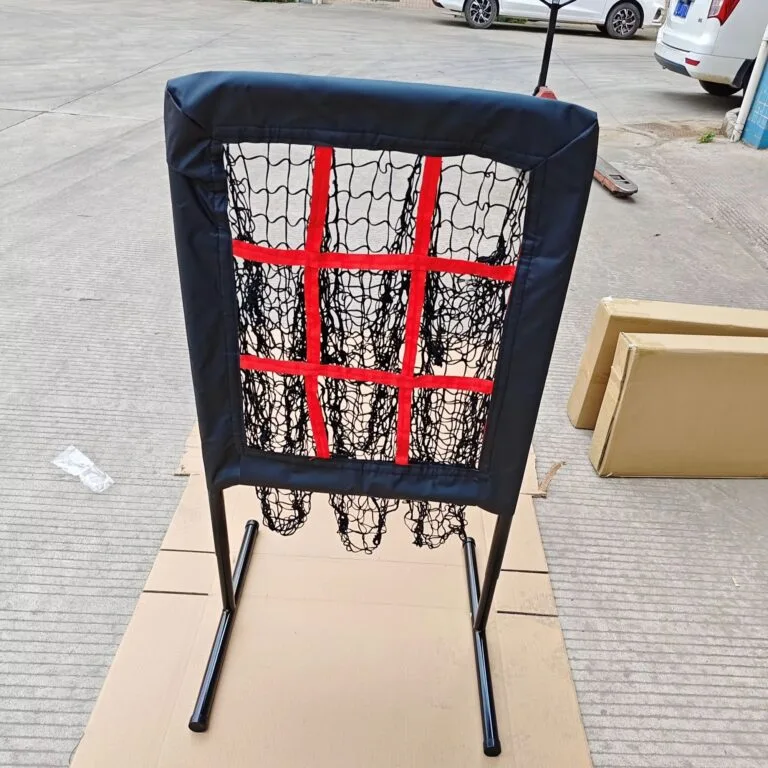
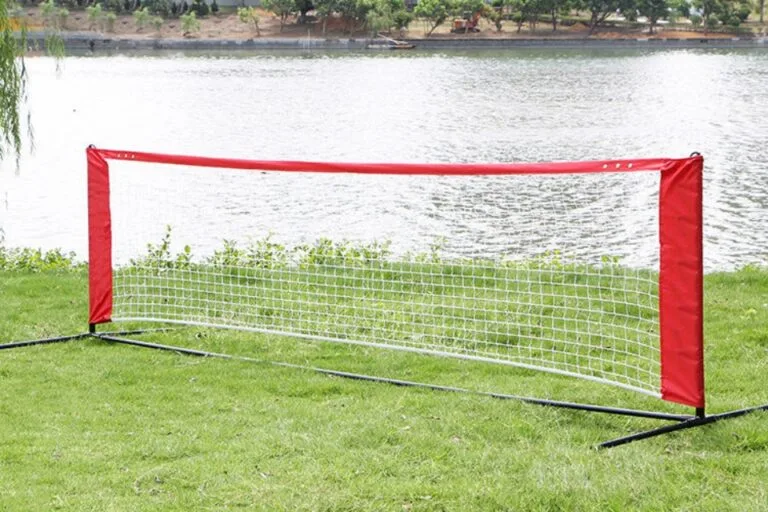
Here’s the ugly truth: buyers keep shopping as if one net can solve every problem in a shared facility. It can’t. Baseball backstop behavior isn’t golf range containment. Pickleball separators aren’t the same thing as impact zones. Tennis needs visibility. Golf needs stopping power. Hockey-adjacent protection gets twitchy fast when rebounds and frame durability enter the picture. That’s why I’d review multi-sports net systems, baseball net options, and golf net solutions as different spec families—not one happy bucket of “sports stuff.”
Structural Specs Matter More Than Buyers Think
Steel first.
Seriously, this is where a lot of cheap proposals start to smell funny. People obsess over net color, border finish, maybe whether the twine is braided or knotted, while the real story is hiding in the bones of the install: poles, cable, footing depth, end loads, attachment hardware, concrete, edge reinforcement. That stuff. The unsexy stuff. The stuff that determines whether the system behaves like a facility asset or a future headache.
The cleanest real-world example I found was Ogden City’s 2024 bid for the El Monte Golf Course practice range. It wasn’t fluffy. It specified an LFS #930 golf net, UV-treated polyester with sewn borders, 40-foot AGL steel poles, 10.75-inch minimum pole diameter, 0.250-inch minimum wall thickness, 8-foot minimum engineered depth, 24-inch minimum boring, 3,000 psi concrete, 20,000-pound end anchors, and 5/16-inch minimum cable size. That’s the kind of detail I trust because it tells me the buyer understood a very basic fact: the fabric is only half the system. Maybe less. (ogdencity.gov)
And no, I don’t think this is overkill.
From my experience, the minute a vendor gets vague about pole schedule, cable gauge, footing assumptions, or anchor loads, you’re no longer reviewing a real sports barrier netting installation package—you’re reviewing sales vapor. That’s when change orders start circling overhead like vultures. The bid looks tidy. The install won’t.
Why Demand and Shared Use Change the Planning Model
Demand changes everything.
That matters because shared-use sports facilities aren’t niche anymore, and pretending otherwise is lazy planning. In the 2024 St. Catharines Sports Field Strategy, the city reported 2,015 baseball and softball participants and a service level of one field per 77 players, while also noting user preference for additional multi-diamond complexes. Then you look at Sport Singapore’s 2023/2024 annual report, where the new Jurong Town facility was described as supporting football, hockey, pickleball, tennis, and sheltered multi-sport courts, and it had already attracted 86,000 visitors since opening. That’s not theoretical demand. That’s operational pressure. Real bodies. Real bookings. Real collisions between sport needs. (stcatharines.ca)
And once the demand stack gets dense, bad zoning gets exposed fast.
A Smarter Way to Zone a Multi-Sport Facility
I break these jobs into three buckets. Not because it sounds neat. Because it works. Usually.
Containment Zones
First: containment zones. Those are the high-energy ball-path areas—the spots where baseballs, softballs, golf balls, maybe hard-driven shots, can leave play and become somebody else’s problem.
Divider Zones
Second: divider zones. Different animal. These are often about coexistence, visibility, and reducing interference between adjacent courts or training stations.
Conversion Zones
Third: conversion zones—the trickiest ones—where the room needs to flip, reset, retract, slide, or roll between use cases without a staff mutiny.
That last one gets ignored too often.
A lot of indoor sports netting installation failures aren’t really material failures at all; they’re operational failures. The spec may be technically fine, but the room can’t convert quickly, the tracks bind, the drops are in the wrong place, the stack zones eat usable space, or the system demands two staff members and a ladder every time the schedule changes. That’s not flexible. That’s fake flexibility.
Safety, Liability, and Why Evidence Matters
But let me say the quiet part louder: safety claims should be backed by evidence, not just “well, everybody does it this way.” The Cambridge study on MLB foul-ball injuries found 0.42 to 0.55 foul-ball injuries per game serious enough for first-aid-center presentation, and the authors concluded that in roughly every two or three MLB games a foul ball causes an injury serious enough that a fan seeks medical attention. Then there’s the 2024 Stetson Law Review article, which notes MLB’s recommendation that protective netting be extended to the foul poles while discussing the old “baseball rule.” So when someone tells me netting is mostly optional optics, I don’t buy it. Not for one second. (cambridge.org)
Budgeting and Vendor Evaluation
Budget honestly—or don’t bother.
I mean that. If you budget only for mesh panels and leave out engineering review, lift access, anchors, edge cable, specialty hardware, installation sequencing, or replacement stock, you’re not estimating. You’re fantasizing. And the industry, sadly, will let you fantasize right up until the PO is signed.
The 2023 University of Utah baseball stadium proposal handled this like a grown-up project: netting sat inside a broader public-safety and neighborhood-mitigation framework, with a $35 million total project budget and a timeline running from 2023 design to March 2025 opening. Different scale, sure. Same lesson. You don’t bolt this stuff on at the end and expect elegant outcomes. (ushe.edu)
And I’m skeptical of pretty websites. I always am.
So I look for the boring evidence. Manufacturing discipline. Border stitching. Rope termination. UV treatment consistency. Sleeve reinforcement. Weld finish on portable frames. Packaging that suggests the company has actually shipped these systems repeatedly instead of improvising every crate. That’s why I’d spend real time on the factory tour and not just the hero banner. You can learn more from production habits than from a dozen polished sales lines.
Why Service Scope Matters
Same with service scope.
A vendor’s services page matters more to me than people think, because the real question isn’t “Can you sell me a net?” The real question is: who owns design review, who confirms attachment conditions, who flags substitutions, who coordinates install sequence, who handles spare panels, and who answers when a cable line starts sagging six months in? That’s where the wheat gets separated from the chaff.
Planning Checklist for Multi-Sport Facility Netting Installation
Planning area
What to lock early
Specific questions that separate pros from bluffers
Common failure
Risk mapping
Ball paths by sport, age group, and direction of play
Where are the worst flight paths, rebound paths, and spectator exposures?
Buying net height before mapping trajectories
Structural system
Pole heights, wall thickness, cable loads, anchors, footings
What are the pole specs, footing depths, cable diameters, and engineering assumptions?
Treating the net like drapery instead of a loaded system
Facility zoning
Containment, divider, and conversion zones
Which areas need fixed netting, retractable tracks, or portable frames?
Using one solution for every zone
Sport-specific spec
Mesh/application by baseball, golf, tennis, pickleball, hockey
Which sports require impact containment versus light separation and visibility?
Copy-pasting one spec across all sports
Procurement
Scope boundaries and substitutions
Who owns design review, hardware, installation, lifts, freight, and spare parts?
Accepting vague “or equal” substitutions
Operations
Inspection, repair access, replacement cycles
How will damaged panels, cables, or hooks be replaced during the season?
Designing a system nobody can maintain quickly
I like tables because they strip the romance out of the conversation.
And here’s mine: a real gym netting installation guide doesn’t begin with color swatches or catalog SKUs. It begins with flight paths, impact zones, support conditions, turnover frequency, and maintenance reality. That order matters. Get it wrong, and the whole job starts leaning on workarounds—ceiling baffles where you needed containment, portable frames where you needed a fixed backstop, apology emails where you needed planning.
FAQs
What is multi-sport facility netting installation?
Multi-sport facility netting installation is the planning, engineering, fabrication, and placement of fixed, retractable, or portable net systems that contain balls, separate adjacent activities, protect spectators and staff, and let one venue safely support several sports with different speeds, trajectories, and visibility demands. That’s the clean definition. In practice, it’s the operating skeleton of a shared-use sports space.
How do you choose the best netting for a multi-sport facility?
The best netting for a multi-sport facility is the system that matches each zone’s real use case—impact containment, visual separation, or flexible conversion—while accounting for ball speed, rebound risk, ceiling height, support structure, and how often the room changes over between sports or programming modes. I wouldn’t choose by marketing labels. I’d choose by zone behavior, staff workflow, and structural reality.
How much should you budget for sports barrier netting installation?
Sports barrier netting installation should be budgeted as a full-system cost that includes engineering, poles, tracks, cables, anchors, footings, hardware, freight, lift equipment, installation labor, and future replacement access, because the visible mesh is only one part of what the facility is actually buying. That’s the honest answer. Fabric-only pricing is how owners get baited.
Do you need fixed or retractable netting?
Fixed or retractable netting should be chosen based on risk level, conversion frequency, staffing, and whether the facility can realistically operate the hardware without slowing scheduling or increasing maintenance headaches, because flexibility is only valuable when the building team can use it quickly and correctly. I prefer fixed systems in high-risk containment zones. I prefer retractables when turnover speed actually drives revenue.
What should you ask a netting vendor before signing?
You should ask a netting vendor to define material type, mesh application, UV treatment, flame rating where needed, border construction, support loads, pole specs, footing assumptions, cable size, lead time, spare-part availability, warranty exclusions, and who is responsible for final engineering review and installation sequencing. Don’t skip the exclusions. That’s where the bodies are buried.
Conclusion
Most buyers still over-focus on the net and under-focus on the system. That’s backwards. Start with the services team, compare the right multi-sports net systems, inspect how the company actually builds through the factory tour, and then contact the team with your sport mix, layout, clear height, structural conditions, and turnover goals. Better inputs. Better quote. Fewer regrets.