Tell us what you want to develop. FSPORTS supports OEM/ODM, private label, and custom sports netting projects based on your existing product, drawing, sample, photo, or application requirement.
Share the product type, dimensions, target quantity, destination, and any known mesh, material, frame, hardware, logo, or packaging requirements. If your specification is not complete yet, send what you have and we can review the remaining details before quotation.
Are Your Soccer Goals Really Match Grade Or Just Hobby
You can tell a lot about a soccer setup in the first five minutes. The goal “looks fine,” then your striker hits a clean far-post shot and the frame flexes. Or the net pops loose and the ball rolls back out like it never went in. That’s when people start asking the real question: is this goal match grade, or is it just for weekend kicks?
This guide breaks it down with practical checks you can do on-site, plus a simple spec table you can hand to a coach, facility manager, or buyer. If you’re sourcing nets or goals at scale, you’ll also see where FSPORTS fits in for custom, bulk wholesale, and OEM/ODM supply.
Match grade vs hobby: quick checklist table
Spec area
Match-grade target
Hobby red flag
Why it matters
Source you can cite (no links)
Regulation size
Full-size adult goal is 7.32m × 2.44m (24ft × 8ft)
“Close enough” size
Angles, finishing reps, keeper positioning all change
IFAB Laws of the Game
Stability
Anchored or properly weighted every session
“It’s heavy so it won’t tip”
Tip-over risk + inconsistent play
CPSC soccer goal safety guidance
Frame integrity
Rigid joints, consistent welds, no twist
Frame racks when moved
Goal mouth goes out of square
Facility procurement best practice
Net retention
Secure net clips/cord channels
Net slips or gaps at posts
“Ghost goals” and re-shoots
Training operations best practice
Material for outdoors
UV-resistant net + weather-ready frame
Brittle net after one season
Faster wear, returns, complaints
Manufacturer spec + QA documents
Compliance language
Clear “regulation size / standard size / safety guidance” wording
If you only remember one thing, make it this: adult full-size soccer goals are 7.32m wide and 2.44m tall. That isn’t trivia. It’s training geometry.
When the goal runs small, players stop trusting far-post windows. They start “aiming safe.” That changes shot selection and slows development. When the goal runs big, keepers cheat their set position and get punished in real matches.
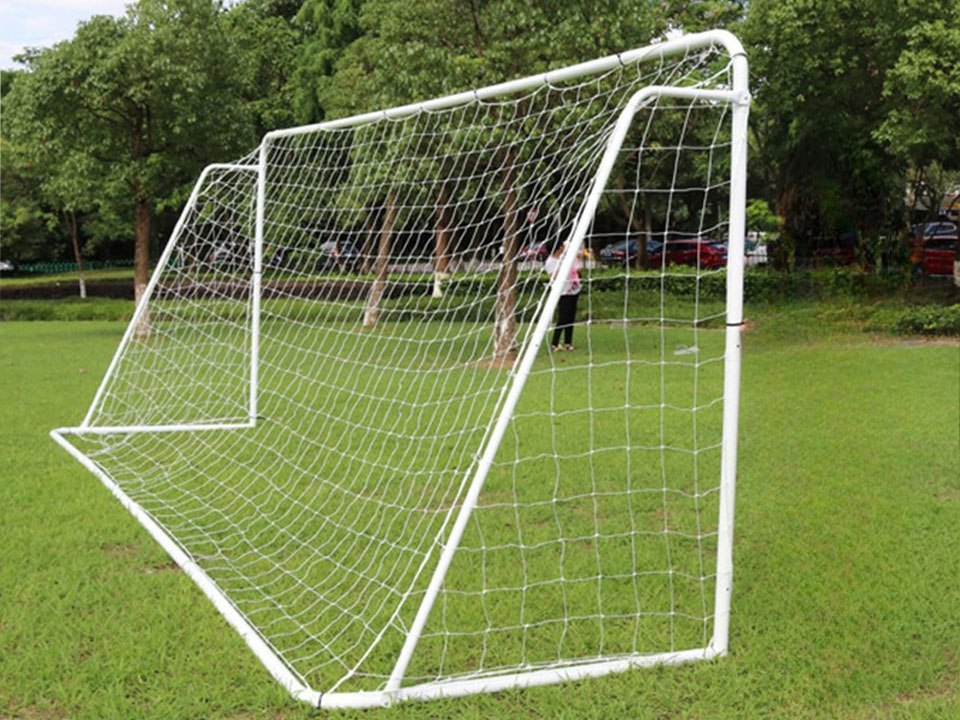
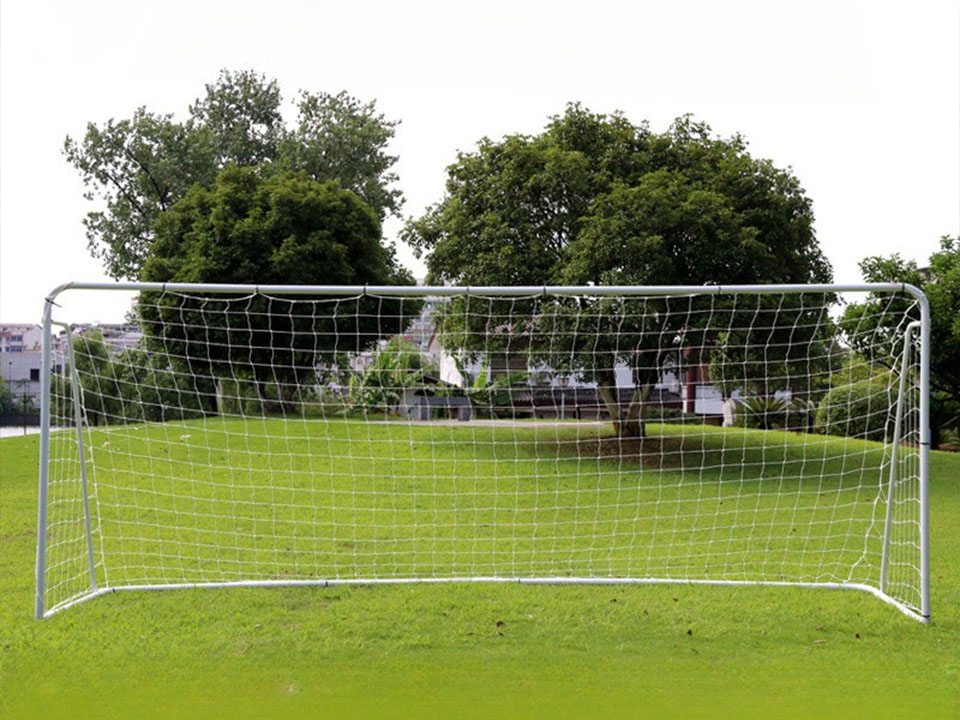
Full-size soccer goal training
If you run 11v11 sessions, match the goal to the match. Your finishing drills should produce the same shot map you’ll see on game day. Otherwise, you’re stacking reps that don’t transfer.
2) Match grade definition: size + structure + safety
People treat “match grade” like a vibe. Buyers and coaches don’t need vibes. They need a pass/fail checklist.
A match-grade setup usually means:
correct size for the competition level
solid frame and joints that stay square
net that stays tight and attached
safety steps that prevent tipping or shifting
Match grade soccer goal buyer checklist
If you’re buying for a school, club, or park district, write these checks into your PO notes. It saves you from the classic headache: the gear arrives, looks good, and then fails on the first windy day or heavy practice block.
3) FIFA Quality Programme for Football Goals and third-party test language
Here’s the straight talk: leagues and facility managers trust what they can verify. That’s why many serious buyers look for product language that references a recognized test program or standard (for example, FIFA’s quality program framework for goals, or ASTM safety/performance language where it applies).
Even if you’re not running a pro stadium, that mindset helps. It tells you whether you’re buying a real piece of equipment or a photo prop.
Procurement keywords: FIFA Quality Programme for Football Goals
If you sell to clubs, retailers, or distributors, include the keywords they search for:
regulation size
safety anchoring guidance
material spec (UV resistance, impact use-case)
replacement net availability
bulk packaging and consistent QC
This is also where a manufacturer like FSPORTS can support you with made-to-order specs, OEM/ODM labeling, and wholesale fulfillment when you’re building a repeatable product line.
4) Youth soccer goal sizes and small-sided games
A lot of “bad goals” aren’t bad at all. They’re just the wrong size for the age group.
When kids train on oversized goals, coaches see wild shot choices and low confidence. When kids train on tiny goals, they stop lifting their heads because every finish feels blocked. Either way, development takes a hit.
Format / age group (typical)
Goal size (ft)
Goal size (m, approx.)
Practical takeaway
U6–U8
4 × 6
1.22 × 1.83
Keep it simple: fun reps, clean contact
U9–U10
6.5 × 18.5
1.98 × 5.64
Teach corners without impossible angles
U11–U12
7 × 21
2.13 × 6.40
Transition toward “real” finishing cues
U13+ / adult
8 × 24
2.44 × 7.32
Match the competitive standard
Youth soccer training goal sizes
If you’re a club operator, this table helps you standardize fields. If you’re a retailer or distributor, it helps you build the right SKU mix instead of guessing.
5) Portable soccer goal safety: anchoring and tip-over prevention
This part isn’t optional. Portable goals can tip. People get hurt. So treat anchoring like warm-ups: you do it every time, no debate.
A simple rule works well in the real world: if players can hang on it, climb it, or slam into it, you must secure it as if they will. Because they will.
Portable soccer goal safety checklist
anchor or weight the goal before play
re-check after moving the goal
don’t rely on “it’s heavy” as a safety plan
inspect net ties and clips so the ball doesn’t snag and pull the frame
6) ASTM F2950 and goal weight threshold: >40 lb (18 kg)
In the U.S., buyers often bring up ASTM language when they want a clear baseline. One common reference point is the >40 lb (18 kg) threshold used in safety/performance discussions for larger goals.
You don’t need to turn your website into a standards textbook. Just keep your spec sheets clean:
state the size clearly
state whether it’s portable
state the recommended anchoring method
state intended use (youth training, club, school, recreational)
School and park district purchasing requirements
If you sell B2B, this is where you win deals. Purchasing teams don’t want drama. Give them a spec they can approve fast, plus consistent packaging and QC for repeat orders.
7) Soccer goal frame depth, net shape, and rebound behavior
Two goals can share the same mouth size and feel totally different.
A deeper frame gives the net more volume, so balls don’t pop out.
A shallow setup can “spit” hard shots back into play.
Loose netting creates weird rebounds and messes with keepers.
That’s why training products like rebounders matter. They control the touch and return angle, so your drills stay tight.
You want gear that survives transport, rough handling, and quick resets. That means stable frames, simple parts, and nets that install without a 20-minute knot session. If you’re sourcing for resale or events, build a standard spec, then order in bulk with consistent QC so every field matches.
Where FSPORTS fits for bulk, custom, and OEM/ODM
FSPORTS positions itself as a premium netting manufacturer in China, supplying UV-resistant, high-impact nets in standard and made-to-order sizes for training facilities and sports venues. If you’re a retailer, distributor, or e-commerce seller building a reliable lineup, start from the full product catalog and lock your core SKUs first. Then add custom sizes, private label packaging, and replacement nets to lift repeat orders.
Internal links in this article were selected from your FSPORTS URL list