Tell us what you want to develop. FSPORTS supports OEM/ODM, private label, and custom sports netting projects based on your existing product, drawing, sample, photo, or application requirement.
Share the product type, dimensions, target quantity, destination, and any known mesh, material, frame, hardware, logo, or packaging requirements. If your specification is not complete yet, send what you have and we can review the remaining details before quotation.
What net twine thickness is standard for professional soccer goals vs training goals?
If you’ve ever ordered a soccer goal net and thought, “Wait… what’s the standard twine thickness?” you’re not alone. Most buyers don’t want a chemistry lesson. You just want a net that won’t blow out mid-session, won’t sag like a tired hammock, and won’t turn into frayed spaghetti after a few months of sun.
Here’s the honest answer: soccer rules usually don’t lock you into one exact mm for net twine. The “standard” comes from real-world usage—shot speed, training volume, weather exposure, and how often you want to replace the net. That’s why pro match nets and daily training nets often land in different thickness ranges.
Net twine thickness in soccer goal nets
“Twine thickness” (often shown in mm) is the diameter of the yarn/cord that forms the mesh. Thicker twine usually means:
better abrasion resistance (less fuzzing and fraying)
longer outdoor lifespan when paired with UV-stabilized material
slightly heavier net (more stable hang, but more weight to handle)
Thin twine isn’t “bad.” It just fits different usage. If you’re running light drills, portable goals, or seasonal setups, thinner can make sense.
Professional soccer goal net twine thickness
For professional match goals and high-intensity stadium use, the common buying range is:
4.0–5.0 mm twine as the “typical pro-grade” zone
sometimes 3.0–4.0 mm for leagues or venues that want a cleaner look, lower weight, or faster handling
Why pros lean thicker: a pro environment stacks stress. Think full-power shots every day, constant ball retrieval, and nets that stay installed through heat, rain, and UV. A thicker cord helps prevent snap points at the same mesh intersections that get hammered repeatedly.
Training soccer goal net twine thickness
For training goals, the practical “standard” shifts down:
2.0–2.5 mm for light duty (backyard, youth, portable pop-up goals, low weekly volume)
3.0–4.0 mm for club training (academies, schools, daily sessions, shared facilities)
Training nets die from repetition, not one single rocket shot. If your team runs finishing drills every evening, the net sees thousands of impacts. That’s where 3–4 mm pays off—less downtime, fewer repairs, fewer “we need a new net again” moments.
Standard twine thickness ranges: professional vs training goals
Use type
Common twine thickness range (mm)
What it’s trying to solve
Typical buyer profile
Light training / portable goals
2.0–2.5
easy setup, lower weight, casual use
backyard setups, youth programs, PE classes
Daily training / club facilities
3.0–4.0
high repetition, abrasion, shared wear
academies, schools, community clubs
Professional match / stadium
4.0–5.0
high shot velocity, long-term install, weather
stadium ops, pro clubs, venue contractors
A quick reality check: if you’re replacing nets too often, you’re probably under-spec’d on thickness (or missing UV protection). If you’re paying for a tank of a net that gets used twice a month, you’re probably over-spec’d.
Twine thickness vs durability for soccer goal nets
Twine thickness matters, but it’s not the only durability lever. Buyers who know the industry usually check a small “spec stack,” not one number.
UV resistance
Outdoor nets fail fast when the material isn’t UV-stabilized. UV damage makes cords brittle. Then a normal shot can crack a strand that “looked fine yesterday.” If your nets live outdoors, treat UV resistance like a must-have, not a nice-to-have.
Abrasion and ground contact
If the bottom of the net drags the turf, rubs against hard ground, or gets stepped on during resets, abrasion becomes the killer. Thicker twine helps, but so does smart design: proper net depth, correct hang, and avoiding sharp frame edges.
Mesh size and ball behavior
Mesh size doesn’t change twine thickness, but it changes how the net “catches” shots. Tight mesh can reduce ball push-through but increases the number of impact points per shot. That can be good—until your net is too thin for the drill volume.
Net “sag” and shape retention
Thicker twine can reduce visible sag, but shape retention also depends on material stiffness and how the net is tied. A well-built 3–4 mm net can look cleaner than a sloppy 5 mm net installed poorly.
Braided vs twisted twine for soccer goal nets
This is where a lot of buyers get surprised.
Twisted twine often costs less and works well for light-to-medium duty.
Braided twine usually handles abrasion better and tends to “stay together” longer when it starts to wear.
If you’re sourcing for clubs or resellers, braided construction can reduce complaints like “the net is fuzzy” or “it’s wearing through near the corners.”
Soccer goal net twine thickness by real-world use case
Backyard soccer training goals
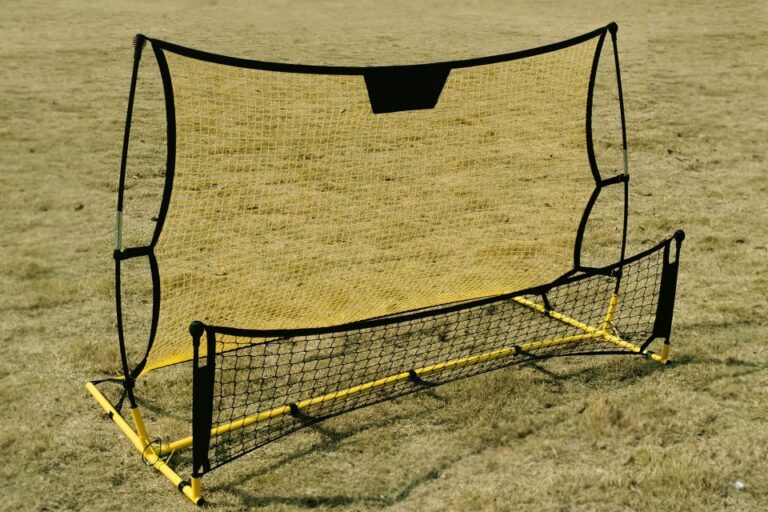
If you’re setting up in a yard, driveway, or a small cage area, 2.0–2.5 mm can work—especially if you store it away after use. Pair it with practical gear like rebound-style trainers so the net isn’t only acting as a shot-stopper. For example, a solo soccer net trainer and rebounder makes the session smoother when you’re training alone.
If the net stays mounted, sees high shot speed, and gets exposed to sun and rain, 4.0–5.0 mm becomes a common pick. You’re buying uptime. That’s also where details like reinforced edging, cleaner joining, and consistent mesh geometry matter because stadium crews hate fiddly maintenance.
Soccer goal net buying checklist for bulk and OEM/ODM orders
If you’re a distributor, retailer, or brand doing private label, you usually need repeatable specs—so you can reorder the same performance every season.
Spec item
What to confirm
Why it matters in the field
Twine thickness (mm)
target range by usage
controls wear rate and impact tolerance
Material
PE / PP / nylon (as required)
affects stretch, feel, lifespan, and price tier
UV stabilization
yes/no + requirement level
prevents brittle failure outdoors
Net construction
braided vs twisted
impacts abrasion resistance and appearance
Mesh size
match goal standard or training design
affects ball catch and push-through
Edge finishing
reinforced rope, binding, corner strength
reduces blowouts at stress zones
Packaging
bulk pack, retail pack, barcode, inserts
keeps fulfillment clean for resellers
FSPORTS soccer nets for wholesale, custom size, and OEM/ODM
If you’re sourcing for resale or project installs, you don’t need one “perfect net.” You need a supplier that can hit your spec and keep it consistent.
FSPORTS focuses on premium sports netting manufacturing in China, with UV-resistant, high-impact nets in standard and made-to-order sizes. That fits the way B2B buyers actually operate: you match twine thickness to usage, lock the spec, then scale it across bulk orders for your channel—retail, e-commerce, facility supply, or branded OEM/ODM lines.
3.0–4.0 mm: daily club use, schools, shared facilities
4.0–5.0 mm: pro match feel, stadium install, heavy outdoor exposure
Tell your supplier how the net will live—indoors vs outdoors, portable vs permanent, weekly volume, and who’s using it. That context picks the “standard” faster than any brochure ever will.