Tell us what you want to develop. FSPORTS supports OEM/ODM, private label, and custom sports netting projects based on your existing product, drawing, sample, photo, or application requirement.
Share the product type, dimensions, target quantity, destination, and any known mesh, material, frame, hardware, logo, or packaging requirements. If your specification is not complete yet, send what you have and we can review the remaining details before quotation.
Outdoor Pickleball Net — are portable nets “commercial grade” enough for public courts?
Public courts have one job: stay playable, day after day, with as little drama as possible. That’s why the “portable vs permanent” net question keeps coming up in parks, schools, and rec centers. You can absolutely run public play with a portable setup. But “commercial grade” isn’t a sticker. It’s a mix of regulation specs, tension stability, durability, and facility operations.
Below is a practical breakdown you can use for a spec sheet, an RFQ, or a purchase review—plus real-world scenarios that match how courts actually run.
Pickleball net height 36 inches at posts and 34 inches at center
If a net can’t hold regulation height, players will call it out fast. You’ll also see more “was it in?” arguments because the ball behaves differently when the center sags.
Baseline specs that matter on public courts
Net height at sidelines/posts: 36 inches
Net height at center: 34 inches
Net width: typically 22 feet (so it reaches past the 20-foot court width)
Portable nets can meet these numbers on day one. The real question is whether they still hold them after repeated setup, wind, and hard hits.
Portable pickleball net commercial grade vs permanent net durability
Here’s the blunt truth: portable nets trade “set-and-forget” for flexibility. That trade can still be worth it, especially on shared-use courts or during seasonal programming.
Where portable wins
Shared-use facilities (tennis in the morning, pickleball at night)
Temporary overlays (school gyms, community events, pop-up leagues)
Fast installs without construction downtime
Where permanent usually wins
24/7 outdoor exposure with no staff support
High traffic courts with daily play
Sites that want consistent tension without constant adjustment
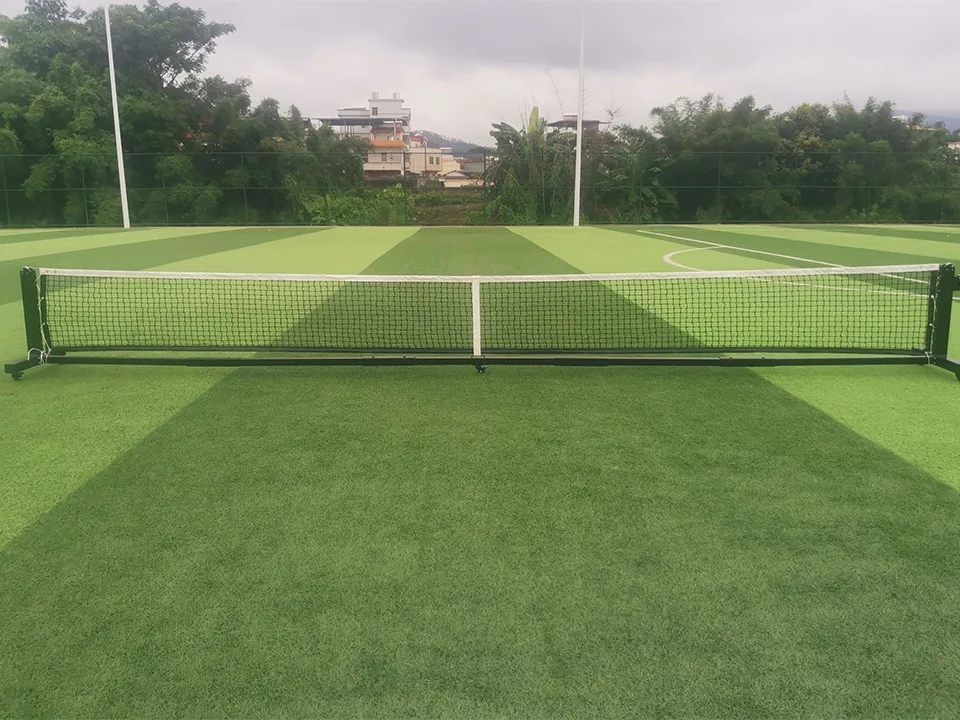
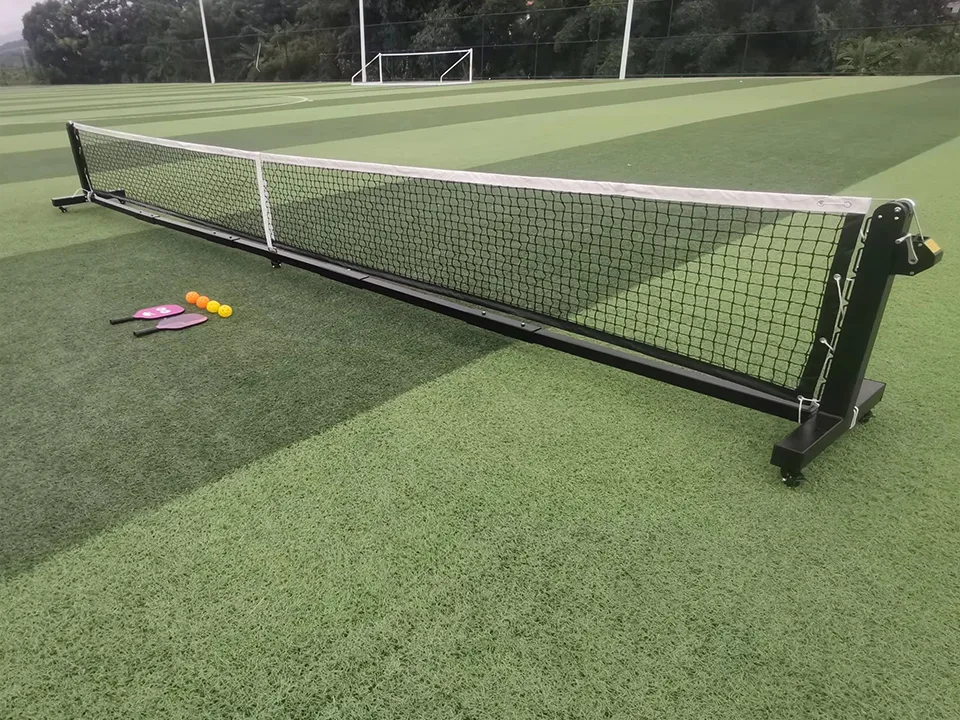
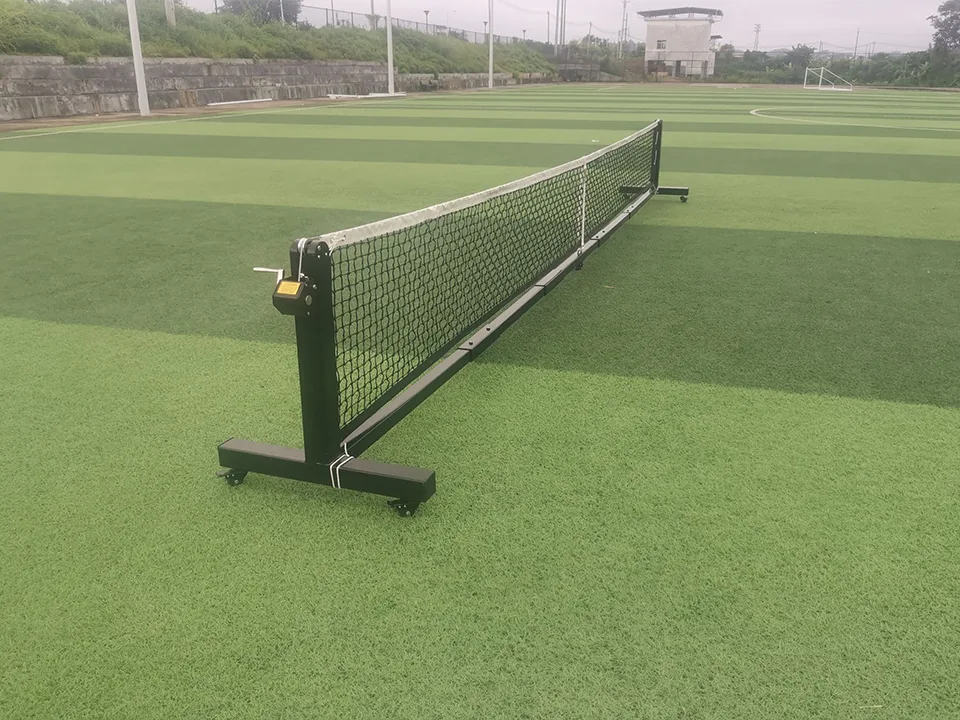
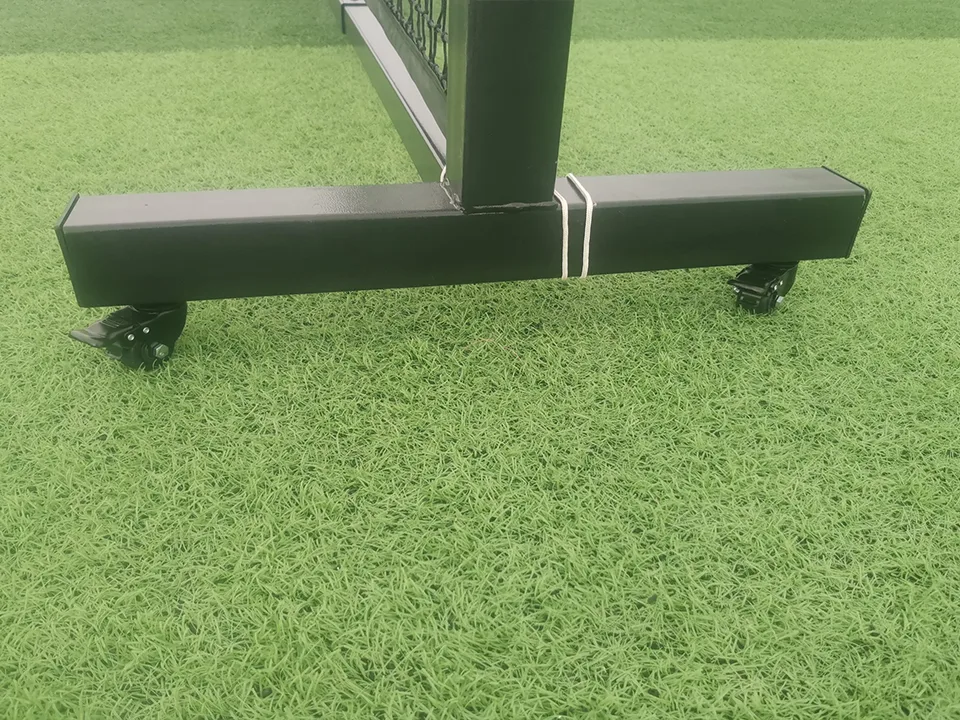
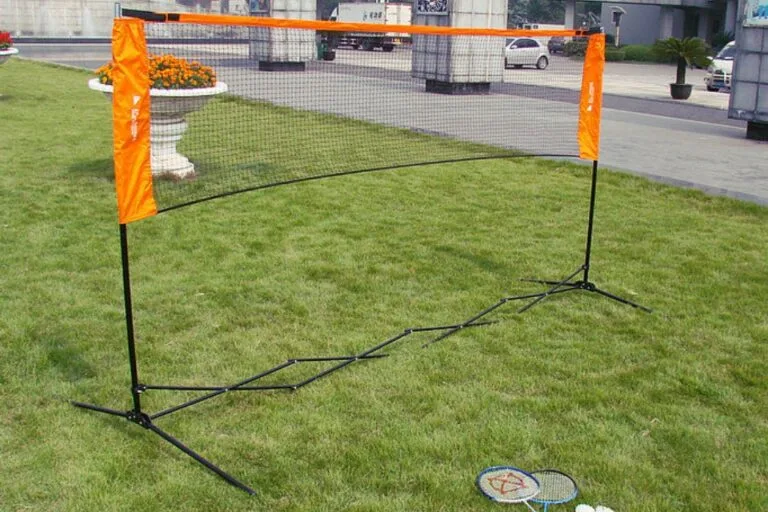
If you want portable gear that feels more “facility-grade,” start with a steel-frame build and stable feet. For example, a model like the portable pickleball net with steel frame and support feet tends to reduce wobble and “walking” on rough surfaces.
Portable pickleball net tension stability and steel frame features
On public courts, the enemy isn’t only wear. It’s inconsistency.
A “commercial grade” portable net usually needs:
Rigid frame geometry (less flex when players brush the tape)
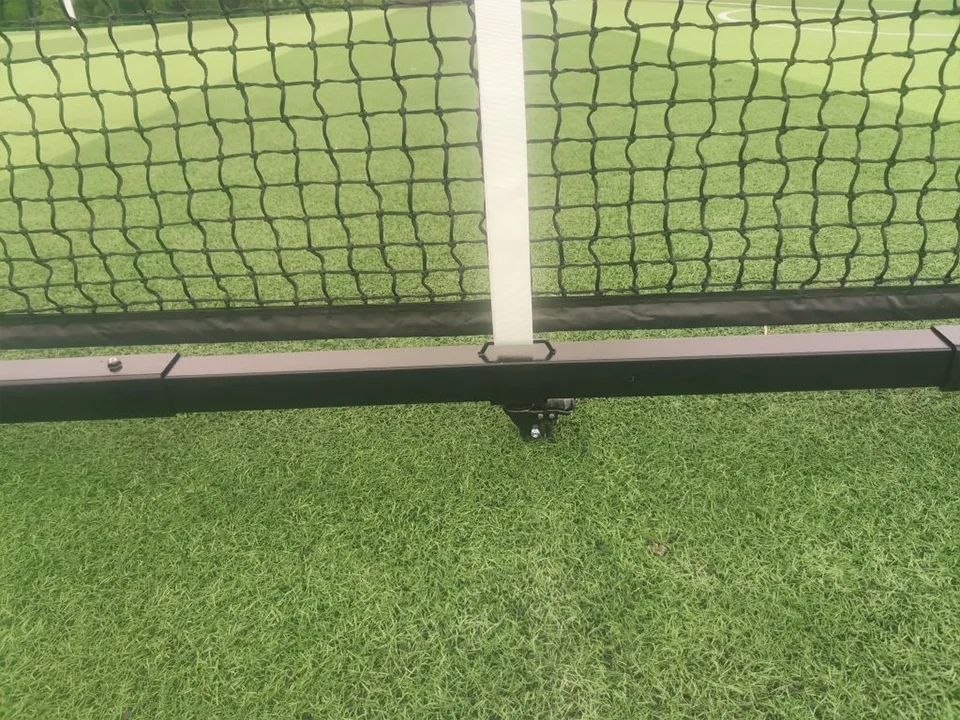
Tension system that stays put (cable/top strap that doesn’t loosen mid-session)
Weather-friendly hardware (rust is a silent killer outdoors)
Footing that grips (support feet, wide base, or rolling frame with lock points)
If your court team moves equipment a lot—say, rolling it into a storage room each evening—a rolling base can be a real ops upgrade. A multi-sport option like the adjustable multi-sport net with rolling base and casters can reduce staff time and avoid frame damage from dragging.
Public court theft and vandalism risk for portable nets
This is the part buyers forget until it happens.
Portable nets are easier to steal, move, or damage. If your site is unattended for long stretches, you’ll need an asset control plan, not just a net.
Typical mitigation steps:
Store nets after hours (locked cage, equipment room)
Use check-in/check-out logs (simple, but it works)
Assign ownership (staff, club lead, or contractor)
Keep spare parts in inventory (tape, straps, fasteners)
A portable kit that’s designed for transport can make this easier. For example, a portable pickleball net frame set with carry bag and base supports “deploy + pack-down” routines without turning your team into full-time mechanics.
Portable pickleball net storage and facility operations workflow
Public courts run on workflow. If the workflow breaks, your “commercial grade” gear won’t matter.
Think in simple ops questions:
Who sets up the net?
How long does setup take for one court?
Where does equipment live between sessions?
Who checks net height and tension?
What’s the process when something breaks?
Here are common real-life setups:
Public court setup scenario
What usually goes wrong
What “commercial grade” should include
Unattended outdoor park courts
Theft, vandalism, weather wear
Favor permanent posts, or portable only with locked storage + accountability
Table of arguments with sources for “commercial grade” portable nets
You asked for clear arguments, a table, and sources. Since you don’t want outbound links, the “source” column names the standard reference or field-proven facility practice.
Argument title
Concrete point you can use in a spec or RFP
Source (no external links)
Pickleball net height 36 inches at posts and 34 inches at center
A portable net must hold regulation height without center sag across a full session
USA Pickleball rules / court spec standards
Portable pickleball net commercial grade vs permanent net durability
Portable works for public courts only when ops can maintain it (setup, storage, inspection)
Parks & recreation facility operations best practice
Portable pickleball net tension stability and steel frame features
“Commercial grade” means rigid frame + stable base + tension control, not just thicker netting
Equipment spec benchmarking used by facility buyers
Public court theft and vandalism risk for portable nets
If the site can’t secure gear, portable nets turn into a shrinkage problem
Community court management practice
Portable pickleball net storage and facility operations workflow
If your workflow is messy, nets loosen, parts disappear, and players complain
Rec center SOP / event operations playbooks
FSPORTS portable pickleball net options for B2B buyers
If you’re buying for public courts, you’re usually not buying one net. You’re managing consistency across locations, maintenance workload, and supply continuity.
That’s where FSPORTS fits naturally. The site positions FSPORTS as a premium sports netting manufacturer in China, with UV-resistant, high-impact nets and standard or made-to-order sizing—useful when you’re doing bulk wholesale, OEM/ODM, and multi-site rollout.
Here are internal links you can place in your own content so readers can move from “what should we buy?” to “what can we source?” without leaving your domain:
MOQ and lead time that match your rollout schedule
OEM/ODM support (branding, packaging, accessories, replacement parts)
That’s the difference between buying “a net” and building a program that doesn’t get constant complaints.
If you want, I can also rewrite this into a shorter version for your product category page and a longer version for a blog post cluster, while keeping the same keywords and internal links.