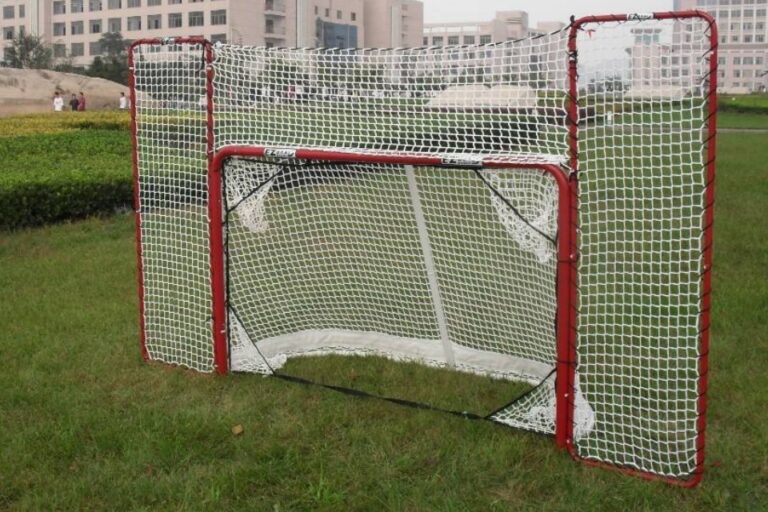
Tell us what you want to develop. FSPORTS supports OEM/ODM, private label, and custom sports netting projects based on your existing product, drawing, sample, photo, or application requirement.
Share the product type, dimensions, target quantity, destination, and any known mesh, material, frame, hardware, logo, or packaging requirements. If your specification is not complete yet, send what you have and we can review the remaining details before quotation.
I have watched too many buyers treat a golf barrier, a batting-cage shell, a volleyball game net, and a tennis court net as if they were cousins in the same catalog, when in reality they answer four different questions about impact, rebound, visibility, rule compliance, and liability.
Why do so many projects still get specified like patio furniture?
The blunt number that matters is this: according to the National Safety Council’s 2024 injury summary, sports and recreational injuries treated in emergency departments rose 17% in 2024, reaching 4.4 million cases. That does not prove every field needs more netting, but it does bury the lazy idea that safety hardware is a decorative upsell. (Injury Facts)
Here is the hard truth I wish more procurement teams would say out loud. Baseball and golf netting are protective systems first; volleyball and tennis nets are rule-governed playing equipment first, and when a supplier blurs those categories, the buyer usually pays for that confusion twice. Once at install. Again at replacement.
Baseball: stop buying “generic sports net” and calling it a spec
Baseball punishes sloppy decisions.
Recent public documents make that obvious: Minor League Baseball says Professional Development League clubs must install protective netting from foul pole to foul pole unless the ballpark layout makes that unnecessary, while 2024 Nashville facilities minutes state that MLB PDL standards require batting cages to be at or as close as possible to 12 feet from the ground to the lowest sag point of the netting. Separate 2024 baseball bid language from Charleston described a backstop system about 513 linear feet long at roughly 30 feet above grade, and Fayette County’s 2024 RFQ specified baseball-field netting with 1-3/4-inch holes. MiLB’s updated netting requirements read like bureaucracy, but I trust bureaucracy when it involves injury exposure and compliance penalties. (MLB.com)
So when I review baseball netting options, I do not start with color, portability, or whether the frame looks clean in a product photo. I start with mesh opening, fiber type, lowest sag point, panel size, and where the miss actually goes. A cage net that works for youth batting practice is not automatically the right answer for spectator protection, dugout shielding, or a field-edge foul-ball corridor.
And this part gets ignored. Public baseball specs still lean hard on nylon for cages and field applications, as shown in McCracken County’s 2024 batting-cage bid, because repeated ball strikes are not theoretical wear; they are the job. If your baseball brief does not define mesh size, use case, and target clearance, you do not have baseball netting specifications. You have wishful thinking. (mccrackencountyky.gov)
Golf: smaller ball, nastier problem
Golf is worse.
Not because it is louder or more dramatic, but because the ball is smaller, the launch windows are uglier, and the net is often the last thing standing between your range and somebody else’s fairway, driveway, or insurance claim.
Public owners still write golf specs like civil-safety documents. Ogden City’s 2024 El Monte practice-range bid called for at least 13 black steel poles a minimum of 40 feet tall, about 480 feet of black netting, UV-treated polyester golf netting, 5/16-inch minimum cable, and 20,000-pound end anchors; Savannah’s golf-range netting scope required a 10-year UV warranty and a minimum mesh breaking strength of 210 pounds. Ogden City’s 2024 El Monte golf barrier bid is the kind of document I like because it strips the romance out of golf and forces everyone to talk in the language that matters: height, load, cable, anchors, and failure. (ogdencity.gov)
Mesh size matters too. Municipal golf documents from Pacific Grove and Seattle describe 1-inch polyester golf barrier netting, while SportsTurf’s facility guidance notes that small-mesh golf netting increases wind load on the structure. That is the trap. Buyers obsess over stopping the ball and forget that the frame still has to survive the weather. (cityofpacificgrove.gov)
So when people ask me about golf net systems, I usually answer with a question they do not love: what are you protecting, and what is beyond it? A short indoor practice net is an impact problem. A perimeter range barrier is a trajectory-and-structure problem. Pretending those are the same product is how projects get underbuilt.
Volleyball: this is a playing net, not a ball-stop wall
Volleyball is different.
FIVB’s current indoor rules define the net very precisely: 2.43 m high for men and 2.24 m for women, measured at the center, with the height over the two sidelines not exceeding the official height by more than 2 cm; the net is 1 m wide, 9.50 to 10 m long, and made of 10 cm square black mesh. That means official volleyball netting requirements are about playability and rule compliance first, not field-edge containment. (FIVB)
I see this mistake all the time. Somebody wants a cleaner quote, so a supplier folds volleyball into a “multi-sport” line item and quietly swaps in a barrier-style fabric mentality, even though the real product here is the game net itself. If you are sourcing volleyball net systems, the first question is not “How tough is it?” but “Does it meet playing height, tension, width, and visibility requirements for the level of play?”
And yes, you can add surrounding containment for warm-up zones or training setups. But that is a second system. Mixing the official playing net and the containment barrier into one vague specification is procurement theater, not engineering. (FIVB)
The official court net looks basic until you read the rulebook closely. The current ITF Rules of Tennis say the court is divided by a net suspended from posts at 3.5 feet (1.07 m), the net itself sits 3 feet (0.914 m) at the center, the span is 42 feet (12.80 m), and the mesh must be small enough that a ball cannot pass through. The ITF also recommends minimum clearance from the baselines to backstops of 21 feet for international play and 18 feet for recreational and club play, with 12 feet and 10 feet respectively from sidelines to sidestops. (itftennis.com)
That matters because tennis net systems are not just about netting material. They are geometry products. Center strap height, post placement, top band, mesh density, and clearance around the court all affect whether the court plays like tennis or like a backyard compromise.
So no, tennis court netting is not “close enough” to a volleyball net with different poles, and it is definitely not interchangeable with baseball or golf barrier netting. Different ball. Different strike pattern. Different rule logic. Different failure points. (itftennis.com)
One table the industry should stop pretending it doesn’t need
Sport
What the net must do
Baseline spec logic
Common buying error
Baseball
Contain repeated hard impacts and protect lanes, dugouts, or spectators
Roughly 1-3/4 in mesh is common in recent public specs; cage clearance is often targeted near 12 ft at the lowest sag point; larger spectator/backstop systems can run far higher
Buying “multi-sport” mesh without defining use case
Golf
Stop a smaller, faster ball on higher launch paths
Small-mesh UV-treated barrier netting, heavier cable, real anchors, and height driven by trajectory and adjacency; 40 ft is a common public-project starting point, not a universal answer
Underestimating wind load and shot dispersion
Volleyball
Meet official playing dimensions and visibility rules
2.43 m men / 2.24 m women; 1 m wide; 10 cm square mesh
Confusing game net with containment barrier
Tennis
Meet official court geometry and ball-response expectations
42 ft span, 3.5 ft at posts, 3 ft center, small-enough mesh, proper backstop clearance
Treating it like a generic backyard divider
The volleyball and tennis figures above come straight from FIVB and ITF rules; the baseball and golf rows reflect current public procurement and facility-standard documents, which is usually where real-world discipline shows up first because failure there has a budget line attached to it. (FIVB)
Multi-sport sounds efficient. It often is not.
I am not against a multi-sport net system. I am against pretending one compromise spec is automatically the best netting for baseball golf volleyball and tennis.
Here is my rule. The smallest ball, the highest-risk shot path, and the strictest governing dimension should control the brief. If golf is in the mix, your mesh and structure get more demanding. If official volleyball or tennis is in the mix, your playing-net dimensions stop being negotiable. That is how to choose sports netting without buying the wrong thing for everybody. (ogdencity.gov)
FAQs
What mesh size should baseball netting use?
Baseball netting should usually use small square mesh around 1-3/4 inches, paired with high-strength fiber and a support layout that controls sag, because baseball failures happen less from the listed opening alone and more from an underbuilt overall system handling repeated impact. That is why recent public baseball documents still specify 1-3/4-inch openings, nylon netting, and cage-height targets tied to the lowest sag point rather than vague “sports net” language. (fayettecountyga.gov)
How high should golf netting be?
Golf netting height should be set by shot trajectory, tee orientation, setback distance, and what sits beyond the barrier, but real public projects show that 40-foot installations are common starting points while higher-risk edges can push far beyond that with heavier structural requirements. In other words, golf height is not a catalog number; it is a site-risk calculation, which is why public bids pair tall poles with UV-treated netting, heavy cable, anchors, and break-strength requirements. (ogdencity.gov)
Are volleyball and tennis nets the same as barrier netting?
Volleyball and tennis nets are rule-defined playing equipment with fixed heights, widths, and mesh behavior, while barrier netting is a separate protective system meant to contain balls and manage clearance, so swapping one for the other usually creates either non-compliant play or weak protection. FIVB and ITF rules are very specific about official net dimensions, which is exactly why buyers should separate game-net specs from perimeter or training-barrier specs. (FIVB)
How do I choose sports netting for a multi-use facility?
Multi-use sports netting should be selected by the smallest ball, the worst-case launch path, the highest repeated impact, and the strictest rule requirement that applies to the space, because compromise only works when safety, sightlines, and rule compliance all survive the compromise. That usually means golf drives mesh and structure, baseball drives impact durability, and volleyball or tennis drive the official game-net dimensions. (ogdencity.gov)
Here is my closing advice. Stop buying “netting.” Start buying a use case.