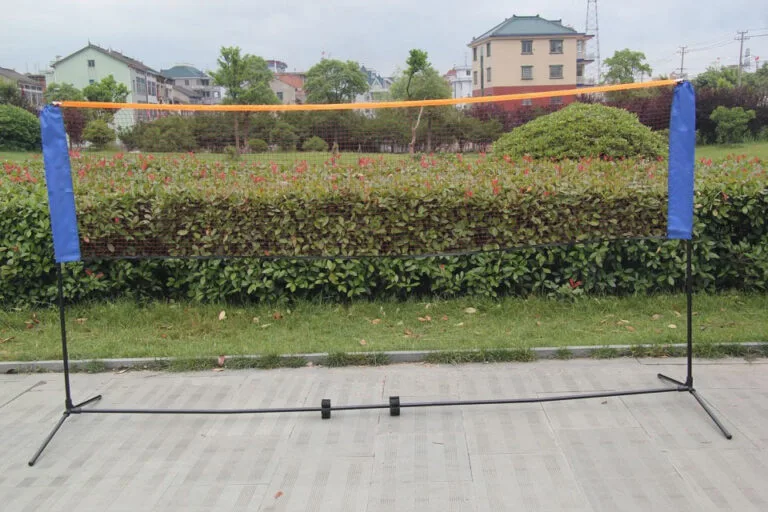
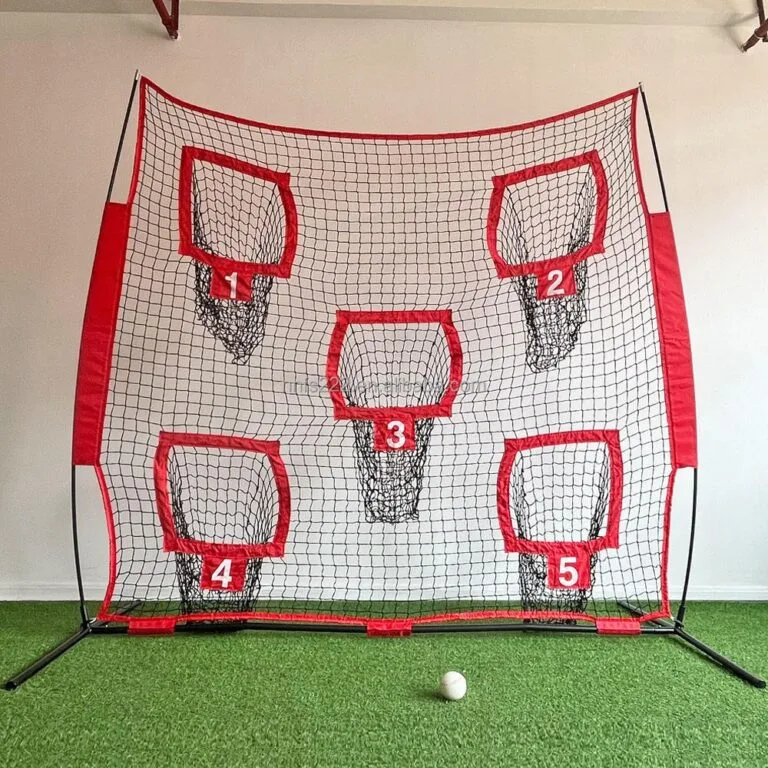
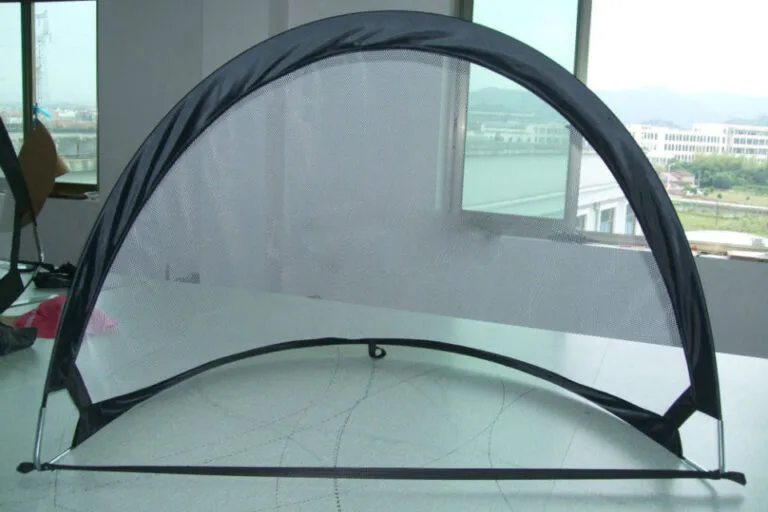
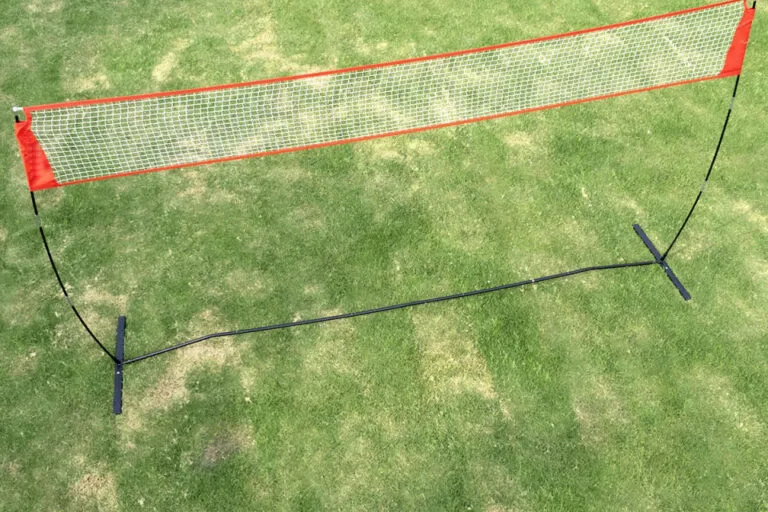
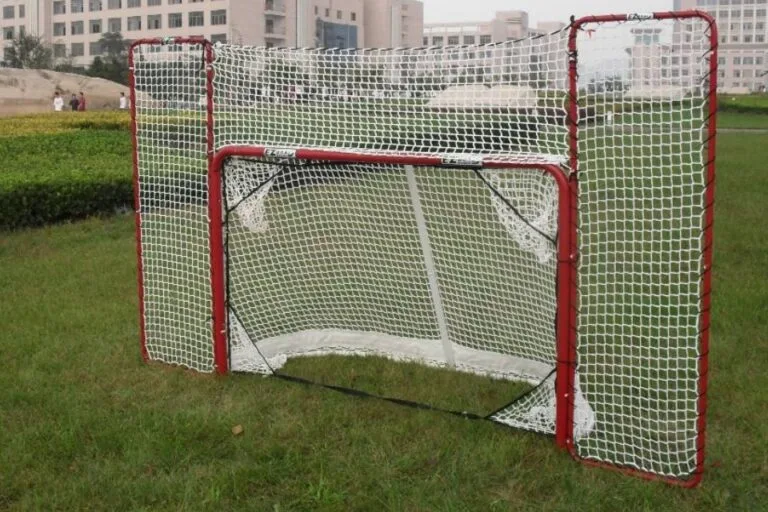
Tell us what you want to develop. FSPORTS supports OEM/ODM, private label, and custom sports netting projects based on your existing product, drawing, sample, photo, or application requirement.
Share the product type, dimensions, target quantity, destination, and any known mesh, material, frame, hardware, logo, or packaging requirements. If your specification is not complete yet, send what you have and we can review the remaining details before quotation.
Why Outdoor Netting Fails Faster Than Buyers Expect
I’ve stood next to brand-new outdoor nets that looked tough enough to survive a small war—thick twine, clean knots, decent border rope, tidy stitching, glossy sales copy—and still knew, almost immediately, that some of them were basically on a slow march toward chalking, embrittlement, and ugly failure because the real story wasn’t the weave. It was the polymer package.
That part matters.
And yet buyers still get hung up on the wrong stuff. Mesh size. Knot style. Frame color. Packaging. Freight. I get it—those things are visible. Chemistry isn’t. But here’s the ugly truth: when you’re choosing UV resistant netting, you’re not really choosing “a net” in the cozy, retail sense. You’re choosing resin, stabilizer loading, pigment behavior, oxidation resistance, and how much punishment the net can absorb before it stops being a product and starts being a problem.
I frankly believe the phrase “outdoor rated” has been abused into mush. It sounds reassuring. It usually isn’t.
Climate Pressure Is Getting Worse
And climate? Climate is not a footnote anymore. It’s the whole fight. Reuters reported that 2024 was the hottest year ever recorded globally, with average temperature about 1.6°C above the 1850–1900 baseline, while NOAA counted 27 U.S. billion-dollar weather and climate disasters in 2024 alone, which is a pretty blunt reminder that anything left outside now deals with harsher exposure cycles, nastier heat loading, and less margin for sloppy material choices than a lot of old spec sheets ever assumed. Bad news. Reuters on 2024’s global heat record and NOAA’s billion-dollar disaster database don’t read like sports-product brochures—and that’s exactly why they’re useful here.
But let me say the quiet part out loud: most netting doesn’t “suddenly fail.” That’s not how this usually goes. It loses chemistry first. Then appearance. Then strength. By the time a buyer notices the visible damage—fading, stiff hand, little hairline splits near stress points, odd brittleness at the knuckles—the stabilizer package may already be half-spent and the polymer chains already taking a beating.
Too late.
I’ve watched people do the finger-pinch test on weathered mesh and announce, confidently, “Seems okay.” That’s how replacement budgets get ambushed. A net can pass the eyeball test and still be halfway to the graveyard.
What UV Treatment Actually Means
The Questions Serious Buyers Should Ask
So when somebody tells me they’re shopping for UV treated netting, I don’t start with color or price. I start with questions most sellers wish buyers wouldn’t ask. What’s the base resin—HDPE, nylon, PP, polyester? What’s the pigment system? Carbon black or decorative fluff? What’s the UV package—HALS, absorber, both? What antioxidant reserve are we talking about? Any retention numbers after accelerated aging? Any QUV data? Any xenon arc results? If the answer gets foggy right there, I’m already suspicious.
Because the chemistry isn’t mysterious. It’s just inconvenient for bad sellers.
What the Research Actually Shows
A 2024 paper in Results in Materials tracked HDPE under prolonged heat and UV exposure and found antioxidant depletion, oxidative damage, viscosity change, and greater stress-cracking vulnerability, which is exactly the sort of behind-the-scenes degradation that happens before a product turns into a dramatic field failure and before the average buyer realizes anything serious is going on at all. That study says a lot. Study of heat and UV radiation exposures on HDPE geomembranes.
And then there’s the pigment question—people underestimate that one all the time. A 2024 paper in Polymer Degradation and Stability found that carbon-black-filled polyolefin composites showed the strongest photostability because carbon black absorbs radiation and limits penetration into the polymer matrix. Another 2023 study in Polymer Testing showed a polypropylene fiber system with a UV-stabilizer/LDH package that bumped decomposition temperature by 38°C and retained 94.56% strength after aging. That’s the difference between real material engineering and brochure filler. Carbon black and photoaging behavior in polyolefins and UV-stabilized polypropylene fiber research.
Numbers matter.
Weather Resistance Is More Than Just UV
But the industry loves mushy language because mushy language sells. “Weather resistant netting.” “Heavy duty.” “Outdoor safe.” “All-season.” Fine. Nice words. Do they tell me whether the twine is going to go glassy in brutal summer sun? Do they tell me what happens when salt mist starts sitting on the surface day after day? Do they tell me whether the border rope creeps, whether the lacing points chafe, whether the grommet zone turns into a stress riser? Not really.
And that’s another thing people get wrong: UV isn’t the whole problem. It’s the headline, sure. Not the whole bill. Salt is nasty. Humidity changes the cycle. Wind turns slack panels into abrasion machines. Dirt and biofilm hold moisture against the polymer. Freeze-thaw hits seams, sleeves, ties, and hardware interfaces. A knot that looked harmless in the sample becomes a little stress concentrator in the field. A steel frame edge becomes a saw. You don’t need one catastrophic event. You just need repetition.
That’s enough.
A 2024 ScienceDirect assessment of HDPE after long marine exposure pulled together evidence that UV in saltwater conditions can sharply reduce ultimate tensile strength and chip away at ductility and mechanical integrity over time, which lines up almost perfectly with what installers in coastal zones already know from experience: the ocean doesn’t just “age” materials, it roughs them up chemically and mechanically at the same time. HDPE degradation after long marine exposure.
Choosing the Right Netting for Real Outdoor Conditions
There Is No One Universal “Best” Net
From my experience, the biggest buying mistake is assuming there’s one universal “best” outdoor mesh. There isn’t. There’s only fit. An Arizona install is not a Florida install. A coastal range cage is not a dry inland backstop. A golf barrier net that sees constant ball strike is not the same design problem as a farm cover or a perimeter screen—even if the catalog tries to mash them into one category for convenience.
So yeah, I’m biased.
For long-term outdoor exposure under hard sun, I still lean toward stabilized HDPE more often than not. Why? Because it’s a workhorse. Not glamorous. Not fancy. Just reliable when the additive package is real. Nylon can absolutely be the better call in impact-heavy zones—golf, baseball, specialty cages—because rebound, abrasion behavior, and toughness matter there. But I don’t buy nylon on folklore anymore. I buy it on treatment quality, build consistency, and how honest the spec sounds after five minutes of questions.
Cheap polypropylene? It has a place. Temporary. Budget. Seasonal. Short-cycle. But I wouldn’t dress it up as long-term infrastructure unless the stabilization is better than most low-cost product pages suggest.
Where Internal Product Context Helps
If you’re comparing actual application types, start with context, not claims. Somebody looking at outdoor net systems, golf net products, or a durable nylon golf barrier net should be asking a much more annoying set of questions than most buyers do: resin family, denier, knotless vs. knotted construction, UV package, edge reinforcement, abrasion points, replacement cycle, and whether the exposure profile is full-time or intermittent.
Ask more.
And if the install is permanent—or supposed to be—then manufacturing consistency matters almost as much as the nominal material choice. A sample can lie. Production variance is where the truth shows up. That’s why I like seeing a factory tour when I’m trying to decide whether a company just assembles nice photos or can actually hold tolerances and process control batch after batch.
Why Lifespan Claims Often Mislead Buyers
Here’s another hard truth: service life claims without climate context are half-claims. “Five to ten years outdoors” might be fair in one setting and laughable in another. Same with “untreated lasts two to three years.” Maybe. Maybe less. Full sun, high UV index, tensioned install, abrasive wind, salt load, dirty surface, cheap border finish—those variables can eat that estimate alive.
That’s why outdoor netting durability is never just a material question. It’s a system question.
You have the resin. Then the additive package. Then the color system. Then the twine construction. Then the knot geometry. Then the border finish. Then the hardware contact points. Then the tension. Then the maintenance—if any. Miss one piece and the whole assembly starts acting older than it is.
And, honestly, this is where a lot of “best netting for outdoor use” articles go soft. They flatten the decision into a shopping guide. I think that’s lazy. Buyers deserve the ugly mechanics.
Application Examples That Reflect Real Exposure
If the use case is sports-specific, I’d rather look at something closer to the real exposure pattern—an indoor-outdoor golf hitting cage net for repeated strike zones, for example, or a heavy-duty hay bale net cover for weatherproof farm storage where weather loading, flex, and long-duration exposure tell a different but equally useful story. Different jobs. Same unforgiving outdoors.
Material Comparison Table
Material / build
UV behavior outdoors
Weather weak point
Where I’d use it
My blunt take
UV-stabilized HDPE netting
Usually the safest all-around outdoor choice when the additive package is real
Heat oxidation over time, creep under constant load
Strong and impact-friendly, often excellent for ball containment
Moisture uptake, variable UV performance by treatment quality
Golf and baseball impact zones, specialty cages
Great when specified well; overrated when sold vaguely
Standard polypropylene netting
Fine for low-cost or temporary use
Fast embrittlement if stabilization is weak
Seasonal, light-duty, short-cycle installs
Cheap for a reason
Polyester mesh systems
Better UV profile than many buyers expect, generally dimensionally steadier than nylon
Can feel stiffer depending on construction
Some barrier and architectural applications
Solid niche option, not universal
Any untreated synthetic net
Degrades fastest in full sun
UV, oxidation, cracking, color fade, loss of elongation
Short-term only
Not infrastructure, just a countdown
Why Location Changes Everything
The table helps. It doesn’t save you.
A desert install gets cooked by UV dose and heat soak. A Gulf Coast install gets mugged by humidity, salt, grime, and solar load all at once. A northern install adds freeze-thaw and hardware fatigue. Same product. Different punishment. Different life. That’s why I keep coming back to this: the best net isn’t the loudest one in the catalog. It’s the one whose formulation and build match the abuse it’s actually going to see.
FAQs
How long does UV treated netting last outdoors?
UV treated netting is outdoor mesh made with polymers and additive packages designed to slow photodegradation, oxidation, embrittlement, and strength loss under sunlight, heat, and moisture, but actual service life depends much more on resin quality, stabilizer loading, installation tension, contamination, and local climate severity than on the phrase “UV treated” alone.
My blunt answer? Good stabilized netting can often last around five to ten years outdoors, while weak or untreated mesh may start failing in only a few seasons. Sometimes faster. The environment decides more than the label does.
What is UV resistant netting?
UV resistant netting is synthetic netting engineered to better withstand ultraviolet exposure by using polymers, pigments, antioxidants, and light-stabilizing additives that reduce chain scission, brittleness, fading, cracking, and loss of mechanical performance during prolonged outdoor service under sun and heat.
That’s the technical answer. The practical answer is simpler: it’s netting built not to die as quickly in the sun. But don’t assume all “UV resistant” claims mean the same thing—they absolutely don’t.
What is the best netting for outdoor use?
The best netting for outdoor use is the material-and-construction combination that matches the real exposure profile, impact load, maintenance cycle, and environmental stress of the installation, with stabilized HDPE often leading for long-term full-sun use and treated nylon often making more sense in repeated impact applications.
I still favor HDPE for a lot of permanent outdoor jobs because it’s forgiving. Nylon earns its keep in strike-heavy environments. Cheap PP can work—but mostly when the job is temporary and expectations are realistic.
Does color matter for weather resistant netting?
Color matters because pigment systems affect radiation absorption, heat buildup, and how deeply UV energy penetrates the polymer, which means two nets with the same dimensions and similar construction can weather very differently outdoors if their pigmentation and stabilizer chemistry are not equally robust.
Black often performs well because carbon black acts like a UV shield. Bright colors aren’t automatically bad—but they need real formulation work behind them, not just marketing taste.
Does climate resistant netting need different specs near the coast?
Climate resistant netting near the coast needs different specs because salt deposition, humidity cycling, wind-driven abrasion, contamination, and strong UV exposure combine to accelerate oxidation, surface wear, and hardware-related stress in ways that many standard outdoor specifications are not built to handle for long-term service.
I’d over-spec coastal installs every time. That’s not fear talking. That’s experience. The ocean has a way of exposing weak assumptions faster than inland buyers expect.
Conclusion
If you’re sorting through options right now, start with the outdoor net category, compare it with the golf net collection, and then ask the questions that separate real outdoor engineering from pretty catalog copy. And if you want direct answers on resin choice, UV package, or climate fit, contact the team here. It’s cheaper than replacing a net you were talked into instead of properly sold.