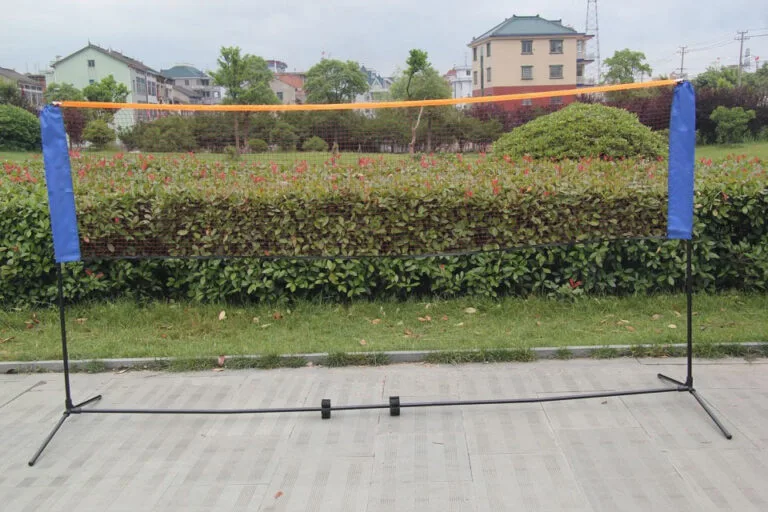
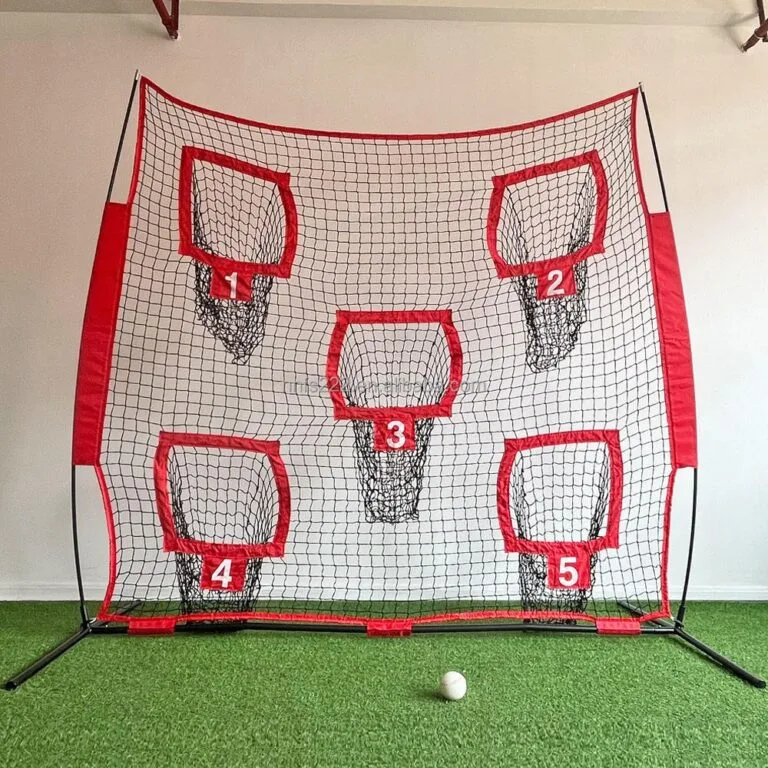
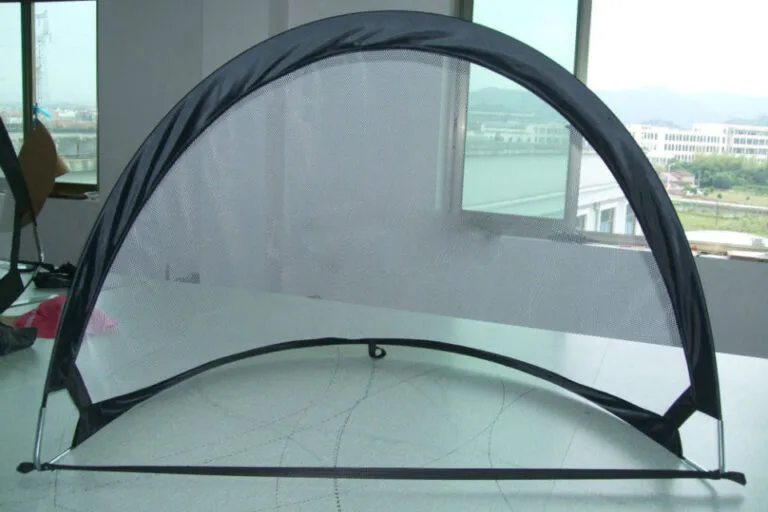
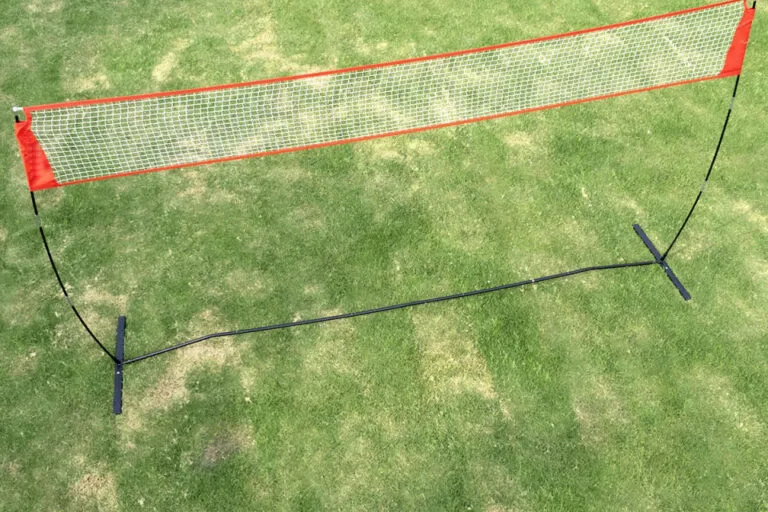
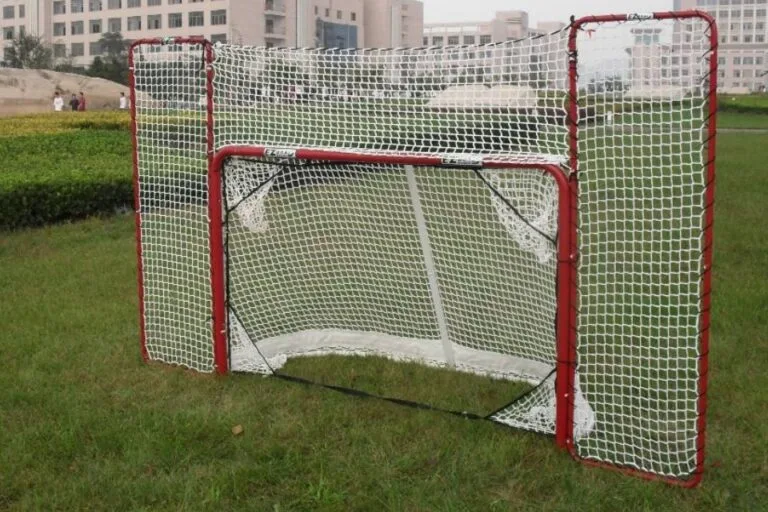
Tell us what you want to develop. FSPORTS supports OEM/ODM, private label, and custom sports netting projects based on your existing product, drawing, sample, photo, or application requirement.
Share the product type, dimensions, target quantity, destination, and any known mesh, material, frame, hardware, logo, or packaging requirements. If your specification is not complete yet, send what you have and we can review the remaining details before quotation.
Usually, the answer people want is one neat number they can drop into a quote request and move on with their day, but that’s not how netting works in the real world, not if the install has to survive actual ball speeds, weather, repeat impacts, and the weird abuse that shows up the second coaches, kids, and facility managers start using it. That fantasy dies fast.
Three words. No.
I frankly believe the industry makes this harder than it needs to be. Sales sheets toss around “heavy duty,” “commercial grade,” “pro quality”—all that catalog perfume—while the real question sits there, ignored: what opening size stops the projectile without turning the panel into an overpriced wind sail?
That’s the fight.
From my experience, buyers don’t usually fail on intent; they fail on spec logic, because they shop by sport label instead of by projectile diameter, impact pattern, and net function, which is how you end up with a soccer-style opening on a golf job or an overbuilt micro-mesh panel where a standard large-ball layout would’ve done the work for less money and less headache.
And then they act surprised.
Here’s the ugly truth: there is no universal ideal sports netting mesh size. There’s only the right mesh for the object you’re trying to stop, the number of hits it’ll eat per day, and the way the net is being used—goal face, backstop, divider, cage wall, or perimeter barrier.
Different beasts.
Recommended Mesh Size by Sport
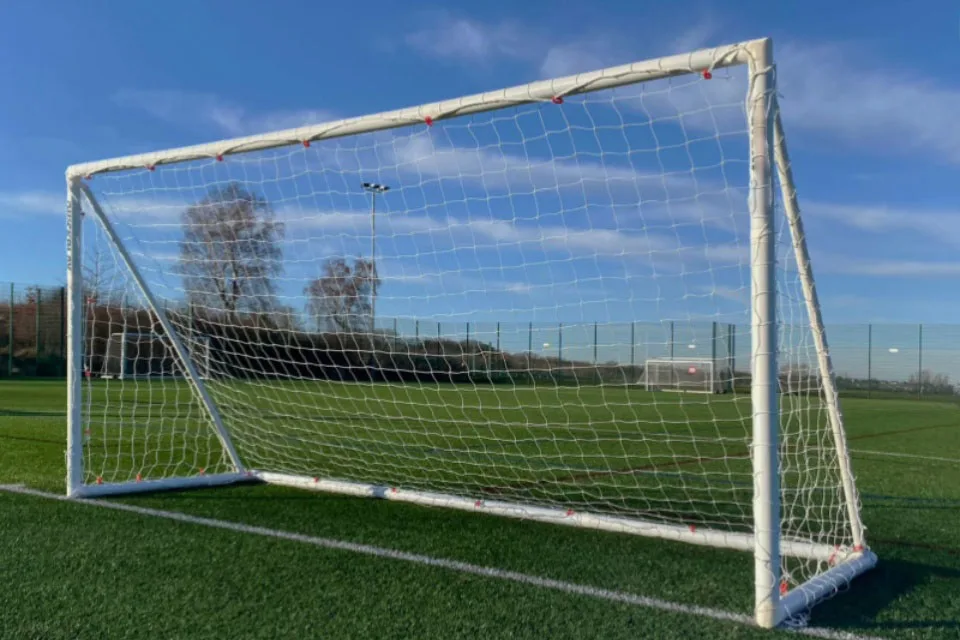
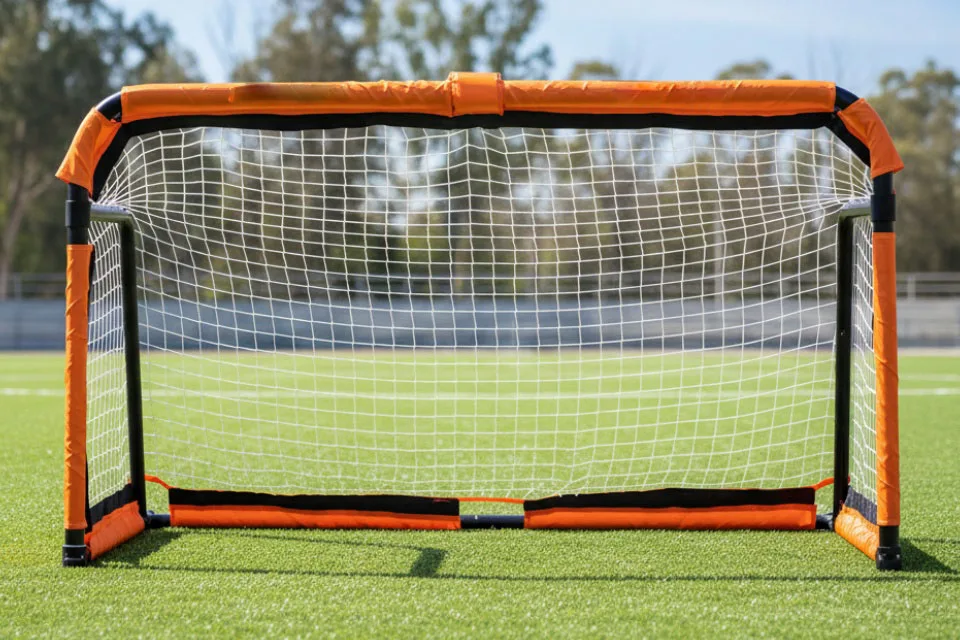
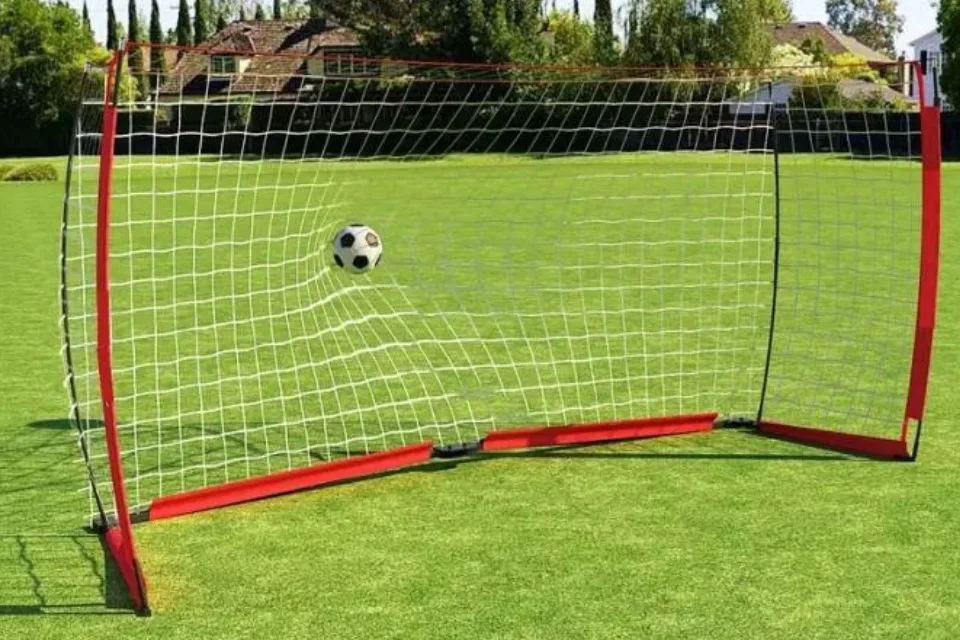
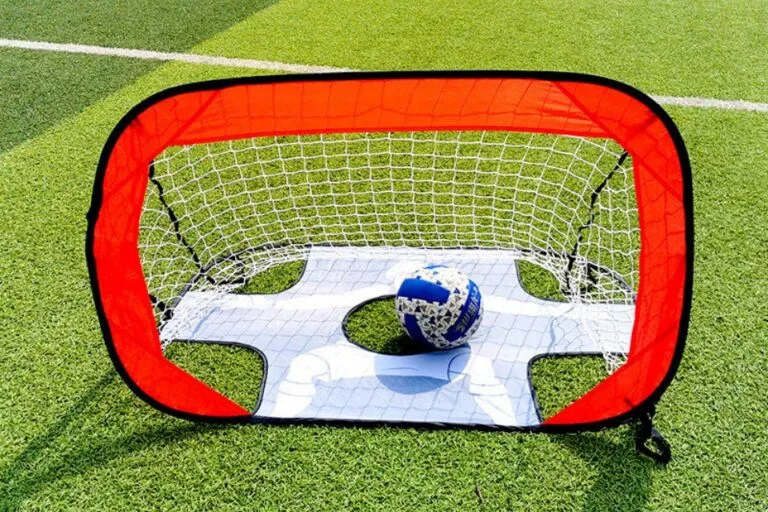
For golf, I stay in the 3/4-inch to 1-inch range. For baseball and softball, 1 3/4-inch to 2-inch is the sensible middle. Tennis, pickleball, lacrosse, hockey—usually 1-inch to 2-inch depending on the strike load and whether we’re talking about a rebound surface or true containment. Soccer, volleyball, and football goals? Usually 4-inch to 5-inch works just fine because the ball is so much bigger than the opening that going tiny is often just spec theater.
That isn’t opinion alone. The object dimensions are public and boringly clear: a golf ball must be at least 1.680 inches in diameter, a baseball 9 to 9 1/4 inches in circumference, a tennis ball 2.57 to 2.70 inches, a pickleball 2.874 to 2.972 inches, a soccer ball 68 to 70 cm in circumference, a lacrosse ball 19.69 to 20.32 cm in circumference, and an ice hockey puck 3 inches in diameter. (usga.org)
Market Demand and Why Bad Specs Keep Happening
And demand’s not slowing down either. Reuters reported in July 2024 that pickleball participation in the U.S. jumped 52% from 2022 to 2023, while the USTA’s 2024 participation report put U.S. tennis players at 23.8 million in 2023 with 527 million annual play occasions. More players, more training lanes, more schools rushing procurement, more clubs slapping together mixed-use courts. That’s exactly when sloppy specs sneak through the back door. (reuters.com)
But numbers on participation are only half the story. The liability side is uglier, and the industry hates admitting that. A 2024 IU Indianapolis Journal of Legal Aspects of Sport analysis reviewed 1,561 golf negligence lawsuits, found 133 cases within scope, and said 85 might have been prevented with proper buffer zones; separately, the U.S. CPSC warning on a 4×8 portable soccer goal is a reminder that buyers shouldn’t isolate mesh size from anchoring, frame geometry, and hardware. (journals.indianapolis.iu.edu)
That matters.
How I Actually Evaluate the Best Mesh Size
So when someone asks me for the best mesh size for sports netting, I don’t start with “sport.” I start with a much more annoying question: what’s the smallest thing this net must reliably stop, how hard is it moving, and where will the repeated impact zones live? That’s the real spec sheet, whether the quote form says so or not.
Golf Netting Systems
If you’re buying golf netting systems, don’t mess around with oversized openings because golf balls are tiny, dense, and merciless; one lazy opening decision and you’re dealing with blow-through, ghost-through, or near-miss complaints that somehow become your fault even when the installer swears the panel “looked right” in the warehouse.
Golf punishes laziness.
Baseball Net Systems
Baseball is different. Not easier—different. On baseball net systems, 1 3/4-inch to 2-inch mesh tends to be the sweet spot because it contains well without loading the panel up with extra weight, drag, and handling problems, which you absolutely feel once you’re talking about bigger cage runs, L-screen surrounds, or repeated batting lane abuse.
Court Nets vs Containment Nets
And then there’s the buyer mistake I see constantly: mixing up a game net with a containment net. A pickleball net system or a tennis net setup is not the same thing as perimeter containment mesh, not remotely, even if somebody in procurement jams them together under one budget line and calls it “court netting.”
That shortcut hurts.
Multi-Sport Installations
Yet mixed-use projects are where this really gets messy, because everybody wants one SKU, one material callout, one clean PO, one vendor, one easy answer—and that’s usually the wrong instinct. If the facility is handling soccer, pickleball, and golf, the spec does not begin with soccer just because soccer is the headliner. It begins with golf, because the smallest projectile sets the containment floor.
Always the smallest.
I’ve seen the opposite happen. A club buys multi-sports netting based on the biggest visual sport in the complex, not the smallest object in play, and then six months later they’re retrofitting zones, hanging secondary curtains, or trying to “solve it with tension.” That rarely works. Tension fixes sag. It doesn’t fix a bad opening size.
The practical sports netting size guide
I still use the official object dimensions as the baseline—but only as the baseline—because real installs get hit off-center, in weather, by tired staff, with bad anchors, on mixed-use sites, and none of that shows up in the polished brochure render. So I’d rather be practical than cute. (usga.org)
Sport / Use Case
Object Size Reference
Recommended Mesh Opening
My View
Golf barrier netting / cages
Golf ball min. diameter 1.680 in
3/4 in to 1 in
Best for true containment; anything looser starts flirting with failure
Baseball / softball backstop or cage
Baseball circumference 9 to 9 1/4 in
1 3/4 in to 2 in
The safest all-around commercial choice
Pickleball containment netting
Ball diameter 2.874 to 2.972 in
1 in to 1 1/2 in
Cleaner containment, less chance of odd wedge-through behavior
Tennis practice / barrier netting
Ball diameter 2.57 to 2.70 in
1 3/4 in to 2 in
Plenty tight enough without overbuilding
Lacrosse backstop / rebound face
Ball circumference 19.69 to 20.32 cm
1 1/2 in to 2 in
Good balance of stop power and durability
Hockey goal / shooting screen zones
Puck diameter 3 in
1 1/2 in to 2 in
Fine for puck control; twine and edge finish matter a lot
Soccer / football goals
Soccer circumference 68 to 70 cm
4 in to 5 in
Wide openings are normal and efficient
Volleyball / recreational multi-sport nets
Volleyball circumference 65 to 67 cm
4 in to 4 3/4 in
Go smaller only if another sport forces it
Why Smaller Mesh Isn’t Always Better
But let me say the unpopular bit plainly: smaller mesh is not automatically “better.” On a golf cage, sure, tighter openings make sense. On a soccer surround, ultra-tight mesh can be a dumb spec—it adds weight, grabs wind, blocks sightlines, and inflates the BOM without giving you a meaningful containment win when the ball is already huge relative to the opening. That’s not premium. That’s overbuilding. (theifab.com)
And smaller openings can create their own headaches. More material. More sail effect. More edge stress. More cost in freight and handling. People forget that netting isn’t floating in theory-space; it’s hanging on posts, cables, frames, and anchors that all start feeling the punishment once you overcook the spec.
The frame knows.
What Buyers Miss Beyond Mesh Opening Size
Which is why I don’t like talking about mesh size in isolation. Twine gauge matters. Material matters. Knot type matters. UV package matters. Border rope matters. Clip spacing matters. If the install is outdoors, weather is basically a silent business partner—and an unforgiving one.
That’s where outdoor barrier netting solution projects go sideways. Not in the quote. Not at install. Later—when UV has been chewing through the yarn, the wind has been loading the panel every afternoon, and the high-impact lane has turned one innocent-looking zone into a failure point. People call that “unexpected wear.” I call it predictable.
My Rule Set for Choosing Sports Netting Mesh Size
So here’s my rule set, stripped down and a little rude.
Match the Opening to the Smallest Projectile
Match the opening to the smallest projectile, with margin. Not barely smaller. Not “probably okay.” With margin.
Size the Net to the Actual Job
Size the net to the job, not the product category. A goal net isn’t a backstop. A divider isn’t a hitting cage. A rebound face isn’t a perimeter curtain.
Split the Build When Necessary
Split the build if the site justifies it. One conservative spec across every area feels efficient on paper, but it often burns money where you don’t need the density and still underperforms where you do. I’d rather pair soccer goal systems with a tighter outdoor barrier netting solution near golf or baseball zones than force a single overcooked spec across the whole site.
And yes—budget matters. It always does. But false economy is still false economy, even when it’s wrapped in a “standardized procurement” memo. Buy the right net once, or buy the wrong net twice. I’ve watched people learn that lesson the expensive way.
FAQs
What mesh size is best for baseball netting?
Baseball netting works best with roughly 1 3/4-inch to 2-inch mesh because a regulation baseball measures 9 to 9 1/4 inches in circumference, and that opening reliably stops the ball without the extra wind load, weight, and cost that come with going unnecessarily tight for no real performance gain. In batting tunnels and backstop runs, I care just as much about twine gauge, seam finish, and how the impact zones are distributed as I do the opening itself. (content.mlb.com)
What mesh size is best for golf netting?
Golf netting works best with 3/4-inch to 1-inch mesh because a golf ball must be at least 1.680 inches in diameter, and golf impact is unforgiving; once the opening gets too generous, you are no longer debating efficiency, you are gambling with containment. From my experience, golf is the category where lazy sizing gets exposed quickest—and usually in a way everybody notices immediately. (usga.org)
Can one mesh size work for multi-sport netting?
One mesh size can work for multi-sport netting only when it is chosen around the smallest projectile used in the space, because a mixed-use facility is governed by the thing most likely to escape, not the thing most likely to headline the brochure or dominate the booking calendar. That’s why golf and baseball often end up driving the spec, even when they’re not the biggest revenue line on the site. (usga.org)
Does smaller mesh always mean a better sports net?
Smaller mesh does not always mean a better sports net, because performance depends on matching the opening to the object size and impact pattern while keeping weight, airflow, sightlines, and frame load in balance; overly tight mesh in large-ball sports often adds cost and stress without adding real containment value. I’ve seen more than one “premium” quote where the tiny opening was really just a sales trick for padding the numbers. (theifab.com)
Conclusion
So, no—I wouldn’t shop this by thumbnail, category badge, or whatever phrase the catalog team slapped on the hero image. Start with the smallest projectile, decide whether you need a goal net or true containment, and then get honest about load, weather, and repetition. When you’re ready to spec something that’ll actually hold up, contact the FSports team or look through the wider product range before you lock yourself into the wrong build.