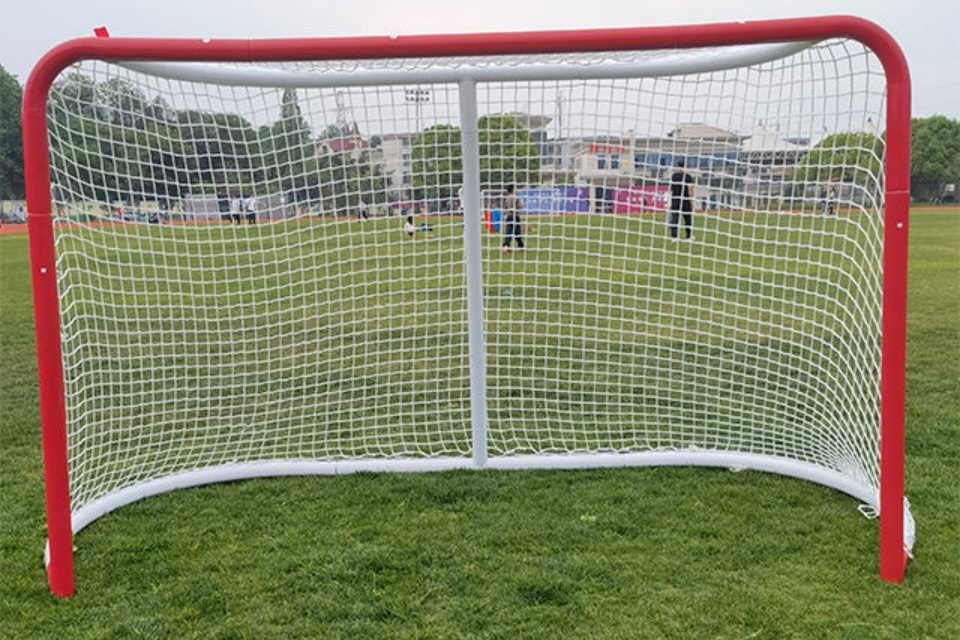
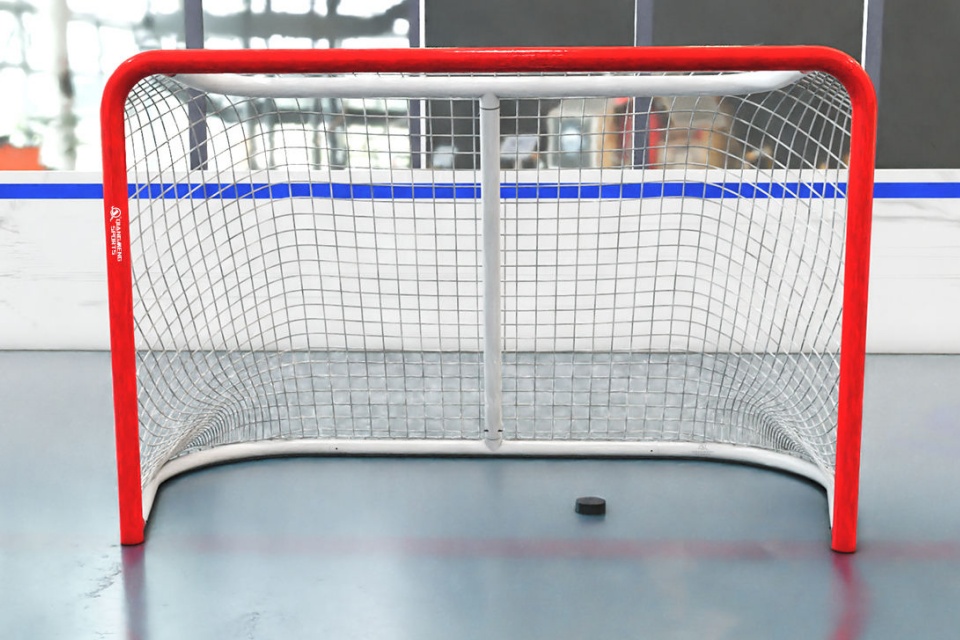
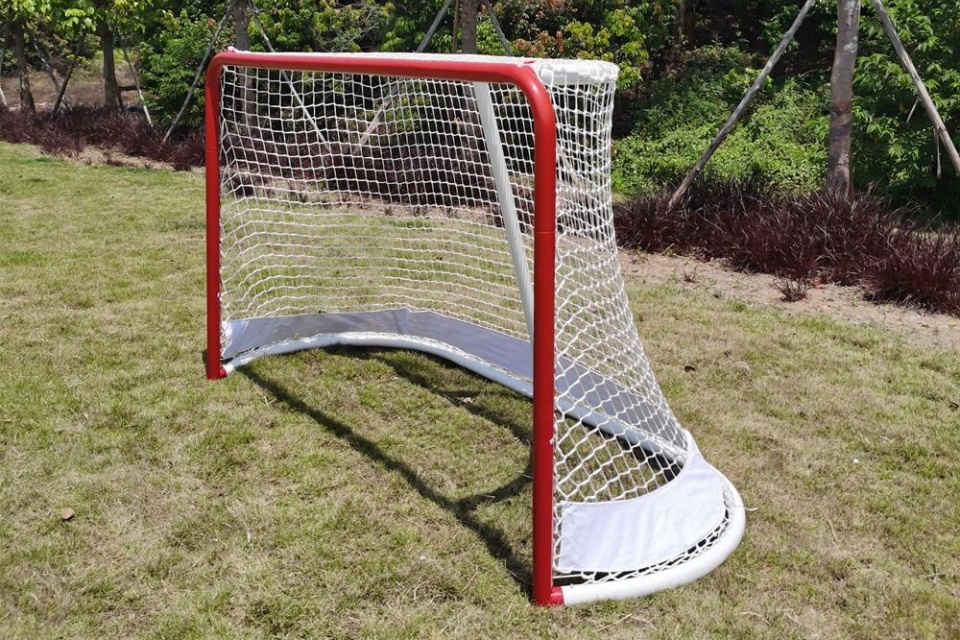
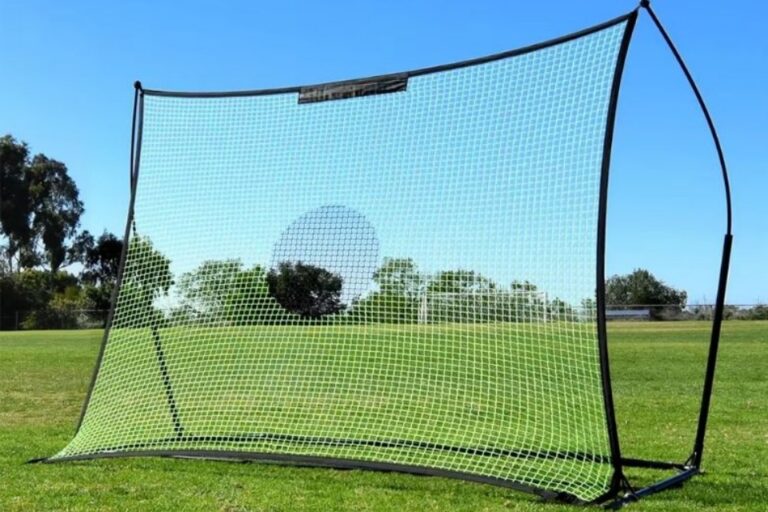
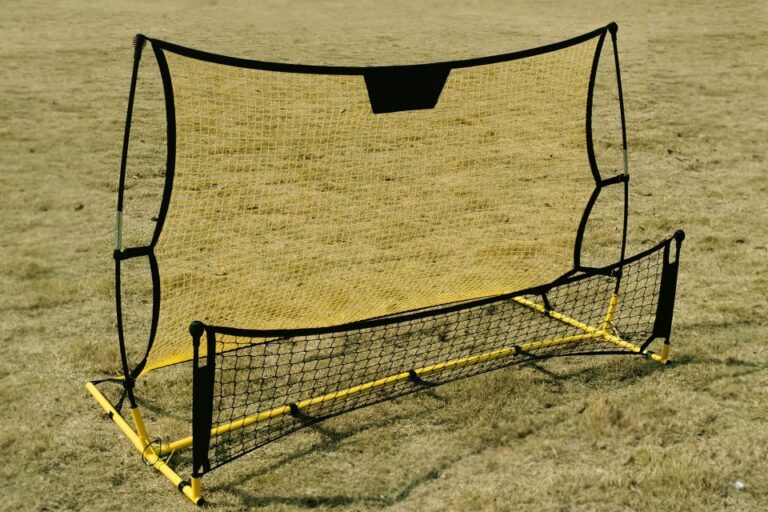
Tell us what you want to develop. FSPORTS supports OEM/ODM, private label, and custom sports netting projects based on your existing product, drawing, sample, photo, or application requirement.
Share the product type, dimensions, target quantity, destination, and any known mesh, material, frame, hardware, logo, or packaging requirements. If your specification is not complete yet, send what you have and we can review the remaining details before quotation.
How To Design a Safe And Functional Batting Cage With Proper Netting
Why Most Batting Cages Fail
Bad cages fail.
And they don’t usually fail with some cinematic collapse that makes everybody gasp and sprint for cover; they fail the way sports gear actually fails in the wild — at the seam, at the knot, at the gate, at the anchor point, in the dead zone nobody inspected, in the five dumb inches of slack that looked harmless yesterday. Then somebody gets clipped. Then everyone acts surprised.
I’ve been around enough training setups to know the pattern. Not just batting cages, either. Golf bays, backstop curtains, L-screens, rebounders, cheap pop-up frames that get called “commercial” because the product photos were taken from flattering angles. Same song. Different SKU. Here’s the ugly truth: a batting cage isn’t “a net.” It’s a controlled-impact lane with failure points, human traffic, rebound paths, and legal exposure baked into the thing whether the buyer wants to admit that or not.
Why does that matter?
Because the injury backdrop is real, not hypothetical. According to the National Safety Council, sports and recreational injuries rose 17% in 2024, and the American Sports Medicine Institute cites 154,757 emergency-room visits in 2024 tied to baseball and softball injuries across key body regions. That’s not niche noise. That’s the environment your batting cage lives in.
And then there’s the case nobody in this business should shrug off.
In May 2024, The Atlanta Journal-Constitution reported that Jeremy Medina’s family sued after the 17-year-old Gainesville High player died following a Nov. 20, 2023 batting-cage practice incident; the complaint alleged no adults were supervising, that it took more than three minutes for an adult to arrive, and more than seven minutes for CPR to begin. Brutal case. But useful, too, because it strips away the fantasy that “safety” is just about buying thicker mesh.
It isn’t.
From my experience, people shopping for batting cage design advice usually want one of two things: a smart spec sheet, or permission to cut corners without feeling like they cut corners. I’ll help with the first one. Not the second. If your cage is too short, say it’s too short. If your operator isn’t trained on the machine, don’t run the machine. If your gate control is sloppy, you don’t have a safe batting cage setup — you’ve got a live lane with vibes.
Batting Cage Dimensions: Start With the Footprint
Let’s start with footprint, because geometry is where the whole thing either gets honest or starts lying.
MLB’s field dimensions still anchor the pitching distance at 60 feet, 6 inches from the back point of home plate, and the Baseball Australia 2024 facility guide says outdoor batting cages should run 70 to 80 feet long, with a standard width around 14 feet and a minimum ceiling height of 12 feet. It also recommends netting be hung on the inside of the cage and that tubing be covered with foam padding. That’s not fluff. That’s the bones.
And yet. Buyers still try to shoehorn a “real” batting cage into a footprint that only makes sense for tee work or short toss, then act shocked when the lane feels cramped, rebounds get twitchy, and the whole rep sequence turns into a compromise nobody wants to call a compromise.
I frankly believe this is where the industry gets slippery.
A short lane isn’t evil. It’s just a short lane. Call it a tee tunnel. Call it a backyard soft-toss bay. Call it a limited-distance cage. Fine. But don’t dress it up as a full-practice build if the actual working length can’t support that claim. I’ve seen too many backyard batting cage netting setups sold on ambition instead of physics.
It works. Sometimes.
Legal and Space Reality
There’s also a legal angle hiding in plain sight. In a 2024 Massachusetts Land Court decision, the batting cage at issue was described as 12 feet high, 15.5 feet wide, and 55 feet long, and the assembly directions called for about a 15’6″ by 57′ area plus eight ground stakes. That detail matters. Once you’re claiming a footprint like that — and driving stakes into the ground — you’re not messing around with “temporary gear” anymore. Courts notice that. Neighbors notice that. Insurance people definitely notice that.
Batting Cage Netting: What Actually Matters
Now, netting. This is where buyers get hypnotized by marketing copy and start making bad calls with a straight face.
The best batting cage netting is not automatically the heaviest net or the priciest one or the one with the most macho-sounding product title. That’s rookie thinking. What matters is whether the mesh, twine, UV resistance, hang pattern, seam construction, door placement, and hardware package match the actual use cycle — tee work, live BP, machine reps, backyard use, school use, indoor, outdoor, full sun, coastal weather, all of it. The cage doesn’t care about your adjectives.
Specs do.
That’s why I’d rather look at a supplier page that talks like an engineer than one that talks like a catalog writer. The FSPORTS baseball net catalog positions its baseball nets for cages, fields, and backyards with UV-treated mesh and custom sizing, while its custom sports netting services page gets into mesh size, gauge, hardware, and impact testing where applicable. Good. That’s the language I want. Mesh. Gauge. Hardware. Wear zones. Not “elite performance experience” nonsense.
Net-Only vs Framed Batting Cage Systems
And don’t lump net-only and frame packages together like they’re the same animal. They aren’t.
Take this heavy-duty batting cage netting option, listed at 35 x 10 x 10 feet and described as fully enclosed. If you’ve already got a support structure, or you’re solving for a tighter backyard or garage footprint, that kind of net-only package can make a lot of sense. Cleaner. Lighter. Fewer moving parts. But a framed unit like the Baseball and Softball Batting Cage Net and Frame — with ground stakes, fiberglass rods, and 1-inch nylon netting — is usually the smarter call when the buyer wants a self-contained lane and doesn’t want site improvisation turning into a janky weekend project.
Different jobs. Different headaches.
Safe Batting Cage Setup Depends on Traffic Flow
But here’s the part people skip because it’s not sexy: traffic flow. Where does the hitter stand? Where does the feeder stand? Where’s the bucket? Where do the waiting players cluster? Where does somebody leave the lane after the rep? If that pattern is muddy, the cage starts feeling chaotic fast, and chaos is where little mistakes stack up — bats left lying around, kids cutting behind the screen, gates left open, somebody leaning into the lane to “just grab one ball.”
Bad habits breed.
Little League’s safety code says play areas should be inspected frequently for holes and damage, and that dugouts and bat racks should sit behind screens. The MSI batting cage best practices bulletin gets even more practical: only one adult pitcher and one batter should be in each cage at a time, adult pitchers should stand behind an L-screen, pitching-machine operators must be trained, and gates have to be controlled through disciplined use. That’s your operational backbone right there. Not optional garnish.
And yes, I’m going to say the quiet part out loud: a lot of “functional” cages are only functional during the honeymoon phase.
Week one, everybody’s careful. Week six, the machine wheel’s been cranked a little hotter, the gate spring is getting lazy, there’s rub wear where the mesh kisses the frame, a ball bucket lives where a human foot should travel, and somebody says, “It’s probably fine.” That phrase — probably fine — has wrecked more sports setups than any material defect ever did.
So design for the mess.
Design for the rushed coach, the tired parent, the teenage helper who swears he knows how to run the wheel, the hitter who drifts, the feeder who crowds, the ball that kicks sideways, the bat that gets dumped in the walkway, the knot that starts to fuzz right where the hot zone lives. From my experience, the safest batting cage design is the one that assumes people will be human and still keeps them out of trouble.
Batting Cage Design Comparison Table
Here’s the design matrix I’d use before approving any batting cage build. It’s my synthesis of the safety rules, facility guidance, and case evidence above.
I know what a lot of buyers want from an article like this. Reassurance. A pat on the head. Some soft line about how “the best batting cage setup is the one that fits your needs.” Sure. Fine. But here’s the ugly truth: some needs are just underbuilt budgets wearing a nicer shirt.
You can’t charm your way past physics.
And you can’t “premium” your way out of bad operations, either. The best batting cage netting in the world won’t save a cage with sloppy gate control, exposed frame contact points, no inspection rhythm, and teenagers wandering through the live lane during reps. Safety isn’t a product feature. It’s a system. That’s why I keep circling back to boring stuff — spacing, inspection, supervision, access control, L-screen placement, hardware choice. The boring stuff decides whether the exciting stuff stays exciting.
Maintenance Gets Ignored Until It’s Too Late
Maintenance gets ignored because it’s not fun to talk about. Still, it matters. Netting doesn’t die all at once. It degrades by inches. UV cooks it. Friction roughs it up. Repeated contact in the strike-path hot zone starts chewing at the same mesh intersections, and the failure shows up slowly enough that people normalize it. Until they can’t. If you’re serious, inspect before use and log the obvious trouble spots — door seam, lower sidewalls, corners, and anywhere the net keeps kissing a hard edge.
That’s not overkill. That’s ownership.
And I’d rather buy from a manufacturer that actually shows its process than from a middleman speaking in generic superlatives. The factory tour and About FSPORTS pages describe an integrated 20,800 sqm operation with in-house cutting, sewing, hardware processing, and QC. That matters to me. Maybe more than it should. But I’ve learned this the hard way: when a supplier can’t explain how the net gets made, they usually can’t explain how it’ll fail, either.
FAQs
What is the standard batting cage size?
A standard full-practice baseball batting cage is a training lane built to support near-regulation work, which usually means roughly 70 to 80 feet in length, about 14 feet in width, and at least 12 feet in height so the hitter, feeder, and ball flight all have workable space. That’s the clean answer. The messier answer? Lots of people build smaller and still call it “standard.” I wouldn’t. If it’s short, call it short. MLB field dimensionsBaseball Australia 2024 facility guide
What type of netting is best for a batting cage?
The best batting cage netting is impact-rated, UV-stabilized synthetic mesh sized for baseball or softball use, installed with hardware that limits sag and abrasion, and positioned so the ball hits forgiving netting before it reaches steel, chain link, or any other hard rebound surface. My bias is simple: I like inside-hung netting, padded frame contact points, and vendors who can talk twine, mesh, and hardware without ducking into vague sales language. Baseball Australia 2024 facility guideFSPORTS services
How often should batting cage netting be inspected?
Batting cage netting should be checked before every session and formally reviewed on a recurring schedule for holes, frayed twine, loose hardware, gate gaps, exposed tubing, and concentrated wear zones because minor damage is exactly how a contained practice lane turns into an avoidable ball-escape or rebound problem. Every session. That’s my answer. Quick visual before reps, deeper inspection on a schedule, and no pretending a fuzzy knot is “still good for now.” Little League safety codeMSI batting cage best practices
Is a backyard batting cage safe for kids?
A backyard batting cage is safe for kids only when it’s run as a supervised drill lane with one active batter, controlled entry and exit, helmet use, protected pitching or machine feeding, and clear separation between the live lane and everyone standing around waiting their turn. That’s the official-ish answer. My less official answer? Home setups get sloppy fast because they feel casual, and casual is where people start freelancing. Little League safety codeMSI batting cage best practices
Do you need a frame, or is net-only enough?
A net-only batting cage is enough when you already have a compatible support structure and mainly need containment, while a framed batting cage system is better when you want a self-supporting lane, more predictable setup geometry, and integrated anchoring without relying on site improvisation. That’s the technical answer. The practical answer? Net-only is lighter and cheaper, framed systems are cleaner and usually less janky once the reps start piling up. Heavy-duty batting cage nettingBaseball and Softball Batting Cage Net and Frame
Conclusion
If you’re serious about building a batting cage that’s actually safe — not just nice-looking in a hero image — start with your measurements, your rep volume, your supervision reality, and the kind of maintenance you’ll honestly keep up with. Then dig into the baseball net lineup, review the custom sports netting services, look through the factory tour, and contact the FSPORTS team with your dimensions, sketches, and site photos. That’s how I’d do it. Not by guessing.