How to Protect Your Business from Sports Netting Supplier Risks
Why Cheap Supplier Quotes Usually Cost More Later
Cheap quotes kill.
Last year, I watched a buyer grin over a lowball factory quote, brag about shaving 11% off landed cost before kickoff season, and then spend the next two months eating chargebacks, arguing over busted mesh and carton count shortages, and pretending the missing test paperwork was a minor admin hiccup. It wasn’t. Not even close.
Why does this keep happening?
Because a lot of teams buy netting like it’s dead-simple commodity gear. It isn’t. Not once you’re talking about actual commercial exposure—polymer grade, knot geometry, UV package, edge binding, stitch density, frame interfaces, warning labels, palletization, freight timing, claim handling. That’s where the bodies are buried. I frankly believe the industry hides behind “heavy duty” because it sounds technical while saying absolutely nothing.
إليكم الحقيقة القبيحة.
Most موردو الشباك الرياضية don’t implode in some cinematic way. They drift. Quietly. First it’s a vague resin description. Then a “tested” claim with no lot tie-in. Then lead time slides because the mill slot moved, or the sewing line got bumped, or the freight booking vanished into thin air. Then, suddenly, your customer’s staring at torn webbing and asking why your procurement process looked like a coin toss.
And that’s before safety gets ugly.
جدول المحتويات
Real-World Supplier Risk Isn’t Theoretical
A Fatal Safety Case That Changes the Conversation
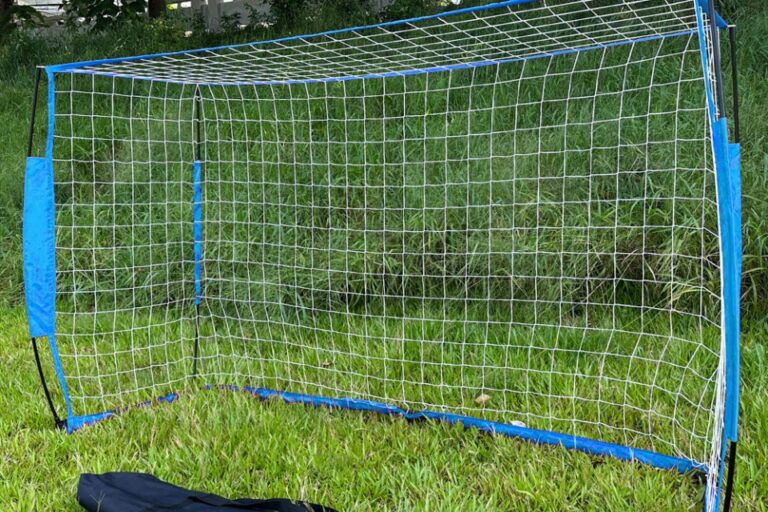
One case should sober up anyone who thinks this is just a sourcing headache. In a تحذير السلامة CPSC, the agency warned consumers on December 19, 2024 to stop using Sport Nets 4×8 portable soccer goals after an April 2023 fatal brain injury in Washington State; CPSC said the manufacturer refused to conduct a recall, and the product had sold online for $43 to $150. That’s not a “customer service issue.” That’s supplier risk made physical.
Marketplace Protection Is Mostly an Illusion
And no, hiding behind a marketplace doesn’t magically wash the risk off your hands. Reuters reported on July 30, 2024 that the CPSC held Amazon responsible for hazardous third-party products sold on its platform, covering more than 400,000 items and treating Amazon as a distributor where it stored and dispatched the goods. So when someone says, “Well, technically, it came through a platform,” I hear something else: nobody did the homework. (reuters.com)
That excuse dies fast.
From my experience, the nastiest failures aren’t always dramatic product collapses. Sometimes it’s much dumber than that—which almost makes it worse. A bad UV cocktail. A softer twine swap after sample approval. Mesh aperture drift. Edge rope inconsistency. A frame weld that technically exists but clearly didn’t get enough love on the jig. If you’ve ever had to explain to a facility manager why “commercial grade” started fraying in one season, you already know how this movie ends.
So no, I don’t start with price.
What You’re Actually Buying from Sports Netting Suppliers
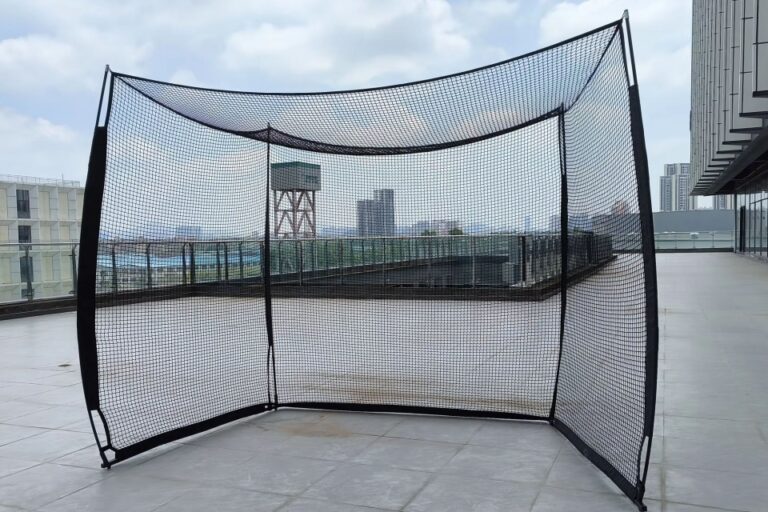
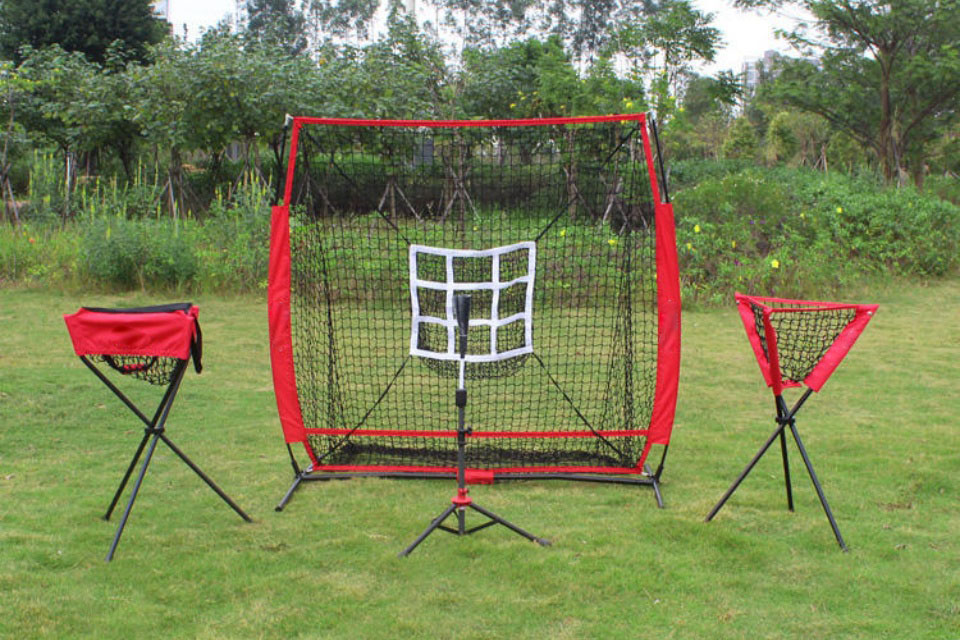
I start with exposure, because if you’re buying barrier netting, golf cages, baseball backstops, soccer goals, rebounders, or multi-sport rigs, you’re not purchasing “net.” You’re buying a package of assumptions—material assumptions, test assumptions, packaging assumptions, customs assumptions, and legal assumptions—and the supplier either has the paperwork to back those assumptions up or they don’t. Simple.
إن best sports netting suppliers are often the least flashy. Boring, honestly. They answer ugly questions without squirming. They can pull records fast. They don’t get weird when you ask for model-linked test reports, actual QC checkpoints, or a root-cause writeup from a prior defect. That’s a green flag in this business. Confidence without documentation is just sales varnish.
And here’s a tell most buyers miss: can the supplier show the operation, not just the brochure? A real manufacturer should be able to walk you through a genuine جولة في المصنع, point you toward an actual كتالوج منتجات الشبكات الرياضية, and explain the nuts and bolts of its services for custom netting projects. If all you get is mood-board marketing and recycled spec fluff, I’d slow the whole thing down.
Compliance, Testing, and Documentation Gaps
“ASTM Compliant” Means Nothing Without the Details
Now let’s talk compliance theater.
I’m always amused—wrong word, irritated maybe—when a seller throws around “ASTM compliant” like it’s holy water. Compliant to what, exactly? Which standard? Which lab? What date? What model? What lot? ASTM’s sports standards catalog handles net-related safety by application, with separate standards for things like paintball barrier netting and climbing nets rather than one universal pass/fail badge for every sports net product. So when a supplier says “meets ASTM” and can’t get more specific, that’s not assurance. That’s smoke. (store.astm.org)
Details matter. A lot.
Due Diligence Laws Are Expanding Fast
And it’s not just product testing. Compliance pressure is widening. Reuters reported in April 2024 that the EU’s Corporate Sustainability Due Diligence Directive would require larger companies to examine upstream design and manufacturing partners as well as downstream transport, storage, and distribution partners, with penalties that can reach 5% of global turnover. If you sell into Europe, weak supplier due diligence isn’t a procurement annoyance anymore—it’s boardroom material. (reuters.com)
Freight, Customs, and Contract Risk
Logistics Volatility Can Destroy “Good Pricing”
Then freight. God, freight.
People still talk like container volatility was a one-off pandemic fever dream. It wasn’t. UN Trade and Development said freight rates surged in 2024, and by mid-2024 the Shanghai Containerized Freight Index had more than doubled from late 2023 because of rerouting, congestion, fuel use, and insurance costs. Reuters also reported that East Asia deliveries into the UK were taking at least 12 to 18 days longer because of Red Sea rerouting. So when a supplier hands you a “sharp” price that only works if every routing variable behaves perfectly, I don’t call that competitive. I call it undercooked. (unctad.org)
It gets worse.
Origin Traceability and Forced Labor Exposure
A lot of buyers still do their forced-labor check like it’s 2017. They grab a country-of-origin statement, maybe a factory declaration, toss it into the folder, and call the file “compliance complete.” That’s cute. CBP’s public UFLPA tools now expose more shipment-level detail, and in its December 2024 monthly update the agency said it stopped 1,404 shipments valued at more than $18.7 million for further examination based on suspected forced labor. If your supplier can’t trace yarn, resin, sewing, finishing, and packaging with confidence, your cargo can stall hard—and the port clock does not care about your quarterly targets. (cbp.gov)
Weak Contracts Create Expensive Disputes
And then there’s the contract mess.
This is where procurement teams get lazy, usually because everyone’s in a rush and nobody wants to fight over definitions until the lawyers arrive later with a flamethrower; under U.C.C. § 2-314, goods sold by a merchant carry an implied warranty of merchantability unless properly excluded or modified, which means they must, among other things, pass without objection in the trade and be fit for ordinary purposes. If your PO says “commercial grade netting” and nothing else, good luck later. (law.cornell.edu)
Words matter.
How to Evaluate Sports Netting Manufacturers Properly
When I size up sports netting manufacturers, I look for category fluency, not catalog bloat. Can they show coherent product depth in أنظمة شبكة البيسبول, golf netting solutions, و outdoor netting products? Good. That tells me they probably understand different use cases, load patterns, exposure conditions, and replacement cycles. But “probably” doesn’t earn a PO. I still want the tech pack guts: denier, material callout, aperture tolerance, sewing sequence, UV additive story, frame coupling, packaging standard, and batch traceability.
Because samples lie.
Or rather—samples tell the truth about one moment in time. Production tells the truth about the supplier.
That’s why I don’t love the lazy “send me one golden sample and we’re good” approach. I want staged verification. Sample approval, yes. But then in-process inspection while the run is alive, not just after the last carton gets taped. Then pre-shipment verification tied to labels, counts, and actual model identity. Otherwise you’re basically praying nobody swapped yarn lots, loosened tolerances, or jammed substitutions into the run because the original inputs got expensive.
That happens. Often.
Supplier Risk Checklist Before You Issue a PO
Here’s the framework I use before any serious PO goes out.
| Risk area | What suppliers usually claim | ما يجب عليك التحقق منه | العلم الأحمر |
|---|---|---|---|
| Material quality | “HDPE/nylon/polyester, heavy duty” | Exact polymer grade, denier, knot or knotless construction, coating type, UV package, batch records | No resin detail, no batch traceability |
| Safety performance | “Tested” or “commercial grade” | Standard number, lab name, test date, model/lot match, installation instructions | Report with no model linkage |
| الامتثال | “Export experienced” | Country of origin by component, supplier map, labor declarations, customs documentation | Only final assembly origin provided |
| Lead time | “30 days” | Production calendar, raw-material availability, container plan, shipping route assumptions | Lead time excludes booking and congestion |
| الضمان | “1-year guarantee” | What fails, what is excluded, who pays freight, response time, replacement threshold | Warranty written as marketing copy |
| Factory capability | “We are manufacturer” | Video audit, machine list, QC workflow, defect logs, inspection checkpoints | Refuses plant visibility |
| After-sales support | “We solve issues fast” | Named contact, escalation process, spare parts/replacement net supply | Only sales rep on WhatsApp |
My rule is blunt: if a supplier can’t survive a document dump request, they won’t survive a field failure.
And I do mean a real document request. Bill of materials. Resin declaration. Mesh spec. Tensile or impact evidence. Installation guide. Warning labels. Country-of-origin support. QC check sheets. Defect photography. CAPA trail. If the vendor starts dancing around those items, that dance is the answer.
The Biggest Risk Is Usually Drift, Not Fraud
But let me say something unpopular.
Fraud gets all the attention. Drift deserves more.
A supplier can be honest and still be dangerous because honest factories still cut corners under pressure—raw material spikes, labor turnover, machine downtime, booking issues, quota pressure, weird customer change orders, you name it. Good first order. Messy second order. Then the buyer acts shocked. I’m not shocked. I’ve seen too many “same as last time” reorders that were absolutely not the same as last time.
That’s why repeatability matters more than charm.
If you need a sanity check, don’t just ask for a quote. Use the صفحة الاتصال and ask something awkward—ask how they control aperture tolerance across runs, or how they handle UV-package consistency, or what happens if edge binding fails after install. A serious supplier will answer the question. A brochure merchant will answer a different one.
الأسئلة الشائعة
What are sports netting supplier risks?
A sports netting supplier risk is any vendor-side weakness—unsafe design, undocumented materials, missed lead times, weak origin tracing, unstable finances, fake testing, or vague warranty language—that can expose your company to injury claims, customs delays, rework costs, chargebacks, and brand damage after purchase commitments are already locked in.
In plain English, it’s the stuff that looks manageable in a quote sheet and turns nasty once product hits the field.
How do I verify sports netting suppliers before ordering?
Verifying sports netting suppliers means checking whether the seller can prove factory capability, material consistency, test validity, compliance documentation, and after-sales accountability through records tied to the exact model and production lot you plan to buy, rather than through generic brochures, old certificates, or unverifiable marketplace listings.
From my experience, if the test report can’t be matched to the exact SKU or lot, it’s decoration.
What contract terms matter most when buying commercial sports netting?
The most important contract terms for commercial sports netting are the written performance specification, inspection rights, lot-to-lot consistency requirements, origin and compliance representations, defect remedies, replacement timelines, freight responsibility, and the exact warranty trigger, because vague purchase orders leave too much room for suppliers to redefine quality after a dispute starts.
هذا هو المكان supplier due diligence for sports netting stops sounding smart and starts saving money.
Is buying from online marketplaces a bad idea for sports netting?
Buying sports netting through online marketplaces is risky when the marketplace obscures the real manufacturer, the actual importer, the testing record, and the recall response path, because the convenience of the transaction can hide weak traceability and leave your business arguing over responsibility only after a safety or compliance problem appears.
A marketplace can help you source leads. It should never be mistaken for due diligence. (reuters.com)
What makes the best sports netting suppliers stand out?
The best sports netting suppliers stand out by being specific where weaker vendors stay vague: they identify polymer and construction details, tie reports to real models and lots, disclose factory processes, accept audit pressure, document corrective actions, and talk about replacement terms with the same precision they use when quoting price and lead time.
That’s the difference between a real operator and someone just flipping catalog pages.
الخاتمة
Protecting your business from supplier risk isn’t about finding some mythical perfect vendor. It’s about setting the process so a weak supplier can’t hide, a sloppy supplier can’t improvise, and a strong supplier can actually prove what they’re saying before your brand gets stapled to the shipment. That’s how I think about how to avoid sports netting supplier risks.
So ask harder questions. Read the paperwork. Pressure-test the story. Start with the catalog, inspect the factory trail, and force the technical conversation before the PO—not after the first claim lands on your desk.