Facility Sizing Calculator & Guide
Why sizing mistakes cost more than people think
Bad math hurts.
Last year I looked at a netting request that seemed clean on paper—nice dimensions, tidy sketch, somebody had even typed “final size confirmed” in the email chain—and it still blew up because the buyer measured the slab instead of the live play envelope, forgot the post setbacks, skipped overlap, and treated hardware loss like it was optional. Happens constantly.
And that’s the part people hate hearing.
I frankly believe most sizing disasters in this business aren’t engineering failures at all. They’re buyer psychology. Somebody wants the PO out fast, somebody else wants the line item lower, and suddenly a fake-precise number starts acting like truth. Then install day arrives. Then everyone gets religion.
So what’s a real facility sizing calculator supposed to do?
Not flatter you. Not hand you a cute square-foot number and a little confidence boost. It should interrogate the job—clear height, sport, netting style, post interference, shank zones, overlap, retrieval lanes, whether you’re dealing with a divider, cage, impact wall, or some Franken-build that got patched together after the architect bailed.
The participation numbers explain why this matters now, not someday. According to the NFHS 2023–24 participation survey, high school sports participation hit 8,062,302, mit 473,073 baseball participants and 903,952 basketball participants. More athletes. More shared spaces. More balls flying through spaces that were “good enough” on the drawing and a headache in the field. (assets.nfhs.org)
And pickleball—yeah, that beast—keeps forcing the issue. The USA Pickleball 2024 annual growth report says the Pickleheads database counted 68,458 known courts, 18,455 new courts added in 2024, und 142 sanctioned tournaments in 2024; it also says USA Pickleball had already helped drive more than $300 million in new facility development off the prior year’s momentum. That isn’t hobby growth. That’s capex pressure with a paddle in its hand. (usapickleball.org)
Inhaltsübersicht
Most calculators lie by omission
Das ist die hässliche Wahrheit.
Most calculators lie by omission.
A weak facility size estimator asks for length and width, spits out a number, and moves on like the job is a rectangle living in a vacuum. Real jobs aren’t rectangles. They’re full of dead space, beam drops, traffic bleed, side-return chaos, door swings, carts, benches, and one coach who always wants “just a little more room” after fabrication starts.
But I’ve seen buyers do this anyway—measure a 40-foot bay, order a 40-foot system, and then act shocked when two feet disappear on each side to posts, anchors, or clearance. That’s not a 40-foot opening. It’s a 36-foot working opening pretending to be 40.
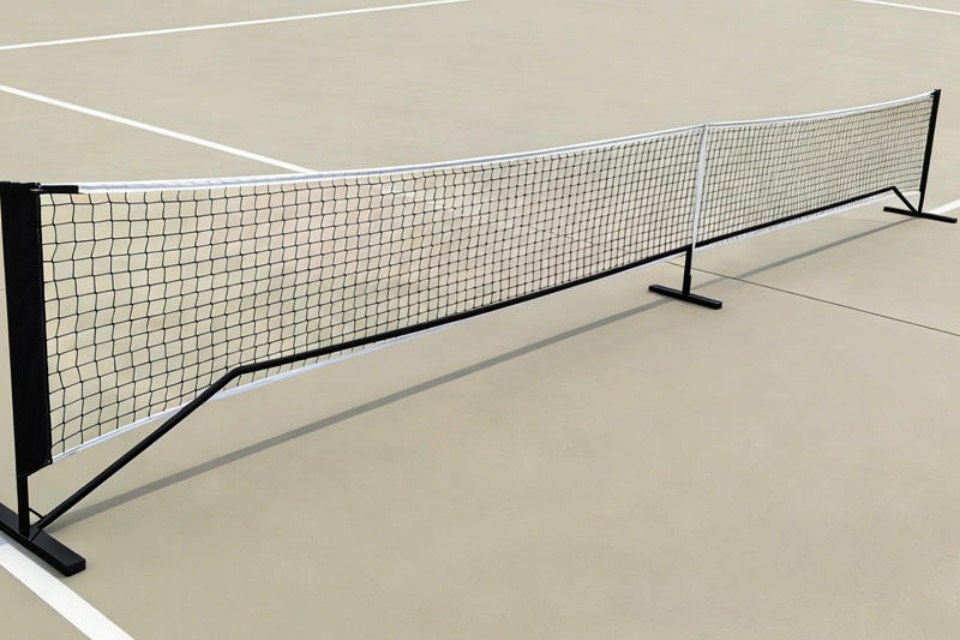
The standards people, to their credit, are more honest than most sales pages. The ASTM F3558-22 overview published by ANSI spells out that the point of a pickleball court fence is to keep balls in, keep unwanted traffic out, and reduce collisions with spectators, fixed objects, slippery surfaces, or hazardous adjacent areas. I read that and think: exactly. A containment system first. A SKU second. (blog.ansi.org)
And if you think bad sizing just creates a mild inconvenience, no—sometimes it gets darker than that. In a December 19, 2024 warning, the U.S. Kommission für Verbraucherproduktsicherheit told consumers to stop using a Sport Nets 4×8 portable soccer goal after an April 2023 incident in Washington State in which a high school student suffered a fatal brain injury; CPSC said the exposed metal tip on the goal’s vertical poles posed the hazard, and the product had sold for $43 to $150. Different product class, sure, but same lesson: geometry, hardware, and clearance aren’t side notes. They are the job. (cpsc.gov)
How to size a facility without fooling yourself
So when people ask me how to size a facility, I don’t start with area. I start with lies. Which assumptions are bogus? Which dimension exists only in the rendering? Which number was measured to the wall even though the wall is useless because a beam, track, or traffic lane eats the edge?
That’s where the real work starts.
Break the project into functional zones
I break every project into zones, and yeah, it sounds obsessive until it saves a reorder: the active capture zone, the edge allowance, the conflict zone, the recovery lane, and the material-behavior zone (because nylon 6,6 doesn’t act like UV-stabilized HDPE once tension, sag, and impact start stacking up).
Short version? Measure what the ball cares about, not what the room brochure says.
The sizing math I actually trust
Core formulas
For divider curtains, my baseline is still boring on purpose:
Net area = run length × drop height
For cages and enclosures, I split the skin into real surfaces:
Total net area = side wall 1 + side wall 2 + back wall + roof + any return panel
Practical allowance ranges
Then I add what the spreadsheet crowd always tries to shave off:
Straight divider curtain: add 5% to 8% Framed panel or rebounder zone: add 8% to 12% Full cage, simulator bay, or irregular enclosure: add 10% to 15%
Es funktioniert. Normalerweise.
And before somebody gets cute—no, those percentages aren’t magic. They’re procurement allowances. Field reality. The stuff that keeps your “perfect estimate” from dying when hems, cable pockets, bungees, hooks, edge wrap, and trimming start eating material in ways your neat little math never bothered to model.
Now layer in demand. The 2024 State of Pickleball report from SFIA and Pickleheads found participation grew 51.8% from 2022 to 2023 and 223.5% over three years; the same report says dedicated pickleball facilities grew 55% year over year, yet still estimated $855 Millionen in court-construction investment would be needed over the next five to seven years. That means more retrofits, more mixed-use spaces, more chopped-up footprints, and less margin for lazy spec work. (sfia.org)
Why multi-sport venues expose weak calculators
And mixed-use is where calculators really get exposed.
A legit sports facility sizing calculator has to ask the uncomfortable question: what is the fastest, hardest, dumbest ball this room will ever see? Not the average day. Not the brochure use case. The worst one. The one that smokes the side panel, clips the seam, rebounds weird, and makes everyone stare at the installer.
Because a youth divider, a golf impact bay, a backyard rebound setup, and a high-turnover training center do not deserve the same assumptions. They just don’t.
A practical sizing table
| Use Case | What You Measure First | What Buyers Usually Miss | Practical Allowance | Better Product Path |
|---|---|---|---|---|
| Baseball batting lane | Length, width, height, end-stop depth | Roof footage, post offsets, ball-return area | 10%–12% | Start with Baseball-Netzsysteme |
| Golf hitting bay | Impact width, side shank zones, ceiling drop | Side protection, top return panel, target cutout | 12%–15% | Compare golf cage net options oder eine Golfsimulator-Gehäuse |
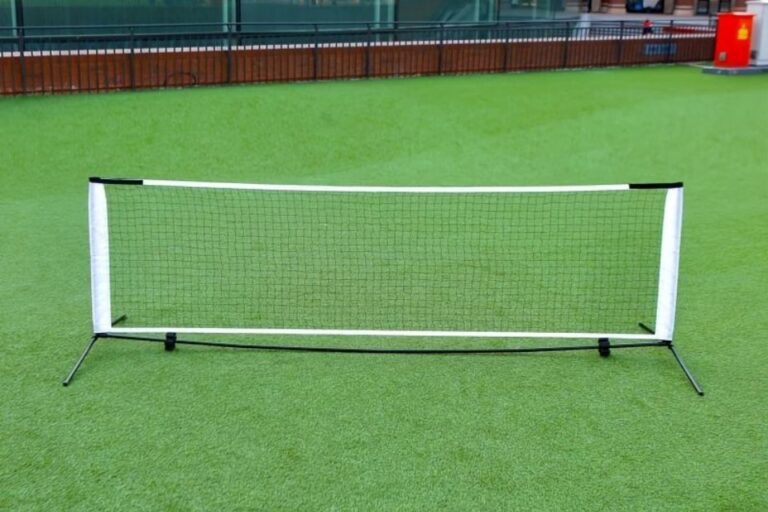
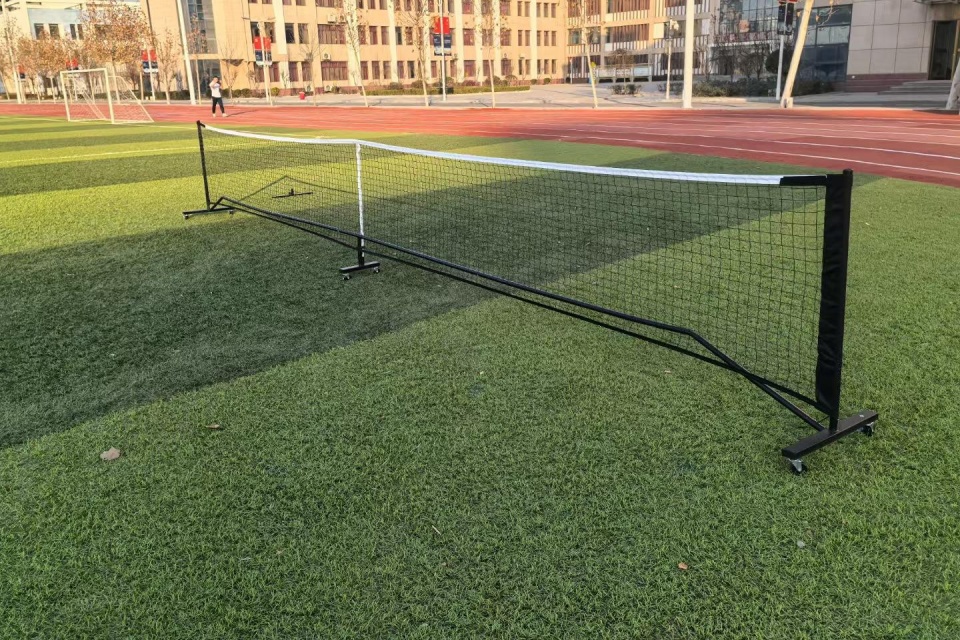
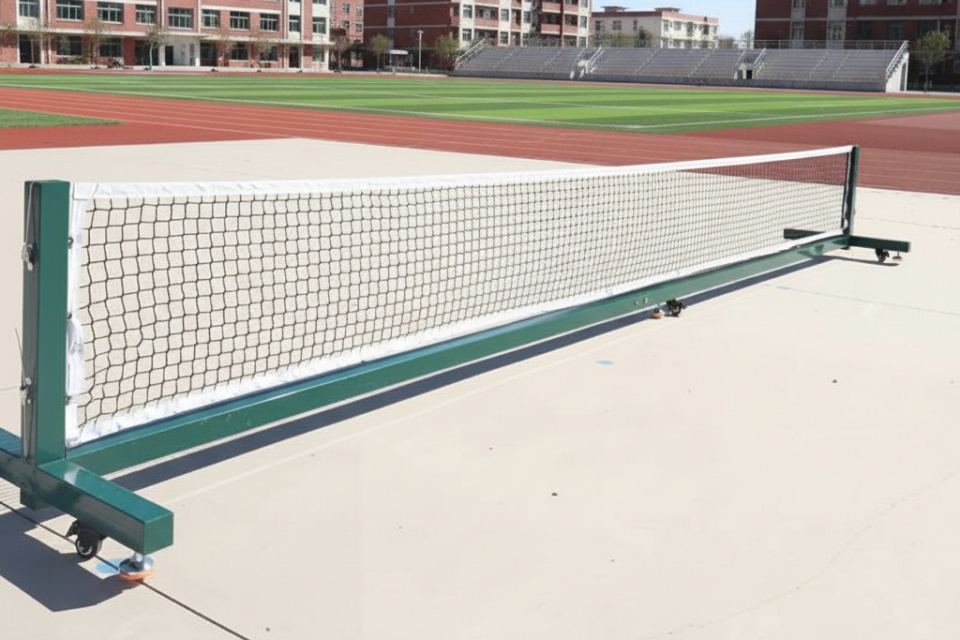
| Pickleball divider | Run length and finished drop | Wheel base width, overlap at the ends, storage path | 5%–8% | Review tragbare Pickleball-Netzsysteme |
| Multi-sport training zone | Widest use case plus tallest use case | Sport changeovers, anchor positions, spectator drift | 8%–12% | Verwenden Sie multi-sport net setups |
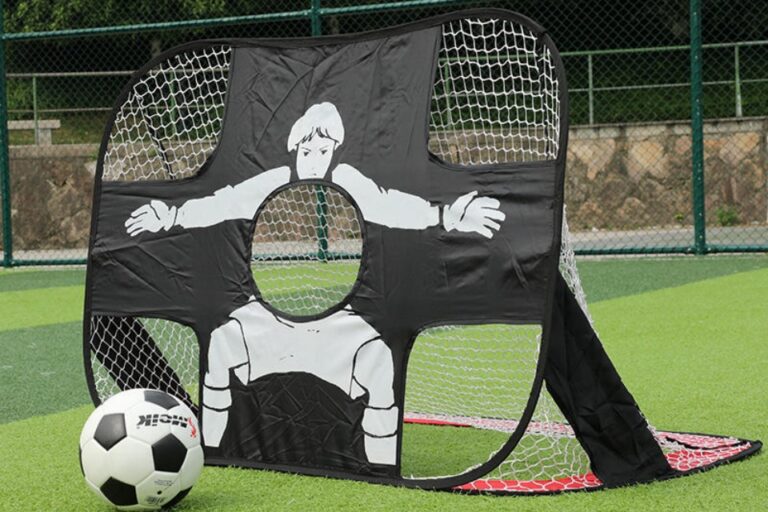
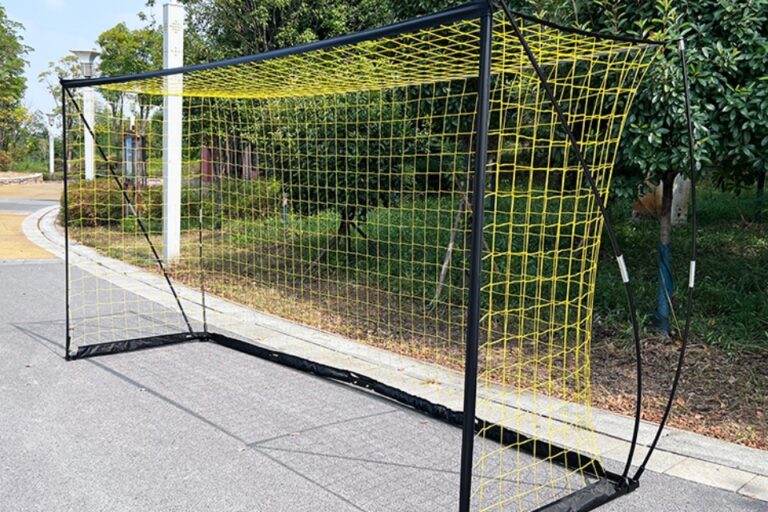
| Soccer or football backstop | Shot width, capture height, retrieval lane | Frame safety, anchor depth, side flare | 8%–10% | Pair containment with soccer goal solutions oder football training systems |
Where buyers get burned
But tables don’t save projects. People do.
And people make the same mistakes over and over: they measure the slab, not the safe envelope; they ignore side flare in golf shank zones; they forget ceiling interferences; they treat portable frames like they’re infinitely forgiving; they obsess over a quarter-inch in one dimension while losing a foot to hardware logic they never modeled in the first place.
False precision again.
I’ve sat in enough quote reviews to know the ugliest line in the file is often “dimensions confirmed.” Confirmed by whom? With what? Laser? Tape? Render? Site photo? A memory from six months ago? Nobody says. Everyone assumes. Then a change-order walks in wearing work boots.
From my experience, the best facility dimensions calculator is the one that feels mildly annoying. It asks too many questions. It forces you to declare sport type, impact severity, mounting style, run-out, and edge condition. It won’t let you hide behind a clean rectangle. Good. That friction is healthy.
And vendor process matters more than buyers like to admit. For custom netting jobs—especially private-label work, mixed-sport builds, or anything with ugly field conditions—I’d rather work with a supplier that actually understands conversion from drawing to production than one with a flashy mockup and suspiciously fast lead-time promises. That’s why I’d still look at the service capabilities und die Werksbesichtigung before trusting the quote.
Yet there’s another thing.
Portable doesn’t mean forgiving.
Portable usually means more assembly variance, more user abuse, more opportunities for somebody to skip a pin, reverse a leg, under-anchor a frame, or drag the unit somewhere it was never meant to live. People hear “portable” and think flexible. I hear “portable” and think tolerance stack-up.
That’s also why I don’t hate a little conservative ordering—when it’s disciplined, not sloppy. Overbuying blindly is dumb. Buying a rational allowance into a system that has real install variables? That’s just adult behavior.
FAQs
What is a facility sizing calculator?
A facility sizing calculator is a planning tool that converts the usable length, width, height, sport type, and netting style of a venue into the net area, linear footage, overlap allowance, and hardware count needed to quote, buy, and install containment correctly the first time. If it’s any good, it tells you what fits, what conflicts, what needs overage, and where the drawing is fooling you.
How do I calculate sports netting requirements?
A good way to calculate sports netting requirements is to measure the true playing envelope rather than the slab, then multiply each active span by its drop or depth, add end panels, roofs, or overlaps, and apply a waste factor based on whether the system is a curtain, a cage, or a framed panel. That’s the backbone of a real facility sizing guide—not a guess, not a napkin sketch, not “close enough.”
What is the best facility sizing calculator for a multi-sport venue?
The best facility sizing calculator for a multi-sport venue is one that lets you model multiple use cases, including ball speed, rebound behavior, divider function, spectator buffers, post locations, and the hardest-use scenario that will stress the netting system the most. If it only works for the cleanest use case, it’s not the best. It’s just the easiest to demo.
How much extra netting should I order?
The right overage for sports netting is a controlled allowance for hems, tensioning, hardware placement, post setbacks, and field trimming, which usually means a smaller percentage for straight divider curtains and a larger percentage for cages, enclosures, or irregular footprints with corners and beam conflicts. I’d generally think in bands: 5% to 8% for dividers, 8% to 12% for framed panels, and 10% to 15% for cages or oddball enclosures.
Can a facility size estimator reduce overordering?
A facility size estimator reduces overordering when it separates active capture area from installation allowance, because buyers often mix those numbers together, pad them blindly, and end up with expensive surplus that still doesn’t solve the real clearance or hardware problem. Done right, estimating doesn’t just trim waste—it trims bad assumptions before they become inventory.
Schlussfolgerung
If you’re sizing a job right now, don’t start with whatever product page looks prettiest. Start with the abuse profile, the geometry, and the install reality—then narrow it down with Baseball-Netzsysteme, golf cage net options, tragbare Pickleball-Netzsysteme, oder multi-sport net setups. And if the drawings are messy (they usually are), run them through the Kontaktseite before you buy the wrong thing.