Sports Facility Features & Amenities: Lighting, Climate, Sound & Revenue
I’ve walked into facilities that looked impressive for exactly six seconds—fresh paint, shiny desk, nice logo wall—and then the doors closed, the air turned stale, the lights threw weird shadows into the corners, and the whole place felt like a cost center pretending to be a premium club.
That happens. A lot.
And members notice faster than owners do.
Here’s the ugly truth: most people in this business still talk about sports facility amenities like they’re brochure material, when the real money is tied up in building physics, programming flexibility, and whether the place can keep bodies comfortable and coaches sane from the 7 a.m. clinic to the 9:30 p.m. league slot. That’s not sexy copy. It’s still true.
So when I hear “amenities,” I don’t think lounge furniture. I think yield. I think court-turn efficiency. I think HVAC load, glare control, reverberation time, booking density, sponsorable walls, and whether your dead square footage can be turned into something billable before the next season rolls around.
Because that’s the real split.
The smart operators aren’t winning because they installed prettier finishes. They’re winning because they turned lighting into usable inventory, climate into retention, sound control into better coaching, and side zones into revenue pockets that earn outside prime hours. The rest? They’re basically subsidizing discomfort and calling it overhead.
Inhaltsübersicht
Lighting doesn’t just help people see. It lets you sell time.
But let’s start where owners usually underthink the problem.
I’ve seen facilities spend big on flooring and then cheap out on the light package—as if members won’t notice the difference between a clean, even lux pattern and a weird patchy court where one baseline feels broadcast-ready and the other feels like a warehouse pickup run. They notice. They may not say “glare index” or “uniformity ratio,” but they feel it in their eyes, in their phone videos, in whether the evening slot feels worth paying for.
Deshalb ist sports facility lighting matters more than most people admit. Good lighting extends playable hours, supports filming, makes coaching easier, improves perceived safety, and helps a building hold its standard after sunset. Bad lighting does the opposite—and it does it quietly, which makes it even more dangerous because operators start blaming price, demand, or “seasonality” when the environment itself is dragging conversion.
I frankly believe this is where a lot of mid-market venues leave money on the table. Not by missing some giant capital trick. By missing a basic one.
Use the room properly.
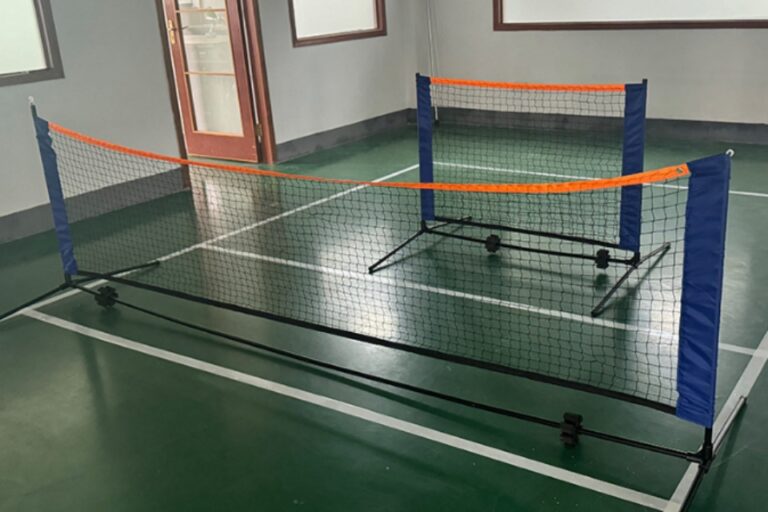
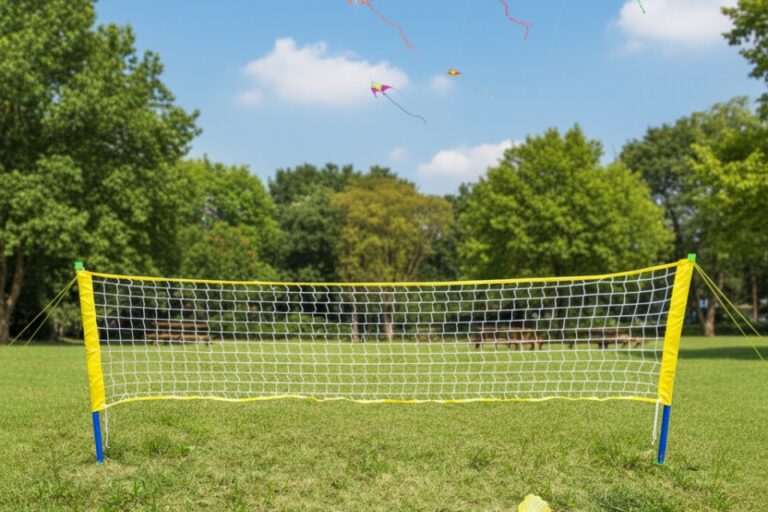
And, yes, there’s a newer layer to this that people used to dismiss as gimmicky but shouldn’t anymore—experience lighting. Not for every facility, obviously. But if you run social leagues, youth nights, family sessions, activation events, or rental blocks that need a little visual lift, products like this portable pickleball net system with LED light frame design and this Buntes LED-Volleyballnetz mit ferngesteuerter Beleuchtung show where the market is going: facilities aren’t just selling access now, they’re selling atmosphere.
Es funktioniert. Normalerweise.
Climate control is the silent churn driver
Yet this is the one owners love to call “back-end.”
From my experience, that’s nonsense. Members don’t separate the “front-end brand” from the air they breathe. They don’t walk out saying, “The latent load profile was mishandled.” They say the place felt stuffy, or weirdly hot, or freezing near the entrance, or dead by the second hour—and then they start drifting to another facility that simply feels easier to be in.
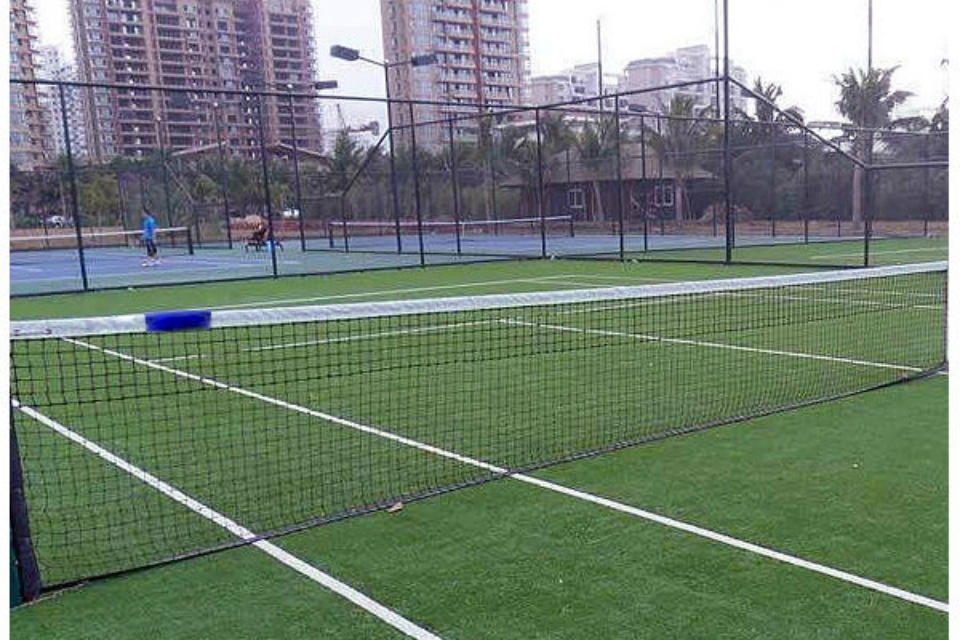
Deshalb ist indoor sports facility climate control isn’t some engineering footnote. It’s retention infrastructure. And when the building is full—lessons running, parents sitting, players rotating, doors opening, sweat and humidity stacking up—your HVAC decisions become membership decisions.
The energy side tells the story pretty clearly. According to the U.S. Energy Information Administration’s commercial building breakdown, space heating accounts for about 32% of total U.S. commercial building energy use, while ventilation and lighting each account for about 10%, which means the expensive systems operators treat like “background utilities” are often the exact systems shaping operating margin and day-to-day user comfort.
That’s not background. That’s the building.
And big venues already know this. In a February 28, 2024 Reuters report on Paris 2024, organizers said the athletes’ village would operate without traditional air conditioning, leaning instead on façade orientation, efficient insulation, and naturally cool underground water to keep interiors comfortable during summer conditions. Whether you admire that strategy or think it’s risky, the lesson is obvious: serious operators design thermal performance early, not after complaint emails start rolling in. (reuters.com)
Also—small point, but not really small—comfort widens programming. If the room stays stable, parents linger, coaches schedule back-to-back sessions, adult leagues tolerate longer stays, and staff don’t get cooked by the third block. That compounds.
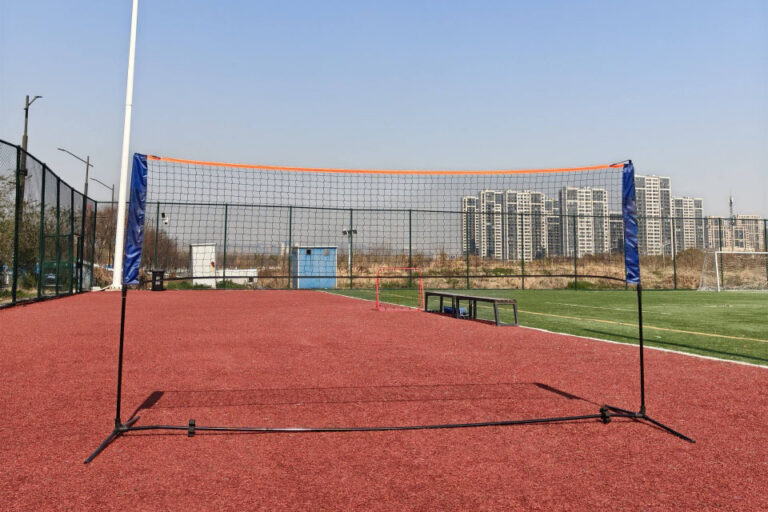
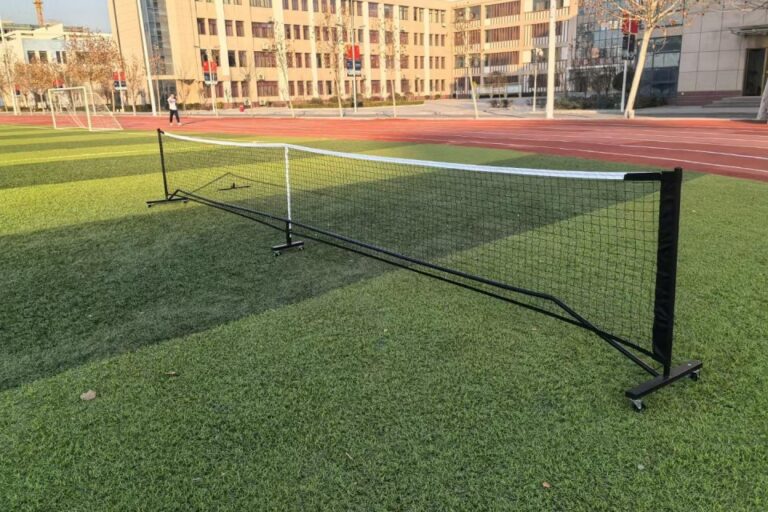
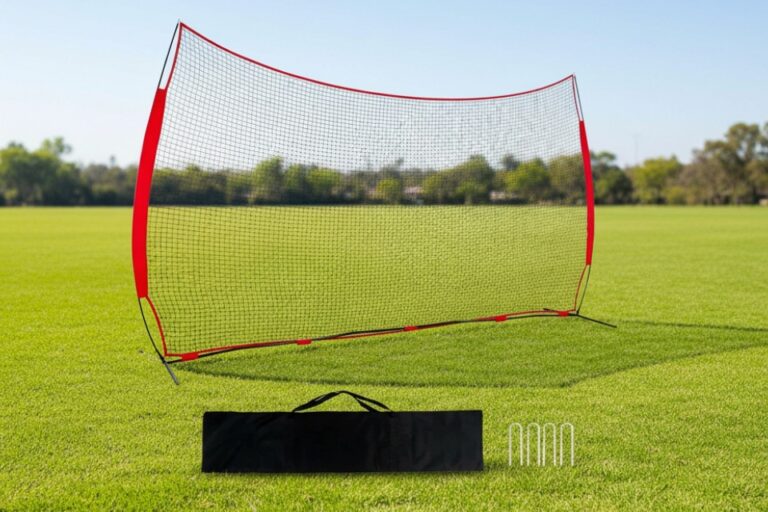
So does flexibility. A modular setup like this verstellbares Multisportnetz mit Rollfuß und Rollen isn’t just hardware; it’s turnover speed, schedule compression, and fewer minutes lost between bookings. People underestimate that all the time.
Sound is where “nice facility” marketing falls apart
Too loud. Too echoey. Too tiring.
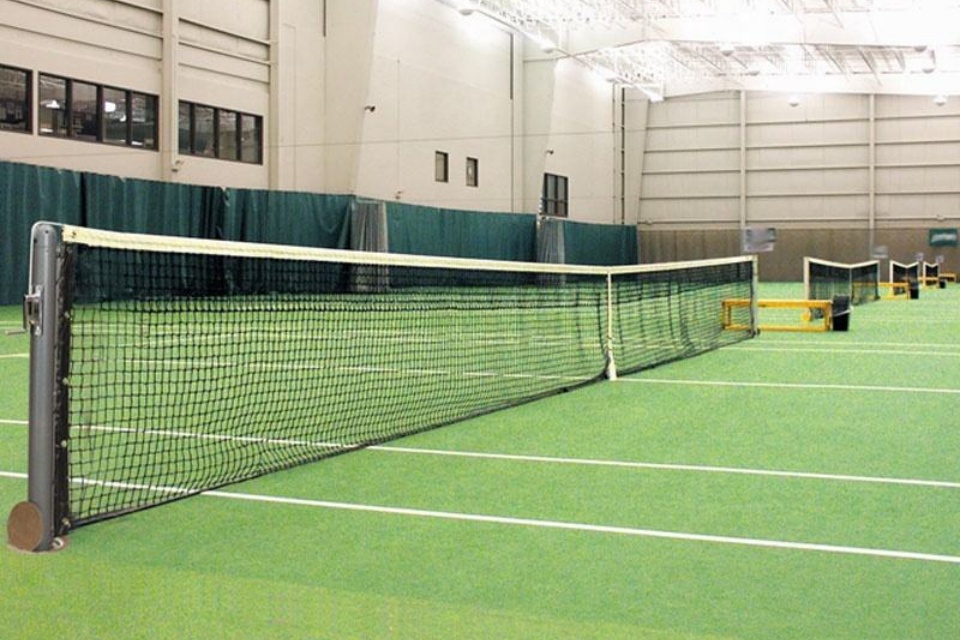
I’ve been in sports halls where the visual finish was solid but the acoustic environment was a mess—whistles ricocheting off hard surfaces, instructions getting swallowed, every drill sounding like a metal shop. Parents get agitated. Coaches start barking because normal speaking volume doesn’t carry. Staff leave the shift with fried voices. Then somebody says acoustics are optional.
No. They aren’t.
A 2024 paper from Eindhoven University of Technology on acoustics in 29 sports halls evaluated reverberation time, sound strength, and speech transmission index across real sports halls and connected those outcomes to absorption characteristics. That matters because a hall can look polished in photos and still perform badly for speech clarity, instructional control, and general comfort once you fill it with actual human noise.
And here’s the part owners really don’t like hearing: bad sound isn’t just annoying. It can become a revenue problem, or worse, a legal one. Reuters reported on May 30, 2024 that police measured decibel levels at Taylor Swift’s concert in Real Madrid’s Bernabéu after neighborhood complaints, with association-hired experts citing 80 decibels against a 53-decibel city limit, while authorities prepared fines for earlier concerts found to have breached limits. That’s what happens when a venue chases multi-use revenue without fully respecting the acoustic consequences. (reuters.com)
Same principle. Different scale.
For smaller operators, sports facility acoustics hit three things fast: coaching clarity, member fatigue, and event viability. If people can’t hear well, don’t stay comfortably, and don’t feel the room is controlled, the space starts leaking value in ways your booking software won’t diagnose for you.
Revenue comes from conversion logic, not raw square footage
However, this is where the conversation gets interesting.
I don’t ask, “What can we fit over there?” I ask, “What can that zone earn across twelve hours if we stop treating it like leftover real estate?” That’s a better question—and a more honest one. Because empty wall runs, shallow corners, underused sidelines, and awkward peripheral zones can often be turned into training, party, sponsor, simulator, or premium-use product if the operator thinks like a programmer instead of a landlord.
Here’s the ugly truth again: too many facilities still depend on one revenue stream and then act shocked when demand softens or weather changes behavior. That’s not strategy. That’s drift.
The big venues already gave the market the playbook. Reuters reported on April 3, 2024 that Tottenham Hotspur’s revenue crossed £500 million for the first time, a figure tied to a venue built to generate more than matchday income alone. Reuters also reported that Real Madrid’s €900 million Bernabéu revamp was designed to expand income beyond football, with a club source previously saying the refurbishment could lift annual stadium revenue to €400 million from €150 million. The gap between average facilities and high-performing ones is not ambition alone—it’s monetization architecture. (reuters.com)
Now, no, your local training center isn’t Tottenham. Obviously.
But the principle scales down beautifully.
Simulator bays. Birthday packages. Skill-lab rentals. Branded activation strips. Seasonal camps. Premium instruction pods. Off-peak adult training. Content-friendly corners. Sponsor-visible netted zones. That’s what sports facility revenue streams look like in real life—not just “raise prices and hope.”
This is exactly why I’d take a hard look at something like a professionelles Golfsimulator-Gehäuse Aufprallschutzeinrichtung. It turns otherwise sleepy indoor space into a year-round billing unit. Lessons, league nights, corporate rentals, weather-proof practice, tech-driven training—it’s not theoretical. It’s monetizable square footage with better margins than a lot of generic open-use floor.
And none of that works if your inventory is rigid. Facilities need systems they can reconfigure without a four-person headache and a maintenance gripe-fest. That’s why broad-access sports facility products matter, and why practical facility services matter almost as much. Gear is easy to buy. Usable operational flow is harder.
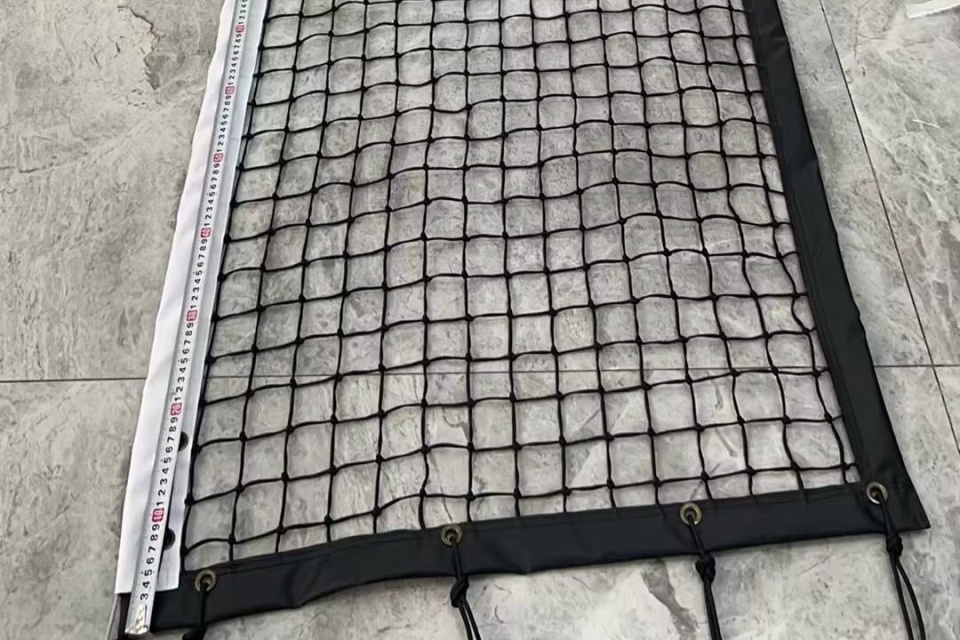
What smart operators actually prioritize
| Facility Element | What it really controls | Common operator mistake | Better move |
|---|---|---|---|
| Lighting | Bookable hours, safety perception, video quality, event feel | Treating brightness as the only metric | Use zoned, purpose-based lighting for leagues, lessons, events, and cleanup |
| Climate control | Dwell time, comfort, repeat bookings, staff endurance | Sizing systems for average demand instead of peak occupancy | Design for peak bodies, humidity load, and uneven court conditions |
| Sound dampening | Coaching clarity, member fatigue, event compliance | Ignoring reverberation until complaints begin | Add absorption where speech and whistle noise compound |
| Revenue spaces | Secondary income, sponsorship, private rentals | Leaving corners and walls operationally idle | Build convertible, premium, and weather-proof program zones |
| Flexible equipment | Changeover speed, multi-sport scheduling, utilization | Buying fixed layouts that trap programming | Use modular systems that let one footprint sell multiple formats |
That table looks simple. It isn’t.
Every line item in it affects utilization. And utilization—real utilization, not optimistic spreadsheet utilization—is what separates facilities that feel busy from facilities that are actually profitable. I’ve seen places with less square footage outperform bigger venues because the smaller operator understood turnover, comfort, and monetizable adjacency way better.
That’s the part outsiders miss.
The best sports venue amenities often don’t scream for attention. They just make the room feel right. The court looks clean on camera. The air stays stable during a packed session. Coaches don’t need to shout themselves hoarse. Members don’t bolt the second their booking ends. Parents don’t mind hanging around. The party package, the lesson pod, the simulator corner, the flexible training lane—they all feel like intentional product, not random leftovers.
That’s the difference. Not style. Systems.
FAQs
What are sports facility amenities?
Sports facility amenities are the built systems and user-facing features that determine how comfortable, safe, bookable, and profitable a venue feels, including lighting, HVAC, acoustics, scoring tech, seating, storage, circulation, and rentable areas that keep the building useful beyond one narrow block of peak play.
That’s the direct answer. My less polished answer? They’re the things members experience even when they don’t have the vocabulary to describe them. If the place feels easy to use, easy to hear, easy to stay in, your amenities are doing their job.
What is the best lighting for a sports facility?
The best sports facility lighting is a controllable, low-glare system designed around the sport, ceiling height, camera needs, and operating hours, so the same court or field can support leagues, private lessons, tournaments, cleaning, and social events without wasting power or forcing staff into crude all-on scheduling.
I’d pick control over brute brightness every time. A smart zoned setup beats a “more lumens solves everything” mindset—especially when you’re trying to stretch playable inventory into evenings without making the room feel harsh.
Why does acoustics matter in indoor sports facilities?
Indoor sports facility acoustics matter because reverberation, reflection, and speech clarity directly affect coaching quality, player focus, staff fatigue, parent comfort, and event compliance, which means poor sound control can damage both member experience and venue economics even when the building looks modern on paper.
And, honestly, people underestimate how draining a bad-sounding room can be. You can survive a mediocre wall finish. You feel a bad acoustic profile in your nervous system after forty-five minutes.
How do sports facilities increase revenue without expanding?
Sports facilities increase revenue without expanding by converting existing square footage into flexible, premium, or weather-proof program zones, such as simulator bays, rentable training pockets, party areas, sponsor-visible activation spaces, and modular court layouts that let one footprint serve multiple audiences across the day.
This is the answer to how to improve sports facility member experience without chasing a giant expansion budget. Better packaging, better flow, better use of underperforming zones—that’s usually where the upside is hiding.
If your venue still treats lighting, climate, and sound like support specs instead of revenue levers, you’re probably running a building that feels busier than it earns. Start with the right sports facility products, pressure-test the layout with actual facility services, and when you’re ready to stop guessing, contact the FSportsNet team and build a facility that works harder than your marketing copy.