Tariff Types Explained: Section 301, Section 232 & Rate Hedging
Tariffs look simple.
They are not just taxes on paper, because the moment a tariff authority attaches itself to a product line, it starts mutating sourcing logic, quote validity, supplier leverage, cash-flow timing, and even which factory gets a serious reply from your procurement team. And that is before customs asks the ugly question: what exactly is this product, where was it really made, and what metal content sits inside it?
So what breaks first?
Usually, margin. Then confidence.
In the Federal Register notice finalizing the 2024 Section 301 modifications, the U.S. locked in higher duties across strategic China-linked categories, while Reuters’ May 2024 report noted the package covered about $18 billion in Chinese imports. USTR’s schedule included 100% on electric vehicles in 2024, 50% on solar cells in 2024, and 50% on semiconductors in 2025.
That matters even if you do not import EVs, chips, or solar modules. Why? Because tariff logic spreads. Once Washington decides a country, sector, or input is a pressure point, everyone downstream starts repricing freight, lead times, component sourcing, and contract language. I have watched importers say, “We’re not in steel,” while buying products whose frame, fasteners, brackets, and tubing say otherwise.
Here is the clean version. Section 301 is the U.S. trade weapon used against unfair foreign practices, and in modern importing it is still most closely tied to China. Section 232 is the national-security tool, and for most operators that means steel and aluminum, plus the compliance headaches that come with metal content, origin records, and quota rules. Reuters’ July 2024 reporting showed how real that is: steel from Mexico faced a 25% Section 232 tariff unless it was documented as melted and poured in North America, while aluminum had to avoid certain non-qualifying smelt or cast origins to escape the 10% duty. (Reuters)
My hard truth? Most companies do not have a tariff problem first. They have an information problem, and tariffs simply expose it.
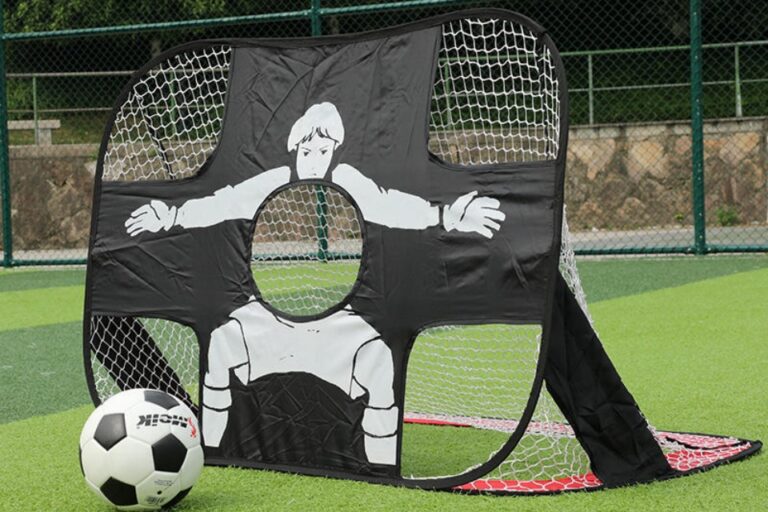
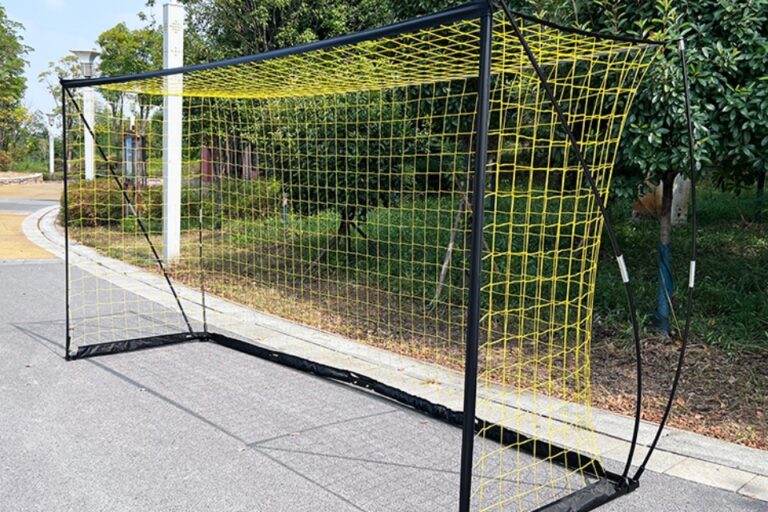
If you sell or source sporting goods, that blindness gets expensive fast. A net is never just a net. It is mesh, cordage, sleeves, powder-coated steel, aluminum joints, hooks, bungees, packaging, labels, and sometimes a carry case that changes classification arguments more than buyers expect. If you are reviewing a Sportnetz Produktkatalog, quoting Pickleball-Netzsysteme, or comparing Golf-Übungsnetze, you are already in tariff territory whether your sales team likes that sentence or not.
Inhaltsübersicht
The tariff split importers keep getting wrong
Section 301 is country-and-conduct driven. The government uses it when it says a foreign country’s policies or practices are unfair to U.S. commerce. That is why “China tariffs explained” usually means “tell me whether my SKU still sits in a Section 301 lane, whether exclusions exist, and whether I can move production before the next contract renewal.”
Section 232 is material-and-security driven. It does not care that your finished good looks harmless in a catalog. If the product or a major input is steel or aluminum, and it falls inside the scope, the legal theory is national security, not market fairness. That is a different filing mindset, a different evidence trail, and a different kind of mistake.
And then there is rate hedging.
I do not mean fake sophistication. I do not mean a PowerPoint slide with colored arrows and the word “mitigation” on it. I mean the boring, profitable work: mapping tariff exposure before purchase orders go live, splitting origin concentration, forcing duty-change language into supplier contracts, checking metal content at the component level, and keeping exclusion calendars on the same dashboard as freight milestones.
That is how adults do it.
The market gave us a live reminder in 2024. Reuters reported that USTR extended exclusions for 352 Chinese import categories and 77 pandemic-related categories, with some extensions running through May 31, 2025. That was not trivia. That was proof that exclusion management is not clerical work; it is rate hedging in plain clothes. Miss the extension window, or assume your product remains covered, and your landed cost model turns into fiction. (Reuters)

What Section 301 really means for buyers
When people ask me what Section 301 tariffs are, I give them the unromantic answer: they are a pricing shock wrapped in trade law.
The 2024 USTR review also noted that companies had shifted sourcing and production out of China, and that China’s share of U.S. imports had fallen since the duties were imposed. That is not ideology. That is buyer behavior under pressure. Some shifted because they wanted resilience. Plenty shifted because 7.5% to 25% changes were large enough to wreck a thin-margin SKU. (Handelsbeauftragter der Vereinigten Staaten)
For a mid-market importer, the Section 301 checklist is brutal but simple: You need the HTS code. You need the real country of origin. You need a dated exclusion file. You need contract language for duty swings. And you need to know which components are still China-dependent even after “diversification.”
That last point gets buried. Buyers love saying they moved assembly. Customs loves asking where the substantial transformation actually happened.
What Section 232 really means for buyers
Section 232 sounds narrower. Sometimes it is. But when steel and aluminum sit inside your bill of materials, narrow becomes expensive very quickly.
The best public study on the economic punch remains the U.S. International Trade Commission’s 2023 report. USITC estimated that, from 2018 to 2021, Section 232 tariffs increased the weighted-average price of steel by about 2.4% and aluminum by about 1.6%, while downstream industries suffered an estimated $3.48 billion decline in 2021. That is the part too many “protective tariff” speeches skip: upstream relief can become downstream pain almost immediately. (usitc.gov)
If your product uses steel frames, folding joints, rebounder legs, transport wheels, or aluminum support poles, Section 232 is not some macro issue for steel mills and lobbyists. It becomes a quoting issue. A sourcing issue. A lead-time issue. A customer-retention issue.
And yes, it turns into a documentation issue.
Reuters’ July 2024 report on the U.S.-Mexico action made that point with no room for fantasy: importers needed records proving melt-and-pour origin for steel and certificate-of-analysis details for certain aluminum supply chains. In other words, your hedge is not only where you buy. It is what you can prove. (Reuters)
Rate hedging is not finance theater
Let me say this plainly: you do not “hedge” tariffs the way you hedge copper or FX unless your business model has a very specific structure. Most companies need operational hedges, not trading-desk cosplay.
Here is what works better.
First, write tariff-change clauses into supplier agreements. If duty rates jump between quote date and customs entry, the burden should not default to the importer just because nobody wanted an awkward negotiation.
Second, diversify by component, not just by final assembly site. Moving a finished good from China to Vietnam or Mexico means less than procurement teams think if the steel tube, sewn panel, molded connector, or target sheet still comes from the same exposed source.
Third, audit classification and product design early. Sometimes the cheapest tariff move is not a heroic supply-chain overhaul. It is a legal redesign, cleaner product description, or packaging change that prevents a bad classification from fossilizing.
Fourth, use timing and inventory structure intelligently. If you have predictable seasonality, booking inventory before a known duty event can be a hedge. So can spreading replenishment windows instead of betting the quarter on one sailing.
Fifth, keep exclusions and quota status on a live operating calendar. The 2024 extensions under Section 301 were a warning to everyone who still treats duty status as static. It is not static. It is a moving bill. (Reuters)
Sixth, do not ignore manufacturing structure. CBP guidance has noted that a product is not hit by Section 232 merely because it was manufactured in a U.S. foreign-trade zone; structure matters, and lazy assumptions cost money. (cbp.gov)
If you are vetting suppliers, this is where real diligence beats glossy brochures. I would rather see a buyer study a factory tour for OEM buyers and ask blunt questions about tubing origin, welding capacity, coating lines, and bill-of-material controls than sit through another webinar where everyone says “resilience” twelve times and nobody names a customs code.

The comparison that actually helps
| Kategorie | Abschnitt 301 | Section 232 | Rate Hedging |
|---|---|---|---|
| Core trigger | Unfair foreign trade practices | National security concerns | Margin protection against duty shifts |
| What buyers usually think of | China tariffs | Steel and aluminum tariffs | Finance tactic |
| What it really hits | Country exposure, exclusions, sourcing concentration | Metal content, origin proof, quota and duty treatment | Contracts, timing, design, classification, origin mix |
| 2024 signal | USTR raised tariffs in strategic sectors; Reuters said the package covered about $18 billion of imports | Reuters reported Mexico-related steel and aluminum anti-circumvention tightening under Section 232 | Exclusion extensions and contract repricing showed that operational hedges beat wishful thinking |
| Biggest importer mistake | Assuming assembly relocation solved exposure | Ignoring component-level steel/aluminum scope | Treating hedging as a spreadsheet instead of an operating process |
| Best first move | Check HTS code, origin, exclusion status | Audit BOM for metal inputs and origin records | Add tariff clauses, diversify inputs, update landed-cost models weekly |
The numbers in that table are not theory; they line up with USTR’s 2024 Section 301 actions, Reuters’ 2024 reporting on both the China package and the Mexico anti-circumvention move, and USITC’s measured downstream impact.
For sports-net buyers, the practical read is simple
If you are buying finished sporting goods, especially products with frames and hardware, do not ask only, “Is this from China?” Ask: Where did the steel come from? Where was the aluminum smelted or cast? Which parts can move first? Which quotes have duty-pass-through language? Which SKUs are one exclusion expiration away from margin collapse?
That is the real version of tariff risk management.
For brands building or expanding private-label lines, I would start by separating products into three buckets: mesh-heavy goods, steel-frame goods, and mixed-component goods. A mesh-heavy SKU may carry more Section 301 sensitivity if sourcing is China-centered. A steel-frame SKU can pull Section 232 issues into the file even when the finished product looks innocuous. Mixed-component goods are where people get trapped, because every department assumes the other department checked the exposure.
Nobody did.
So yes, learn the law. But learn the paperwork even harder.

FAQs
What are Section 301 tariffs?
Section 301 tariffs are U.S. trade remedies imposed after the government finds that a foreign country’s acts, policies, or practices burden U.S. commerce, and in day-to-day importing the term usually points to the China duties first imposed in 2018 and then modified again in 2024. In practice, that means importers must track country exposure, exclusions, and product-level duty changes instead of treating “China tariffs” as one flat rule. (Reuters)
What are Section 232 tariffs?
Section 232 tariffs are duties justified on national security grounds under the Trade Expansion Act of 1962, and for most importers they are shorthand for the metals regime that has hit steel at 25% and aluminum at 10%, with country-specific quota and origin rules layered on top. The expensive part is not only the rate; it is the proof trail around scope, origin, and metal content. (Reuters)
What is Section 301 vs Section 232?
The difference between Section 301 and Section 232 is that 301 is aimed at unfair foreign trade practices while 232 is aimed at protecting U.S. national security, which means one usually tracks country behavior and policy disputes and the other tracks sensitive sectors, especially metals. If you confuse them, you will build the wrong compliance file and probably hedge the wrong risk. (Reuters)
How do you hedge against tariff rate changes?
Rate hedging against tariffs is a procurement and contract discipline in which importers reduce duty shocks before entry by splitting origin exposure, locking pricing formulas, auditing classifications, monitoring exclusions, and structuring inventory, rather than pretending a finance desk can magically erase a government duty after the fact. The best 2024 proof was the exclusion-extension cycle itself: companies paying attention had options; companies drifting had invoices. (Reuters)
If you are sourcing framed sporting goods and want fewer surprises, start with the boring work that actually saves money: review the Sportnetz Produktkatalog, compare vulnerable categories like Pickleball-Netzsysteme und Golf-Übungsnetze, überprüfen Sie die factory tour for OEM buyers, und dann contact the FSportsNet team with your BOM, target market, and current origin mix. That conversation is cheaper than one bad customs surprise.