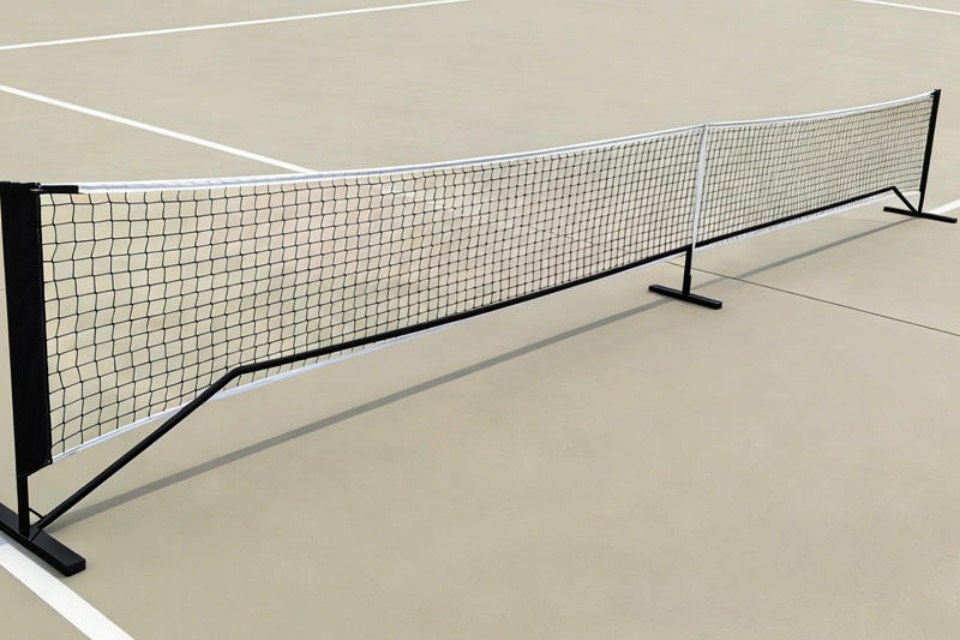
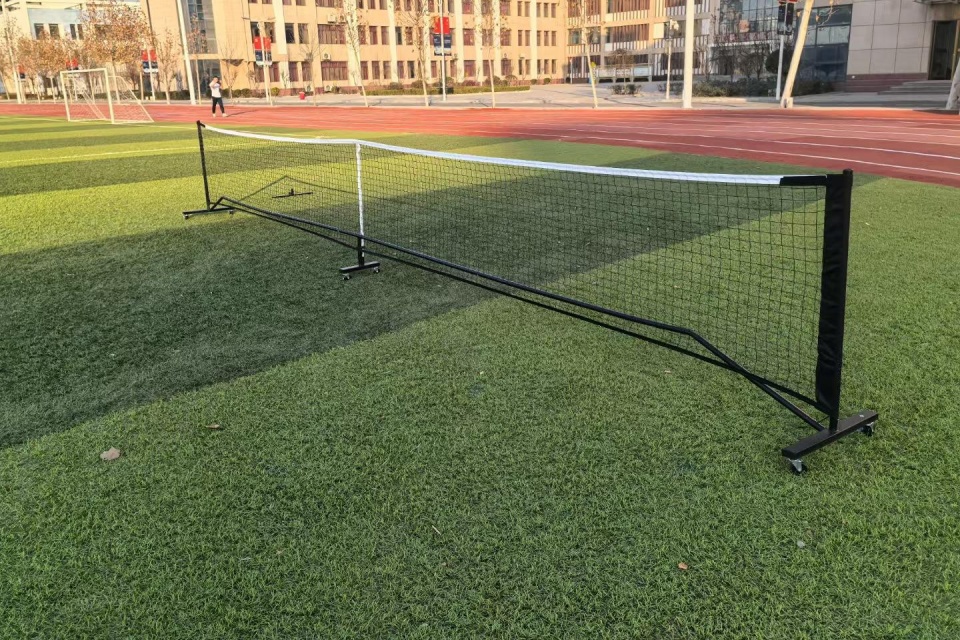
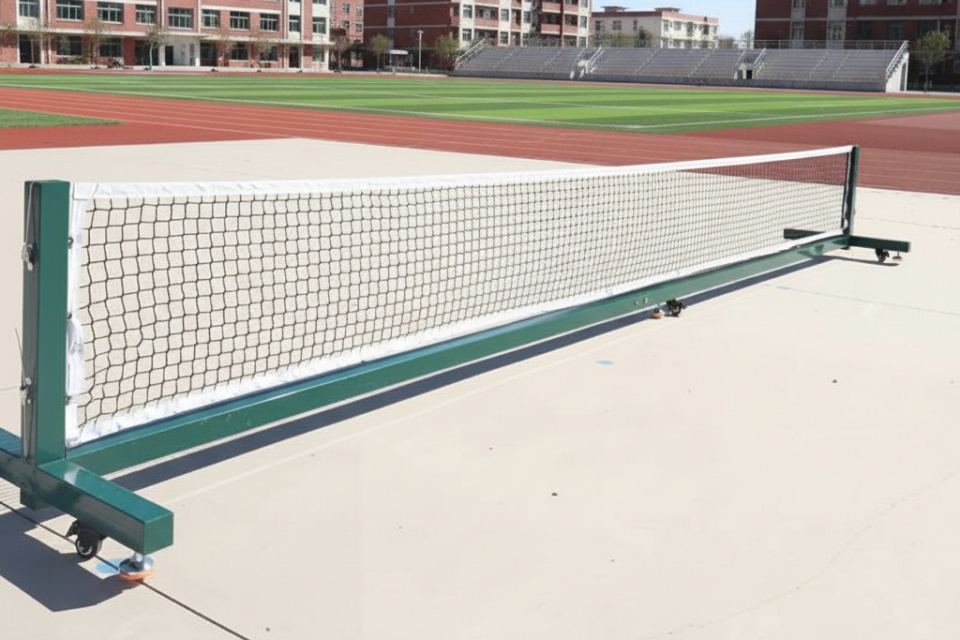
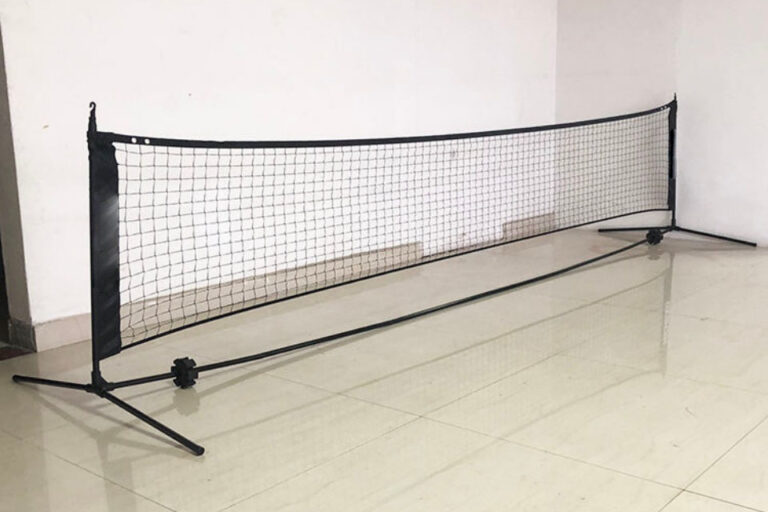
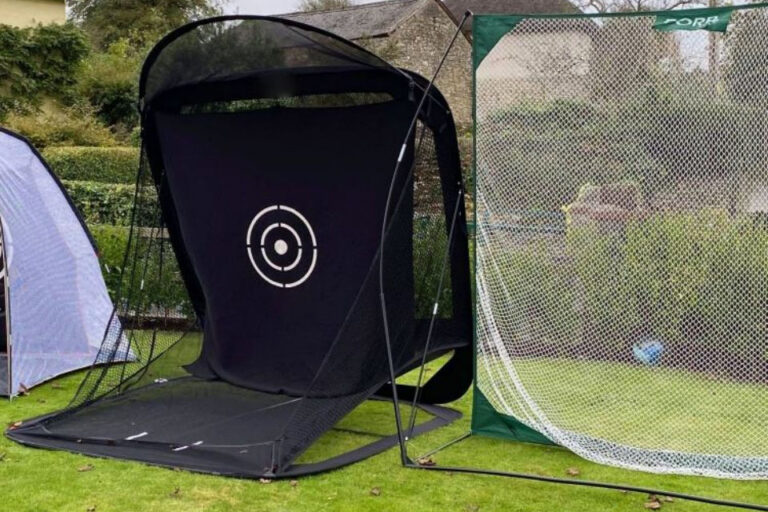
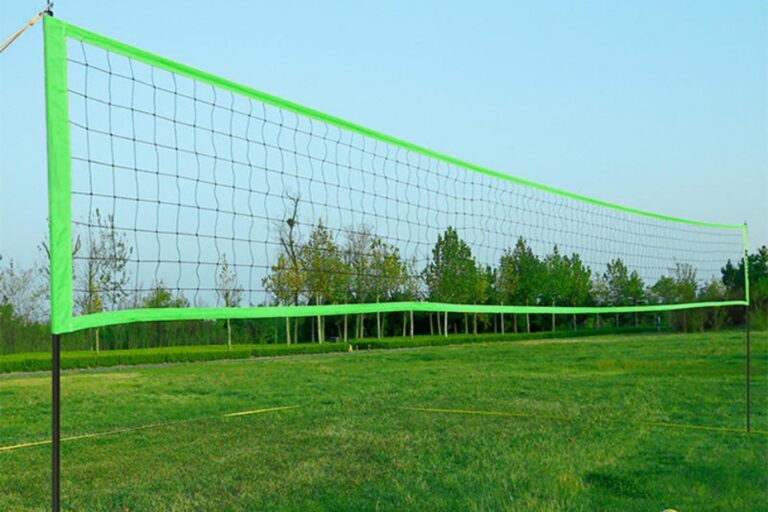
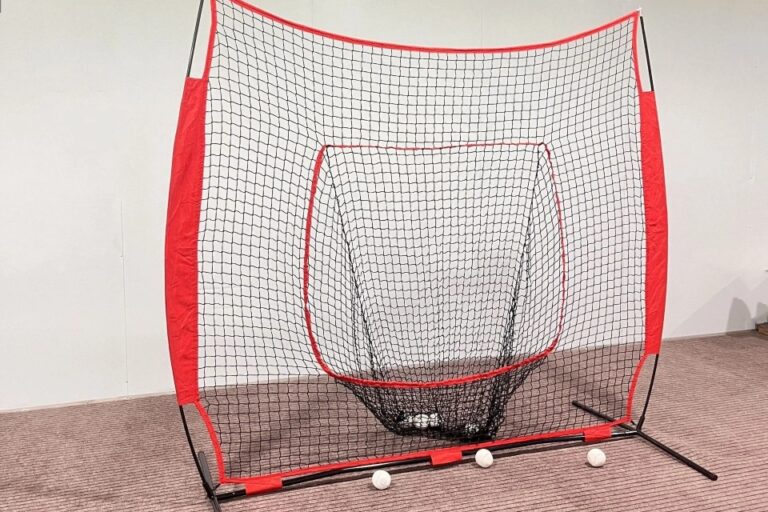
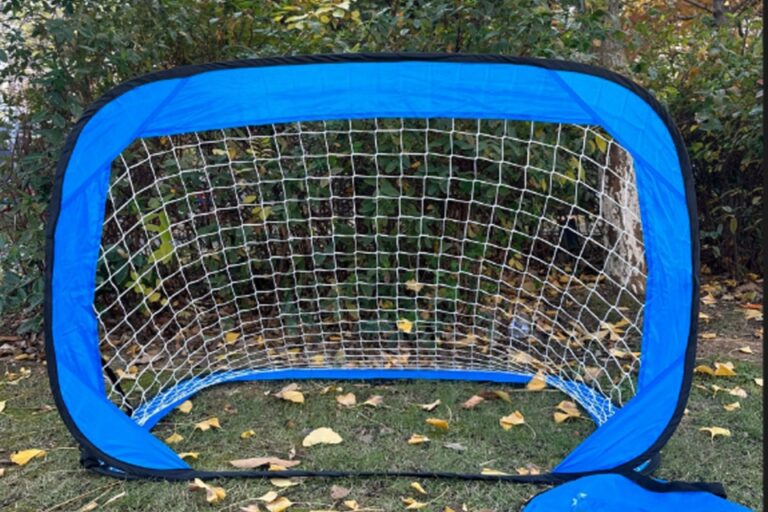
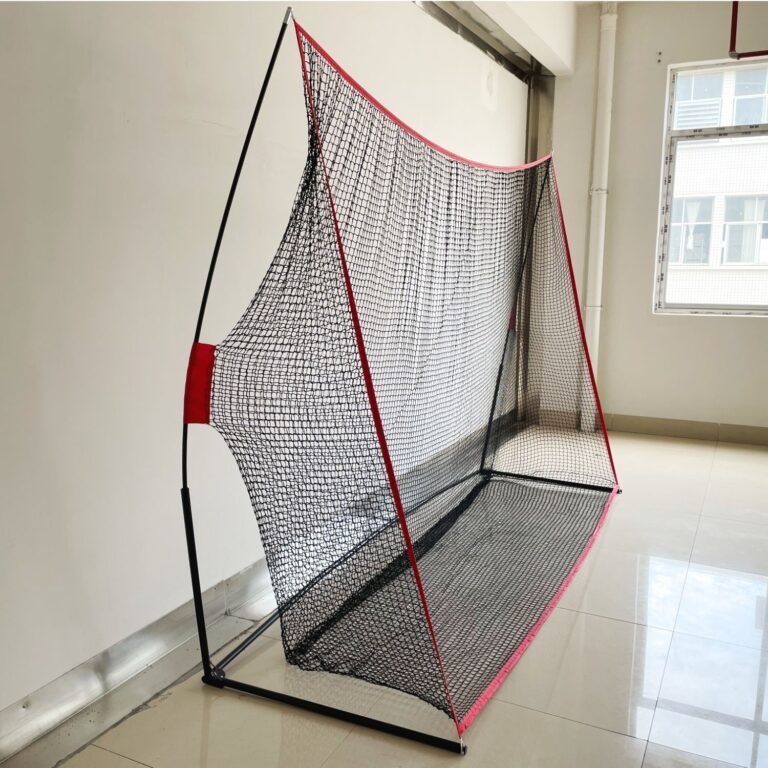
Dites-nous ce que vous souhaitez développer. FSPORTS prend en charge les projets OEM/ODM, les marques de distributeur et les projets de filets de sport sur mesure, à partir de votre produit existant, d'un plan, d'un échantillon, d'une photo ou de vos exigences d'application.
Veuillez nous communiquer le type de produit, ses dimensions, la quantité souhaitée, la destination, ainsi que toutes les exigences connues concernant la maille, le matériau, l'armature, la quincaillerie, le logo ou l'emballage. Si votre cahier des charges n'est pas encore complet, envoyez-nous les informations dont vous disposez ; nous pourrons examiner les détails restants avant de vous établir un devis.
Calculateur et guide de dimensionnement des installations
Pourquoi les erreurs de dimensionnement coûtent plus cher qu'on ne le pense
Les erreurs de calcul, ça fait mal.
L’année dernière, j’ai examiné une demande de filet qui semblait irréprochable sur le papier — de bonnes dimensions, un croquis soigné, quelqu’un avait même tapé “ dimensions définitives confirmées ” dans la chaîne d’e-mails — et pourtant, le projet a capoté parce que l’acheteur avait mesuré la dalle au lieu de l’enveloppe de jeu réelle, avait oublié les marges de retrait des poteaux, n’avait pas prévu de chevauchement et avait considéré la perte de quincaillerie comme facultative. Cela arrive tout le temps.
Et c'est justement ce que les gens détestent entendre.
Je pense sincèrement que la plupart des catastrophes liées au dimensionnement dans ce secteur ne sont pas du tout des défaillances techniques. Elles relèvent de la psychologie des acheteurs. L’un veut que le bon de commande soit validé au plus vite, l’autre souhaite réduire le montant de la ligne de commande, et soudain, un chiffre faussement précis passe pour la vérité. Puis vient le jour de l’installation. Et là, tout le monde se rend à l’évidence.
Alors, qu'est-ce qu'un vrai calculateur de dimensionnement des installations Je suis censé faire quoi ?
Ce n'est pas pour vous flatter. Je ne vais pas vous donner un joli chiffre en pieds carrés ni vous remonter le moral. Je vais plutôt passer le projet au crible : hauteur libre, sport, type de filet, interférence des poteaux, zones de shank, chevauchement, couloirs de récupération, et déterminer s’il s’agit d’une cloison, d’une cage, d’un mur d’impact ou d’une construction « Frankenstein » rafistolée après le départ de l’architecte.
Les chiffres de participation expliquent pourquoi cette question est importante dès maintenant, et non pas dans l'avenir. Selon le Enquête de participation NFHS 2023-2024, la participation aux activités sportives au lycée a atteint 8,062,302, avec 473,073 les joueurs de baseball et 903,952 les joueurs de basket. Davantage d'athlètes. Davantage d'espaces partagés. Davantage de ballons fendant des espaces qui semblaient “ suffisants ” sur le plan, mais qui s'avéraient être un véritable casse-tête sur le terrain. (assets.nfhs.org)
Et le pickleball — oui, ce monstre — ne cesse de mettre la pression. Le Rapport annuel sur la croissance de USA Pickleball 2024 selon la base de données Pickleheads, on dénombre 68 458 tribunaux répertoriés, 18 455 nouveaux terrains de sport ont été créés en 2024, et 142 tournois homologués en 2024 ; le rapport indique également que USA Pickleball avait déjà contribué à stimuler plus de 1 TP 4 T 300 millions dans le développement de nouvelles installations, en s'appuyant sur la dynamique de l'année précédente. Ce n'est pas une croissance accessoire. C'est une pression sur les dépenses d'investissement qui ne fait pas dans la demi-mesure. (usapickleball.org)
La plupart des calculatrices mentent par omission
Voici l'horrible vérité.
La plupart des calculatrices mentent par omission.
Un faible outil d'estimation de la taille d'une installation demande la longueur et la largeur, crache un chiffre, puis passe à autre chose, comme si le projet était un rectangle évoluant dans le vide. Les vrais chantiers ne sont pas des rectangles. Ils regorgent d’espaces morts, de baisses de poutre, de débordements de circulation, de retours latéraux chaotiques, de portes battantes, de chariots, de bancs et d’un entraîneur qui veut toujours “ juste un peu plus d’espace ” une fois la fabrication commencée.
Mais j’ai déjà vu des acheteurs faire ça quand même : mesurer une baie de 40 pieds, commander un système de 40 pieds, puis feindre la surprise quand deux pieds disparaissent de chaque côté à cause des poteaux, des ancrages ou de l’espace libre. Ce n’est pas une ouverture de 40 pieds. C’est une ouverture utile de 36 pieds qui se fait passer pour une ouverture de 40 pieds.
Il faut reconnaître que les responsables des normes font preuve de plus d’honnêteté que la plupart des pages de vente. Le Présentation de la norme ASTM F3558-22 publiée par l'ANSI précise que le but d'une clôture de terrain de pickleball est de retenir les balles à l'intérieur, d'empêcher l'accès aux personnes non autorisées et de réduire les collisions avec les spectateurs, les objets fixes, les surfaces glissantes ou les zones adjacentes dangereuses. En lisant cela, je me dis : exactement. Un système de confinement avant tout. Une référence produit ensuite. (blog.ansi.org)
Et si vous pensez qu’un mauvais dimensionnement n’entraîne qu’un léger désagrément, détrompez-vous : parfois, les conséquences sont bien plus graves. Dans un avertissement daté du 19 décembre 2024, le Commission américaine pour la sécurité des produits de consommation a demandé aux consommateurs de cesser d’utiliser un but de football portable « Sport Nets 4×8 » à la suite d’un incident survenu en avril 2023 dans l’État de Washington, au cours duquel un lycéen a subi une lésion cérébrale mortelle ; la CPSC a indiqué que l’extrémité métallique exposée des poteaux verticaux du but présentait un danger, et que le produit avait été vendu au prix de $43 à $150. Il s'agit certes d'une autre catégorie de produits, mais la leçon reste la même : la géométrie, le matériel et les jeux ne sont pas des détails secondaires. C'est l'essentiel. (cpsc.gov)
Comment déterminer la taille d'un établissement sans se faire d'illusions
Alors, quand on me demande Comment déterminer la taille d'un établissement, Je ne commence pas par la surface. Je commence par les mensonges. Quelles hypothèses sont fausses ? Quelle dimension n’existe que dans le rendu ? Quel chiffre a été mesuré jusqu’au mur, alors même que ce mur est inutile parce qu’une poutre, un rail ou une voie de circulation empiète sur son bord ?
C'est là que le vrai travail commence.
Divisez le projet en zones fonctionnelles
Je décompose chaque projet en zones, et oui, cela peut paraître obsessionnel jusqu’à ce que cela évite de devoir refaire une commande : la zone de capture active, la marge de bord, la zone de conflit, la bande de récupération et la zone de comportement du matériau (car le nylon 6,6 ne se comporte pas comme du PEHD stabilisé aux UV lorsque la tension, l’affaissement et les chocs commencent à s’accumuler).
En bref ? Mesurez ce qui compte pour la balle, pas ce que dit la brochure de la salle.
Les calculs de taille auxquels je fais vraiment confiance
Formules de base
En ce qui concerne les rideaux de séparation, mon style de base reste volontairement sobre :
Surface nette = longueur du parcours × hauteur de chute
Pour les cages et les enclos, j'ai divisé la surface en surfaces réelles :
Surface nette totale = paroi latérale 1 + paroi latérale 2 + paroi arrière + toit + tout panneau de retour
Fourchettes d'allocations pratiques
Then I add what the spreadsheet crowd always tries to shave off:
Straight divider curtain: add 5% to 8%Framed panel or rebounder zone: add 8% to 12%Full cage, simulator bay, or irregular enclosure: add 10% to 15%
Cela fonctionne. En général.
And before somebody gets cute—no, those percentages aren’t magic. They’re procurement allowances. Field reality. The stuff that keeps your “perfect estimate” from dying when hems, cable pockets, bungees, hooks, edge wrap, and trimming start eating material in ways your neat little math never bothered to model.
Now layer in demand. The 2024 State of Pickleball report from SFIA and Pickleheads found participation grew 51.8% from 2022 to 2023 and 223.5% over three years; the same report says dedicated pickleball facilities grew 55% year over year, yet still estimated $855 millions in court-construction investment would be needed over the next five to seven years. That means more retrofits, more mixed-use spaces, more chopped-up footprints, and less margin for lazy spec work. (sfia.org)
Why multi-sport venues expose weak calculators
And mixed-use is where calculators really get exposed.
A legit sports facility sizing calculator has to ask the uncomfortable question: what is the fastest, hardest, dumbest ball this room will ever see? Not the average day. Not the brochure use case. The worst one. The one that smokes the side panel, clips the seam, rebounds weird, and makes everyone stare at the installer.
Because a youth divider, a golf impact bay, a backyard rebound setup, and a high-turnover training center do not deserve the same assumptions. They just don’t.
And people make the same mistakes over and over: they measure the slab, not the safe envelope; they ignore side flare in golf shank zones; they forget ceiling interferences; they treat portable frames like they’re infinitely forgiving; they obsess over a quarter-inch in one dimension while losing a foot to hardware logic they never modeled in the first place.
False precision again.
I’ve sat in enough quote reviews to know the ugliest line in the file is often “dimensions confirmed.” Confirmed by whom? With what? Laser? Tape? Render? Site photo? A memory from six months ago? Nobody says. Everyone assumes. Then a change-order walks in wearing work boots.
From my experience, the best facility dimensions calculator is the one that feels mildly annoying. It asks too many questions. It forces you to declare sport type, impact severity, mounting style, run-out, and edge condition. It won’t let you hide behind a clean rectangle. Good. That friction is healthy.
And vendor process matters more than buyers like to admit. For custom netting jobs—especially private-label work, mixed-sport builds, or anything with ugly field conditions—I’d rather work with a supplier that actually understands conversion from drawing to production than one with a flashy mockup and suspiciously fast lead-time promises. That’s why I’d still look at the service capabilities et le visite d'usine before trusting the quote.
Yet there’s another thing.
Portable doesn’t mean forgiving.
Portable usually means more assembly variance, more user abuse, more opportunities for somebody to skip a pin, reverse a leg, under-anchor a frame, or drag the unit somewhere it was never meant to live. People hear “portable” and think flexible. I hear “portable” and think tolerance stack-up.
That’s also why I don’t hate a little conservative ordering—when it’s disciplined, not sloppy. Overbuying blindly is dumb. Buying a rational allowance into a system that has real install variables? That’s just adult behavior.
FAQ
Qu'est-ce qu'un calculateur de dimensionnement d'installations ?
Un calculateur de dimensionnement d'installation est un outil de planification qui convertit la longueur, la largeur et la hauteur utiles, le type de sport et le modèle de filet d'un site en surface de filet, en longueur en pieds, en marge de chevauchement et en nombre d'éléments de fixation nécessaires pour établir un devis, acheter et installer correctement le système de confinement dès la première fois. S'il est efficace, il vous indique ce qui convient, ce qui pose problème, ce qui nécessite une marge supplémentaire et où le plan peut vous induire en erreur.
Comment calculer les besoins en filets de sport ?
A good way to calculate sports netting requirements is to measure the true playing envelope rather than the slab, then multiply each active span by its drop or depth, add end panels, roofs, or overlaps, and apply a waste factor based on whether the system is a curtain, a cage, or a framed panel. That’s the backbone of a real facility sizing guide—not a guess, not a napkin sketch, not “close enough.”
Quel est le meilleur outil de calcul de la capacité d'accueil d'un complexe multisports ?
Le meilleur outil de calcul des dimensions d’une installation multisports est celui qui permet de modéliser plusieurs cas d’utilisation, notamment la vitesse de la balle, le comportement au rebond, la fonction de séparation, les zones tampons pour les spectateurs, l’emplacement des poteaux, ainsi que le scénario d’utilisation le plus exigeant, qui mettra le système de filets à rude épreuve. S’il ne fonctionne que pour le cas d’utilisation le plus simple, ce n’est pas le meilleur. C’est simplement le plus facile à présenter.
Quelle quantité supplémentaire de filet dois-je commander ?
La marge de surmesure appropriée pour les filets de sport correspond à une marge contrôlée destinée aux ourlets, à la mise en tension, au positionnement des fixations, aux retraits des poteaux et à la découpe sur site ; cela se traduit généralement par un pourcentage plus faible pour les rideaux de séparation droits et un pourcentage plus élevé pour les cages, les enceintes ou les configurations irrégulières comportant des angles et des interférences avec les poutres. Je raisonne généralement par fourchettes : de 5% à 8% pour les cloisons, de 8% à 12% pour les panneaux encadrés, et de 10% à 15% pour les cages ou les enceintes atypiques.
Un outil d'estimation de la taille d'une installation peut-il permettre de réduire les commandes excédentaires ?
Un outil d’estimation de la taille des installations permet de réduire les commandes excédentaires en distinguant la surface de capture active de la marge d’installation, car les acheteurs ont souvent tendance à confondre ces chiffres, à les gonfler sans discernement et à se retrouver avec des excédents coûteux qui ne résolvent toujours pas le véritable problème d’espace libre ou de matériel. Lorsqu’elle est bien menée, l’estimation ne se contente pas de réduire le gaspillage : elle élimine les hypothèses erronées avant qu’elles ne se transforment en stocks.