How To Negotiate Moq For Bulk Sports Netting Orders
Why MOQ Is Usually More Flexible Than Buyers Think
MOQ lies.
In sports netting, the number on the quote is usually not a law of physics but a stitched-together estimate of setup labor, yarn allocation, frame hardware, packaging friction, defect risk, and freight exposure, which means buyers who argue only over unit price are arguing at the wrong layer of the deal. Why do so many procurement teams still miss that?
I’ll be blunt: the hard truth is that minimum order quantity for netting is often a risk-transfer device dressed up as factory policy. When a supplier senses unclear specs, erratic forecasting, or expensive customization, it pushes that uncertainty back onto you through a fatter MOQ. When your spec is tidy, repeatable, and easy to run, the number suddenly becomes “flexible.” Funny how that works.
목차
Freight Pressure, Risk Pricing, and the Real MOQ Story
And timing matters. In June 2024, 로이터 보도 that container freight prices from Asia to the U.S. and Europe had tripled since early 2024, while another Reuters report said some routes could climb to as much as $9,000. If your supplier is building freight volatility into the quote, a high MOQ for sports netting is often just margin insurance in disguise. (reuters.com)
So here is my rule: never ask, “Can you lower the MOQ?” first. Ask, “Which variable is forcing this MOQ—yarn color, mesh size, twine gauge, frame diameter, carton design, logo application, or freight packing density?” That question changes the room. It tells the supplier you understand how bulk sports netting is actually made, and it forces them to reveal whether the quote is anchored in production reality or sales theater.
The Fastest Way To Lower MOQ: Simplify The Spec
The cleanest leverage comes from simplification. If you keep the yarn in standard HDPE or PE, hold to standard mesh openings, skip color-matched accessories on the first run, and accept plain cartons before retail-ready packaging, you strip cost out of the job where the supplier actually feels it. I have watched too many buyers demand custom logo bags, custom inserts, custom labels, and custom dimensions on order one, then act shocked when the supplier wants a warehouse-sized commitment. That is not negotiation. That is self-sabotage.
Compliance Changes The Negotiation
ADA, ASTM, and Why Cheap Orders Can Become Expensive Later
Compliance changes the math.
If you buy cheap equipment that creates safety or access trouble, the low MOQ you celebrated in procurement can come back as a legal and operational mess. In October 2024, the DOJ announced a settlement with the Chicago Cubs over alleged ADA violations at Wrigley Field, including wheelchair sightlines and seating integration problems during the 1060 Project renovation. That case was about far more than netting, obviously, but it makes the point I care about: facilities pay for access mistakes later, and usually at a higher rate. (justice.gov)
The access angle is not theoretical either. The U.S. Access Board says accessible routes in court sports facilities must directly connect both sides of the court, and those routes have to comply with ADA requirements for width and level changes. That is why I do not treat portable frames, ballast, and wheeled bases as minor accessories when I negotiate a pickleball or tennis order; a bad footprint can create a facilities problem long after the invoice is paid. See the U.S. Access Board’s sports facility guide and its accessible routes guidance if you want the rule set in plain language. (access-board.gov)
Safety Warnings Matter More Than Price Concessions
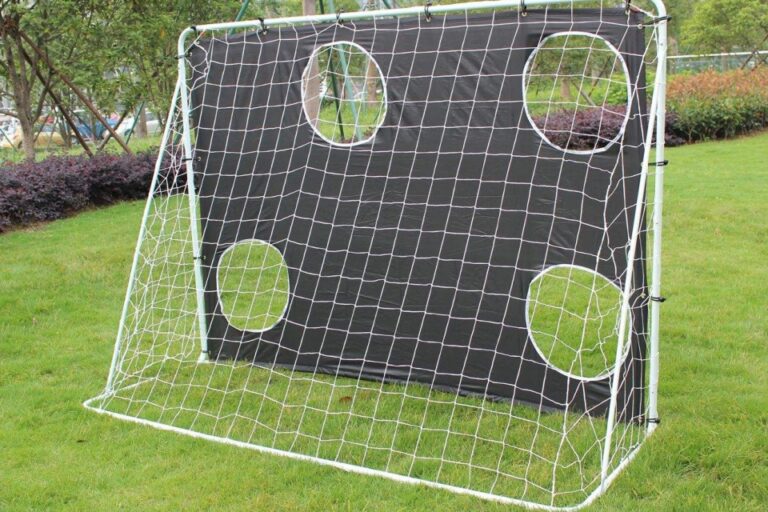
And safety is even less forgiving. On December 19, 2024, the CPSC warned consumers to stop using Sport Nets 4×8 portable soccer goals because of an impalement hazard and said a Washington State high school student suffered a fatal brain injury in April 2023 after falling on an exposed metal tip; in a separate December 20, 2024 communication, CPSC staff noted ASTM F2950’s scope is specified for soccer goals weighing 40 lb or greater. If you are negotiating MOQ for movable goals or training frames, you do not cut volume by cutting anchoring, guarding, or instructions. You cut volume by removing decorative nonsense and preserving the safety core. Read the CPSC 경고. (cpsc.gov)
Supplier Transparency Makes Negotiation Easier
That is also why I like dealing with suppliers that show their homework. A manufacturer that exposes its 맞춤형 스포츠 그물망 서비스, invites scrutiny through a 공장 투어, and explains its build model on the About Us page is easier to pressure-test. FSPORTS says it keeps netting, cutting, sewing, hardware processing, surface treatment, and packing in-house and says typical OEM/ODM MOQs are around 200 sets; that tells me the right negotiation target is not “zero MOQ fantasy,” but “which features are forcing me above the baseline?” (fsportsnet.com)
The Six Moves Smart Buyers Use To Push MOQ Down
The buyers who win MOQ negotiations do six things differently.
1. Negotiate Around Material Families, Not SKU Counts
First, they negotiate around material families, not SKU counts. If your order includes portable systems and goals across similar yarns, colors, and fittings, ask the supplier to treat them as one material program instead of isolated SKUs. I would much rather pool volume across soccer goal products and a second compatible line than accept two bloated minimums built off the same factory inputs.
2. Split The Deal Into Phases
Second, they split the deal in phases. Order one should be about proof of process, not branding vanity. Standard carton. Standard bag. Standard color. Then, once sell-through is real, you add printed packaging, inserts, or private-label trims on order two. That is how you negotiate MOQ with suppliers without pretending the supplier’s setup costs do not exist.
3. Separate Tooling From Volume
Third, they separate tooling from volume. A buyer who says, “Charge me once for the custom jig, screen, or packaging die, then lower the production MOQ,” sounds serious. A buyer who says, “Hide all of that inside the unit price and also lower the MOQ,” sounds unserious. Suppliers respond accordingly.
4. Offer Release Schedules Instead Of Oversized One-Shot Orders
Fourth, they offer release schedules instead of giant one-shot buys. If your warehouse cannot absorb 500 sets, propose 200 now with a written 200-plus-200 call-off plan over 90 or 120 days. The supplier gets production confidence. You keep cash discipline. Everybody acts like adults.
5. Use The Boring Parts As Bargaining Chips
Fifth, they use the boring parts as bargaining chips. Earlier deposit. Faster artwork approval. Fixed carton dimensions. Fewer packaging SKUs. Standard care labels. Shared spare-parts packs. These are not glamorous moves, but glamour does not lower MOQ. Friction reduction does.
6. Keep Compliance Non-Negotiable
Sixth, they keep compliance non-negotiable. If your program touches schools, municipal parks, clubs, or public-access venues, I would protect anchoring, labeling, installation instructions, and circulation footprint before I protect colorways or premium packaging every single time. That is not moral grandstanding. That is basic risk pricing.
A Practical MOQ Evaluation Table
Here is the working grid I use when I evaluate how to negotiate MOQ for bulk orders. It is not a market census. It is a buyer’s field map.
| Order profile | What the supplier is really protecting | Smart negotiation move | Expected MOQ direction |
|---|---|---|---|
| Standard sports netting, no logo, standard packaging | Machine time, material allocation, carton efficiency | Ask for pooled volume across compatible items | 최저 |
| Standard size, custom logo only | Separate labeling and packing steps | Move logo to hangtag or bag on second PO | Lower |
| Custom size plus custom packaging | Setup loss, packing complexity, slower QC | Pay one-time packaging/tooling charge, keep carton plain initially | Medium |
| Multiple SKUs using same yarn and fittings | Forecast uncertainty, mixed picking cost | Negotiate one raw-material MOQ across the family | Lower than separate MOQs |
| Safety-sensitive goals or court systems | Liability, hardware accuracy, documentation burden | Keep compliance hardware fixed; cut aesthetic extras instead | Medium but safer |
| Retail-ready launch with inserts, UPC, branded bags | High pack-out friction and inventory risk | Use phased rollout and release schedule | Lower over time |
Not All Sports Netting Orders Behave The Same
Frame-Based Systems Versus Pure Net Replacement Programs
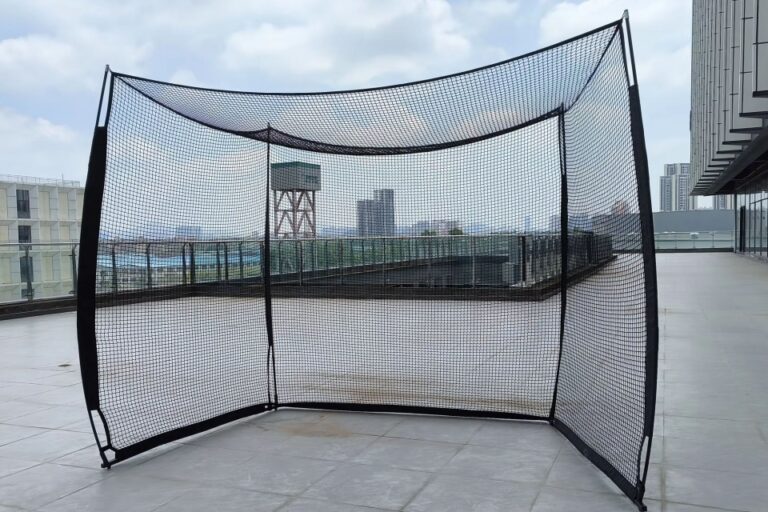
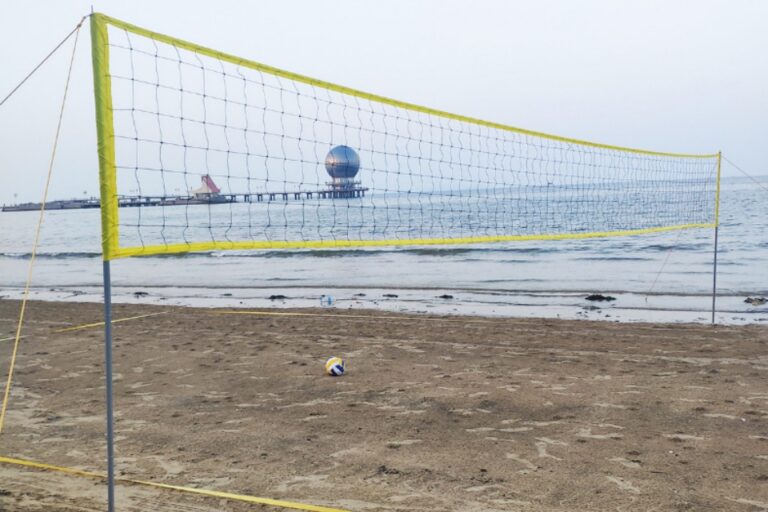
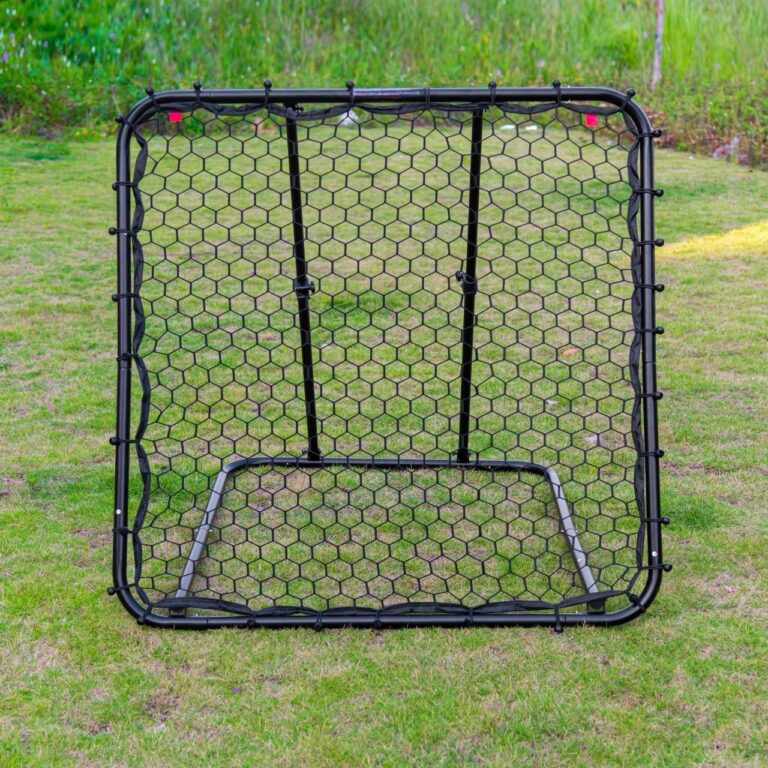
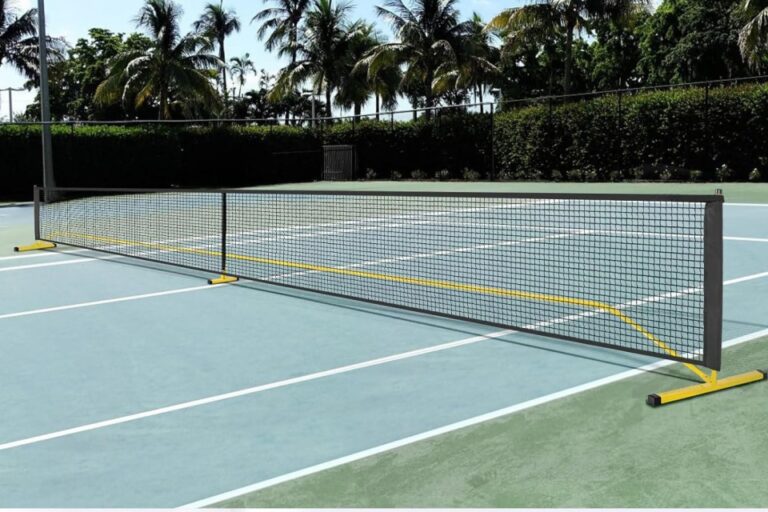
The smartest commercial play, in my view, is to stop treating all sports netting as one category. Barrier netting, rebounders, movable goals, and portable court systems do not create the same factory pain. If you are buying 피클볼 네트 시스템, the base geometry, wheels, center post, and carry bag can drive MOQ more than the mesh itself. If you are buying a pure net replacement program, the yarn and finishing are usually the fight. And if you are buying a hybrid program of frames plus netting, the steel or aluminum parts may be the real bottleneck while the net is just getting blamed.
Why “Wholesale” Is Not Automatically Efficient
I also think buyers overvalue the phrase “wholesale.” Sports netting wholesale is not automatically cheap, and it is definitely not automatically efficient. A bloated wholesale order with the wrong mesh, wrong packaging, and wrong compliance assumptions is just a larger mistake. Better to buy a smaller, cleaner, repeatable program than a giant first PO you will spend six months apologizing for.
The Question That Exposes Fake MOQ Rigidity
One more thing. Ask the supplier what happens if you remove custom retail packaging and switch to master-carton labeling only. That single question exposes whether the MOQ is really about manufacturing, or whether it is being inflated by pack-out labor and private-label theater. I have seen more fake rigidity collapse there than anywhere else.
자주 묻는 질문
What is MOQ for sports netting?
A sports netting MOQ is the minimum order volume a supplier sets to cover setup labor, raw-material allocation, packaging work, quality-control time, and freight economics on a given program, which means the number usually reflects manufacturing friction and commercial risk more than some sacred factory law.
That is why the best response is not outrage. It is diagnosis. Find the setup burden, then strip it down.
How low can a supplier go on minimum order quantity for netting?
The lowest workable minimum order quantity for netting is the point where the supplier can still run stable production by using standard yarn, standard mesh, standard hardware, and simple packaging, while you offset smaller volume with faster approvals, pooled SKUs, or a scheduled reorder commitment.
If the spec is clean, the MOQ can drop. If the spec is messy, the supplier is paying for your indecision and will make sure you pay too.
Does custom branding always increase MOQ?
The lowest workable minimum order quantity for netting is the point where the supplier can still run stable production by using standard yarn, standard mesh, standard hardware, and simple packaging, while you offset smaller volume with faster approvals, pooled SKUs, or a scheduled reorder commitment.
If the spec is clean, the MOQ can drop. If the spec is messy, the supplier is paying for your indecision and will make sure you pay too.
Can ASTM and ADA requirements affect MOQ for sports netting orders?
ASTM and ADA requirements affect MOQ indirectly because compliant products often need specific anchoring hardware, safer geometry, clearer instructions, better documentation, and tighter space planning, which can narrow your supplier options and make standardization far more valuable when you want lower volume without buying a liability problem.
That is the trap buyers miss. Compliance rarely raises cost because the rules exist; it raises cost because buyers try to customize everything around the rules.
What is the best MOQ for sports netting orders?
The best MOQ for sports netting orders is the lowest repeatable volume that protects safety, access, and margin while keeping inventory exposure under control, which usually means a standard first run, reduced packaging complexity, and a written reorder path instead of one oversized bet.
I would rather sign a smaller, cleaner, second-order-friendly deal than chase the fantasy of the absolute lowest number on paper.
결론
Ready to stop negotiating blind? Start with the spec sheet, not the unit price, then send the supplier a cleaner brief and make them defend every MOQ driver line by line. If you want a manufacturer to pressure-test that logic, use the FSPORTS contact page and ask one simple question: which parts of my sports netting program are truly driving the minimum, and which parts are just sales padding?