Teilen Sie uns mit, was Sie entwickeln möchten. FSPORTS unterstützt OEM-/ODM-Projekte, Eigenmarken sowie maßgeschneiderte Sportnetzprojekte auf der Grundlage Ihrer bestehenden Produkte, Zeichnungen, Muster, Fotos oder Anwendungsanforderungen.
Teilen Sie uns bitte die Produktart, die Abmessungen, die gewünschte Stückzahl, den Bestimmungsort sowie alle bekannten Anforderungen hinsichtlich Maschenweite, Material, Rahmen, Beschlägen, Logo oder Verpackung mit. Falls Ihre Spezifikation noch nicht vollständig ist, senden Sie uns bitte die Ihnen vorliegenden Informationen zu; wir werden die restlichen Details dann vor der Angebotserstellung prüfen.
So schätzen Sie den Netzbedarf für verschiedene Sportarten ab
Why Most Netting Estimates Fail
Bad specs hurt.
I’ve watched buyers copy a neighboring install, approve a neat-looking quote, and only later realize that a 12-foot divider was never going to control a 95 mph foul ball, a sliced driver, or a finishing drill hammered from eight yards out. Why do so many projects still price sports netting like decorative mesh instead of a safety system?
Here is the hard truth: most netting mistakes are not material mistakes. They are geometry mistakes. When I estimate Anforderungen an Sportnetze, I do not start with catalog language, product photos, or whatever the last contractor installed. I start with the miss. Line-drive sports need reaction shielding. Launch-angle sports need elevation capture. Court sports need side containment and quick ball recapture. That is also why a generic multi-sport net solution only works when the facility shares the same miss envelope, not merely the same footprint.
The Core Formula Behind Sports Netting Estimates
The sizing model I actually trust is blunt: required netting area = (capture width × capture height) + side returns + overlap allowance + access gaps + installation waste
And, yes, I add extra. Usually 5% to 10% for hems, tensioning, overlaps, and the little realities that sales sheets love to ignore.
What Drives the Number
What drives the number?
Projectile speed and shape
Release point and likely miss angle
Setback from players to the net line
People, cars, glazing, walkways, or neighboring courts behind the play zone
Permanent versus portable use
Wind load, post spacing, and edge tension
That is the whole job. Everything else is detail.
How Netting Requirements Change by Sport
Baseball and Softball
Baseball and softball make the point fast. MLB recommended protective netting for all field-level seats between the near ends of both dugouts and within 70 feet of home plate, and Statcast defines a hard-hit ball at 95 mph or more. Read MLB’s netting guidance next to the Statcast hard-hit definition, and the lesson is obvious: baseball backstop math begins with reaction time, not aesthetics. (mlb.com)
So when I size Baseball-Netzsysteme or broader Außennetz, I do not spec only the pretty rectangle behind home plate. I map the foul-ball cone, the coach and spectator exposure, and the rebound risk off edges and posts. For youth and recreational use, a 25- to 30-foot capture height often clears the first planning pass; for harder-hit training lanes, varsity setups, or tighter spectator proximity, I move into 30 to 40 feet and widen farther down the lines. If you stop at “goal width” thinking, baseball will embarrass your quote.
Golf
Golf is sneakier.
A 2024 legal analysis in the Journal of Legal Aspects of Sport reported that recreational golf has no universal buffer-zone standards, reviewed 1,561 golf negligence lawsuits, and identified 85 cases that might have been prevented with proper buffer zones. In parallel, the USGA said research shows average swing speeds of 93 mph for male golfers and 72 mph for female golfers. That combination matters. No fixed standard, meaningful ball speed, ugly miss patterns, real liability. See the 2024 golf negligence analysis und die USGA equipment notice. (journals.indianapolis.iu.edu)
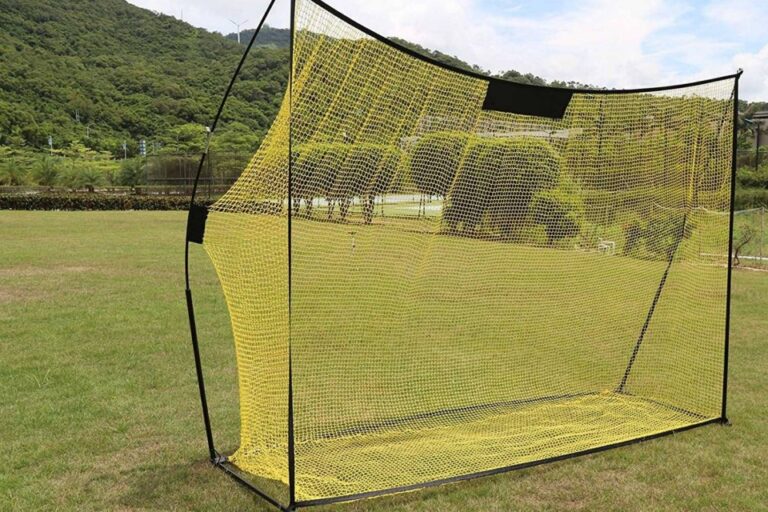
My rule of thumb for golf barrier netting and cages is simple: size for the bad strike, not the brochure swing. Side nets around backyard or club practice areas often start at 30 to 40 feet if the setback is generous. Put parking, glazing, pedestrian routes, or boundary fences close behind the hitter, and I move to 40 to 60 feet fast. For full practice cages, I care less about vanity height and more about how the frame handles repeated impact, UV, and shank direction. Buyers love talking about mesh. I care just as much about the dead zones where the ball escapes.
Fußball
Soccer gets underestimated for the opposite reason. People see a larger ball and assume softer containment. Wrong. FIFA’s stadium guideline uses 105 m × 68 m as the recommended field size and recommends at least 2 metres of level surface beyond touchlines and goal lines, while FIFA’s goal-quality programme explicitly emphasizes frame stability, net quality, and safety. That tells you the behind-goal zone is not an afterthought; it is part of the system. Read FIFA’s stadium guideline and its goal standards overview before you compare soccer goal and training net options. (publications.fifa.com)
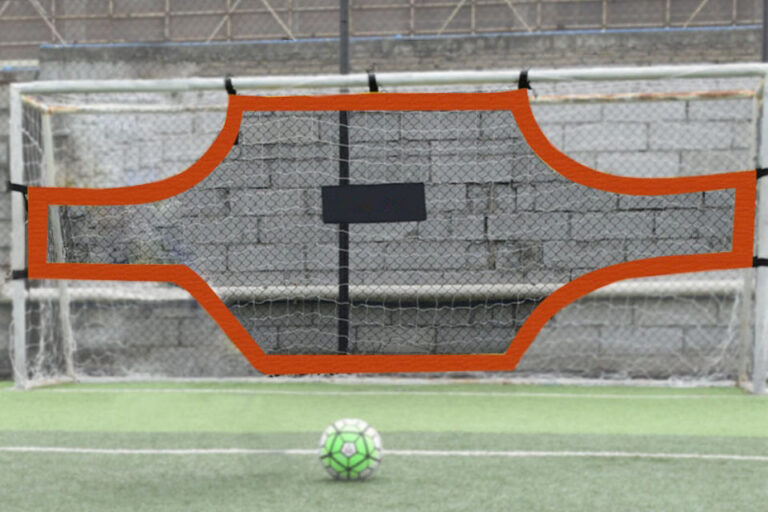
For soccer, I usually start behind-goal capture at 20 to 30 feet for youth or general recreation, then move toward 25 to 40 feet where finishing drills happen close to goal, the field runs tight to a fence line, or misses can clear into parking, stands, or pedestrian space. Width matters too. Goal width plus 10 to 20 feet on each side is a sensible first pass. More if the shooters attack from angles. More again if you know the session is repetitive shooting, not casual play.
Tennis and Pickleball
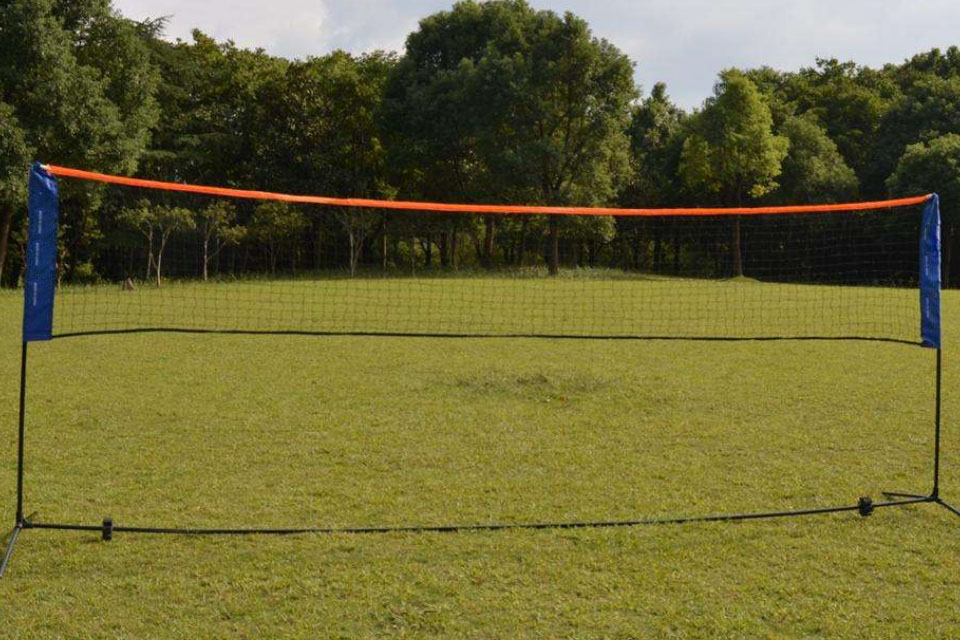
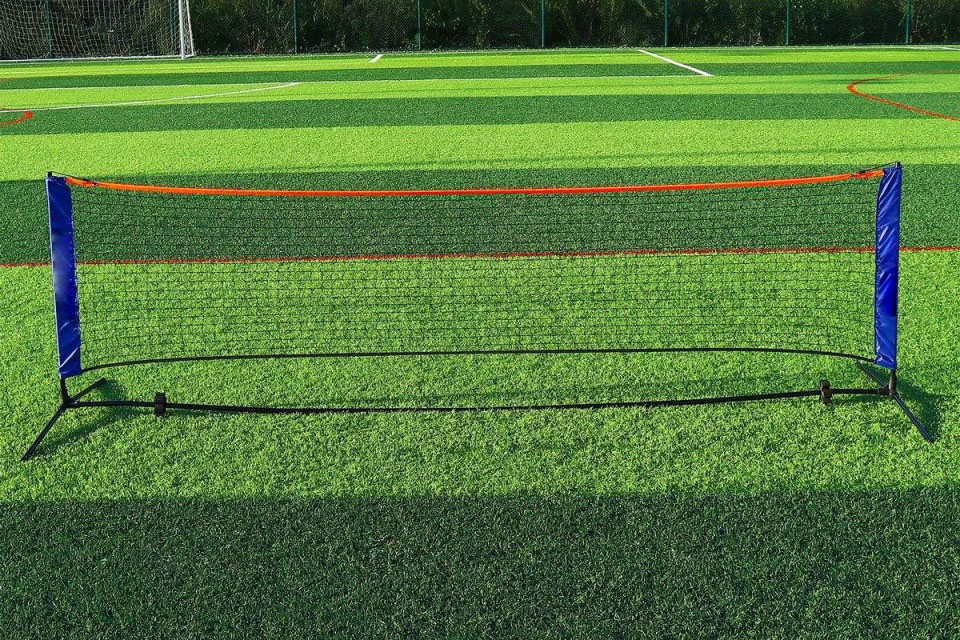
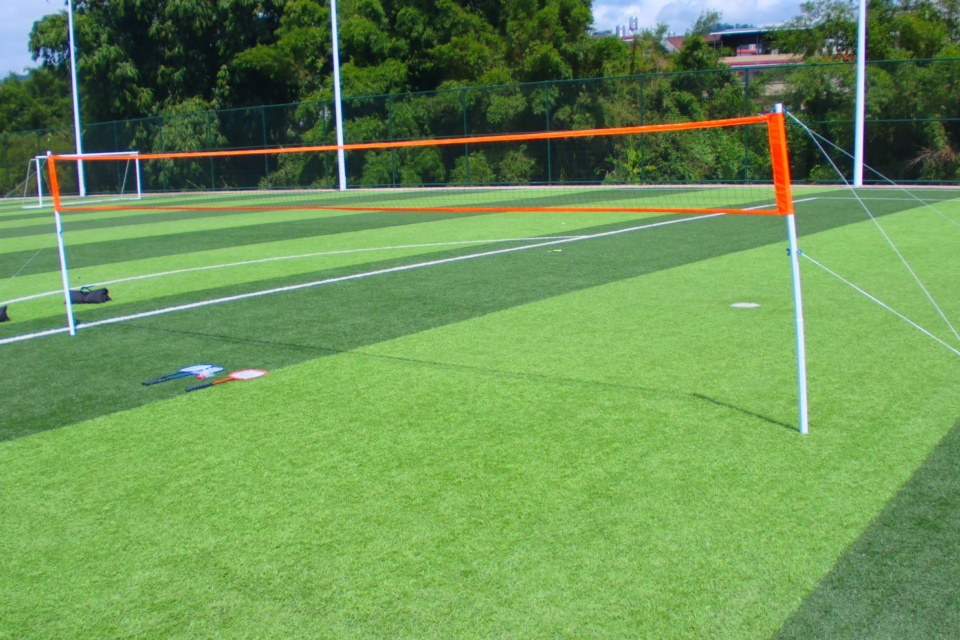
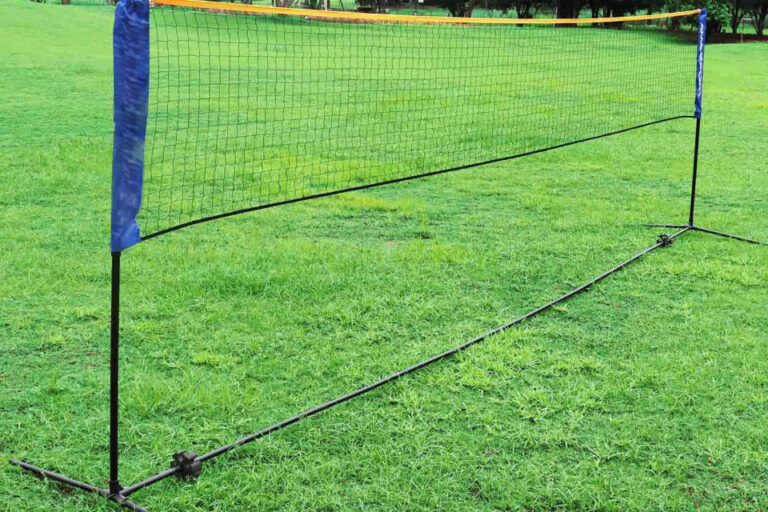
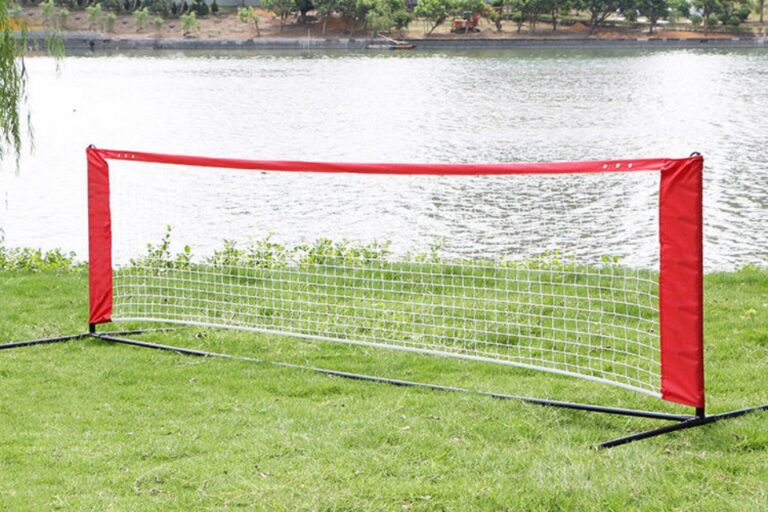
Court sports have a different failure pattern: they bleed balls sideways all day. The ITF guide recommends 21 feet from baselines to backstops and 12 feet from sidelines to sidestops for international competition layouts, and USA Pickleball specifies a 22-foot post spacing, a net length of at least 21 feet 9 inches, and a 36-inch sideline height with a 34-inch center height. The point is not the net ribbon itself. The point is that court geometry and run-off space decide whether balls stay controlled or turn into a reset nightmare. See the ITF-Leitfaden für die Spielfeldgröße und USA Pickleball’s court construction guidance. (itftennis.com)
That is why I treat Pickleball-Netzsysteme and tennis dividers differently from baseball or golf containment. Divider nets between active courts often work at 10 to 12 feet. Tight perimeters near walkways or shared recreation yards usually want 12 to 18 feet. And if the site is doing two jobs at once, say tennis in the morning and pickleball in the afternoon, the real question is not “What is the standard?” It is “What is the most annoying and unsafe ball path we are willing to tolerate?”
Demand is pushing these bad decisions harder. The 2024 SFIA Topline report says pickleball reached 13.6 million participants in 2023, up 51.8% in one year, and racquet sports added five million participants from 2022 to 2023. Compressed footprints are not a theory anymore. They are budget reality. Read the 2024 SFIA Topline Participation Report. (usta.com)
The Planning Ranges I Use Before Engineering Review
Sport
What I size for first
Starting net height I would quote
Starting width/span I would quote
Mesh direction
Baseball/Softball
Foul-ball cone, line drives, rebound off frame
25–40 ft
70–140 ft behind plate zone, plus returns
Tighter mesh, higher abuse tolerance
Golf
Slice corridor, sky balls, side leakage
30–60 ft
Full strike lane or boundary line length
Smaller mesh, strong UV/edge spec
Fußball
Over-bar misses, angled finishing shots
20–40 ft
Goal width + 10–20 ft each side
Larger mesh acceptable for containment
Tennis / Pickleball
Lobs, side escapes, reset speed
10–18 ft
Divider or full court perimeter span
Divider-focused, lower impact abuse
Lacrosse / Hockey
Rising shots, ricochets, hard repetitive impact
20–30 ft
Goal width + 10–15 ft each side
Smaller, tougher containment approach
These are planning numbers. They are not stamped drawings. They are not a substitute for code, anchoring, fire requirements, wind analysis, post design, or a site-specific liability review.
Where Buyers Usually Get This Wrong
I see the same four errors again and again.
First, they size to the official playing area rather than the error area. That is amateur math. A field or court dimension tells you where play is legal. It does not tell you where misses travel.
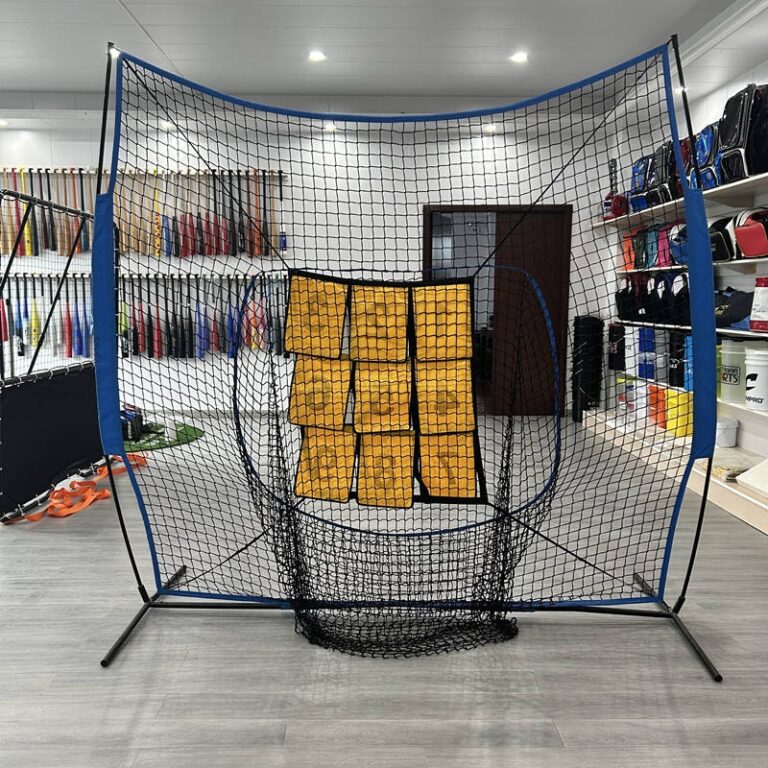
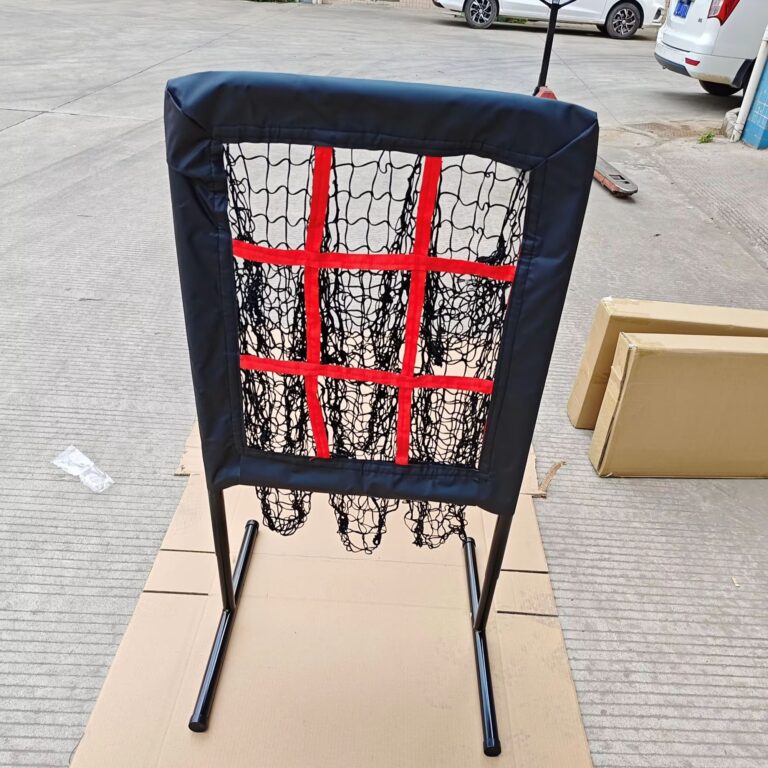
Second, they buy a practice net when they really need Sportschutznetze. Those are different animals. A practice target stops repeated shots from one direction. A barrier system protects people, property, and adjacent activity.
Third, they ignore side returns. Edge leakage is real. If a ball can slip around the shoulder of the system, you do not have containment; you have decoration.
Fourth, they under-spec the support system. Nets fail at the edges, corners, tie points, and posts long before marketing copy admits it.
So when someone asks me, “How much netting do I need for a sports field?” I push back. Show me the field sketch. Show me the setback. Show me what sits behind the play line. Show me the worst miss, not the best shot.
FAQs
How much netting do I need for a sports field?
The amount of sports netting you need is the full capture area required to stop normal play, common misses, and unsafe rebounds, calculated from net height, net width, side returns, overlap allowance, access gaps, and installation waste. In plain English, you are buying containment volume, not just a panel size.
What is the best sports netting for baseball and soccer?
The best sports netting for baseball and soccer is a sport-specific barrier system matched to ball speed, shot angle, exposure behind the play zone, weather, and support-frame load, with baseball usually needing tighter mesh and faster-reaction shielding than soccer. MLB’s fan-safety guidance and FIFA’s field and goal guidance show why these two sports should not be quoted from the same template. (mlb.com)
How do I estimate sports netting for pickleball or tennis?
Estimating sports netting for pickleball or tennis means measuring court length, run-off area, and the escape path of lobs and cross-court misses, then choosing divider or perimeter heights that keep balls controlled without killing sightlines, circulation, or maintenance access. The ITF’s backstop and sidestop guidance, plus USA Pickleball’s court and net specs, give you the geometry; your site risk tells you the actual barrier height. (itftennis.com)
When should I use sports barrier netting instead of a standard practice net?
Sports barrier netting is a permanent or semi-permanent containment system built to protect people, property, and adjacent play from repeated impact and escape balls, while a standard practice net is usually a localized training aid designed for a smaller, more predictable shot pattern. If failure affects anyone beyond the athlete, barrier netting is the safer call.
Does official field size decide net size?
Official field size sets the legal play area, but net size is decided by miss pattern, setback, exposure behind the play zone, and the cost of one escaped ball. That is why a regulation court or field can still need very different athletic field netting from one venue to the next.
Get a Quote Based on Real Risk, Not Generic Specs
If you are comparing quotes, do not ask vendors for “the standard size.” Ask them to explain the miss pattern, side returns, post spacing, UV spec, and why the system will still work after a season of abuse. Then browse the relevant Sportnetzprodukte, review the custom Netting-Dienste, oder Kontakt mit dem Team with your field sketch, target height, and setback dimensions. A clean quote starts with ugly truths.