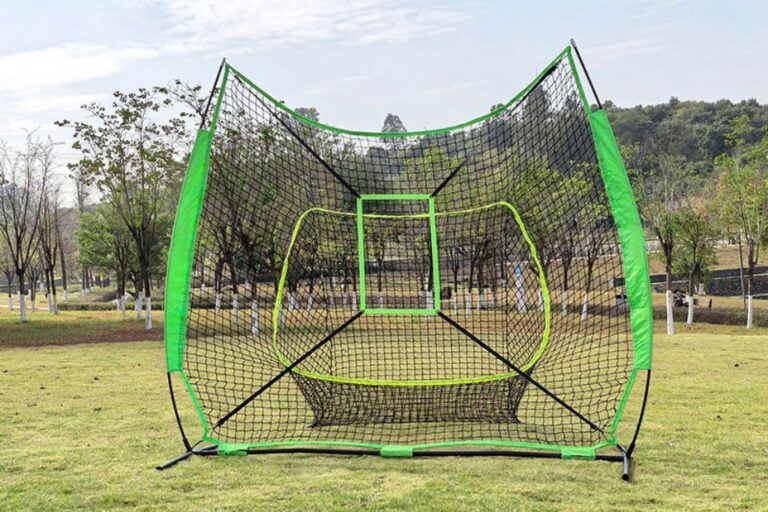
ESG & Sustainability In Sports Equipment: Certifications & Supply Chain Transparency
Why ESG Claims in Sports Equipment Often Fall Apart
A few months ago, I was on one of those supplier calls where the slide deck looked immaculate, the rep sounded rehearsed, and every third sentence contained some version of “responsible sourcing,” yet the minute I asked who extruded the yarn, who coated the tube, who handled final stitch-up, and whether the recycled-content claim matched the actual shipment paperwork, the whole presentation started wobbling. That was the tell.
Same circus.
But that’s sports equipment sourcing in 2026 if we’re being honest. People still act like a training net or rebounder is a dead-simple SKU—mesh, steel, carry bag, carton, done. Nope. It’s usually PE or PP netting, maybe rPET if someone’s pushing a greener spec, then powder-coated tube, sleeves, elastic toggles, hook-and-loop, labels, cartons, polybags, third-party sewing, maybe outsourced pack-out, and sometimes a shadow supplier in the wings nobody mentions until the paperwork gets ugly.
And that’s where I frankly believe most ESG in sports equipment claims start to smell funny. Not because sustainability is fake. Because the category has learned how to merchandize “good intentions” while keeping the proof stack blurry. Slick hero banner. Clean icon row. Big recycled badge. Tiny traceability. You ask one awkward question about lot-level records or transaction certificates and suddenly you’re getting vague answers about “trusted long-term partners.” Which usually means: please stop asking.
The pressure is real, though. PwC’s 2024 Voice of the Consumer Survey says consumers are willing to pay an average 9.7% premium for sustainably produced or sourced goods, but the FTC also warns that broad, unqualified claims like “green” or “eco-friendly” are hard to substantiate and can mislead. That’s not soft branding theory. That’s pricing power colliding with regulatory risk. (pwc.com)
Índice
Why Supply Chain Pressure Is Increasing
Then Brussels showed up.
On July 25, 2024, the EU’s corporate sustainability due diligence directive, Directive 2024/1760, entered into force, pushing in-scope companies to identify and address human-rights and environmental harms across global value chains. Around the same stretch, Reuters reported investor pressure on Nike over worker-rights protections in high-risk sourcing countries and on Inditex to publish its full supplier list. Different sectors, same message: Tier 1 visibility is not transparency. Bare minimum. See the European Commission’s directive page, Reuters on Nike, y Reuters on Inditex. (comisión.europa.eu)
That changes buying behavior.
Or it should.
Because if you’re sourcing sustainable sports equipment and still asking fluffy questions like “Do you use recycled materials?” you’re probably getting managed by the sales deck. The sharper question is uglier: can you prove that this exact finished SKU, in this exact shipment, with this exact material mix and this exact assembly route, is covered by the claim you’re making? That’s where the fake clean story usually starts fraying at the edges.
I’ve seen buyers get impressed by the phrase “post-consumer recycled polyester” without asking whether the recycled content applies to the full net body, one accessory panel, or just the packaging insert. Happens all the time. And when that same supplier starts using mushy phrases like “global sourcing partners” or “approved upstream network,” what they often mean is: don’t ask us who actually made the stuff.
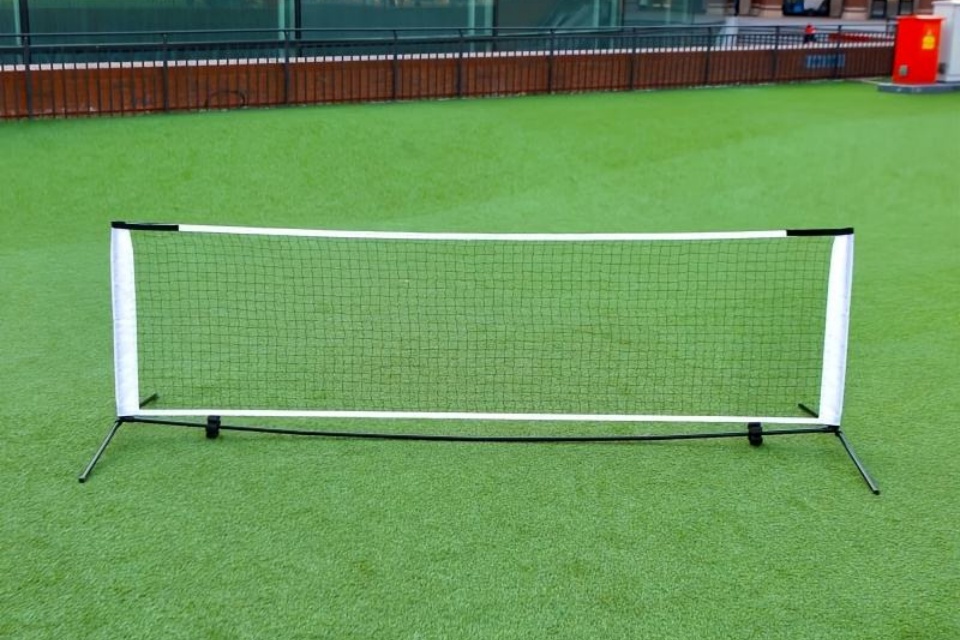
The Certifications That Actually Matter
GRS and Recycled-Content Claims
Let me be blunt. If a supplier is selling recycled netting and can’t produce the right paperwork quickly, I assume the claim is fragile until proven otherwise. For textile-heavy products, GRS is usually where I look first. Textile Exchange says the Global Recycled Standard verifies recycled materials through chain of custody, requires at least 50% recycled content, and adds environmental, chemical, and social processing criteria; it also distinguishes between scope certificates, which show a company is qualified, and transaction certificates, which verify that specific shipped goods conform to the standard. That last piece is the kill shot. No TC, no clean recycled-content story. (textileexchange.org)
That’s the hinge.
OEKO-TEX vs. bluesign
And yet people still mash together OEKO-TEX and bluesign like they’re interchangeable badges you can throw into one bullet point. They’re not. From my experience, that confusion is one of the easiest tells that a supplier rep—or buyer, frankly—is talking past the actual risk. OEKO-TEX STANDARD 100 is about harmful-substance testing in finished textile components. That matters for netting, sleeves, webbings, fabric add-ons, the bits athletes actually touch. bluesign leans more into the production system, chemistry inputs, resource controls, and process discipline. One is closer to “what’s in the product.” The other is closer to “how the product pipeline is managed.” Similar orbit, different instruments. (oeko-tex.com ex-standard-100/?utm_source=chatgpt.com))
What ISO 14001 Can and Cannot Prove
Now, ISO 14001. Buyers love seeing it. Sales teams love saying it. I get why—it sounds grown-up and operational. And it is useful. ISO describes it as a framework for environmental management systems, and the EPA similarly treats ISO 14001 as a common EMS structure for identifying, managing, monitoring, and controlling environmental issues. Good. Useful. But let’s not kid ourselves here: a management-system certificate does not magically turn a golf cage, soccer goal, rebounder, or pickleball net system into a sustainable product. It tells me the plant should have some discipline. It does not prove the specific SKU is low-impact, responsibly sourced, chemically cleaner, or lower-carbon. That leap is where a lot of sourcing teams get burned. (iso.org)
That distinction matters.
Labor and Social Compliance Still Matter
Labor compliance is where the conversation gets even messier. Factories say “we comply with local laws” as if that sentence should calm anyone down. It doesn’t. I want third-party social verification, corrective-action detail, and a sense of whether the site is merely audit-literate or actually improving. SA8000 is positioned by Social Accountability International as a leading social certification framework for fair treatment of workers. SMETA, from Sedex, is designed to identify unsafe conditions, overwork, discrimination, low pay, and forced labor. Those aren’t decorative extras. They’re part of whether the procurement model is defensible when someone finally asks hard questions. (sa-intl.org)
Packaging gets ignored, too. Which is funny, because a lot of brands love talking about recyclable cartons and “responsible packaging.” Fine—then show me the chain-of-custody logic for the paper-based inputs. Otherwise it’s just eco-copy on corrugate.
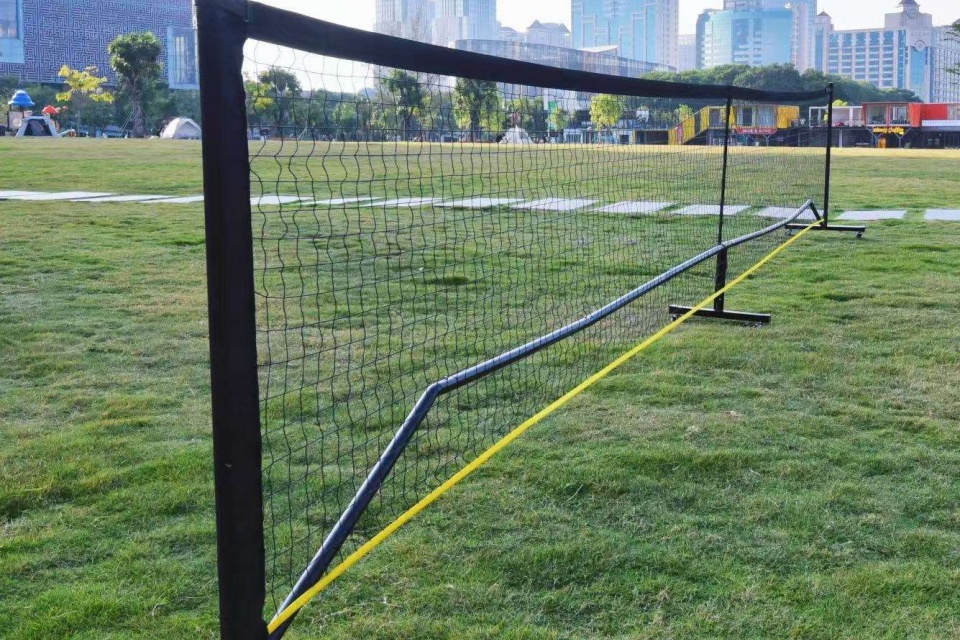
What Responsible Procurement Looks Like
| Buyer question | Weak answer | Proof that counts | What I infer |
|---|---|---|---|
| Is the net made with recycled content? | “Yes, recycled polyester.” | GRS or RCS scope certificate, transaction certificate, invoice match, lot or shipment reference | The supplier can trace the claim beyond marketing |
| Are the textile parts chemically safer? | “We meet global standards.” | OEKO-TEX STANDARD 100 or equivalent lab report for finished textile components | The claim is tied to testable substance limits |
| Does the factory manage environmental impact? | “We care about the planet.” | ISO 14001 certificate plus waste, water, energy, and corrective-action records | There is at least a management system behind the promise |
| Are labor conditions being checked? | “We follow local law.” | SMETA 4-pillar or SA8000 evidence plus corrective-action closure records | Social compliance is being audited, not just asserted |
| Is packaging actually traceable? | “The carton is recyclable.” | FSC Chain of Custody documentation for paper-based packaging | Packaging claims are linked to tracked sourcing |
| Can you see beyond Tier 1? | “Our factory is compliant.” | Named mills, yarn suppliers, coaters, hardware processors, and subcontractors | The supplier understands supply chain transparency in sports equipment |
I keep coming back to that table because it cuts through the fluff. A lot of buyers don’t need another ESG webinar. They need a better filter. Ask for the scope cert. Ask for the TC. Ask for the social audit, the CAP closure, the RSL or harmful-substance testing, the factory name, the processor list, the mill, the coater, the pack-out site. The chain either tightens—or it doesn’t.
But buyers skip it.
Usually because everyone is in a hurry. RFQ goes out, sample looks fine, price is acceptable, lead time isn’t insane, and suddenly the sustainability review becomes a box-tick exercise where nobody wants to be the person asking whether the “recycled” claim only covers the mesh panel while the rest of the product remains undocumented virgin material plus opaque trim. I’ve seen that exact move. More than once.
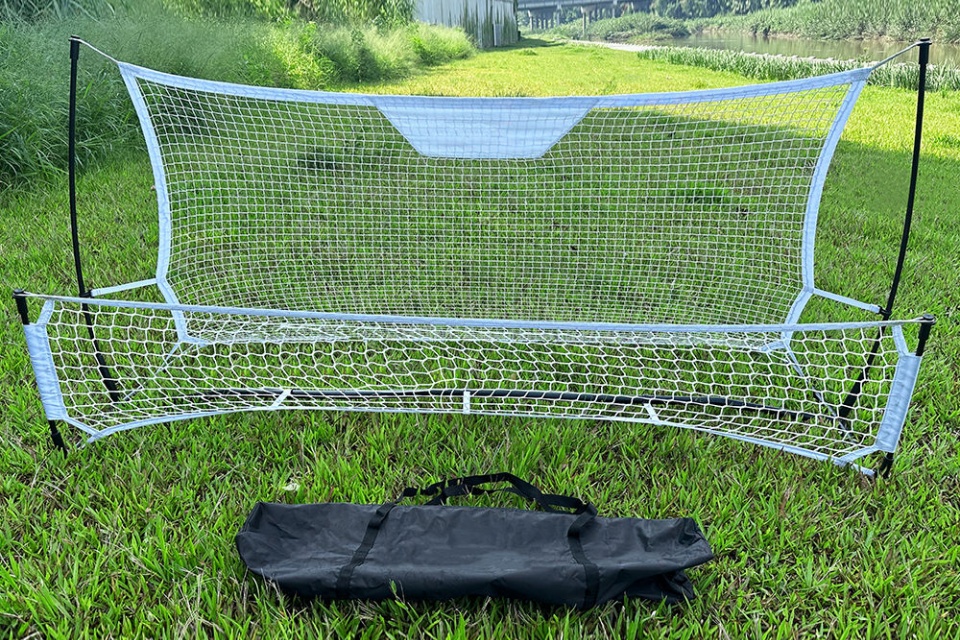
How to Verify Sports Equipment Suppliers for ESG Compliance
If you’re trying to figure out how to verify sports equipment suppliers for ESG compliance, don’t start with the mission statement. Start with the component map. Net body. Frame. Powder coat. Sleeve. Bungee. Label. Carton. Polybag. Then ask which standards apply to which parts. That’s where the nonsense usually starts leaking out. Sustainable materials for sports gear are not a single yes/no switch. They’re component-specific, shipment-specific, and painfully document-heavy if done properly.
And that’s why I get skeptical when a supplier says it has the “best sustainability certifications for sports equipment brands” without naming which certification covers which input and which factory. Best for what, exactly? Recycled content? Chemical safety? Labor? Packaging traceability? Environmental management? Different problem sets. Different evidence.
What to Look for in a Sports Net Supplier
If you’re sourcing net-based products, I’d rather see a manufacturer expose the mechanics than repeat sustainability buzzwords. A visible visita a la fábrica tells me more than a polished values page because it hints at actual capability—tube bending, sewing lines, assembly flow, storage logic, maybe even how standardized the operation feels. The same goes for servicios de redes deportivas a medida. Those pages often tell you whether the supplier truly understands mesh gauge, frame spec, target attachments, finish options, and production customization—or whether it’s just re-skinning standard catalog items with fresh naming.
Then I look at range depth. Not because breadth automatically means quality—it doesn’t—but because consistency across categories can expose whether the operation is engineered or improvised. Compare the core productos de redes deportivas offer with focused lines like sistemas de redes de golf y sistemas de redes de pickleball. If the construction logic, material language, and design discipline hold together across those groups, I pay more attention. If every page feels like a different company wrote it after midnight, I start asking tougher questions.
And yes, I still go old-school: I ask the supplier directly. Use the página de contacto and request shipment-level proof in writing. Not “Do you care about sustainability?” That’s useless. Ask, “Can you provide current scope certificates, transaction certificates where applicable, latest social audit summary, chemical compliance documentation for relevant textile components, and identification of major upstream processors tied to this product family?” You’ll learn a lot from the speed—and the discomfort—of the reply.
That’s the whole thing, really.
Not the slogan. The traceability.
Preguntas frecuentes
What is supply chain transparency in sports equipment?
Supply chain transparency in sports equipment is the documented ability to identify where each major input, processor, and subcontractor sits in the product path, how materials move between them, and which records prove the environmental, labor, and sourcing claims attached to each shipment. That’s the clean definition. In real life, it means fewer brand promises and more named mills, cert numbers, audit trails, and shipment-linked documents that survive scrutiny. (comisión.europa.eu)
Which certification matters most for recycled sports nets?
For recycled textile-based sports equipment, GRS is usually the strongest single option because it combines recycled-content verification with chain of custody and adds environmental, chemical, and social processing criteria, while Textile Exchange’s transaction-certificate system verifies the specific goods being shipped. That’s why I ask for the TC almost immediately. A recycled-content claim without shipment-linked proof is just polished copy. (textileexchange.org)
How do I verify sports equipment suppliers for ESG compliance?
Verifying ESG compliance means matching supplier claims to shipment-level certificates, current social-audit evidence, chemical or harmful-substance testing, environmental management records, and named upstream partners so that every promise on recycled content, worker conditions, and material safety can be traced to a document trail. My practical version is less elegant: certs first, then shipment proof, then upstream names, then the awkward follow-up questions they hoped you wouldn’t ask. (sedex.com)
Is ISO 14001 enough to call a product sustainable?
ISO 14001 is not a product sustainability label; it is an environmental management system framework that shows a company has formal processes to identify, monitor, and improve environmental performance, which is useful but still incomplete if product-level claims lack material traceability, chemistry controls, or labor evidence. So no—I don’t treat ISO 14001 as the finish line. I treat it as evidence that the factory may at least have its house somewhat in order. (iso.org)
Conclusión
If you want fewer recycled buzzwords and more auditable proof, start where serious procurement starts: inspect the about page, walk the visita a la fábrica, revise el product range, and send the uncomfortable questions through the contact form. That’s when you find out whether the supplier has an ESG system—or just an ESG pitch.