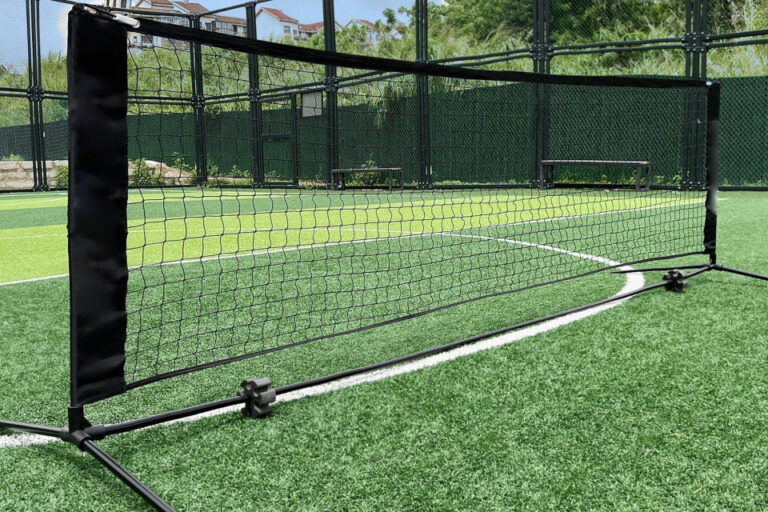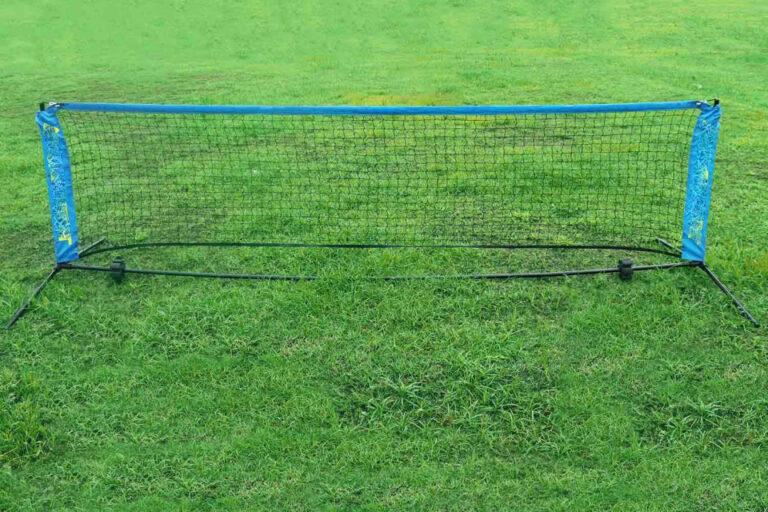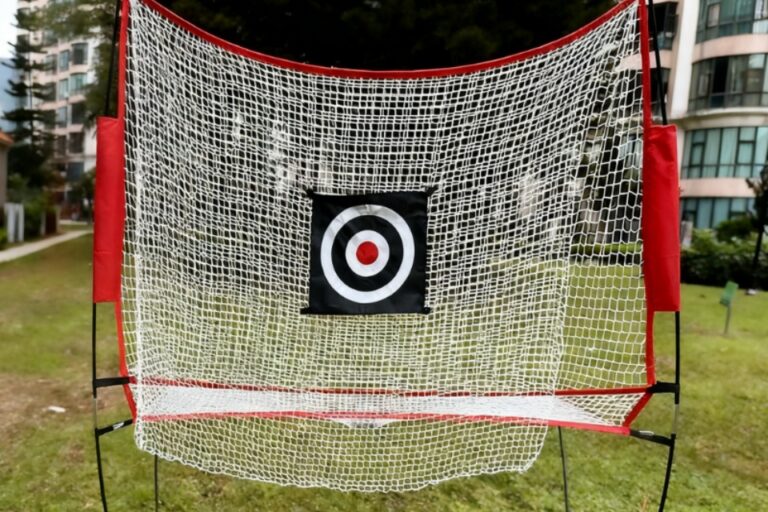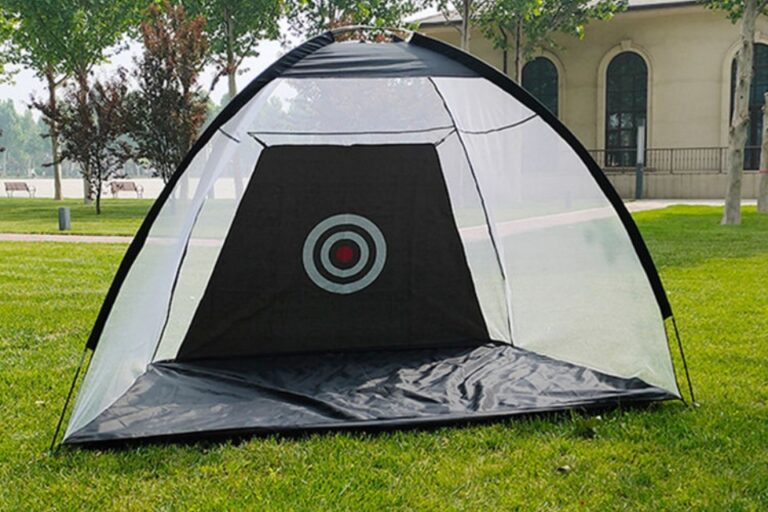
Opzioni per il bordo della corda: Vinile, fettuccia, corda ritorta e anima in piombo
Why Most Buyers Get Rope Borders Wrong
Most buyers guess.
I’ve watched it happen more times than I’d like to admit: someone compares mesh count, knot style, frame gauge, and landed cost down to the last cent, then shrugs at the border spec as if it’s decorative trim, even though the border is often the first thing to bag out, curl up, saw against hardware, or make an otherwise solid net look worn-out before the season even feels started.
That’s the miss.
And honestly, the trade helped create it. We trained buyers to react to soft catalog language—“heavy duty,” “commercial,” “premium”—when the real story sits in the edge build, the sewing, the reinforcement path, and how that border behaves once tension, weather, and bad installs start doing what they always do. A rope border isn’t cosmetic. It’s load path. It’s edge armor. It’s weight distribution. It’s install behavior. Sometimes, depending on the sport, it even changes how the net plays.
Why do people still treat it like trim?
Indice dei contenuti
Why Rope Border Specs Matter More Than Buyers Think
The rulebooks don’t.
Official rulebooks back that up. The USTA 2024 Friend at Court says a tennis net must sit at 3 feet (0.914 m) in the center, be held down by a strap, and have a white band covering the cord or metal cable. The FIVB 2021–2024 rules go even further, specifying a 7 cm top band and a 5 cm bottom band with a rope threaded through it. And the USA Pickleball official rulebook specifies a 2-inch (5.08 cm) white tape binding over a cord or cable. That is not trim. That is function, geometry, and repeatable performance. (usta.com)
And the market isn’t exactly slowing down. The 2024 State of Pickleball report said U.S. participation grew 51.8% from 2022 to 2023, dedicated facilities grew 55% year over year, and roughly $855 million in court investment is still needed over the next 5–7 years. Reuters reported in July 2024 that the new Pickleball World Rankings tour was launching with $15 million in prize money globally. That kind of growth does something ugly to product quality: it rewards speed, broad claims, and copycat specs. Bad border choices stop being isolated mistakes. They become systemic. (sfia.org)
If you’re comparing sistemi di reti da tennis, sistemi di reti per pickleball, e sistemi di reti da pallavolo, here’s the ugly truth: the same rope border recipe should not be dragged across all three just because it makes procurement easier. Different support structures create different edge stress. Different sports punish different zones. Some beat up the top tape. Some expose the side hems. Some make the bottom border do far more work than buyers realize. And buyers? They usually don’t complain in engineering terms. They say the net looks cheap, sags weird, or never sets up straight. Same problem.
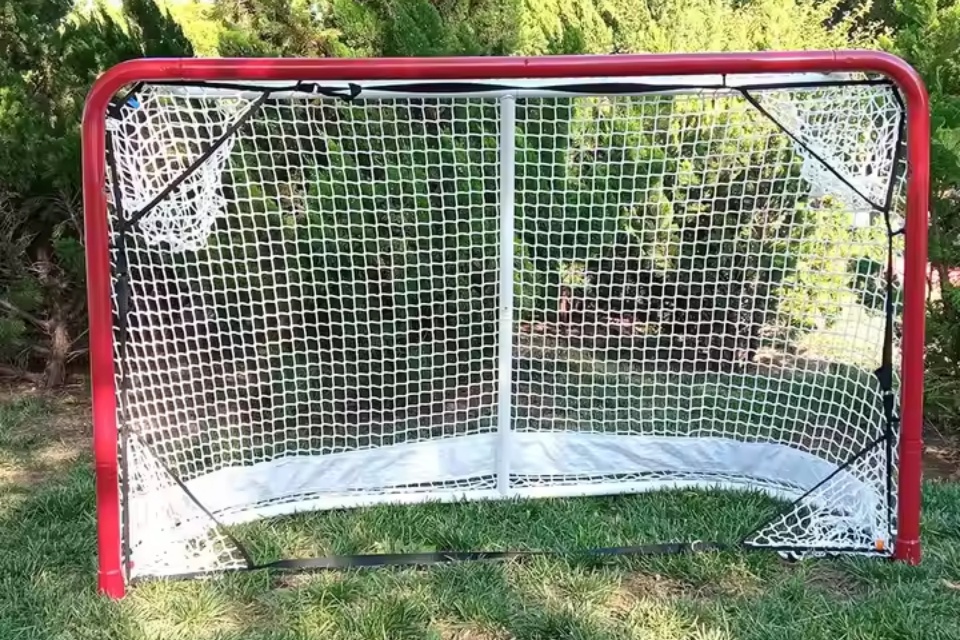
Comparing Rope Border Types
Vinyl Rope Border
Vinyl first.
I get why suppliers love pushing vinyl rope border. It presents well, cleans up the edge visually, gives you a smoother interface against cables or frames, and adds some abrasion and moisture shielding—on paper, anyway. It also looks “finished” in photos, which matters more in this business than people admit. But cheap vinyl is one of those industry traps that keeps getting sold as an upgrade. A 2024 study published by Springer noted that PVC-coated woven samples showed a significant drop in tensile strength after one year of exposure, while UV-stabilized polyethylene changed only slightly. So when somebody tells me, with a straight face, that they’re offering a “vinyl rope border,” I don’t nod politely. I ask what PVC formulation, what substrate, what UV package, and what stitch density they’re actually using. No answer? Then I assume it’s appearance masquerading as durability. (link.springer.com)
That doesn’t make vinyl bad.
It makes lazy vinyl bad. On a product like this standard tennis net with plastic-coated vinyl netting and winch cable, vinyl can be exactly the right call because the edge has to behave cleanly under a cable tension setup and still look right on court. Different job. Different logic. The right vinyl border feels engineered. The wrong one feels glossy for about five minutes, then starts showing edge memory, cracking, and that annoying stiff curl buyers hate but can’t always name.
Webbing Rope Border
Now webbing.
From my experience, this is the option that survives real life best—real life meaning repeated setups, rushed takedowns, half-careful storage, corner loading, anchor-point stress, and installers who absolutely will not baby your net just because a spec sheet asked nicely. Flat webbing spreads load more evenly than a lot of twisted constructions, stitches cleaner, tracks straighter under tension, and usually gives you a more obedient edge line around hardware and terminations. That matters. A lot. Especially when the alternative is a border that starts corkscrewing because the assembly crew pulled one side harder than the other and moved on.
I default to webbing when the product is going to live a hard life. Portable systems. Training units. Repeated install cycles. Anything with a high chance of being packed, dragged, reset, and re-tensioned by people who care about function, not craftsmanship. That makes it a smart fit for many sistemi di reti portatili per pickleball, training-focused prodotti multisport, and distributor lines where consistency beats showroom polish every time. It isn’t sexy. It works.
Usually.
Twisted Rope Border
Twisted rope is the old favorite. And, frankly, the lazy favorite.
I know why it sticks around. It’s familiar, flexible, cheaper to source, and easy to sell into budget-minded jobs where the buyer mainly wants “good enough” and doesn’t want a lecture about edge creep, torsional twist, or how a border can telegraph sewing inconsistency across the full panel. But that’s exactly the problem. Twisted rope borders tend to reveal every shortcut. They twist under repeated load. They can bag unevenly. They love producing that slight wavy-edge look that doesn’t always trigger a formal complaint but definitely makes a net feel second-rate.
And yet—I still use it in the right context.
Budget barriers, straightforward replacement nets, low-load applications, jobs where appearance is secondary and the commercial target is brutally price-sensitive. Fine. Use twisted rope. I’m not precious about it. But for premium installs or spec-heavy commercial work? I frankly believe the industry leans on twisted rope far too much because it’s easy, familiar, and forgives lazy purchasing decisions right up until the return data starts getting awkward.
Lead Core Rope Border
Then there’s lead core rope. This one gets misunderstood fast.
A lead core rope border is not automatically “better” because it feels heavier in the hand. That’s rookie thinking. It’s better only when the application actually needs ballast at the hem—bottom hems on divider nets, impact curtains, golf enclosures, and barrier systems where you need the edge to hang flatter, resist flutter, and close that irritating air gap that lighter hems leave behind when the installation looks fine on paper but sloppy in motion. In those cases, lead core can do something plain rope and webbing simply can’t fake.
But I wouldn’t spec it casually. Not even close.
Especially not around schools, public recreation, or any environment where wear, cutting, mishandling, or undocumented material substitution could enter the picture. The EPA’s October 8, 2024 Lead and Copper Rule Improvements tightened federal action around lead exposure, and the CDC’s 2024 lead guidance states that exposure can damage a child’s brain and nervous system, lower IQ, and cause long-term harm. So my position is simple—and maybe a little unfashionable in corners of this business: if a lead core rope border isn’t fully enclosed, clearly documented, and truly necessary for performance, I don’t want it anywhere near the project. (epa.gov)
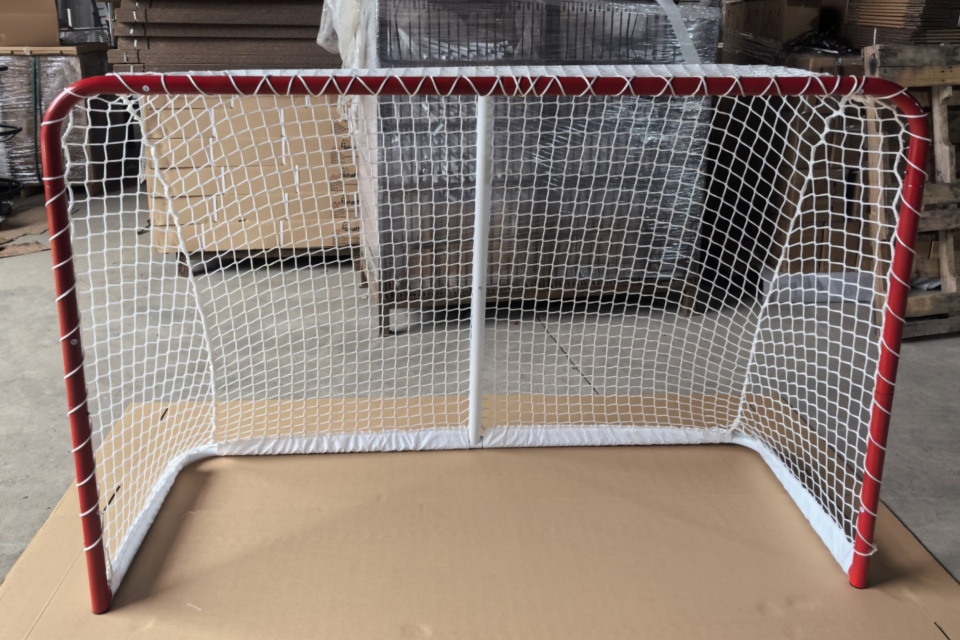
How to Choose Rope Border Options by Support Structure
This is the part buyers skip.
They ask which material is “best,” as if the answer exists in a vacuum, when the better question is what the support structure is asking the border to do over time. A fixed tennis post-and-cable system loads the edge differently than a freestanding pickleball frame, a rebounder, or a golf impact bay. That’s why “how to choose rope border options” should start with frame behavior, not surface-level preference. If the net lives under steady tension, you need dimensional discipline. If it’s packed every week, you need flexibility without distortion. If it hangs free, weight may matter more than stiffness. That’s not theory. That’s install reality.
And, yes, safety bleeds into this more than some manufacturers like to admit. In December 2024, the U.S. Consumer Product Safety Commission warning on Sport Nets 4×8 portable soccer goals described an exposed metal tip hazard and referenced a fatal April 2023 injury involving a high school student; the goals had sold online for about $43 to $150. No, that wasn’t a rope-border failure. But it came from the same industry disease: treating edge conditions, small hardware choices, termination details, and “minor” components like they don’t deserve engineering attention. They do. They absolutely do. (cpsc.gov)
So here’s my blunt ranking.
For most outdoor sport nets, webbing is the best rope border for durability when the net gets handled often. For finish-sensitive court nets, a properly specified vinyl rope border can be excellent. Twisted rope border works when price rules the room and expectations stay modest. Lead core rope border is a niche tool for weighted hems, not a default upgrade.
Rope Border Comparison Table
| Rope border type | Il miglior caso d'uso | Weight | Cosa fa bene | Where it fails | My verdict |
|---|---|---|---|---|---|
| Vinyl rope border | Court nets, appearance-sensitive installs, cable systems | Medio | Clean finish, shields edge, tidy interface with hardware | Low-grade PVC can stiffen, crack, or lose strength outdoors | Good when the spec is real, bad when the spec is vague |
| Webbing rope border | Portable nets, repeated setup/takedown, training systems | Light to medium | Flat load distribution, cleaner sewing, easier tensioning | Can fray if poorly cut or underbuilt | Best all-rounder for real-world handling |
| Twisted rope border | Budget nets, simple barriers, replacements | Light | Cheap, flexible, easy to source | Twist, creep, uneven edge behavior, weaker premium look | Acceptable for low-budget work, overused elsewhere |
| Lead core rope border | Bottom hems, divider nets, golf curtains, weighted barriers | Heavy | Hangs straight, reduces flutter, improves drape | Added handling concerns, not ideal for casual public installs | Specialized solution, not a status symbol |
If you’re building out a serious product line, start with the border and work backward. Don’t force one edge construction across every SKU just because it simplifies purchasing. That shortcut always looks efficient on a spreadsheet, then shows up later as sag, complaints, ugly installs, or replacement cycles that somehow surprise everybody except the people who warned about it at the start. Better to start from the application and use custom net manufacturing services to match border construction to tension method, exposure, and frame geometry.
Domande frequenti
What is a rope border on a sports net?
A rope border is the reinforced edge construction sewn or bonded around a sports net that carries tension, protects the mesh from abrasion, shapes the net’s drape, and provides the attachment path for cords, cables, straps, or weighted hems used during installation and play. That’s the clean definition. My less polite version? It’s the part too many buyers ignore until the net starts looking tired, crooked, or cheap.
Which rope border is best for durability?
For most outdoor sport applications, the best rope border for durability is usually polyester webbing or a high-spec vinyl-covered system, because both protect the edge better than plain twisted rope while keeping cleaner tension lines, provided the stitching, UV package, and hardware are matched to the job. If you want my honest bias, here it is: webbing for repeated handling, vinyl for finish-critical fixed installs, twisted rope a distant third unless budget is running the meeting.
When should I use lead core rope border?
A lead core rope border is a weighted hem option used when a net must hang straighter, resist flutter, or close bottom-edge gaps, especially on divider nets, golf curtains, and barrier systems where gravity helps stabilize the install more effectively than tension alone can. That’s the technical answer. The practical one? Use it when you truly need ballast—not when you just want something that feels “heavier duty” in a sales sample.
How do I choose between vinyl, webbing, twisted, and lead core rope?
You choose between vinyl, webbing, twisted, and lead core rope by matching the border to four variables: exposure, tension path, movement frequency, and safety context, because the right answer for a fixed court net is often wrong for a portable training net, and both can be wrong for a weighted divider. I start with support structure, then lifecycle, then appearance, and only then price. Price-first buying is usually where the trouble starts.
If you want a border spec that won’t turn into a warranty argument six months later, stop buying by mesh alone. Look at the frame, the tension method, the exposure, and the people who’ll actually be handling the net. Then review FSports product options o contatta il team with the real install details, because the right rope border is rarely the one with the prettiest catalog photo.