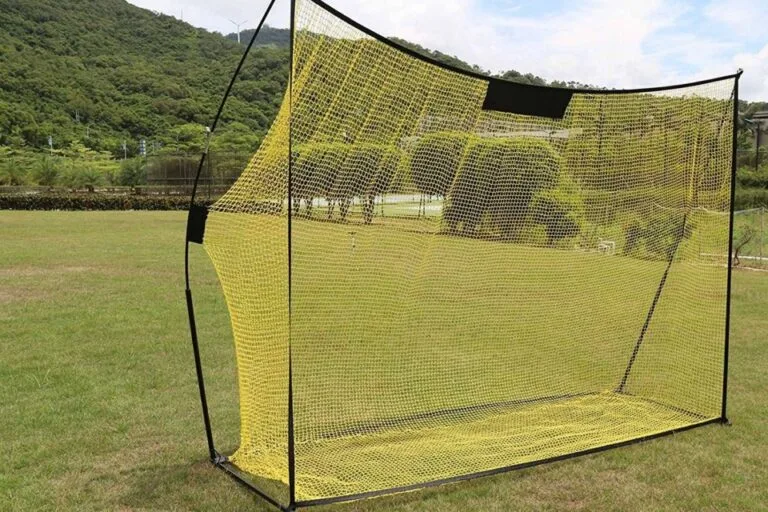
They look at color, twine thickness, maybe a product photo taken from ten feet away, and then they buy whatever seems “heavy-duty,” which is how perfectly decent clubs end up replacing nets too early, fighting sag, or discovering that a cheap frame-plus-net bundle was never built for real outdoor punishment in the first place. Why do people keep buying by vibe instead of by failure mode?
The Short Answer: What Netting Is Usually Best
I’ll give you the blunt answer. For most outdoor installations, the best soccer goal netting is UV-stabilized HDPE goal netting, especially in black or otherwise properly stabilized formulations, because outdoor performance is usually decided by sunlight, water exposure, and maintenance abuse long before it is decided by showroom softness or marketing adjectives. SABIC describes HDPE as resistant to weathering, UV radiation, and temperature changes for outdoor use, while Toray’s nylon technical data shows meaningful moisture absorption in nylon grades under ordinary atmospheric conditions; and the Plastics Pipe Institute’s 2024 TN-47, while not a soccer-net standard, is a useful polymer benchmark because ASTM D2513 Code C black PE compounds with 2% to 3% well-dispersed carbon black are treated as UV-stabilized for not less than 10 years without extra testing. That is the sort of engineering signal I take seriously. SABIC’s HDPE profile, Toray’s nylon data, そして PPI TN-47 are worth your time. (sabic.com)
The Hard Truth: Netting Is Only Half the Purchase
But here is the hard truth I see ignored all the time: netting is only half the purchase.
A good net on a bad goal is still a bad buy, and recent safety evidence makes that impossible to wave away. On December 19, 2024, the U.S. Consumer Product Safety Commission warned consumers to stop using a 4×8 portable soccer goal after a fatal April 2023 incident in Washington State involving an exposed metal tip; FIFA’s goal-quality programme says modern goal standards are about durability, consistency, quality of the net, and overall safety; and the NCAA’s current rule book says goals must be anchored, secured, or counterweighted, with nets firmly attached and free of openings before play begins. If you think “cheap but fine” is a strategy, read the CPSCの警告, FIFA’s Quality Programme for Football Goals, and the NCAA’s 2024-2025 soccer rules. (CPSC.GOV)
When Nylon Still Makes Sense
So when is nylon the better answer?
When the brief changes. Nylon still has a case when you want a more premium feel, more traditional presentation, and a stronger material under load, especially in environments where the net is stored, rotated, or protected rather than left outside twelve months a year. But nylon’s moisture uptake is not a rounding error; Toray lists equilibrium water absorption of 3.5% for nylon 6 and 2.5% for nylon 66 under ordinary atmospheric conditions, which is exactly why I do not recommend untreated nylon as the default for schools, municipal parks, and outdoor community facilities that lack disciplined maintenance. In those settings, I would rather spec the boring material that survives. (plastics.toray)
Knotless vs Knotted Soccer Netting
And yes, 結び目のないサッカー用ネット is usually the nicer product.
I prefer knotless nets for cleaner ball presentation, a more refined look, and less visual bulk at the intersections. But I would not romanticize it. On rough public fields, abuse-heavy academies, or shared multi-user installations where the net gets dragged, snagged, and generally treated like rental equipment, a well-made knotted HDPE net can be the smarter commercial decision. Pretty is nice. Replacement cycles are nicer.
How to Evaluate Complete Goal Systems
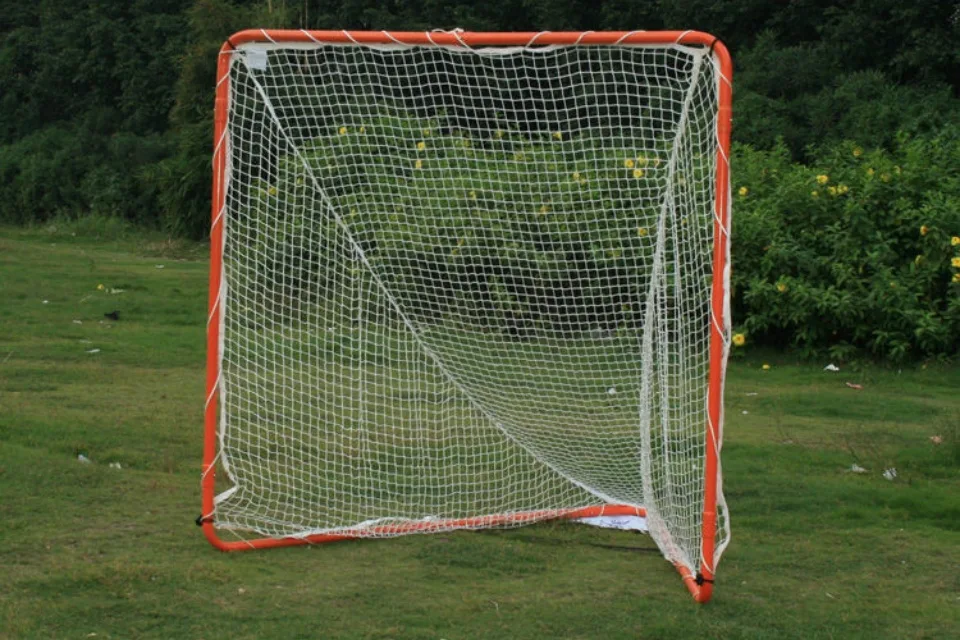
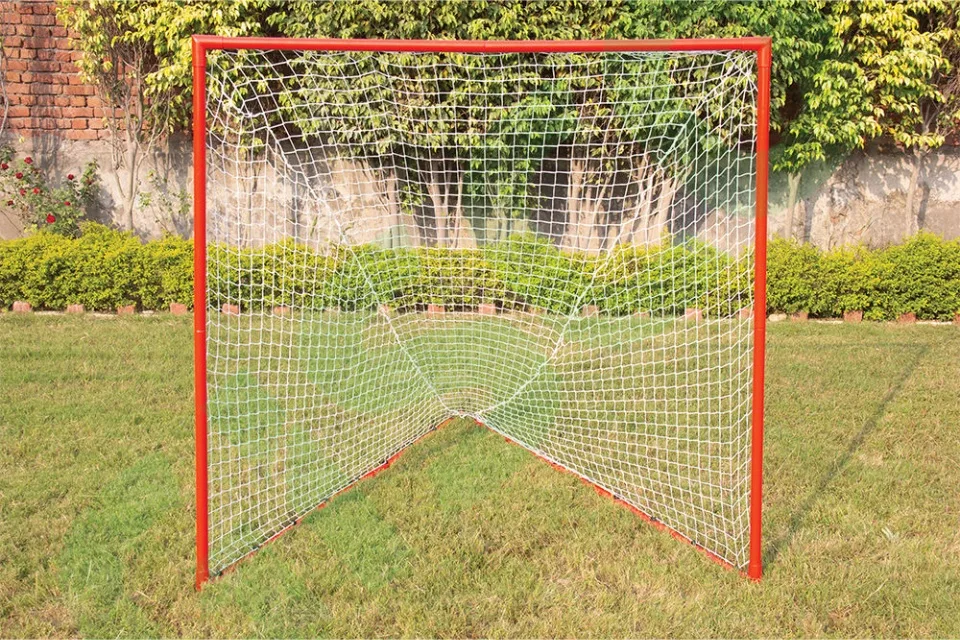
If you are shopping complete systems instead of net-only SKUs, start by comparing the brand’s soccer goal range with its football goal range, because “football goal netting” can mean two very different things in search: full association-football goals on one hand, and American-football passing or throwing target nets on the other. For year-round outdoor installs, I would also review the broader outdoor sports netting options and use a complete system like this 耐候性ネットフレーム付きヘビーデューティーポータブルサッカーゴール as a benchmark for what a serious outdoor spec should look like. If the order is custom or OEM, the real conversation belongs in custom netting services, not in a race to the lowest quote.
The Buying Matrix I Actually Trust
Here is the buying matrix I actually trust.
ユースケース
Best Netting Choice
Why I’d Buy It
Where Buyers Get Burned
Public outdoor soccer field
UV-stabilized HDPE
Better fit for sun, rain, and low-maintenance exposure
Choosing nylon because it “feels premium”
School or college match goal
Premium HDPE or protected nylon
Match presentation matters, but reliability still rules
Ignoring anchoring, attachment, and frame safety
Indoor futsal or covered training space
Nylon or knotless HDPE
UV pressure drops, appearance and handling matter more
Over-specifying outdoor durability you do not need
High-abuse academy or municipal park
Knotted HDPE
Less precious, more practical, easier commercial replacement logic
Buying fancy knotless nets for brutal environments
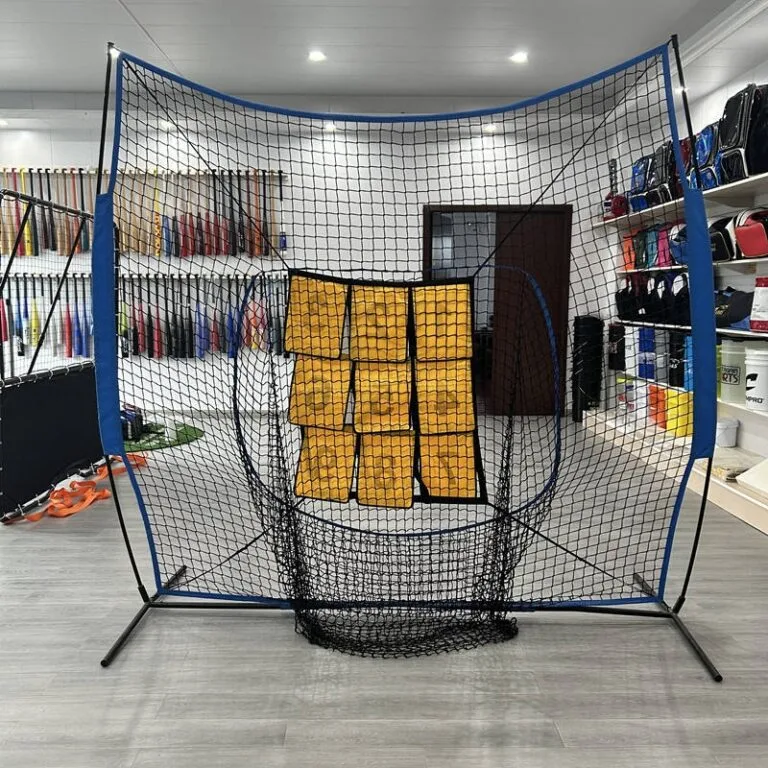
American football target or throwing frame
Heavy-duty PE/HDPE pocket or target netting
Repeated high-velocity strikes reward durability and weather tolerance
Treating trainer nets like match-goal nets
My Bottom Line
My bottom line is simple: HDPE is the default winner, nylon is the specialist option, and knotless is a finish choice, not a durability miracle. That judgment lines up with current goal-safety standards from FIFA and NCAA, with nylon moisture data from Toray, and with the broader outdoor-use profile of HDPE. (inside.fifa.com)
The Rules Are Not Vague
The other thing serious buyers should stop doing is pretending the rules are vague. They are not. NCAA Rule 1.10 says nets must be attached to the uprights and crossbars, secured behind each goal, properly supported, and free of holes or openings for the ball to escape; NFHS’s 2024-25 comparison guide also flags goal nets as mandatory in the high-school context, while IFAB/FIFA law language allows nets if properly supported and not interfering with the goalkeeper. In other words, “good enough” is not a professional standard. NFHS 2024-25 Soccer Guide and the NCAA rulebook both make that plain. (ncaaorg.s3.amazonaws.com)
Final Answer: What Is the Best Soccer Goal Netting?
So what is the best soccer goal netting, really?
For most buyers, it is UV-stabilized HDPE soccer goal netting, ideally from a supplier that can show credible material control, proper attachment design, and frame safety discipline. Not the softest. Not the prettiest. The best.
よくある質問
What is the best netting for outdoor soccer goals?
The best netting for outdoor soccer goals is usually UV-stabilized HDPE mesh because it is better suited to prolonged sun, rain, and temperature exposure, while still delivering the strength and practicality most schools, clubs, and municipal facilities need for long service life and lower maintenance. I would only move away from that default if the goal is mostly sheltered, frequently stored, or the buyer explicitly wants a premium match-day look with tighter handling expectations. (sabic.com)
Is HDPE better than nylon for football goal netting?
HDPE is generally better than nylon for football goal netting when the product will stay outdoors, because HDPE is widely specified for weather, UV, and moisture resistance, while nylon absorbs more moisture and makes more sense when appearance, handling feel, or specialized performance matters more than exposure resilience. I know some buyers still default to nylon because it sounds more “pro,” but that is often a branding reflex, not a lifecycle calculation. (sabic.com)
What is the difference between knotless soccer netting and knotted soccer netting?
Knotless soccer netting is a smoother, cleaner-looking mesh construction often chosen for presentation and touch, while knotted soccer netting is a more rugged, visually heavier construction that many buyers still prefer for abuse-heavy community use and straightforward replacement economics. I like knotless for premium installs, but I still trust knotted HDPE when the field is public, the schedule is brutal, and nobody is babying the equipment.
When should you replace a goal net?
You should replace a goal net when the mesh has holes, widened openings, failed attachment points, visible fraying, or loss of proper support that allows the ball to escape or the net to perform inconsistently, because at that point the issue is no longer cosmetic but operational and, sometimes, safety-related. NCAA language is strict here for a reason: defective nets are not a small detail before competition. (ncaaorg.s3.amazonaws.com)
Does the frame matter as much as the netting?
The frame matters at least as much as the netting because anchoring, stability, attachment design, and the absence of hazardous components determine whether a goal is safe to use, whereas even excellent mesh cannot compensate for a poorly designed or badly maintained structure. The 2024 CPSC warning should end the debate on that point for any serious buyer. (CPSC.GOV)
結論
If you are sourcing for a club, school, distributor, or OEM program, stop shopping for adjectives and start shopping for failure resistance. Browse the soccer goal collection, と比較する。 football goal lineup, and if you need custom sizes, attachment styles, or bulk production support, move the conversation to サービス または コンタクトページ. That is where serious buying starts.