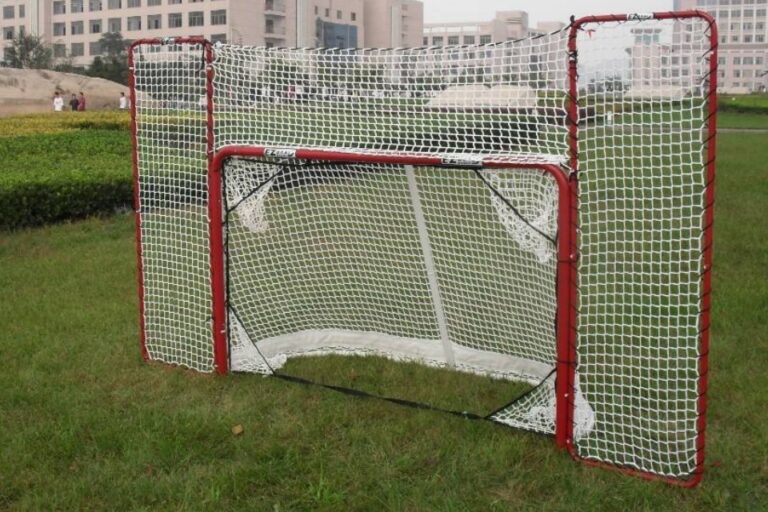
Начните свой проект по производству спортивных сеток по схеме OEM/ODM
Расскажите нам, что вы хотите разработать. Компания FSPORTS реализует проекты по производству спортивных сеток по схемам OEM/ODM, под частной торговой маркой и по индивидуальному заказу на основе вашего существующего продукта, чертежа, образца, фотографии или требований к применению.
Сообщите нам тип изделия, размеры, планируемый объем заказа, пункт назначения, а также все известные требования к сетке, материалу, каркасу, фурнитуре, логотипу или упаковке. Если ваши технические требования пока не полностью сформированы, пришлите нам то, что у вас есть, и мы сможем уточнить остальные детали перед составлением коммерческого предложения.
Что выбрать: стационарные или модульные системы спортивных сеток?
Why This Decision Is Usually More Complicated Than It Looks
Somebody always says, “It’s just a net.”
That’s usually the first bad sign. Because by the time a facility manager, coach, buyer, or board member says that out loud, the decision has already been shrunk into a product question—mesh, price, size, delivery date—instead of what it actually is: a risk-control decision with hardware attached.
It isn’t just netting.
I’ve watched facilities buy permanent sports netting when what they really needed was flexible court separation. I’ve also seen modular sports netting shoved into jobs where it had no business being used—high-speed baseball work, outdoor golf containment, crowd-facing barrier duty. Then the system sags, shifts, blows around, gets patched with zip ties, and everyone starts blaming the vendor.
Convenient. Not honest.
Here’s the ugly truth: most sports netting systems don’t fail in one dramatic movie-scene snap. They fail slowly. A loose cable here. A tired bungee there. A base that was “fine last season.” A staffer who sets the frame six feet off the correct line because nobody labeled the floor.
And then the ball finds the gap.
Permanent vs Modular Sports Netting: The Real Question
The permanent vs modular sports netting question isn’t really about which one is better. That’s the wrong fight. The real question is nastier: does your hazard stay put, or does your facility keep changing around it?
If the hazard stays put, permanent usually wins. If the space keeps changing, modular starts making sense.
Обычно.
The pressure on sports facilities is not exactly shrinking, either. The NFHS reported that high school sports participation passed eight million for the first time in 2023-24, reaching 8,062,302 athletes in that school year, according to its 2023-24 high school athletics participation release. More athletes means more reps, more rentals, more off-season training, more badly timed foul balls, more parents standing where they shouldn’t, and more facilities trying to squeeze five programs into a space built for two.
Это важно.
And the injury backdrop isn’t comforting. The National Safety Council’s sports and recreational injury data says sports and recreational injuries increased 17% in 2024, with exercise and exercise-equipment injuries alone rising to 564,845 cases. No, that doesn’t mean every injury was caused by bad netting. Don’t twist it. But it does mean the general risk environment around athletic activity is getting louder, busier, and harder to ignore.
So I’ll say what a lot of catalog copy won’t: if your facility has a predictable ball-flight problem, pretending it’s “occasional” is how you end up buying twice.
When Permanent Sports Netting Makes Sense
But permanent sports netting isn’t a trophy.
Some buyers love it because it looks serious. Big posts. Tensioned cables. Concrete footings. Maybe a boom lift in the parking lot for a few days. It feels official, like the facility has graduated into the adult table.
Sometimes that feeling is earned.
Permanent sports netting is the right call when the danger zone doesn’t move. Baseball backstops. Softball hitting tunnels. Golf range sides. Outdoor field perimeters. Spectator-facing zones. Places where the same ball path keeps showing up like a bad habit.
Fixed Hazards Need Fixed Protection
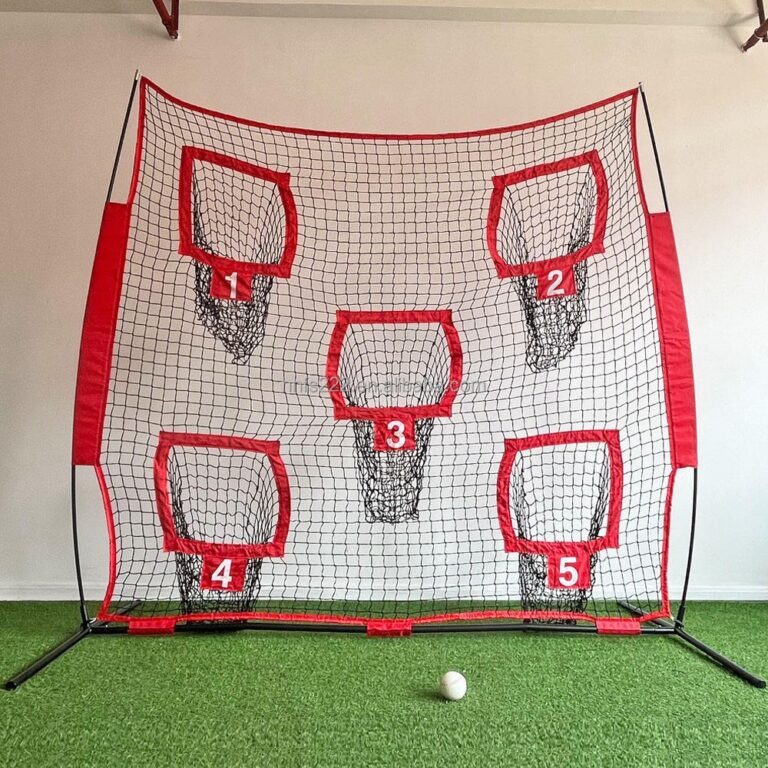
If you’re dealing with baseball or softball, start with actual бейсбольные сетчатые системы, not some generic barrier net that “should probably work.” That phrase—should probably work—has killed more budgets than people admit. For golf, especially where shanks and slices can reach walkways, parked cars, roads, neighboring property, or maintenance areas, a purpose-built golf barrier netting option makes far more sense than stretching a practice net into a safety role.
Different job. Different spec.
Permanent systems do one thing very well: they remove daily decision-making. Once the posts, cables, tension, mesh, hardware, and bottom containment are right, the system becomes boring. Boring is good. Boring means nobody has to ask where the frame went. Nobody has to roll anything out. Nobody has to remember which side faces the batting lane.
But—and this is where people get touchy—permanent systems can also be dumb.
A fixed system in a space that changes every three hours can turn into a nuisance. I’ve seen gyms where permanent posts became ankle hazards, visual clutter, storage obstacles, and quiet enemies of every coach trying to run a clean session. Nobody complains during the ribbon-cutting. They complain six months later.
Loudly.
When Modular Sports Netting Is the Smarter Choice
That’s where modular sports netting earns its keep. A rec center isn’t a stadium. A training academy isn’t always a single-sport building. Some spaces host pickleball in the morning, volleyball in the afternoon, youth soccer after dinner, and private baseball lessons squeezed into the side bay because somebody knows somebody.
Messy? Sure. Real? Absolutely.
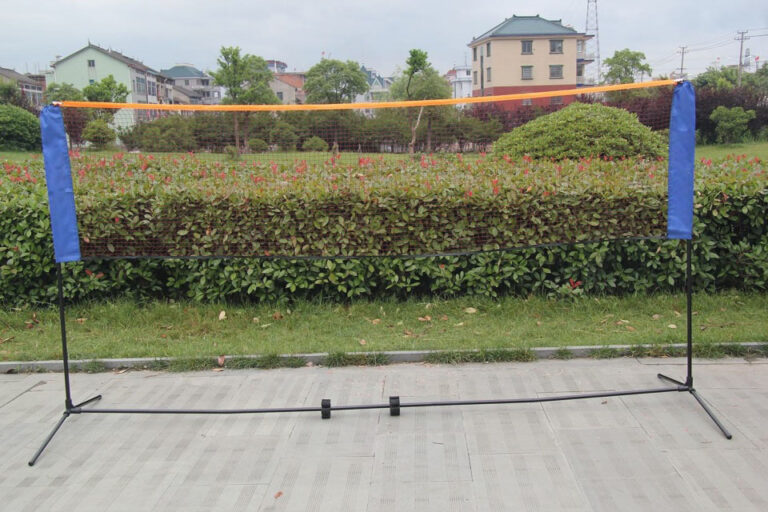
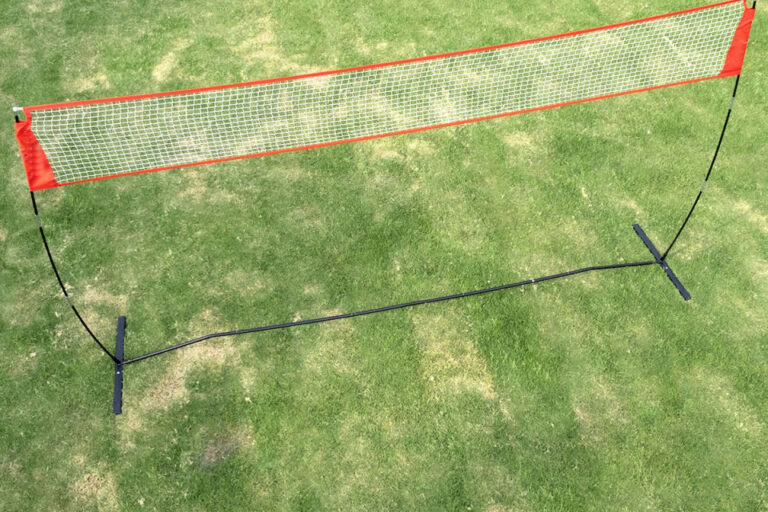
In that kind of facility, modular sports netting gives you movable containment. You can split courts, create temporary drill lanes, protect a training corner, or rework the floor without treating every layout change like a construction project. That’s why an регулируемая мультиспортивная сетка с подкатным основанием or broader системы мультиспортивных сеток can be the smarter buy.
Not softer. Smarter.
The Hidden Labor Cost of Modular Netting
But modular netting has a dirty little secret: it costs labor forever.
A rolling system that moves twice a day, five days a week, gets handled about 520 times per year. Think about that. Five hundred and twenty chances for a caster to jam, a tube to bend, a net sleeve to tear, a clip to disappear, a frame to get dragged instead of lifted, or a part-time employee to say, “Yeah, close enough.”
Close enough isn’t a safety plan.
From my experience, the worst modular installs all have the same tells: underweighted bases, thin-wall steel, mystery mesh, sloppy edge binding, weak corner stitching, and no designated storage spot. The system looks fine in the first photos. Then it starts living behind a door, rubbing against concrete block, snagging on carts, and losing pieces one by one.
It works. Until.
Why Facility Risk Can’t Be Treated Casually
The legal angle is where the conversation gets less fun. Reuters reported a lawsuit by former MLB player Darin Ruf against the Cincinnati Reds after a June 2, 2023 injury involving an allegedly exposed field hazard; the claim centered on avoidable facility conditions, not a freak athletic moment. Read the Reuters report on the Darin Ruf injury lawsuit. Different hazard, yes. Same principle, though: once a facility can reasonably predict a risk, “we didn’t expect that” starts sounding thin.
Very thin.
Permanent vs Modular Sports Netting Comparison
Here’s how I’d frame the permanent vs modular sports netting decision if I were sitting across from a skeptical facilities director with a spreadsheet open and a board meeting coming up.
Because a permanent net can still be a bad system if the posts are too light, the cable run is sloppy, the bottom gap is ignored, or the footing plan was copied from some unrelated job. A modular net can be perfectly reasonable if it’s separating pickleball courts, catching low-velocity training balls, or creating temporary lanes in a supervised indoor space.
Use case beats ego.
Outdoor Sports Netting Needs Extra Scrutiny
Outdoor netting needs its own level of suspicion. Sun cooks fiber. Rain adds weight. Wind turns loose netting into a sail. Hardware corrodes quietly, which is the worst kind of corrosion because nobody panics until something already looks terrible. If the system will live outside, look at proper наружные сетчатые системы instead of hoping an indoor product will tough it out.
Hope is not UV treatment.
Material Specs That Actually Matter
Let’s get into the shop-floor stuff for a second. Nylon. PE. HDPE. Knotted. Knotless. Twine gauge. Mesh opening. Border rope. Selvage. Grommet spacing. Impact panels. Cable clamps. Snap hooks. Bungees that don’t feel like they came from a camping aisle.
That’s the language buyers should be using.
Nylon often has better stretch and abrasion behavior. Polyethylene, especially UV-treated HDPE, can be a strong outdoor option because it doesn’t absorb water the same way and can handle weather well when specified properly. Heavier twine helps only if the frame, post, cable, and anchor package can handle the load. A strong net on weak hardware is just a nicer-looking mistake.
I frankly believe many facilities overbuy height and underbuy structure.
They want the tallest possible barrier because it looks safer in a meeting. I get it. Height is easy to understand. But height without tension, post strength, correct placement, wind planning, and bottom control is just vertical optimism. A lower, better-engineered system can outperform a tall, sloppy one.
Not always. Often enough.
How to Match the Netting System to the Sport
For baseball, I care about ball speed, batter orientation, direct impact vs deflection, cage distance, and whether the system is protecting players, spectators, glass, or property. For golf, I care about shank angles, range width, side-panel coverage, projected landing zones, and whether the net is containment or true barrier protection. For pickleball, tennis, volleyball, and badminton, I care about reset time, sightlines, frame stability, and whether staff can move the system without inventing new swear words.
This is why browsing спортивные сетки before mapping the hazard can backfire. Product catalogs are useful. They are not strategy.
But buyers love starting with products because it feels productive.
Measure the space first. Watch actual play. Stand where the parent stands, where the coach stands, where the maintenance cart parks, where the kid retrieves balls, where the wind pushes loose mesh, where the ball really goes—not where the drawing says it should go.
Then choose.
My Practical Buying Rule
If the net protects people, parked cars, windows, walkways, neighboring courts, public paths, or high-liability zones from a predictable ball path, I lean permanent. If the net organizes activity, splits training zones, supports seasonal programming, or gives coaches a movable boundary, I lean modular.
And if it needs to do both?
Hybrid. Probably.
Permanent perimeter containment with modular interior dividers is often the cleaner setup. Add dedicated sport-specific practice stations where impact is concentrated. Don’t ask one poor netting system to be a backstop, court divider, golf cage, storage wall, and miracle worker.
It won’t be.
Часто задаваемые вопросы
What are sports netting systems?
Sports netting systems are engineered assemblies of netting, posts, frames, cables, anchors, and hardware used to contain balls, divide athletic areas, protect spectators, or support training zones. They can be permanent fixed installations or modular movable systems depending on sport type, ball speed, facility layout, weather exposure, and operating schedule.
Is permanent sports netting safer than modular sports netting?
Permanent sports netting is usually safer for fixed, repeated, high-speed hazards because it can be anchored, tensioned, inspected, and maintained as part of the facility structure. Modular sports netting can also perform well, but its safety depends more heavily on correct setup, base weight, staff habits, movement frequency, and storage discipline.
When should I choose modular sports netting?
Modular sports netting should be chosen when a facility needs movable containment, temporary court separation, seasonal layouts, or flexible training zones. It fits gyms, recreation centers, academies, clinics, and shared courts where pickleball, volleyball, tennis, soccer, badminton, or skills training may rotate through the same space during the week.
What is the biggest mistake buyers make with removable sports netting?
The biggest mistake buyers make with removable sports netting is assuming portability replaces proper specification, setup, and maintenance. A removable system still needs correct height, mesh strength, frame stiffness, base weight, storage planning, inspection routines, and staff training, or it becomes a movable weak point instead of real protection.
Are permanent sports netting systems worth the higher upfront cost?
Permanent sports netting systems are worth the higher upfront cost when the hazard location is stable and the facility needs reliable protection every day. Baseball backstops, golf range barriers, spectator-facing zones, and outdoor containment areas often justify fixed systems because consistency, durability, reduced labor, and lower setup error add value over time.
How do I compare the best sports netting systems?
The best sports netting systems should be compared by sport, ball speed, mesh size, twine material, UV resistance, frame strength, anchoring method, movement frequency, warranty terms, and maintenance access. Price matters, but low-cost systems often become expensive when staff time, replacement parts, safety exposure, and early failure are included.
Final Buying Advice
Before you buy, walk the field like a pessimist.
Don’t just measure the opening. Watch the misses. Watch the lazy warmups. Watch where balls go when athletes are tired. Watch who stands behind the hazard because “they always stand there.” Watch the wind. Watch the staff move equipment when nobody important is looking.
That’s where the answer is.
For a facility-specific recommendation, send the sport, dimensions, indoor/outdoor use, wind exposure, and movement frequency through the Страница контактов Fsports and ask for a system that fits the actual risk, not just the budget.