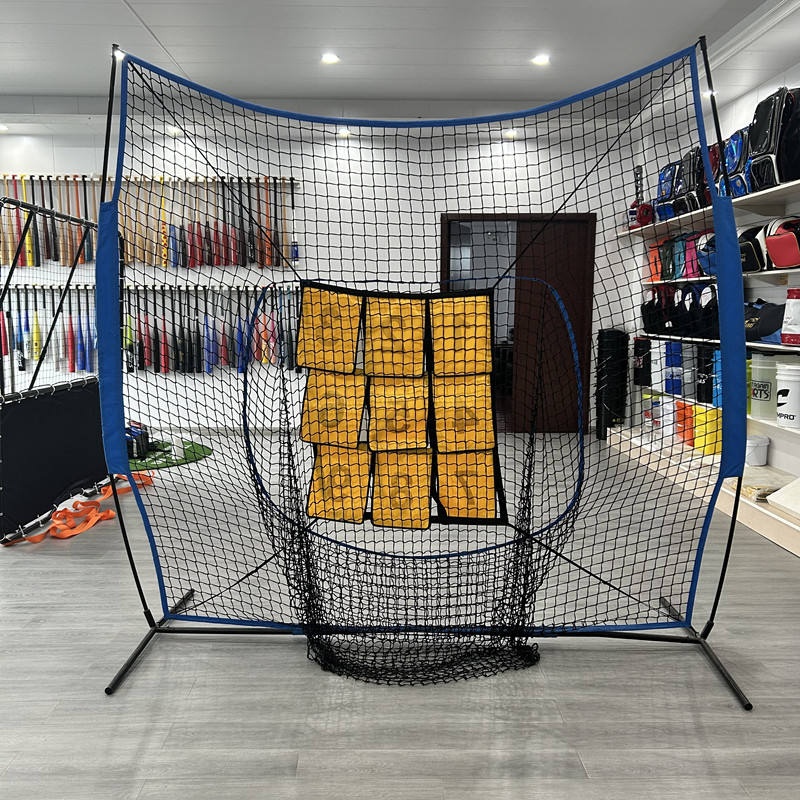
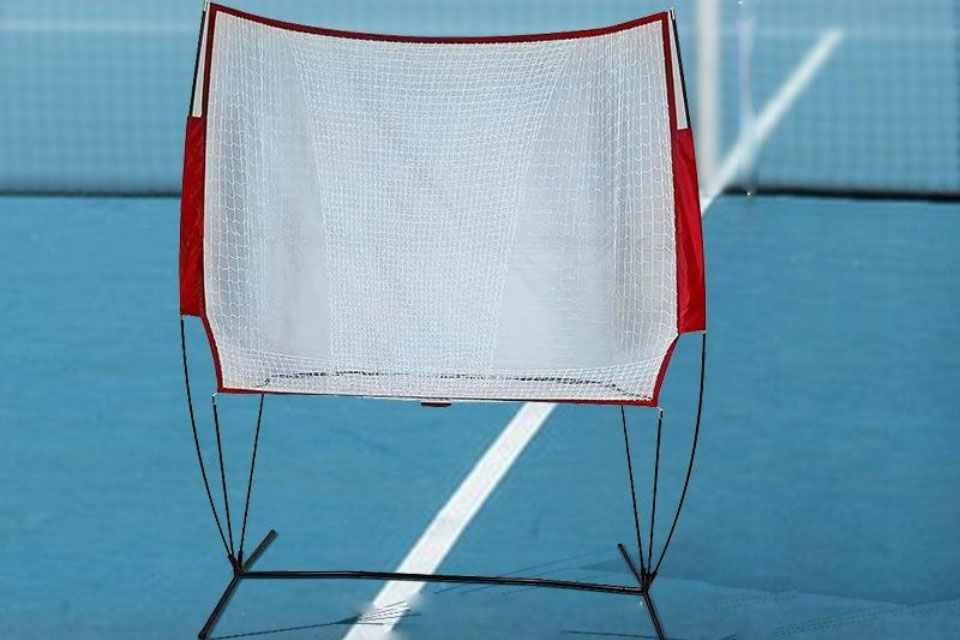
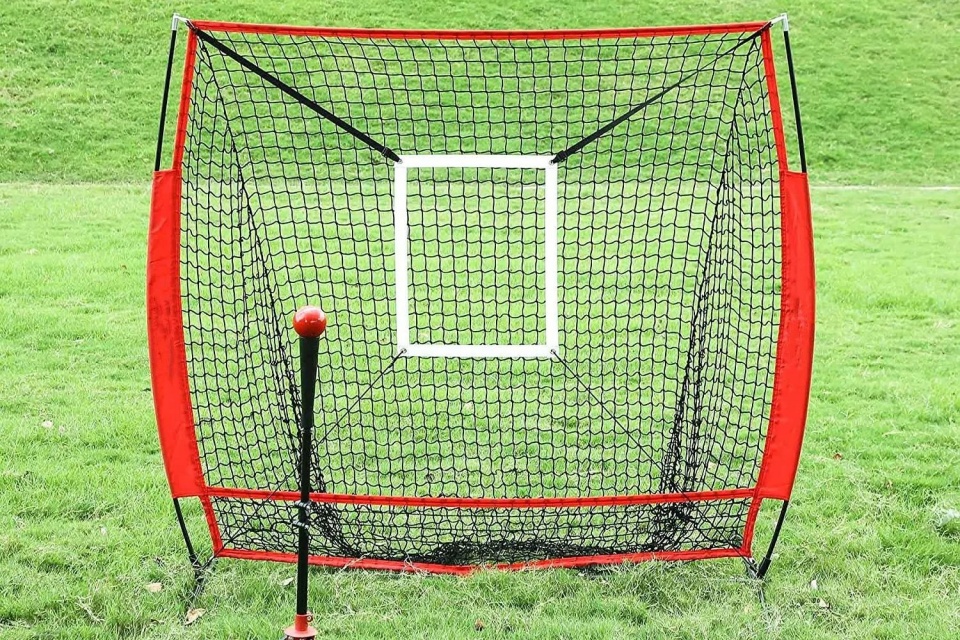
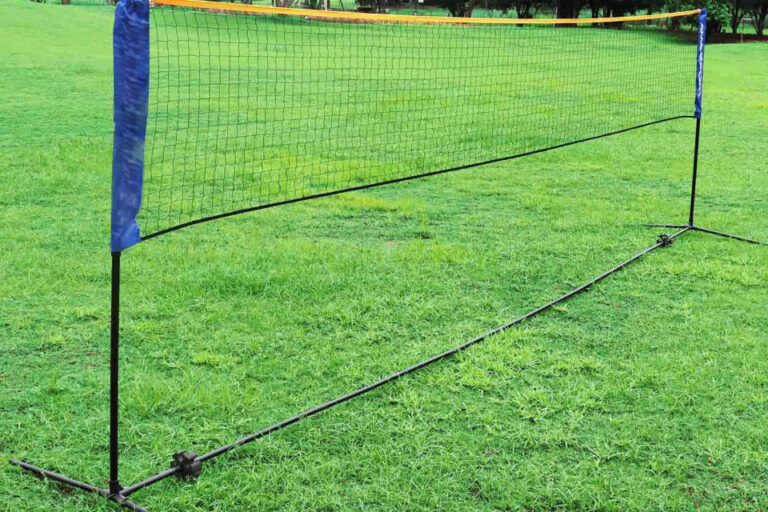
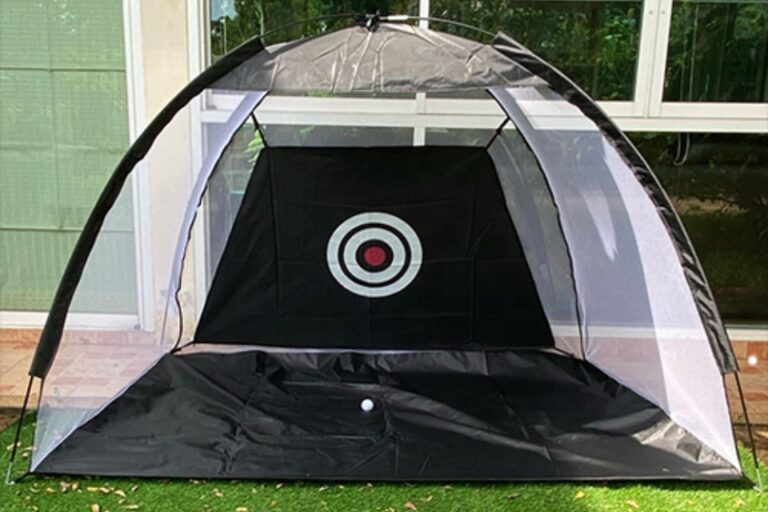
أخبرنا بما تريد تطويره. تدعم FSPORTS مشاريع تصنيع المعدات الأصلية (OEM) وتصنيع التصميم الأصلي (ODM)، والعلامات التجارية الخاصة، ومشاريع الشبكات الرياضية المخصصة بناءً على منتجك الحالي أو الرسم الهندسي أو العينة أو الصورة أو متطلبات الاستخدام.
يرجى إطلاعنا على نوع المنتج، والأبعاد، والكمية المطلوبة، والوجهة، وأي متطلبات معروفة تتعلق بالشبكة، أو المادة، أو الإطار، أو المكونات المعدنية، أو الشعار، أو التغليف. إذا لم تكن المواصفات كاملة بعد، فيرجى إرسال ما لديك وسنقوم بمراجعة التفاصيل المتبقية قبل تقديم عرض الأسعار.
شبكات مخصصة لأقفاص تدريب البيسبول: دراسة حالة إنتاج حديثة في مجال الأعمال بين الشركات (B2B)
The Commercial Reality Behind Custom Batting Cage Nets
Cheap nets lie.
I’ve seen it happen too many times: a buyer gets sold on a clean product shot, a soft “heavy duty” promise, maybe one nice sample, and then the real product starts telling the truth after UV exposure, ball burn, roof sag, rope stress, and a coach yanking the panel sideways because practice starts in eight minutes.
It gets ugly.
So what separates custom batting cage nets from stock netting with a nicer label?
Here’s the ugly truth: in B2B baseball netting, nobody serious is really buying “mesh.” They’re buying fewer complaints, fewer failed installs, fewer surprise replacements, and a net spec that doesn’t make the distributor look careless when a facility owner starts sending photos of torn corners and stretched roof panels.
And yes, I’m biased here. I frankly believe buyers under-spec sports netting more often than suppliers overcharge for it. Not always. But often.
Market Demand Behind Baseball Batting Cage Nets
But demand is real. This isn’t some tiny backyard hobby category pretending to be industrial.
Baseball participation in the U.S. reached nearly 16.7 million in 2023, with baseball and softball combined at roughly 25.3 million participants, according to MLB’s report based on SFIA data. Baseball participation reached 16.7 million (mlb.com) SFIA also reported that U.S. sporting goods industry sales grew 4.2% in 2023 to $121.66 billion, with Baseball/Softball product sales up 10%. SFIA’s 2024 manufacturers’ sales report (sfia.org)
That matters because more players means more cages. More cages means more school tenders, indoor academies, club upgrades, team training spaces, and replacement orders from buyers who are finally tired of pretending a generic backyard net can handle commercial use.
هذا هو المكان baseball batting cage nets move out of the “sports accessory” bucket and into something closer to facility infrastructure.
Small distinction. Big money.
Recent B2B Production Case Background
For this anonymized B2B production case, I’m not going to dress it up with a fake buyer name, fake photos, or some glossy “global partner success story” nonsense. We didn’t get a public PO. We didn’t get permission to name the buyer. Fine.
The useful part is the production logic.
A professional buyer had to brief, compare, approve, and receive custom baseball netting before export. That means the important story isn’t “Look, we made a net.” The story is: what did the buyer need to lock down before bulk production so the cage didn’t turn into a warranty headache?
Working Specification for the Project
The working spec looked like this:
A commercial training buyer needed outdoor baseball cage nets for a facility buildout. The buyer was not shopping for a backyard pop-up net. Different animal. They needed cage panels with repeatable mesh, reinforced border rope, UV-resistant black netting, clean stitched edges, labeled cartons, and packing that would survive export handling.
The target use case was high-frequency batting practice. That means real ball speed, repeated impact, winter storage risk, sun exposure, and staff who may not baby the product. In other words, the net had to survive normal abuse.
And that last bit matters more than people admit. “Normal abuse” is the daily operating condition in a busy baseball facility. Not an accident. Not a rare edge case. Tuesday afternoon.
Specification Logic for Custom Baseball Netting
A serious B2B batting cage net supplier should push back at the quotation stage.
That sounds annoying, I know. Buyers want price. Sales teams want speed. Everyone wants the quote sheet to move. But from my experience, the cage orders that go bad usually go bad before production starts, right there in the lazy little exchange where someone says “70 ft batting cage net” and nobody asks enough follow-up questions.
Indoor or outdoor? Ceiling-hung or frame-mounted? One-piece tunnel or modular panels? Sliding entrance or fixed opening? Baseball only, or softball too? Live pitching? Pitching machine? Coastal humidity? Desert UV? Snow storage? Will the customer use cable lines, carabiners, hooks, zip ties, or whatever the installer has in the truck?
Specs decide everything.
Once the cage dimensions are confirmed, the supplier has to choose the correct net construction: mesh size, twine thickness, knot style, material, rope border, opening design, and accessory package; otherwise, the buyer ends up comparing one nylon batting cage netting quote against a PE quote and pretending the lower price is “market intelligence.”
That’s not sourcing.
That’s guessing with spreadsheets.
Recommended Construction Direction
In this case, I’d steer the buyer toward a commercial batting cage netting package with a 45 mm class baseball mesh, heavy UV-treated black netting, reinforced perimeter rope, and roof support lines. For buyers comparing factory options, Fsports’ شبكات أقفاص التدريب على الضرب في رياضتي السوفتبول والبيسبول is a relevant internal reference point because it sits close to the actual use case: pitching, hitting, cage containment, and portable or semi-fixed practice setups.
The hard truth? “Heavy duty” is not a specification. It’s a sales adjective wearing work boots.
A buyer who accepts that phrase without asking for denier, twine size, mesh opening, UV treatment, border reinforcement, carton weight, rope finish, and inspection photos is basically approving a mystery product. Maybe it works. Maybe it doesn’t.
Fun gamble, right?
Freight, Packaging, and B2B Margin Risk
And then there’s freight. Always freight.
The industry has another problem: freight volatility. In May 2024, Reuters reported that ocean shipping rates, port backups, and container shortages were again pressuring global supply chains as Red Sea diversions and tariff concerns hit the market. Reuters on 2024 ocean shipping disruption (reuters.com)
So when someone says packaging is “just packaging,” I get suspicious. Cartons are not decoration. They’re margin protection.
A 20-carton trial shipment and a 1,000-unit distributor rollout don’t behave the same way in the warehouse, on a pallet, in a container, or during final delivery. Carton dimensions, compression strength, SKU labels, barcode placement, gross weight, and whether the cage sections are marked clearly can decide whether installation crews move fast or stand around opening boxes like it’s a bad Christmas morning.
Messy cartons cost money.
Production-Side Checklist Before Bulk Manufacturing
Here’s the production-side checklist I’d use before approving bulk manufacturing:
Decision Point
Weak Buyer Question
Better B2B Question
لماذا هذا مهم؟
المواد
“Is it strong?”
“Is this nylon, PE, or polyester, and what UV treatment is used?”
Nylon handles impact well; PE can be cost-effective outdoors; both need correct application.
حجم الشبكة
“Is it for baseball?”
“What is the mesh opening in mm or inches?”
Baseball containment usually needs tighter mesh than general sports barrier netting.
Twine weight
“هل هي ثقيلة؟”
“What twine size or strand construction is quoted?”
Thicker netting can extend service life but raises cost and freight weight.
تشطيب الحافة
“Does it come finished?”
“Is there border rope, stitched edge reinforcement, and hanging points?”
Most failures begin at stress points, not the middle of the net.
Use environment
“Outdoor okay?”
“What is the expected UV, rain, wind, and seasonal storage exposure?”
Outdoor baseball cage nets fail faster without UV planning.
B2B packaging
“How many cartons?”
“Can cartons be labeled by cage section, SKU, PO, and destination?”
Distributors lose time and money when install crews open mystery boxes.
QC proof
“Inspected?”
“Can you provide mesh, stitching, rope, label, and packing photos before shipment?”
Visual QC evidence reduces disputes before goods leave the factory.
That table looks basic. It isn’t.
Every row is a future argument avoided. Material mismatch, mesh confusion, weak border stitching, unlabeled cartons, missing accessories, vague QC photos—these are not dramatic factory disasters. They’re the boring errors that quietly eat B2B profit.
Factory Transparency and Production Control
However, factory transparency is where I separate serious suppliers from catalog brokers.
Buyers should not feel rude asking for production photos, cutting tables, stitching lines, rope finishing, folded-panel layout, and carton marking. If a factory handles OEM netting and sports-equipment services, it should be able to explain how repeat orders are controlled. Not with poetry. With process.
And a supplier that shows its جولة في المصنع gives buyers more context than a polished PDF ever will.
I’ll say it plainly: if the supplier can’t explain how they control tolerances, panel labeling, and repeat construction, they’re not ready for serious B2B batting cage work. Maybe they can sell small orders. Maybe they can ship something that looks decent once.
But repeatable production? Different league.
Safety, Liability, and Risk Management
But let’s talk liability, because nobody in sales likes that conversation until something fails.
Batting cage insurance guidance from Sadler Sports notes that facilities should inspect equipment regularly, take preventive action when defects are found, and use complete enclosure or containment with netting or fencing as part of risk management. Batting cage insurance and risk management guidance (sadlersports.com) The American Bar Association’s 2024 review of sports disputes also shows how negligence and premises-liability theories keep appearing in sports-venue conflicts, even when the facts differ by sport and contract structure. ABA 2024 sports-related disputes review (americanbar.org)
Does every torn net become a lawsuit? No. Don’t be dramatic.
But the net is still a containment system. It protects athletes, coaches, parents, spectators, windows, lights, walls, pitching machines, and the facility’s reputation. Treat it like a cheap add-on and it’ll punish you like a cheap add-on.
That’s the part buyers sometimes miss. A batting cage net doesn’t need to fail spectacularly to create a problem. A stretched corner, a weak seam, a sagging roof panel, or a poorly protected entry opening can create daily operational risk.
Small flaw. Big headache.
Why Unit Price Is the Wrong Buying Metric
The production case also exposed a sourcing mistake I keep seeing: buyers search for “best batting cage nets for baseball facilities” and then sort quotes by unit price like they’re buying identical screws.
إنها ليست كذلك.
A cheap cage net that lasts one season is not cheaper than a better net that lasts three. Especially when you add replacement freight, staff installation, facility downtime, angry customers, warranty calls, credit notes, and the special joy of discovering batch two doesn’t match batch one.
For distributors, the correct question is not “Can you make it cheaper?”
The correct question is “Can you make the same spec again in six months?”
Repeatability wins.
A reliable custom batting cage nets order should include a locked BOM, approved sample photos, mesh tolerance, rope finish, label format, carton artwork, and reorder code. That paperwork is not bureaucracy. It’s margin armor.
Cross-Selling Opportunities for Sports Net Buyers
Yet baseball rarely stays alone in a buyer’s catalog.
For buyers handling multiple sports categories, cross-selling is also real. A baseball facility may later need أنظمة الشبكات الخارجية, golf cage nets, أو multi-sport net products. Smart suppliers use the first baseball order to prove consistency, not to squeeze every last cent from the buyer.
That’s another industry truth: the first order is often a test hiding inside a purchase order.
A distributor may say they need one custom batting cage project. What they’re really checking is communication speed, sample accuracy, carton logic, photo reporting, defect handling, and whether the second order feels easier than the first.
If it does, you get the next sport category.
If it doesn’t, you get silence.
Final Production Opinion
Here’s my strong opinion: the best B2B batting cage net supplier is not the one with the prettiest catalog. It’s the one that argues about the annoying details early, documents production clearly, and ships a boringly predictable product.
Boring is good.
Boring means the installer knows which panel goes where. Boring means the distributor gets fewer angry emails. Boring means the buyer doesn’t have to rebuild trust after every reorder. Boring means the net looks the same in batch two, batch three, and the emergency replacement batch nobody wanted to order.
For custom baseball netting, the production conversation should end with evidence. Not promises. Evidence.
Ask for pre-shipment photos of the mesh. Ask for close-ups of stitched borders. Ask for carton marks. Ask for packed weight. Ask for the accessory list. Ask whether the entry opening is reinforced. Ask whether the roof panel is one piece or joined. Ask whether the supplier can separate panels by cage section. Ask what happens when a repeat order needs the same construction six months later.
And yes, ask for price.
But ask last.
الأسئلة الشائعة
What are custom batting cage nets?
Custom batting cage nets are made-to-order protective net systems built to match a facility’s exact cage length, width, height, roof style, mesh size, twine weight, hanging method, and use environment, rather than forcing buyers to adapt a generic stock net to a training space. They’re used by baseball facilities, schools, clubs, academies, distributors, and outdoor cage contractors.
The main point is fit. A custom net should match the install conditions instead of making the installer “figure it out” on-site with zip ties, spare rope, and wishful thinking.
How to choose custom batting cage nets for a baseball facility?
To choose custom batting cage nets for a baseball facility, buyers should define cage dimensions, indoor or outdoor use, ball type, training intensity, mesh opening, material, UV exposure, border reinforcement, entry design, installation method, and inspection requirements before comparing supplier prices. The right net should match usage, climate, safety expectations, and replacement economics.
Don’t start with price. Start with the cage: length, width, height, roof support, door style, hanging method, and whether the net will face daily machine-pitch abuse or lighter team training.
Is nylon batting cage netting better than PE netting?
Nylon batting cage netting is often preferred for strong impact absorption and premium training environments, while PE netting can be a practical outdoor or budget-sensitive option when UV treatment, mesh size, and twine construction are correctly specified. The better material depends on use frequency, climate, installation style, buyer budget, and expected service life.
Here’s the practical version: nylon often feels like the safer premium pitch, PE often wins on cost and outdoor practicality, and both can disappoint if the edge work, UV package, or mesh spec is wrong.
What are the best batting cage nets for baseball facilities?
The best batting cage nets for baseball facilities are commercial-grade nets with correct mesh size, reinforced edges, stable roof support, UV-resistant material, clean stitching, documented inspection, and packaging that lets installers identify each section quickly. A strong B2B net is not just strong in the middle; it is strong at the stress points.
That last part matters. Most cage failures don’t begin in the clean center panel. They start where people pull, clip, drag, hang, fold, or overload the net.
What should a B2B batting cage net supplier provide before shipment?
A B2B batting cage net supplier should provide confirmed specifications, production photos, mesh and edge-finish evidence, carton labeling details, packing dimensions, gross weight, accessory confirmation, and clear reorder references before shipment. For distributors and facility contractors, this documentation reduces installation mistakes, replacement disputes, and margin loss caused by vague product descriptions.
Photos are not a bonus. For B2B orders, they’re basic proof: mesh close-up, stitched border, rope finish, labels, folded panels, cartons, and packed accessories.
الخاتمة
Ready to specify a serious batting cage net instead of gambling on a generic listing? Send the cage size, use environment, quantity, material preference, and packing requirements through the صفحة الاتصال بـ Fsports and request a custom quote for commercial baseball batting cage nets.