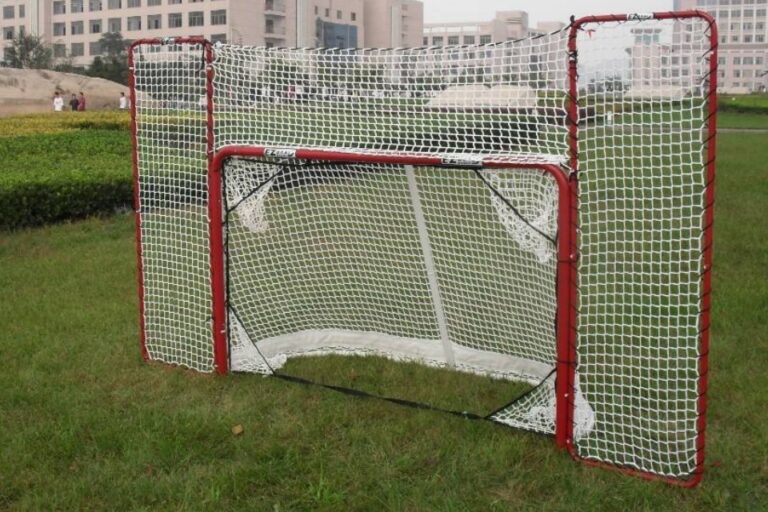
I once watched a facility manager point at a torn batting cage panel and say, “It was rated heavy-duty.” Sure. Heavy-duty for what?
That’s the part nobody wants to say out loud. Custom sports netting gets sold like fabric. Width, height, color, ship date. Nice and tidy. But the real job is messier: ball speed, mesh aperture, twine gauge, UV load, anchor spacing, ceiling height, abrasion points, rebound angle, and the weird stuff athletes do when nobody’s watching.
Kids climb it. Coaches yank it. Golfers shank into it. Baseballs chew through one hot spot for months.
Here’s the ugly truth: most facilities don’t have a netting problem. They have a specification problem that got disguised as a purchasing decision because someone needed three quotes before Friday.
I frankly believe that’s how a lot of bad sports facility netting enters the world.
The real test
The demand side isn’t slowing down. The NFHS High School Athletics Participation Survey reported 8,062,302 high school sports participants in 2023-24, the first time the number crossed eight million. More bodies. More reps. More balls flying into places they shouldn’t.
The injury data is even harder to ignore. The National Safety Council’s 2024 sports and recreation injury data says 4.4 million people were treated in emergency departments for injuries involving sports and recreational equipment in 2024. No, netting doesn’t solve all of that. But bad containment absolutely makes a facility harder to defend.
The best sports netting for facilities isn’t the one with the prettiest product photo. It’s the one that understands how the building gets abused at 6:45 p.m. on a packed weeknight, when a travel team is hitting in lane three and someone’s little brother is standing too close to the rebounder.
A baseball training tunnel wants one thing. A golf simulator bay wants another. A pickleball club with rolling frames has a different failure pattern. A school gym divider? Different again. If a vendor treats all those projects as “sports netting,” I’d be nervous.
Baseball, golf, and impact zones
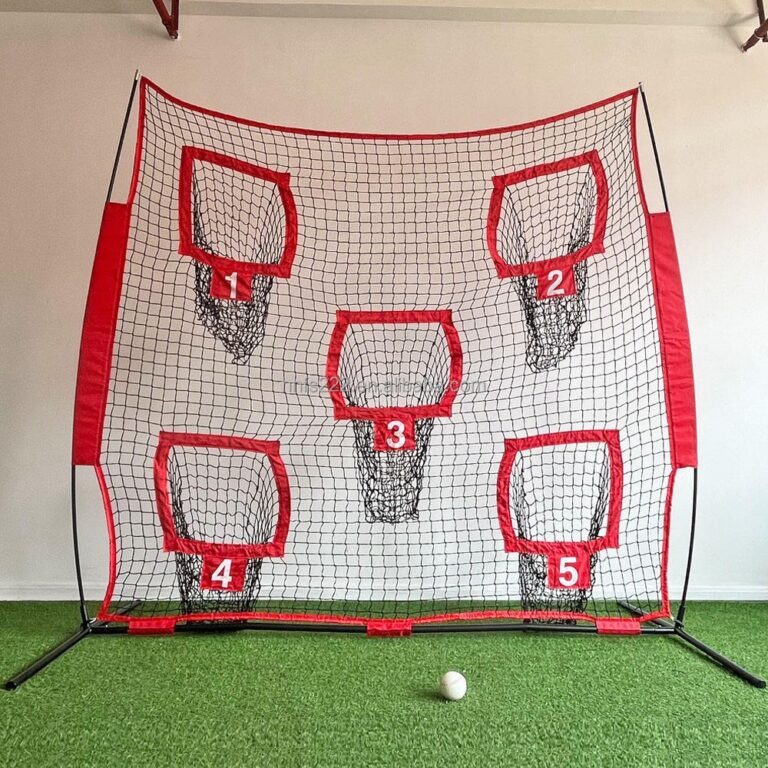
For baseball and softball spaces, start with impact frequency and strike-zone concentration. That’s where the net dies first—not evenly across the panel, but in the same tired pocket where every hitter lives. A serious buyer should look at dedicated 야구 그물 종류 before pretending a generic barrier panel can survive cage work.
Golf is nastier than people think. Smaller projectile, high velocity, ugly spin, and shank zones that punish sidewalls. For indoor bays, range barriers, or garage-style hitting stations, purpose-built 골프 네트 시스템 make more sense than guessing with wide-mesh utility netting.
And then there’s head-impact exposure. The CDC’s HEADS UP sports and recreation data reports that roughly 7 out of 10 emergency department visits for sports- and recreation-related TBIs and concussions are among children 17 and under. Again, a net isn’t a concussion protocol. But reducing loose-ball chaos and cross-play collisions matters.
Portable is not always safe
But don’t confuse “portable” with safe.
Portable means movable. Sometimes convenient. Sometimes flimsy. Sometimes a headache with wheels.
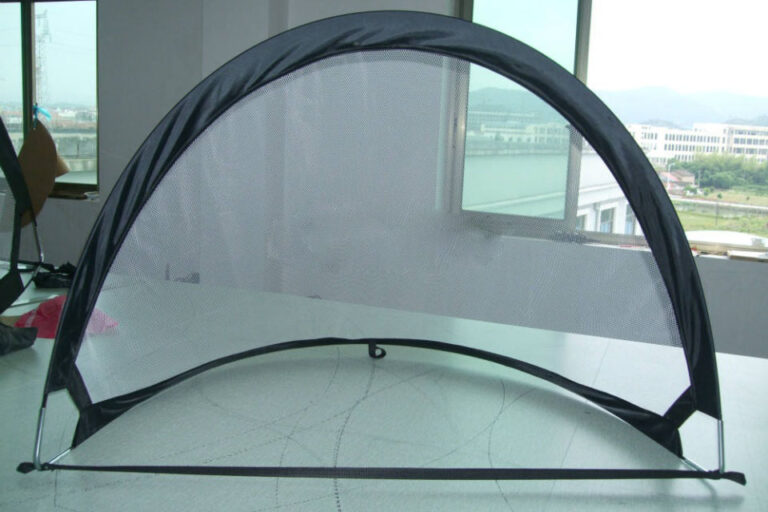
The U.S. Consumer Product Safety Commission’s 2024 warning on Sport Nets 4×8 portable soccer goals mentioned an exposed metal tip hazard, one reported death, and products sold online for $43 to $150. That wasn’t just “a soccer net issue.” That was a system issue—poles, tips, assembly behavior, and cheap hardware living together badly.
The CPSC also publishes guidelines for movable soccer goals, and every school, club, park district, and rec buyer should read them before ordering anything with a frame.
How to customize sports netting without buying junk
Start with the sport. Then stop thinking only about the sport.
“Baseball net” or “pickleball net” is just the label on the box. The real spec lives in the boring details: mesh opening, denier, knot style, border rope, selvage, webbing, snap hooks, bungee tension, post spacing, pulley path, bottom ballast, and whether staff can actually take the thing down without swearing.
They will swear.
From my experience, custom athletic netting should be quoted only after the supplier understands five things: projectile, velocity, usage hours, exposure, and mounting. Miss one, and you’re shopping by vibes.
What is the installed height, post spacing, and local wind exposure?
Pickleball or tennis court
Ball containment, portability, frame stability
PE or polyester netting with steel/aluminum frame
Buying weak frames with decent mesh
Is the frame strong enough for daily public use?
Lacrosse or hockey training
High impact, rebound behavior, frame safety
Heavy-duty net and reinforced seams
Focusing only on net face
Are corners, sleeves, and fasteners protected from impact?
Material, edge, and outdoor use
Material talk gets abused by sales pages. HDPE—high-density polyethylene, often represented chemically as (C₂H₄)n—is a common outdoor workhorse because it can handle UV exposure better when properly stabilized. Nylon, including PA6 and PA6,6 families, brings strength and give. Polyester has its own place, especially around moisture-sensitive applications and certain impact-screen setups.
But fiber alone doesn’t save you.
A beautiful net with cheap edge binding is still a weak net. A strong panel rubbing against raw steel will lose. A $900 cage hung with lazy tension can perform worse than a cheaper one installed by someone who knows load paths.
The edge is where the truth lives.
That’s where I look first: rope border, grommet spacing, clip points, lacing cord, hook quality, sleeve stitching, bottom gap, and the first six inches around any hard contact point. The center of the net is for brochure photos. The perimeter pays the bills.
For multi-sport spaces, don’t buy the fantasy that one net does everything perfectly. It doesn’t. But a well-planned multi-sports net system can work if you design around the nastiest projectile first.
Outdoor facilities need a different mindset. Rain, UV, wind, sand, ice, turf infill—pick your poison. If the installation sits outside, outdoor netting products need proper UV stabilization, smart post spacing, reinforced edges, and easy inspection access.
And honestly, I like seeing how suppliers build. Not just what they claim. A 공장 투어 can tell you whether “custom” means real fabrication capability or someone cutting rectangles in the back and hoping the stitching holds.
My hard rule for facility buyers
Don’t buy custom sports netting from dimensions alone.
Width and height are not a spec. They’re a sketch.
Send photos. Send the ugly corners. Show the low beam, the weird wall pad, the door swing, the ceiling joist, the light fixture with one dent in it. Tell the supplier whether the net will be moved daily, rolled weekly, left in the sun, hit by baseballs, hit by golf balls, or abused by bored teenagers.
That last one matters.
A 70-foot baseball tunnel with 12-foot ceilings and daily team traffic isn’t the same as a backyard hitting net. A golf practice cage for right-handed adults isn’t the same as a mixed bay where lefties, juniors, and first-timers spray balls sideways.
Price matters, obviously. Nobody has unlimited budget.
But cheap can get expensive. Downtime, repairs, labor, angry renters, scratched floors, damaged lights, broken windows, insurance questions, replacement panels—those costs don’t show up in the first quote.
What a good spec should include
A good sports facility netting spec should include sport type, net dimensions, mesh size, cord rating, material, color, border construction, rope or webbing type, attachment method, panel layout, access openings, overlap zones, frame type, anchoring method, storage method, and inspection schedule.
Too much?
Maybe. But guessing is worse.
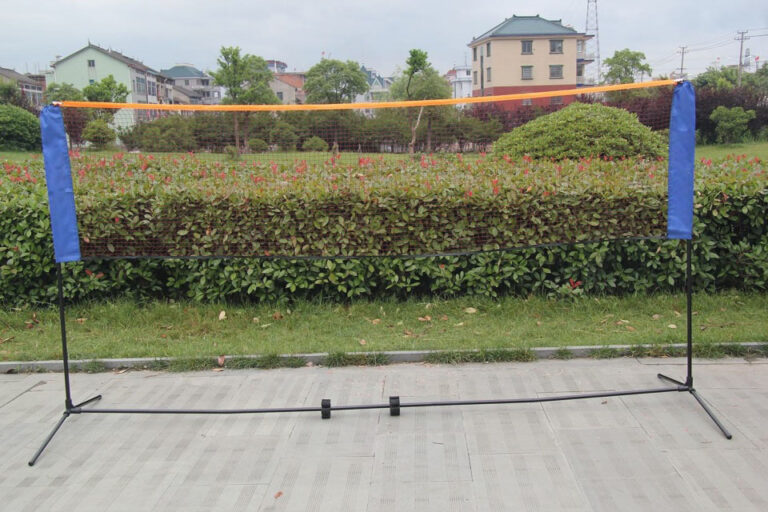
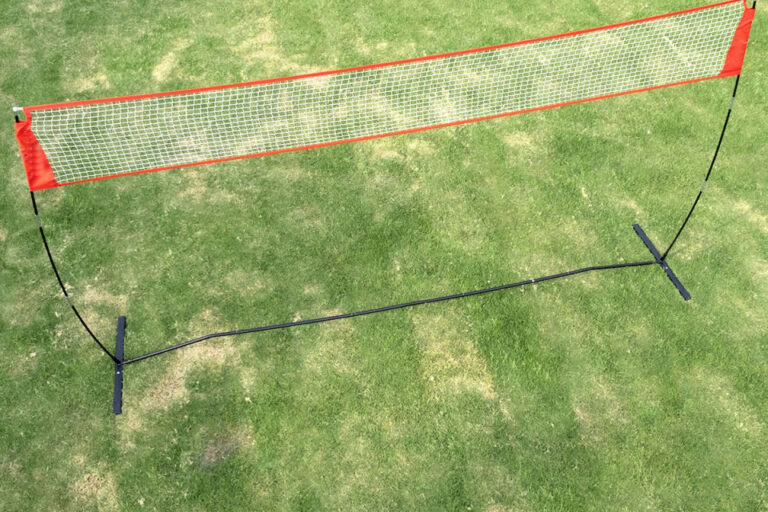
Buyers comparing 스포츠 넷 제품 across baseball, golf, pickleball, soccer, volleyball, tennis, badminton, hockey, lacrosse, and rebounder categories shouldn’t collect links like trading cards. They should narrow the field until only the right system is left.
For custom work, pressure-test the quote with blunt questions:
Can the mesh stop the smallest ball in the facility?
Is the impact zone replaceable, or are you replacing the whole panel when one hot spot dies?
Are the hooks, bungees, poles, and exposed tips safe when used by tired staff and impatient players?
Will the material survive UV, rain, humidity, turf grit, or indoor condensation?
Can staff inspect it without renting a lift every time?
여기에서 custom sports netting for facilities should earn the premium. Not by saying “custom size.” By engineering around the way the facility actually works.
자주 묻는 질문
맞춤형 스포츠 네팅이란 무엇인가요?
맞춤형 스포츠 네트는 시설의 스포츠 종류, 크기, 투사체 속도, 자재 노출 정도, 설치 구조 및 사용자 행동 양상을 고려하여 설계된 맞춤형 격리 또는 훈련 시스템입니다. 여기에는 특정 스포츠 환경에 맞춰 제작된 네트 패널, 프레임, 로프, 슬리브, 후크, 번지 코드, 배리어, 리바운더, 케이지, 골 네트 및 설치용 하드웨어가 포함될 수 있습니다.
In regular facility language, it’s the difference between “we bought a net” and “we solved a containment problem.” Real customization considers mesh aperture, twine gauge, border reinforcement, UV exposure, frame geometry, strike zones, and storage.
시설에 가장 적합한 스포츠용 그물은 어떻게 선택해야 할까요?
시설에 가장 적합한 스포츠 네트는 해당 공간에서 가장 빠르게 날아오는 공, 가장 빈번한 사용 패턴, 그리고 가장 혹독한 환경 조건에 맞춰 그물의 눈금 크기, 재질, 보강 구조, 프레임, 고정 방식 및 설치 방법을 고려하여 선정됩니다. 가장 안전한 선택은 대개 먼저 해당 종목에 적합한 것을 선정한 다음, 실제 시설의 제약 조건에 맞춰 조정하는 것입니다.
Don’t start with the easiest sport. Start with the meanest one. Baseball, golf, lacrosse, and hockey expose weak specs faster than pickleball or badminton. Once the hardest-use case is covered, the rest gets cleaner.
스포츠 시설용 그물망에는 어떤 재질이 가장 적합할까요?
스포츠 시설용 그물망에 가장 적합한 소재는 충격 수준, 기상 노출 정도, 마모 정도 및 설치 유형에 따라 달라집니다. HDPE는 자외선 저항성이 뛰어나 야외에서 자주 선호되며, 나일론은 강도와 탄력성 덕분에 널리 사용되고, 폴리에스터는 습기에 민감한 환경이나 스크린 인근에 설치할 때 우수한 성능을 발휘합니다. 소재 선택은 적절한 메쉬와 테두리 디자인과 함께 고려되어야 합니다.
I don’t buy material claims in isolation. A strong fiber with bad stitching is still a bad system. The rope border, selvage, grommets, clips, contact points, and tensioning method matter too.
맞춤형 운동용 그물은 얼마나 자주 점검해야 하나요?
맞춤형 운동장 그물은 이용이 집중되는 시즌 전, 폭풍우가 지나간 후 또는 시설 변경 시, 그리고 이용량, 종목, 노출 정도에 따라 정기적으로 점검해야 합니다. 이용 빈도가 높은 상업 시설의 경우, 일반 가정용 뒷마당 사용자보다 훨씬 더 자주 가장자리, 고정 지점, 프레임, 충격 부위, 처짐, 마모, 자외선 손상 및 부속품의 이완 여부를 점검해야 합니다.
Look with your hands, not just your eyes. Rub the edge. Tug the clips. Check the bottom gap. Find the fuzzy abrasion spots. If a frame rocks, a rope slips, or a bungee looks cooked, don’t wait.
하나의 그물로 여러 종목에 사용할 수 있나요?
한 장의 그물은 여러 종목에 걸쳐 사용할 수 있는데, 이는 해당 종목들 중에서 공의 크기가 가장 작고, 속도가 가장 빠르며, 충격이 가장 강하고, 설치 조건이 가장 까다로운 종목을 기준으로 시스템을 설계했을 때 가능합니다. 다목적 그물은 통제된 환경에서 가장 효과적이지만, 구매자가 종목별 충격 패턴을 무시하고 모든 공이 똑같이 움직인다고 가정할 경우 위험할 수 있습니다.
A shared gym divider can handle plenty of normal activity. But once you add golf shots, baseball hitting, lacrosse work, or hockey-style impact, the spec changes. Multi-use isn’t magic. It’s compromise with math behind it.
맞춤형 스포츠 네팅을 주문하기 전에 어떤 정보를 제공해야 하나요?
Before ordering tailored sports netting, provide facility dimensions, photos, sport list, expected usage hours, athlete age groups, projectile types, indoor or outdoor exposure, ceiling or post mounting options, storage needs, and any nearby spectators, lights, windows, walls, vehicles, or walkways. Better information produces a safer and more accurate netting design.
Send the annoying details. Especially those. The crooked wall, low ceiling beam, wind tunnel, bleacher line, door behind the cage, and window nobody wants to admit is in the danger zone. That’s where real design happens.
결론
Custom sports netting isn’t about making a facility look polished. It’s about making the space behave when athletes, weather, hardware, and repetition start grinding on the system.
Measure honestly. Spec the worst-case hit. Question the hardware. And when the facility needs more than a stock panel, start with Fsportsnet’s custom sports netting services and ask for a build that fits the way people actually play.