Porque é que as redes de proteção perdem o ressalto ao fim de alguns meses?
Você instala redes novas para o rebote, o salto é ótimo, os treinadores estão felizes, as crianças adoram. Três meses depois, a bola perde o impulso no impacto, a rede fica flácida e você começa a ouvir a mesma reclamação: “Esta coisa não rebate mais a bola”.”
Vamos analisar por que isso acontece, como isso se reflete no treino real e como pode especificar redes de rebote melhores para o seu negócio ou marca.
Índice
Desgaste do material da rede do reboteiro devido ao uso constante
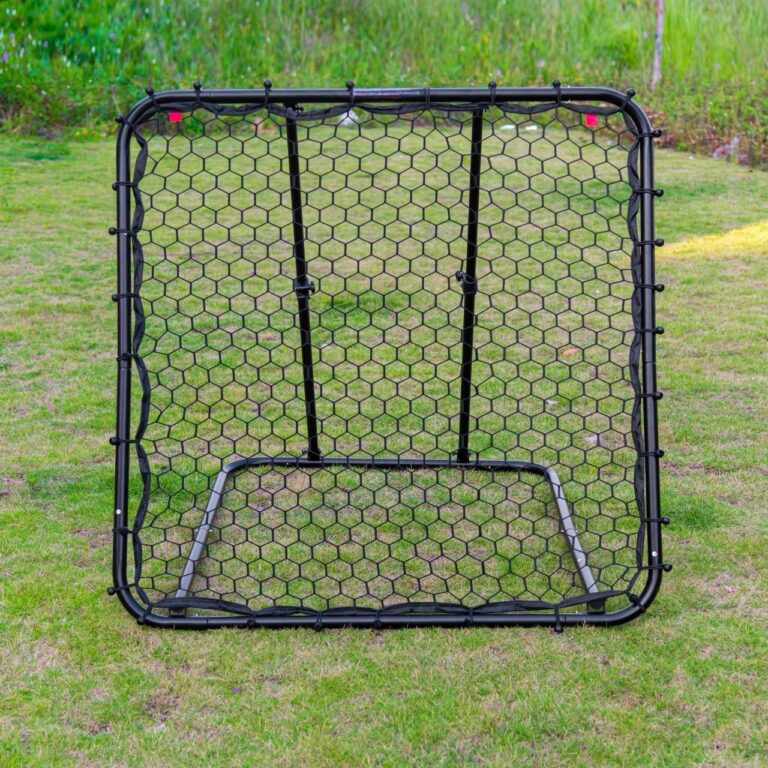
Cada remate, cabeçada, serviço ou lançamento estica a rede e o elástico ou molas por trás dela. Com o tempo, isso ciclo repetido de alongamento-liberação faz com que as fibras e os cordões se estiquem um pouco mais. Eles não voltam ao seu comprimento original, por isso a tensão diminui.
Sinais do mundo real:
- A bola volta mais devagar e mais baixa, mesmo quando os jogadores batem com força.
- O ponto ideal parece “morto”, enquanto os cantos ainda respondem.
- É necessário apertar os elásticos com mais frequência para manter a rede utilizável.
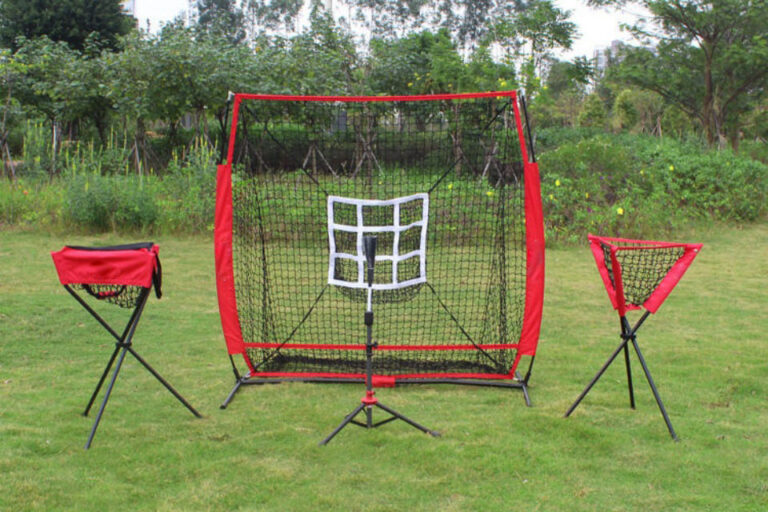
Em uma emissora de futebol ou beisebol que transmite o dia inteiro, isso pode acontecer rapidamente. A rede profissional multi-alvos com 5 zonas de precisão distribui o impacto por vários alvos e uma estrutura mais forte, para que nenhuma zona morra demasiado cedo.
Danos causados pelos raios UV e pelas condições meteorológicas às fibras da rede do trampolim
Se um reboteador vive ao ar livre, sol e clima são tão resistentes quanto os atletas.
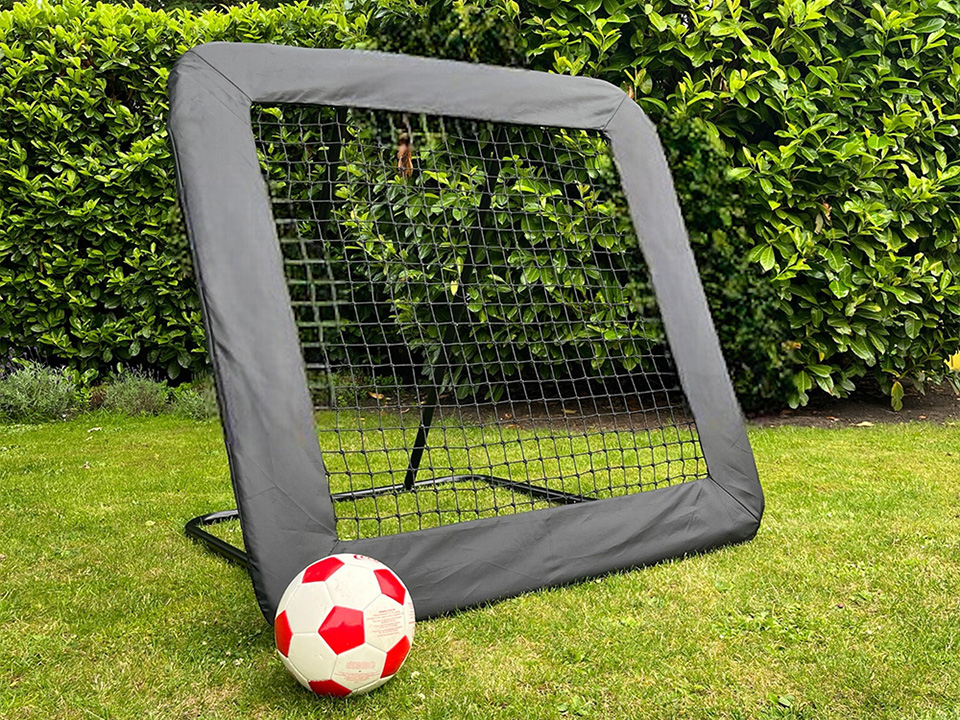
O que os raios UV e as condições meteorológicas fazem a uma rede de rebote:
- Os raios UV degradam as fibras plásticas, tornando a malha seca e quebradiça.
- A cor desbota, especialmente nos painéis frontais expostos e nas encadernações.
- A chuva e a humidade danificam as costuras, os nós e os cordões baratos.
- A sujidade e os grãos ficam presos na malha e agem como uma lixa.
Num campo de ténis ou num campo polidesportivo, é por isso que um Rede e cordas tratadas com UV são tão importantes. Uma unidade como a rede de rebote ajustável para ténis, para treino em recintos fechados e ao ar livre mantém o desempenho mais estável, pois a rede e a estrutura são construídas tanto para aulas em recinto fechado como para exercícios à beira do campo.
Principais razões pelas quais as redes dos trampolins perdem o salto (visualização rápida)
| Causa | O que se vê em campo | Motivo técnico | O que procurar nas especificações |
|---|---|---|---|
| Fadiga do material | A bola retorna mais lentamente, a zona principal parece “plana” | As fibras e os elásticos esticam mais após muitos ciclos | PE ou nylon de alta resistência, cordas elásticas mais grossas, controlo de qualidade rigoroso |
| UV e condições meteorológicas | Cor desbotada, malha seca, toque rígido | Os raios UV e a humidade quebram as cadeias poliméricas e enfraquecem as costuras. | Revestimento resistente aos raios UV, rosca para uso externo, pintura à prova de intempéries na estrutura |
| Estrutura irregular / instalação | Um canto cede, a bola sempre sai para um lado | A carga não é distribuída uniformemente, alguns cabos esticam-se excessivamente antes do tempo | Estrutura rígida em aço, marcas de montagem claras, pés estáveis ou estacas de fixação ao solo |
| Malha de baixa qualidade | A rede perde a forma, apresenta grandes buracos e desgaste precoce | As fibras finas não suportam impactos repetidos ou bolas com velocidade elevada. | Fio mais pesado, malha adequada para o desporto, bordas reforçadas |
| Utilização excessiva | Tacadas poderosas de adultos com equipamento infantil, bolas pesadas | O impacto excede a faixa de projeto, picos de tensão locais | Corresponda o caso de uso à classificação: força juvenil vs profissional, tipo de bola e velocidade |
Quando você estiver comprando para o varejo, equipes ou projetos OEM, esta tabela é uma maneira rápida de filtrar amostras que não sobreviverão a um cronograma de treinamento real.
Problemas de instalação e estrutura que reduzem a tensão da rede do trampolim
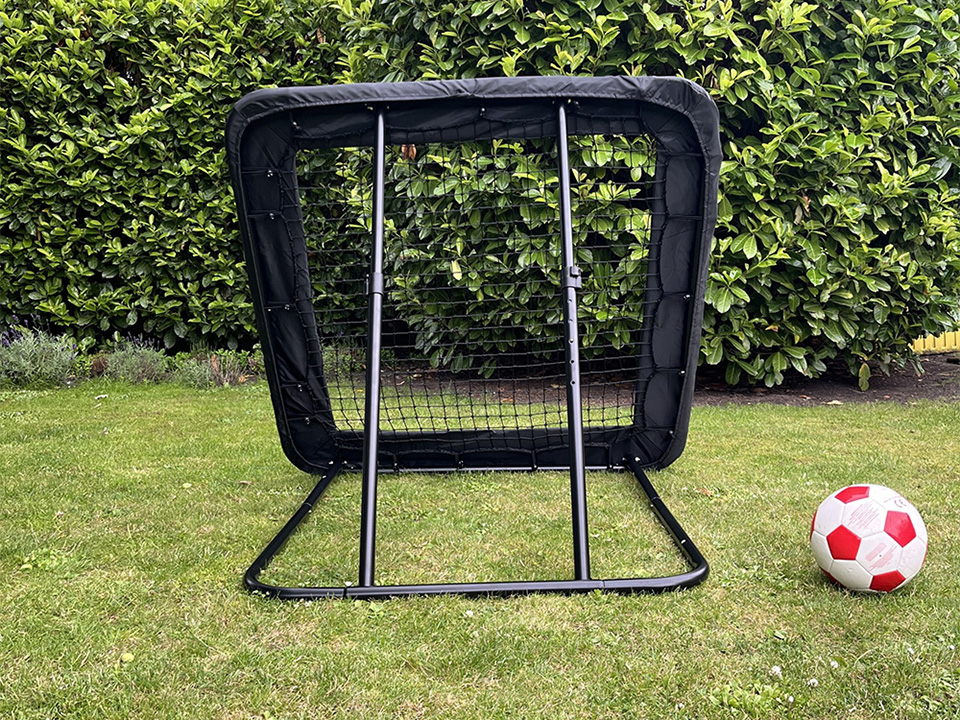
Mesmo uma boa rede pode parecer má se o estrutura e configuração não estão certas.
Problemas comuns:
- A moldura não é quadrada, por isso um lado é mais apertado do que o outro.
- Os pés afundam na relva ou no relvado, alterando o ângulo ao longo do tempo.
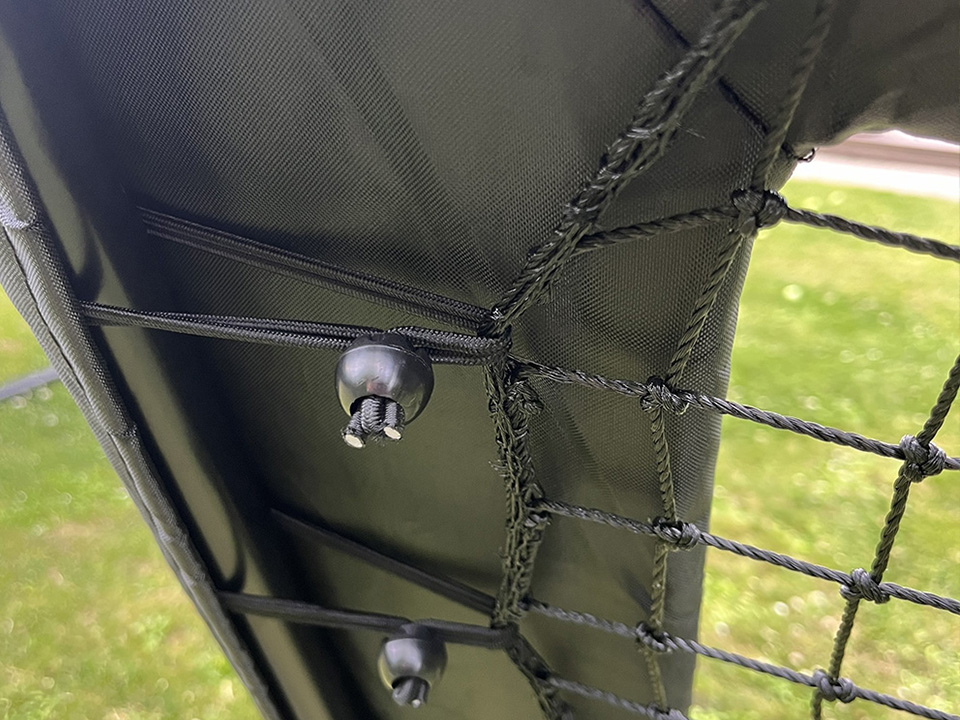
- Os elásticos ou laços não estão espaçados uniformemente, deixando zonas “macias”.
Você verá isso com frequência nos campos de treino de futebol. Um treinador arrasta um rebatedor, encosta-o numa cerca e o ângulo continua a mudar. Um modelo como o rede de ressalto de futebol em aço ajustável com estrutura de zona-alvo proporciona ângulos fixos e uma base sólida, para que a tensão permaneça mais uniforme.
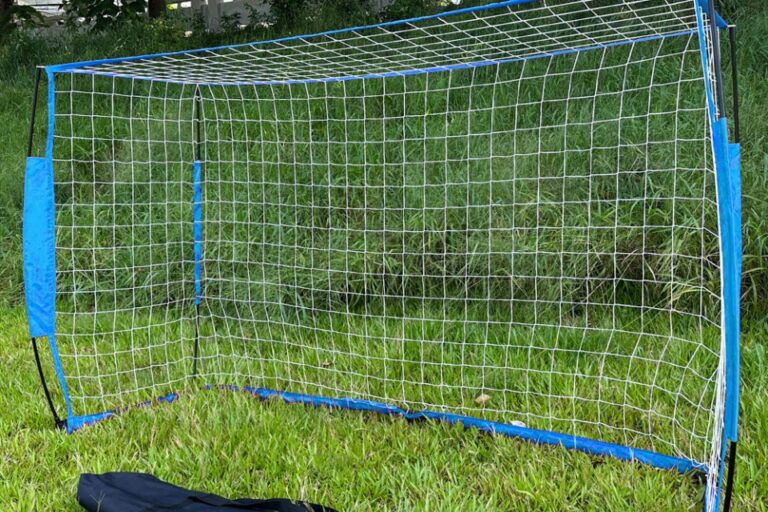
Se preferir oferecer algo mais leve para clubes que movimentam equipamentos a cada sessão, um rede de ressalto de futebol portátil para treino com dois alvos distribui a tensão por duas zonas e possui uma base estável que é mais fácil de posicionar.
Materiais de baixa qualidade para redes de rebote vs. redes de qualidade profissional
Vistos de fora, dois reboteadores podem parecer quase iguais. Por dentro da malha e dos elásticos, eles não são.
As unidades de qualidade inferior costumam usar:
- Fios finos que esticam rapidamente sob carga.
- Fibras não tratadas que detestam sol e frio.
- Estruturas leves que flexionam quando você bate com força na rede.
É aí que você tem flacidez precoce, malha desgastada e reclamações dos utilizadores finais após uma temporada.
Unidades de nível profissional utilizam:
- PE ou nylon mais pesado e resistente aos raios UV.
- Tamanho de malha adequado para cada desporto, para que a carga se distribua.
- Cantos soldados ou reforçados, não apenas um tubo dobrado.
Se você está a vender para clubes e academias, essa diferença afeta diretamente devoluções, reclamações de garantia e avaliações da marca. Em FSPORTS, As linhas de rebote são construídas com o mesmo know-how em redes que usamos para gaiolas de golfe, balizas de lacrosse e redes de proteção de estádios, de modo que as especificações da malha estão alinhadas com a velocidade real da bola, e não apenas com a aparência de showroom.
Sobrecarga da rede do seu trampolim em cenários de treino reais
Uma grande razão pela qual as redes perdem o salto “muito cedo” é simples: são utilizados fora da sua gama de design.
Casos típicos de sobrecarga:
- Os treinadores deixam os jogadores adultos rebaterem bolas num pequeno reboteador juvenil o dia inteiro.
- As equipas utilizam um painel tanto para exercícios com o guarda-redes como para remates potentes à queima-roupa.
- Os jogadores de beisebol ou lacrosse lançam bolas mais pesadas do que a rede foi construída para suportar.
Se sabe que os seus clientes realizam sessões intensas e de alto volume, pode encaminhá-los diretamente para opções resistentes, como o rede de treino para rebote de lacrosse profissional com zona de alvo ajustável ou um rede de rebote para beisebol e softbol para treino de lançamento e defesa. Estas estruturas e malhas são ajustadas para tacadas mais fortes e velocidades de bola mais elevadas.
Para instalações desportivas mistas ou empresas de aluguer, um kit de rede rebatedora desportiva portátil com postes, estacas e saco oferece mais flexibilidade: um SKU que lida com diferentes exercícios sem se desgastar na primeira temporada.
Como escolher uma rede de rebote mais duradoura para o seu negócio
Se é um retalhista, distribuidor ou comprador OEM, a sua verdadeira preocupação não é apenas “O salto está bom hoje?”. É:
- Este produto resistirá a uma temporada inteira de uso intenso?
- Os clubes vão fazer novas encomendas ou vou receber devoluções e comentários negativos?
- Tenho a combinação certa de SKUs para diferentes níveis de formação?
Veja como fazer especificações de forma mais inteligente.
- Adapte as especificações da malha ao desporto e ao nível
- O futebol juvenil e o ténis infantil podem usar malhas mais leves.
- O futebol americano, o lacrosse e o basebol de nível profissional requerem fios mais grossos e elásticos mais resistentes.
- Verifique se o fornecedor tem designs dedicados, como rede profissional de rebote para lacrosse com estrutura de alvo ou rede de ressalto ajustável para pickleball com 5 zonas-alvo.
- Pergunte como a rede lida com a exposição ao ar livre
- Fibras tratadas com UV, costura resistente ao ar livre e estruturas resistentes à ferrugem são fundamentais.
- Isso é importante para clubes de ténis, uso em quintais e parques polidesportivos.
- Observe a estrutura e os acessórios, não apenas a malha
- Tubos de aço com paredes espessas e pés estáveis significam menos flexibilidade e um salto mais consistente.
- O ajuste preciso do ângulo facilita aos treinadores a definição dos exercícios sem torcer a estrutura.
- Planeje o seu sortimento por caso de uso, não apenas por tamanho
- “Utilização familiar no quintal”, “treino diário do clube” e “exercícios intensivos da academia” não devem partilhar as mesmas especificações.
- Com OEM/ODM, pode ajustar diferentes configurações da mesma plataforma para cobrir essas faixas de utilização.
Porque FSPORTS é um fabricante líder de redes desportivas premium na China. Podemos alinhar as especificações da malha, o design da estrutura, a embalagem e a marca para se adequar ao seu canal: lojas especializadas, grandes lojas de retalho, lojas exclusivamente online ou marcas próprias. Encomendas em grandes quantidades e SKUs personalizados ajudam-no a controlar o inventário e atingir a sua margem-alvo em cada segmento.
Lista de verificação para manutenção da rede de rebote para revendedores e treinadores
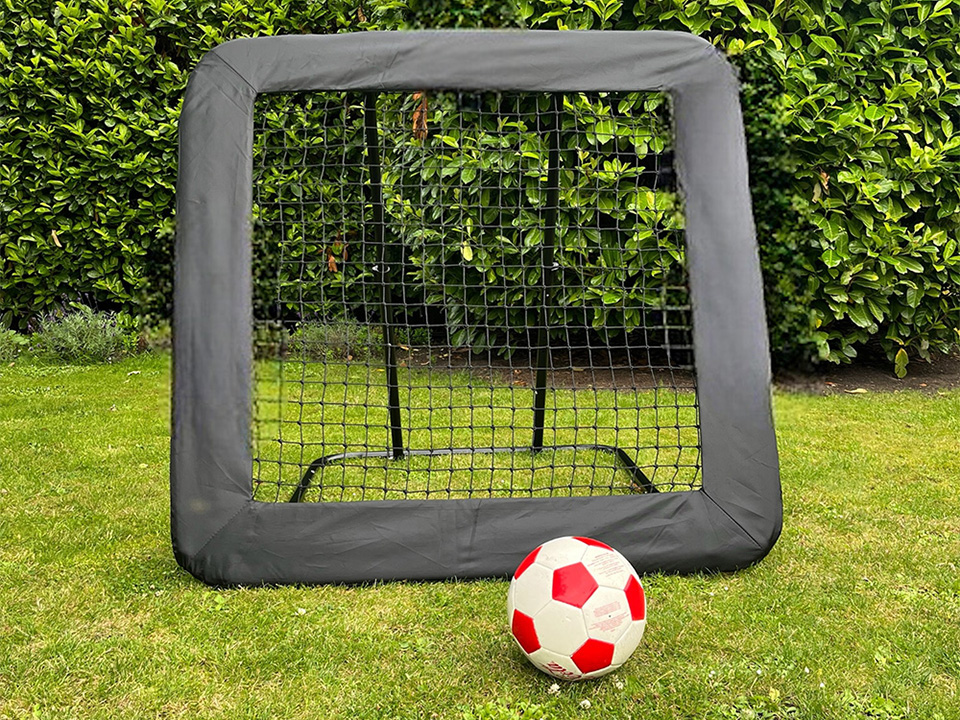
Uma boa especificação ainda precisa de cuidados básicos. Pode até imprimir esta lista de verificação no manual do produto ou na página do produto:
- Guarde os reboteadores longe da luz solar direta quando não estiverem a ser utilizados.
- Após a chuva, deixe a rede secar completamente antes de dobrá-la ou guardá-la.
- Sacuda a sujidade e os detritos; não deixe lama acumular-se na malha.
- Verifique os elásticos e as amarras a cada poucas semanas; substitua aqueles que parecem finos ou esticados demais.
- Certifique-se de que a estrutura permanece perpendicular e que os pés ficam apoiados no chão.
- Gire a posição da rede se os jogadores sempre acertarem a mesma zona.
Para instalações internas e clubes que também oferecem programas de pickleball ou ténis, adicionar uma unidade como a rede polidesportiva regulável com base rolante e rodízios ou um sistema de rede de pickleball para interior ajustável com estrutura de aço permite-lhes dividir a utilização por mais equipamentos, reduzindo a pressão sobre cada reboteador individual.
Quando substituir uma rede de rebote em vez de repará-la
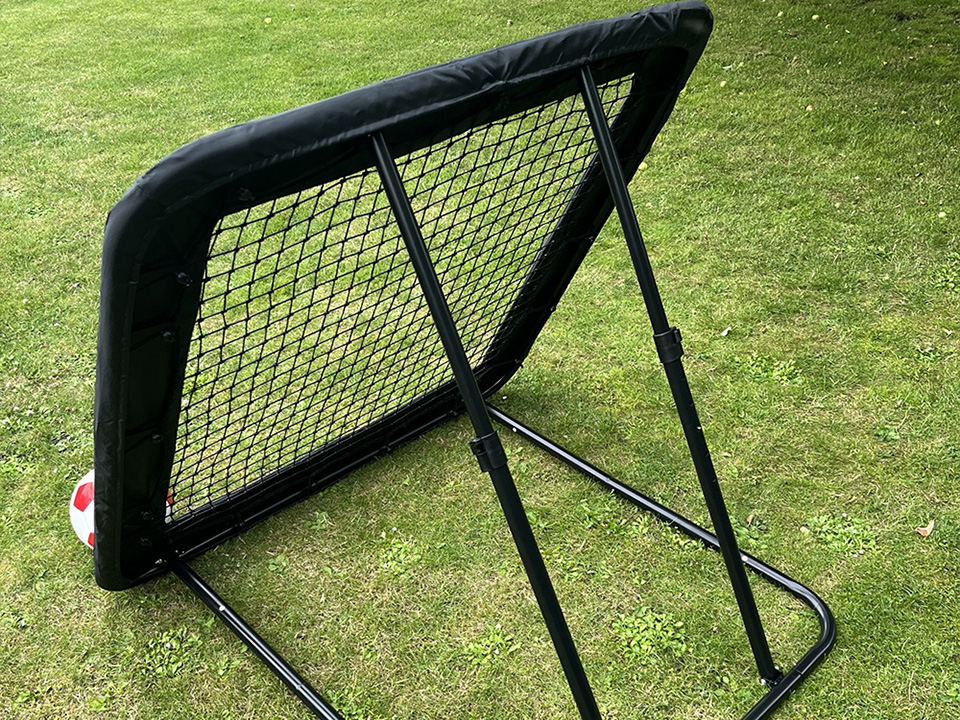
Há um ponto em que apertar os elásticos e voltar a amarrar os cordões é simplesmente desperdiçar tempo numa rede morta.
Informe os seus clientes para substituírem quando:
- A área principal da malha parece rígida e não recupera a tensão.
- Várias cordas elásticas ou molas já se partiram.
- A estrutura está torta, por isso, mesmo uma rede nova não ficará direita.
- A rede apresenta buracos visíveis ou quadrados esticados na zona de rebatida.
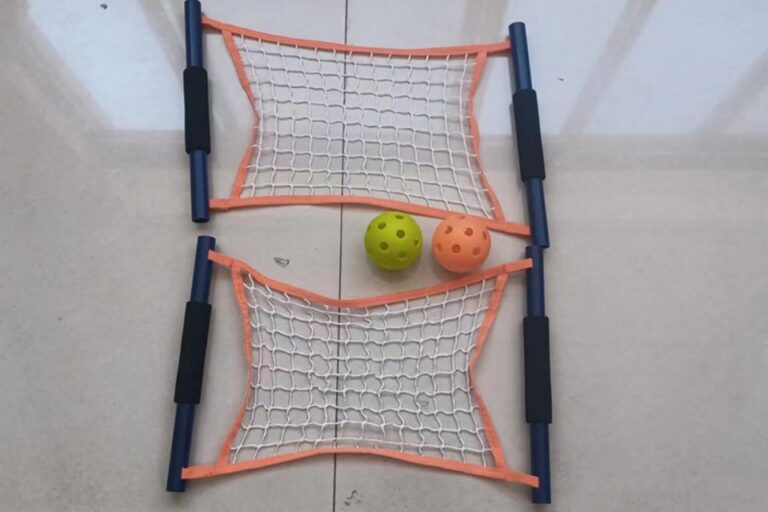
Nessa fase, é melhor para todos trocar por uma unidade nova – por exemplo, um Rede rebatedora portátil de pickleball de 6 x 6 pés com zonas-alvo para exercícios rápidos, ou um Rede de pickleball portátil de tamanho regulamentar com bolsa de transporte e alças se quiserem mais trabalho do tipo match.
Para si, como vendedor, diretrizes claras de substituição significam menos disputas e um serviço pós-venda mais eficiente.
Em suma, as redes dos reboteadores perdem o seu salto após alguns meses, quando a fadiga do material, os raios UV e as condições meteorológicas, uma instalação deficiente, uma malha de baixa qualidade e uma utilização excessiva se acumulam. Se escolher especificações melhores, adequar o produto ao cenário de treino e orientar os seus clientes sobre os cuidados básicos, terá menos reclamações e mais encomendas — e os seus reboteadores permanecerão “vivos” por muito mais tempo.